
Winter storm won’t ruin college football championship, DFW officials vow
The first College Football Playoff championship game is five weeks away, but planning for the biggest sporting event to hit North Texas since the 2011 Super Bowl has been going on for months.
Much of that planning deals with weather, such as the winter storm — deemed “Icemageddon” on social media — that paralyzed North Texas last December with a 4-inch coating of ice.
If such a storm were to dump sleet and snow on Dallas-Fort Worth the week of the championship game, scheduled for Jan. 12 at AT&T Stadium in Arlington, will the game and surrounding pageantry go on as planned? Or will the rest of the nation watch on television with mouths agape, as North Texans struggle to cope with winter weather?
With “Icemageddon” behind them, regional leaders say they’re better prepared than ever to keep roads open no matter what kind of a wallop Mother Nature packs.
And part of the reason for that confidence is they’ve learned from a lot of mistakes — not just during “Icemageddon,” but also the ice- and snow-soaked 2011 Super Bowl that led to nationwide criticism of the region’s ability to function in wintry weather.
“It’s important for people to know the level of planning that is going on, and the good thought behind the planning,” said Michael Morris, transportation director for the North Central Texas Council of Governments.
Besides the CFP championship game, AT&T Stadium is also scheduled to host the Goodyear Cotton Bowl Classic on Jan. 1, and depending upon how the Dallas Cowboys finish their season, possibly one or two NFL playoff games. There’s also the Lockheed Martin Armed Forces Bowl on Jan. 2 at TCU’s Amon G. Carter Stadium.
Bad weather would be bad.
Of course, it’s also possible all of those high-profile football games will take place in balmy weather.
Successes and failures
Several officials say a turning point in how the region deals with bad weather occurred Jan. 27, just weeks after the last frozen particles of “Icemageddon“ had evaporated.
On that day, Edith Marvin, environment and development director for NCTCOG, brought together public works directors and other city and transit officials from across the region for a meeting to reflect upon successes and failures during the ice storm. They were joined by officials from the Texas Department of Transportation, National Weather Service, North Texas Tollway Authority and other agencies.
About 50 people attended that meeting, Marvin said. Minutes taken during that meeting reflect some of the frank back-and-forth discussions that went on. For example:
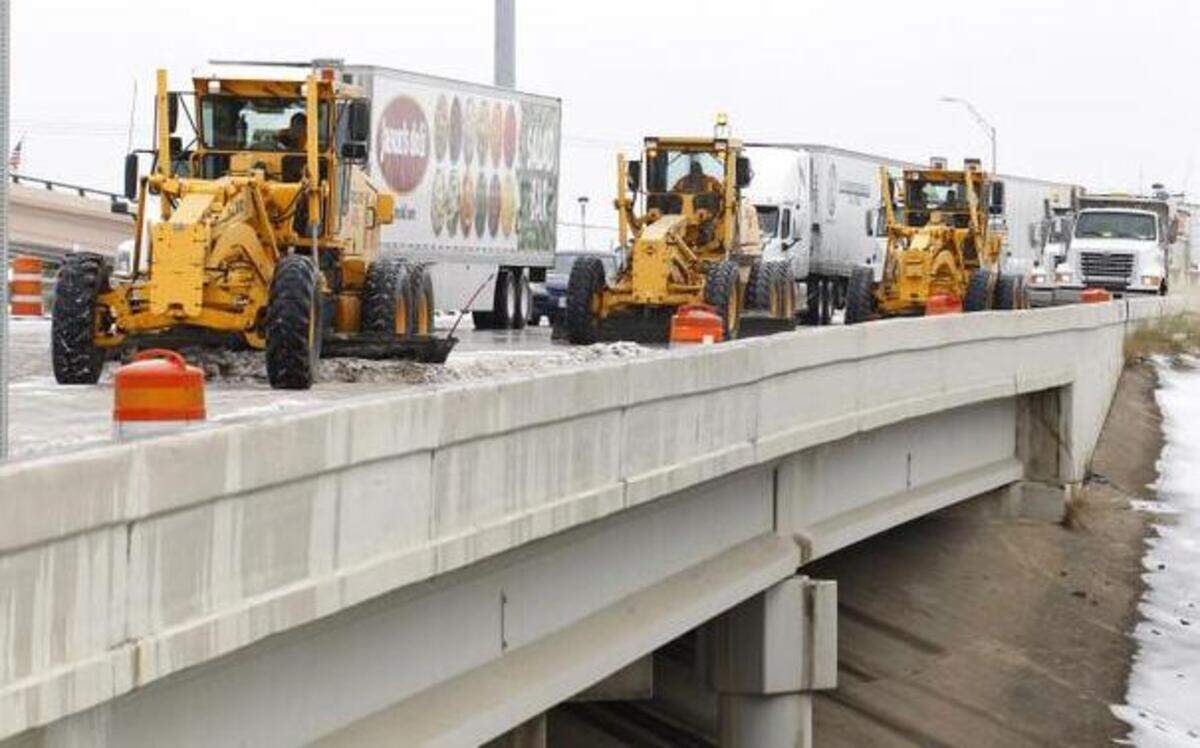
▪ One official expressed the need for more specific weather forecast information. Texas Department of Transportation officials said if they had known 4 inches of ice were coming, they would have been ready with road graders (since snow plows don’t work well in removing ice). Instead, they waited until after the ice had coated highways to request road graders from neighboring districts.
▪ Others lamented they didn’t have readily accessible tire chains, or they hadn’t tested generators in cold weather to ensure they would work when needed.
▪ A Plano official remembered that, on the first morning of the storm, clearing fallen trees was difficult because the city crew responsible for that task took Fridays off.
The group has continued to meet quarterly as a public works council and to exchange ideas about how to battle the next winter storm, Marvin said. She is confident the lessons learned in the discussions will stick, even if the next ice storm doesn’t strike for years.
“When you look at the cities in our region, public works is one of the departments that retains its employees for a long period of time,” she said. “These folks typically don't just up and leave a community.”
TxDOT well-stocked
The lead agency in removing snow from highways is the Texas Department of Transportation. Supplies are well-stocked at the agency’s main campus on McCart Avenue in southwest Fort Worth, as well as other satellite maintenance areas, said spokesman Val Lopez.
In all, 37 tons of salt, sand and deicing chemicals are stockpiled, and on a moment’s notice up to 230 workers can be mobilized to hop aboard dump trucks, road graders and other vehicles to begin treating frozen highways.
“If we have a more severe event, we can bring in resources from other parts of the state,” Lopez said, adding that the agency spent $8.1 million on equipment, supplies and labor during last year’s biggest storm.
In the weeks leading up to the high-profile football games, the transportation department will stage some of its sand, salt and other deicing materials at various points in and around Arlington, as well as other communities. The idea is to have the material available at multiple spots, so trucks don’t have to drive all the way back to the agency’s McCart Avenue campus in Fort Worth empty, Morris said.
Also, additional transportation department employees can be called in from other parts of Texas to help clear ice, and arrangements will be made to house them in area hotels. That would be an improvement from the 2011 Super Bowl, when dozens of workers from places such as Tyler and Amarillo had to sleep on cots at the agency’s offices.
DFW Airport efforts
Dallas/Fort Worth Airport spent $7 million on snow and ice removal equipment this year to pre-treat runways and roads.
Last year’s ice storm dropped 1.25 inches of ice on airport runways, causing delays of 45 to 60 minutes for aircraft waiting for takeoff. More than 2,100 flights were canceled, and 9,500 passengers stayed overnight at airport terminals.
DFW lost $1.1 million in revenue and incurred $2 million in operational costs to deal with the storm.
“The whole concept is don’t let this stuff bond,” Jim Crites, DFW’s executive vice president of operations, said during a November airport board briefing. “Scrape it off and keep it in a fluid state so when the sun comes out, it can evaporate.”
In all last fall and winter, DFW experienced eight winter-weather events, officials said.
Taking care of our own
While the main freeways and airports will be taken care of during another bad weather event, what about everyone else?
It’s the people who live in the region — most of whom aren’t going to the game — who often get stuck in their own neighborhoods.
In 2011, while roads leading to Arlington such as Interstate 30 were well-manicured, many other highways and city streets were unattended and icy.
And during last year’s “Icemageddon,” many tractor-trailers were stuck for days on roads such as Interstate 35W, where ice turned to slush and refroze, creating what became known as “cobblestone ice” that difficult — if not impossible — to drive on.
Still, events such as the CFP championship game have helped those in charge of North Texas’ transportation network understand how they can keep people and goods moving during winter weather, not just for the region’s special guests, but also for its roughly 7 million residents.
“We love it,” Morris said. “When we have special events, it helps us buy the equipment we need to respond to weather all year.”
This report includes information from the Star-Telegram archives.
Gordon Dickson, 817-390-7796
College Football Playoff championship game
▪ About 90,000 people are expected to attend the College Football Playoff championship game Jan. 12 at AT&T Stadium in Arlington.
▪ One team will stay at the Gaylord Texan in Grapevine and the other at the Hilton Anatole in Dallas. The teams are scheduled to arrive Jan. 9.
▪ In addition to local road crews, another 144 Texas Department of Transportation workers will be on call from other parts of the state to possibly come into North Texas to help keep roads clear in the event of nasty weather.
▪ Most of the cost of the additional road workers will be absorbed by state coffers. That tab could cost several million dollars. The committee itself has a roughly $1 million transportation budget, just to cover the routine costs of getting teams and other dignitaries from the hotels to games and other events.
▪ In the event of ice or snow, the focus will be on keeping the highways connecting AT&T Stadium in Arlington with the hotels the teams are staying at, as well as the Dallas Convention Center and Fort Worth’s Sundance Square, where ESPN will be based. Those roads include I-30, Texas 121 and Texas 360. Roads leading to Dallas’ American Airlines Center, where concerts will be held, also will be manicured.
Source: Tommy Bain, chairman of the Stadium Events Organizing Committee.
This story was originally published December 6, 2014 at 4:41 PM with the headline "Winter storm won’t ruin college football championship, DFW officials vow."