Will this North Texas city recall its mayor, council over data center proposal?
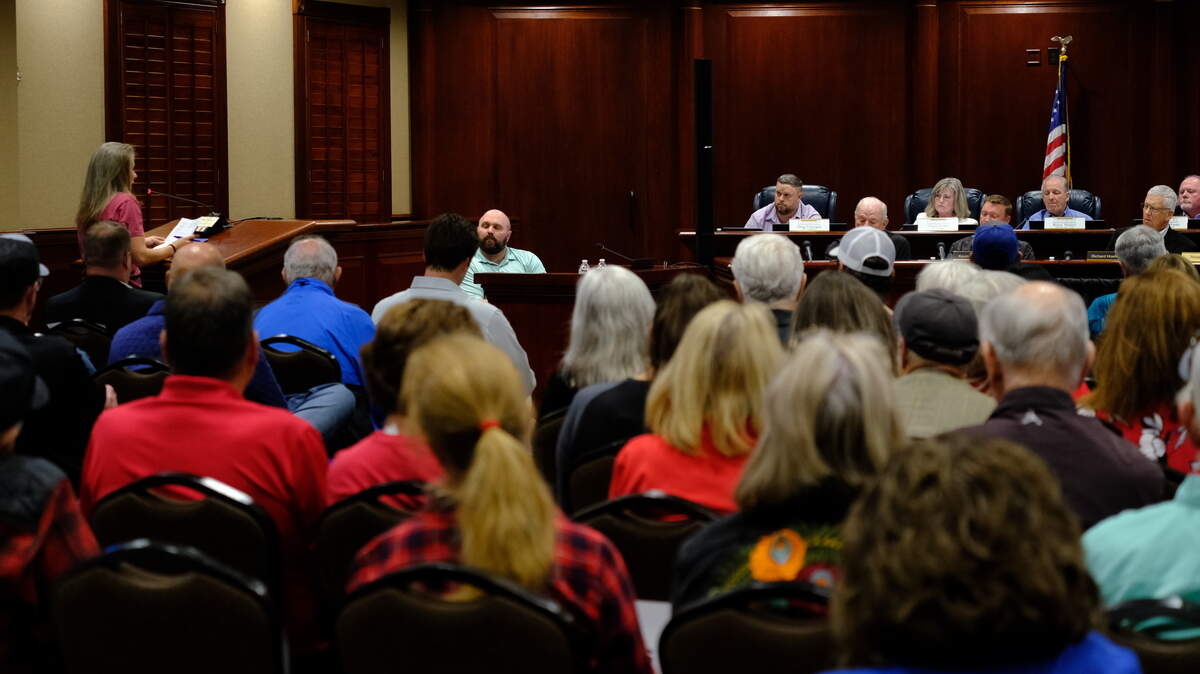
Nestled along the banks of the Brazos River, Granbury is an idyllic lakeside town where quaint coffee shops and a historic City Hall building overlook glittering water and lush green trees.
The city, with a population of roughly 13,000 people, could also become the latest American city that has removed elected officials over data center projects. As the city roils over plans for a data center on 2,000 acres of historic ranch land, residents say they’re taking back their home.
On July 13, a group of residents in Granbury said they filed a petition to recall the city’s mayor, Jim Jarratt, and several of its City Council members, just days after residents presented petitions calling for a vote of no confidence to remove the city manager and the city attorney.
“The efforts of the community came together to voice how they felt about the city council, and we did that by getting signatures on a petition recall for every single council member minus one, which is Angela Parker,” said Granbury resident Janet Logsdon, who helped organize the recall effort, as church bells chimed in the background. “Our team consisted of different political views, and. We worked together. We were united.”
Recall efforts have been launched against elected officials over data projects in several U.S. states. In Festus, Missouri, residents launched recall efforts against incumbent city council members who supported a data center project. A city attorney determined that the recall petitions did not meet legal requirements, but four incumbent city council members who supported the data center did not win re-election bids.
An analysis from Ballotpedia found over a dozen of other recall efforts against local officials over data centers nationwide, though many of those have not moved past the signature gathering phase.
Under Granbury’s home rule charter, a recall petition must be signed by “registered qualified voters of the city equal in number to at least 15% of the city’s eligible voters. Within 15 days, the city secretary must present the petition to the city council. Elected officials whom the residents are seeking to recall may hold a public hearing to “present facts pertinent to the charges specified in the recall petition.”
If the official doesn’t resign, the City Council must order an election at the earliest date permitted under state law.
For several months, residents have been mounting an effort against “Project Patriot,” a proposed data center on roughly 2,000 acres in the former Knox Ranch that was annexed by the city in January.
The data center would be developed by Dallas-based Bilateral Energy. A concept plan, made public by the city in June, consists of five data center buildings, storage and administrative buildings, and over a dozen other unlabeled spaces. In 2025, the Texas Commission on Environmental Quality approved an emissions permit submitted by Dallas-based developer Bilateral Energy LLC to build eight simple-cycle power turbines and 87 linear generators at 1225 Meadow Wood Road, which is in the center of that parcel.
At that January meeting, city leaders said that they had not previously received any communications from a developer interested in the land. City manager Chris Coffman previously told the Star-Telegram that the city was approached by Daniel Wong, director of Bilateral Energy, but he did not know that Wong worked for Bilateral.
Residents have claimed that city leaders did know about the development, and in April, a lawsuit was filed seeking a permanent injunction and a temporary restraining order against the city of Granbury. The suit claims that the City Council violated the Texas Open Meetings Act when members toured a Dallas data center in early January.
Internal communications included in the lawsuit list all of the City Council members, in addition to Granbury Mayor Jim Jarratt and other city leaders, as attendees who were expected to take the tour.
Granbury’s former economic development director, Shea Hopkins, suggested in the emails to stagger the tours “even two minutes behind” to avoid a quorum.
“I just want to make sure that we are doing things the appropriate way,” Hopkins wrote. Hopkins left her position with the city in May.
Logsdon, who is named as a plaintiff in that lawsuit, previously campaigned for Granbury Mayor Jim Jarratt — and the irony of campaigning to get him removed from office was not lost on her.
“The whole group is disappointed in the elected officials that we put in there in that seat,” Logsdon said. “So, whether it was the mayor or a council member, we’ve just been disappointed.”
The same day that the recall petition was filed, on July 13, the Granbury Planning and Zoning Commission recommended that the city council approve an amendment to the city’s zoning ordinance that would require data center developers to acquire a special use permit and adhere to a 1,000-foot setback from property lines.
It may not sound like an unusual move — but the proposal was written by a Hood County resident.
Nikki Sopchak lives in Hood County and owns property in Granbury. She has a master’s degree in urban planning, and when she heard about Project Patriot, she wanted to put it to good use.
“If I see something that’s being done that’s wrong, that motivates me,” Sopchak said. “This motivated me in a big way to put a lot of personal time into trying to make it better, because at first I thought that maybe they just don’t have the time or the expertise or the skills to put these safeguards in quickly.”
The City Council will have the ultimate say in whether to adopt Sopchak’s proposal. Although the commissioners also weighed a proposal with additional language written by city staff, it was the one Sopchak wrote that was recommended for the council’s approval.
Granbury spokesperson Jeff Newpher declined to confirm that the city received the recall petitions, although the residents who submitted it posted a photo showing that the petitions were stamped by the city secretary’s office.
Newpher also said that the city did not have a statement to share on the recall petitions.
“I feel like we have had God’s blessing on everything,” Logsdon said. “It took every single block walker to get out there and get the signatures, and it took the city voters to sign. So it was a community effort.”