A Texas law was supposed to help food trucks. Now some may lose their business
A Texas law that went into effect July 1 was supposed to give food truck owners a break by eliminating city permits in favor of one that allows them to operate anywhere in the state.
But for operators who stay in only one city, the new permit from the Department of State Health Services costs far more than the one from the city.
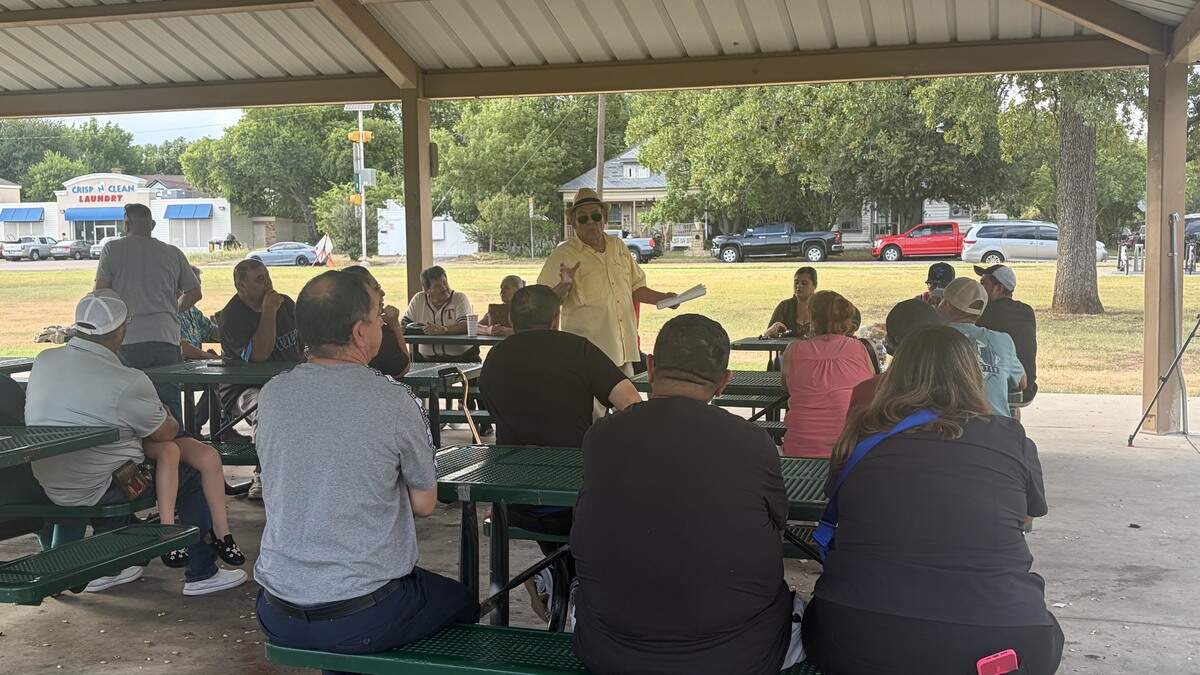
Angel Garza organized a meeting Monday night at Marine Park north of downtown to speak with over a dozen food truck business owners about the law and its implications.
“In Austin, they want to change the law, but triple the money, that’s ridiculous,” Garza, who runs a commissary, and wanted to help out the Hispanic food truck owners who attended.
The new state law, House Bill 2844, also known as the “Food Truck Freedom Bill,” requires the Department of State Health Services to issue a permit for all licensed mobile food trucks. Before, food truck owners paid fees at local health departments in every city and county where they sold their food.
The change was intended to save food truck owners money, but for some, it’s a far more expensive option.
The state permit is based on tiers, ranging from $300 to $876 in application fees and $400 to $500 in pre-licensing inspection fees. Some owners could also pay up to $500 in routine or compliance inspections. The licenses require a yearly renewal.
Cities can still regulate zoning, parking, noise, fire safety and local taxes.
In Fort Worth, the annual health permit fee for mobile food vendors was $258. A request for a new permit included a $165 plan review fee.
Nestor Mendoza sells Mexican food from his truck, Holy Frijole. He stays in Fort Worth, so he knew the new law would not help him.
“We’re going to be paying double for just staying in one place,” Mendoza said.
State Rep. Ramón Romero, a Democrat from Fort Worth, says the law was “grossly implemented.”
His two biggest worries are that people will potentially lose their business and cities losing the permit income to conduct health inspections.
For now, Romero said, mobile food vendors will have to follow the law. He said he will continue to advocate for them and will propose changes once the Texas legislative session opens in January.
“I think that it’s really going to be a matter of the agency realizing that there were mistakes made in the rulemaking and makes adjustments if possible,” Romero said.