Family seeks answers on Tarrant Jail death; Sheriff’s Office denies wrongdoing
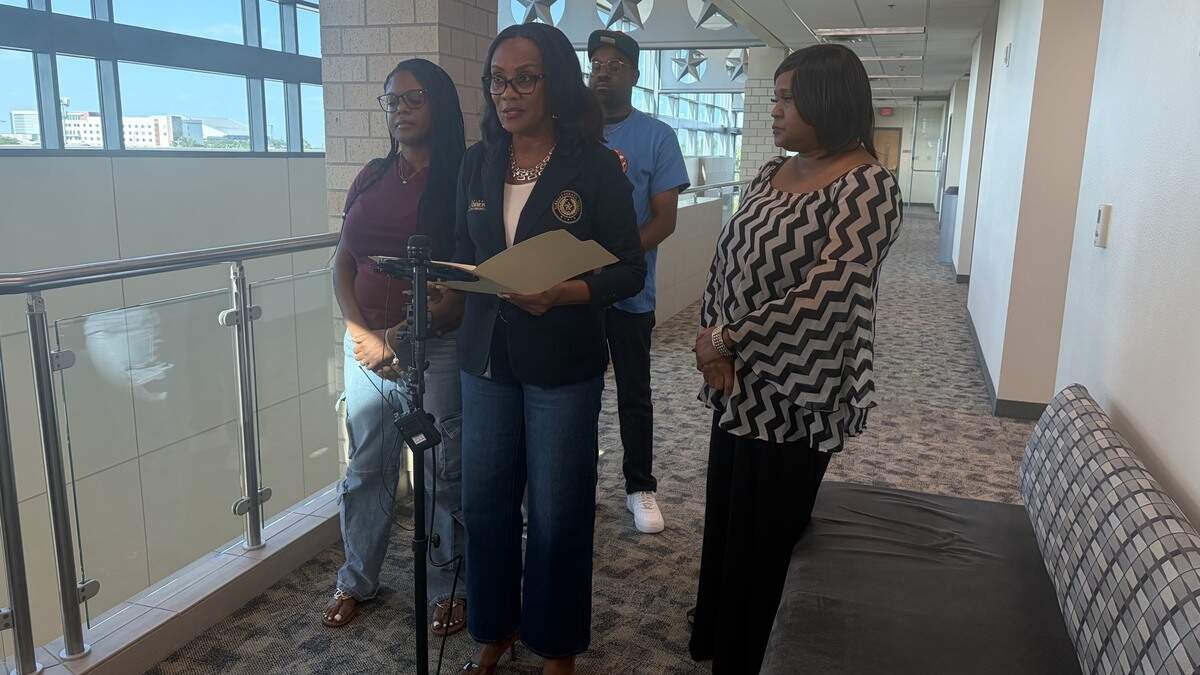
A family is looking for answers after they claim their family member is the 80th person to have died in Tarrant County Jail since Sheriff Bill Waybourn was elected in 2017.
Tarrant County Commissioner Alisa Simmons held a press conference with the family of Victor Runnels on Tuesday evening at Tarrant County Sub-Courthouse in Arlington on Runnels’ death.
Runnels, 61, was arrested by the Fort Worth Police Department on a parole violation and booked into the Tarrant County Jail on June 11. On June 24, Runnels suffered a medical event and was taken to JPS Hospital, where Runnels died the next day.
According to the Tarrant County Medical Examiner’s Office website, the cause of Runnels’ death has not been determined. Runnels’ family said they have not been contacted by the Sheriff’s Office on what happened to Runnels or why he died.
“I deeply, deeply loved my brother, and for this to happen to him, we must have answers, and I want justice for my brother and accountability,” Vickie Rogers, Runnels’ sister, said while holding back tears at Tuesday’s press conference. “I’m not going to rest in peace without it.”
Runnels’ death marks the fourth death in 11 days in the Tarrant County Jail. The others who died were: Mack Greer, 49, James Kent Johnson, 40, and Carl Avery McCray, 40, who all died between June 15 and June 18.
In a statement, the Tarrant County Sheriff’s Office said Runnels was not an in-custody death. The statement claims he entered the jail with extensive and ongoing medical issues and was released from custody on June 25 and passed away later that evening. The Texas Commission on Jail Standards determines that Runnels’ death “does not meet the criteria for an in-custody death,” according to the statement.
“Every day, people arrive at our jail already sick, struggling with addiction, or dealing with long‐term untreated medical conditions,” the statement reads. “By the time they come into our care, many are diagnosed with illnesses that are already in advanced stages. Working alongside our partners at JPS Health Network, we provide top‐tier medical care to every person in our facility. Unfortunately, there are cases where an individual’s illness is so advanced that there is no curative treatment available. We remain committed to ensuring that every person in our custody is treated with professionalism, dignity, and the highest standard of care.”
The family and Commissioner Simmons called for an investigation into not only Runnels’ death but also for anyone who has died in-custody of Tarrant County Jail.
“It’s not a partisan issue; it’s not an ideological issue. It is a matter of justice and accountability and basic human dignity,” Simmons said.
“These people deserve answers, and from what they’re being told right now is that there will not be an independent investigation, and that is simply tragic.”
The family said that when they arrived at JPS Hospital, Runnels was still in cuffs and chains. His cuffs and chains were removed and a few minutes later he was pronounced dead, according to the family.
Simmons said Runnels’ release from custody might be similar to circumstances for Mack Greer, who was released on a personal recognizance bond. Such a bond occurs when a judge grants a compassionate release for inmates who are in failing health and no longer a threat to the community. This allows them to be with family during their final days, according to a Robbie Hoy, a spokesperson for the Tarrant County Sheriff’s Office.
Victoria Rogers, Runnels’ niece, reached out to Simmons on Facebook at 11 p.m. Thursday about Runnels’ death, and Simmons responded to the message. When there is a death in jail, the Sheriff's Office notifies the county, then the commissioner court’s members receive a communication that a death has occurred in custody or jail.
Simmons said on Tuesday she has yet to be notified about Runnels’ death by the administrative office.
Victoria Rogers said they are still looking for answers and a proper investigation into her uncle’s death.
“It’s very saddening that you have to fight for these answers,” Victoria Rogers said.
“You have to cry out, you have to reach out, you have to go and try to piece together your own timeline of what you think or believe happened to your loved one.”