North Texas tornado hunters: Inside the art (and science) of storm chasing
The air was warm and breezy as Martin Lisius sped northeast on Texas 25, near Archer City, in his Acura MDX.
The prairie extended so far in each direction it felt like you would fall off the edge of the earth if you walked far enough.
Puffy white cumulus clouds inched across the sky a few thousand feet above the ground. In the distance, their gently curved edges became bulbous, towering cumulonimbus clouds reaching farther and farther into the atmosphere.
To the untrained eye, it was a perfect, balmy Texas spring day.
But Lisius saw something different in those growing beasts — the beginnings of a tornado.
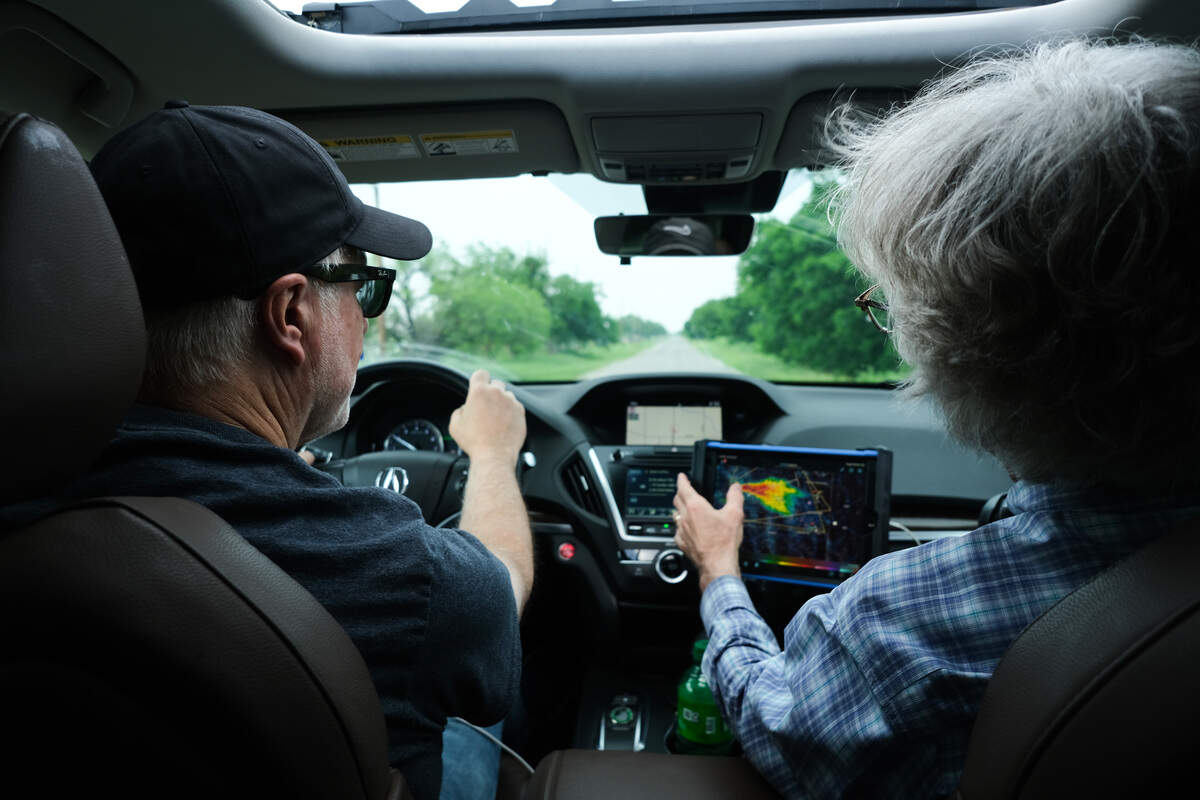
“I have no doubt in my mind, this is the place to be,” Lisius said as he looked out the window on April 26. Weather forecasters had predicted a severe weather system and risk of tornadoes primarily in Kansas and Oklahoma, with the potential for an isolated but strong storm in North Texas.
Lisius, of Arlington, is a storm chaser and a filmmaker whose life’s work revolves around finding and understanding severe weather. On this day, the Star-Telegram accompanied Lisius and another chaser, Steve George of Arlington, on a chase that followed a storm system from north of Fort Worth to Iowa Park and Wichita Falls on the tail end of a week-long severe storm outbreak that had stretched across the Midwest.
The day before, two tornadoes killed two people and injured at least 11 others in Wise and Parker counties.
A phenomenon born in the 1950s, storm chasing is a kind of extreme sport, an artistic endeavor, and never-ending scientific quest. Tornadoes happen all over the world, but they are more common in the United States than in any other country, with over 1,500 tornadoes reported in 2025.
Lisius, who began chasing storms in the 1980s, is a legend among chasers and beyond. He was a technical adviser on the original “Twister,” which is celebrating its 30th anniversary this month.
He also runs a company dedicated to stock footage of weather and one that charges tourists generally between $2,000 to $5,000 for “tornado tours,” a different kind of safari in which guides find severe weather instead of animals.
The chase with Lisius began in his garage, where he applied Rain-X to his car before consulting a colorful array of forecasts and weather models on his iPad to decide what storm to chase. Some days, there’s a plethora of options. That Sunday, the bulk of the storms were elsewhere, but there was a promising system that could move across the Great Plains.
Lisius, and hundreds of other storm chasers, had activated during the outbreak, searching for tornadoes, taking videos and photos, and livestreaming their chases on social media. The day before, Lisius saw and filmed seven tornadoes.
How a picturesque Texas day turns into a ‘Twisters’ worthy tornado
As Lisius sat on the side of the road, the driver’s side door open and his legs dangling out of the car, he waited for a perfect storm.
Throughout the morning, Lisius — and chasers who had fanned out across North Texas — waited for the drifting cumulus clouds to rise far enough to become a tornado-producing supercell thunderstorm.
The barrier to that rise is the “cap,” a layer of warm air one to two miles above our heads that is so warm that rising air is suddenly cooler than the air surrounding it, and sinks back to the ground. For a supercell to take shape, rising air must “break the cap” to reach a layer of the atmosphere where that air will always be warmer than the cold air around it.
“All that warm, moist air is rushing up into the cold air above,” Lisius said as he flicked through forecasts on an iPad from the front seat. “It’s condensing like a big bomb.”
If the conditions are right, and the cap breaks, that unstable air will create ferocious, snarling supercells that grumble and crackle with energy. As these up-drafts surge, they tilt and stretch invisible ribbons of wind shear, moving at different speeds and heights, and the air begins to rotate.
Breaking the cap is critical for strong tornadoes, but every tornado requires wind shear. It’s the combination of these two factors that can create larger, more destructive vortexes.
Lisius got out of the car to stand outside, watching the clouds grow taller and firmer. A rusted iron cattle grid nearby whistled softly in the breeze.
“All right, let’s go,” he said, getting back in the car and putting his seatbelt on. “Siri, take me to Iowa Park, Texas.”
And suddenly, the Acura was flying north, Lisius’ ham radio crackling to life as a tinny automatic voice announced that a tornado warning had been issued by the National Weather Service. Ham radio is less common now with cell phones, but many chasers still use it to follow storm warnings and to communicate with each other.
The waiting was over. At the juncture of science and the human eye, what existed hours ago as a smattering of red, green, and yellow on radar screens was now a rapidly evolving weather system.
As Lisius crisscrossed gravel roads and whizzed past rural farmsteads dotted with cattle, other chasers began to gather along the road, posting on social media as they followed the storm.
Storied National Weather Service program helps document severe weather
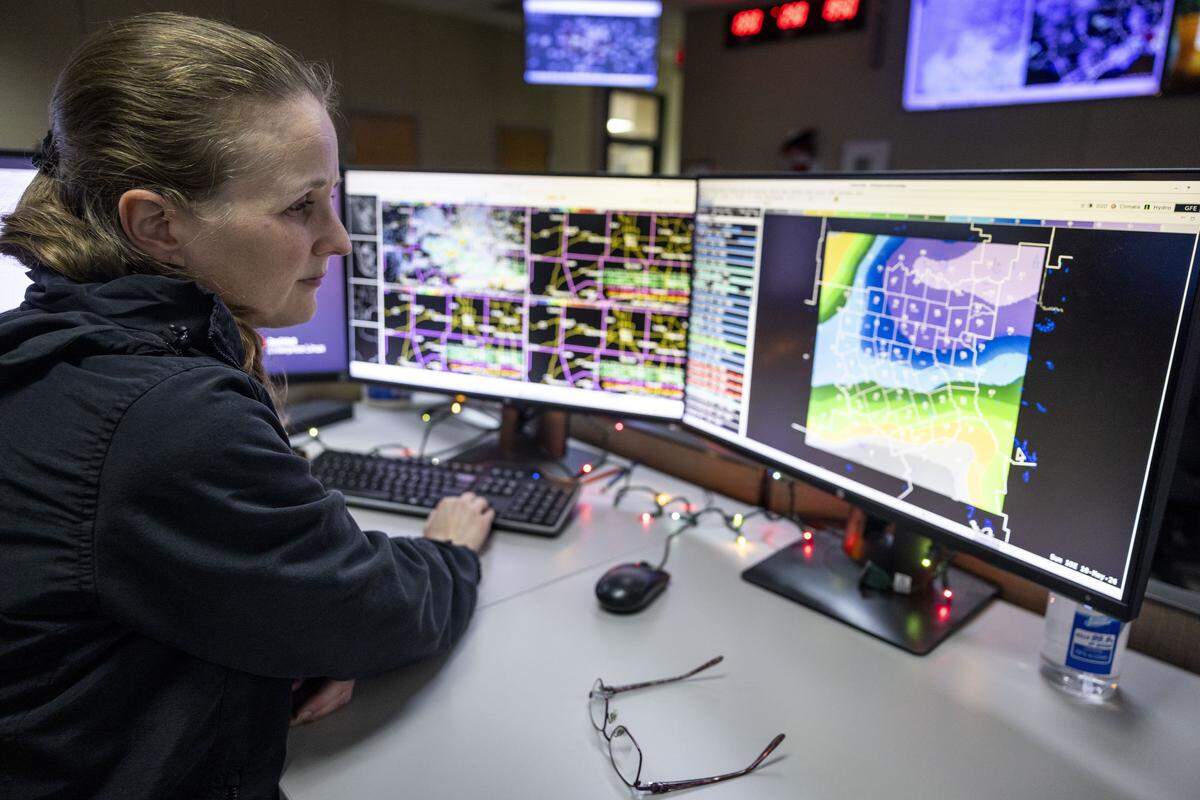
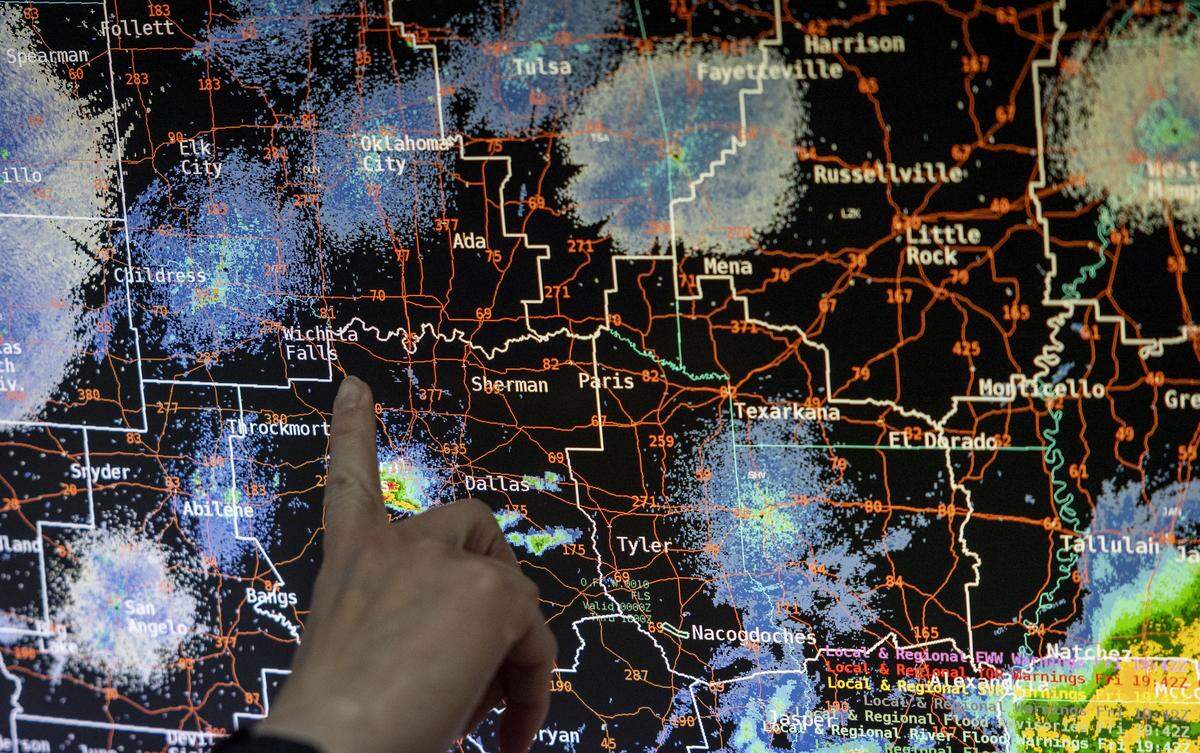
Over 100 miles away, in a white building off NE Loop 820 in Fort Worth, meteorologists use these real-time updates — and a network of storm spotters — to inform their understanding of storms as they happen, through an outreach program called Skywarn.
“We are in the office, so we need help out where the storms are,” said Jennifer Dunn, chief warning meteorologist for the National Weather Service’s regional office covering 46 counties across north and central Texas. “Skywarn helps us to train storm spotters, or official storm spotters, to educate them, and to be our eyes and ears.”
Since the 1970s, the National Weather Service has trained over 300,000 volunteers who gather a key piece of meteorology — what the National Weather Service calls “ground truth.” Although many trained spotters are also chasers, there are plenty of folks who spot severe weather from their backyards.
“We’re just one lone office here in north Fort Worth,” Dunn said. “We have responsibility for 46 counties. We can’t be in all those 46 counties.”
After taking a course offered by the federal agency, which is usually offered between January and March ahead of severe weather season, spotters are trained to recognize weather patterns and relay information back to forecasters.
As far as radar technology has advanced, it still cannot sample the air inside a tornado, Dunn said. National Weather Service radars sample data beginning from about 90 to 100 feet off the ground.
“There are so many things happening rapidly in some type of physics balance that until you can accurately recreate that in a model every time, there’s always going to be some component of it that we don’t fully understand,” Dunn said.
Scientists understand what separates a supercell storm that can form a tornado from a run-of-the-mill thunderstorm, Dunn said.
The forces that drive a supercell storm to create a tornado — especially enormous and destructive twisters like those in Joplin, Missouri, in 2011, and El Reno, Oklahoma, in 2013 — are less understood.
“It happens in a very localized area, and it can be very dangerous to get into an area nearby to take accurate readings,” Dunn said. “You have to pretty much be perfectly placed.”
At the very center of storm chasing is the practice of this delicate balance — getting close enough to a storm to see and document it, but far enough away that you aren’t in its path.
Don’t try this at home, professional chasers say
Although finding a storm is made much easier by having a weather radar in the palm of your hand, Lisius said, it also drives many more people to chase who don’t have the experience and knowledge to help them stay safe.
“The people that are not storm chasers that try to chase the storm, who know the least about weather, are the greatest risk,” Lisius said. “The biggest risks are people just getting in their cars who have no knowledge of whether whatsoever, and trying to chase the storm. We saw a big jump in that after “Twister” was released in the ‘90s, and then we saw a big surge since “Twisters” was released.”
There may be no greater force that has driven people to storm chasing over the past 30 years than “Twister,” the 1996 Jan De Bont film starring Helen Hunt and Bill Paxton as tornado researchers trying to place a research sensor inside a storm.
The plot, omnipresent in the mythology of chasing, hinges on the idea of getting dangerously close to a storm to get data that could help create a better warning system and save lives.
That question — how to most effectively warn and educate communities that often get less than half an hour to prepare for an imminent risk of tornadoes, especially in areas that receive confirmed tornadoes throughout the year — is what drives the work of forecasters and chasers alike.
Educating the public, one projector screen at a time
On another humid April day, Chelsea Burnett’s computer sat on a cart in a corner of the Southwest Regional Library in Fort Worth. A couple dozen chairs faced a projection screen. Burnett cooed at a toddler sitting in his mother’s lap.
Chelsea Burnett, an Oklahoma native, is a chaser and a weather educator who lives in Dallas with her family. She also drives storm chasing tours for a different company. On this day, Burnett was here to encourage people to be better informed and prepared to deal with severe weather.
Burnett introduced herself before giving a slideshow about an array of weather to the women who sat in chairs in front of her.
“How many of y’all have different ways of getting alerts?” Burnett asked the group. “When there is severe weather, how do you guys find out? I just want to make sure all of us have multiple ways of getting alerts.”
Burnett, like many chasers today, has taken meteorology classes but does not have a formal degree — but she has made a career out of her sheer passion for understanding the natural world.
“It’s like the first time chasing almost every time for me,” Burnett told the Star-Telegram as she drove back to Texas after a weekend of chasing. “Every chase is different, but the feeling is the same. I feel very small compared to these storms.”
Boom or bust doesn’t matter — it’s the joy of nature
Back in Iowa Park, as the afternoon light began to dim, the storm Lisius was chasing grew weaker and weaker with every tornado warning issued, and a thick haze made it dangerous to drive too close to the storm itself. Chasers often don’t want to get “under” the storm, which can be wrapped in a dangerous barrier of hail and heavy rain.
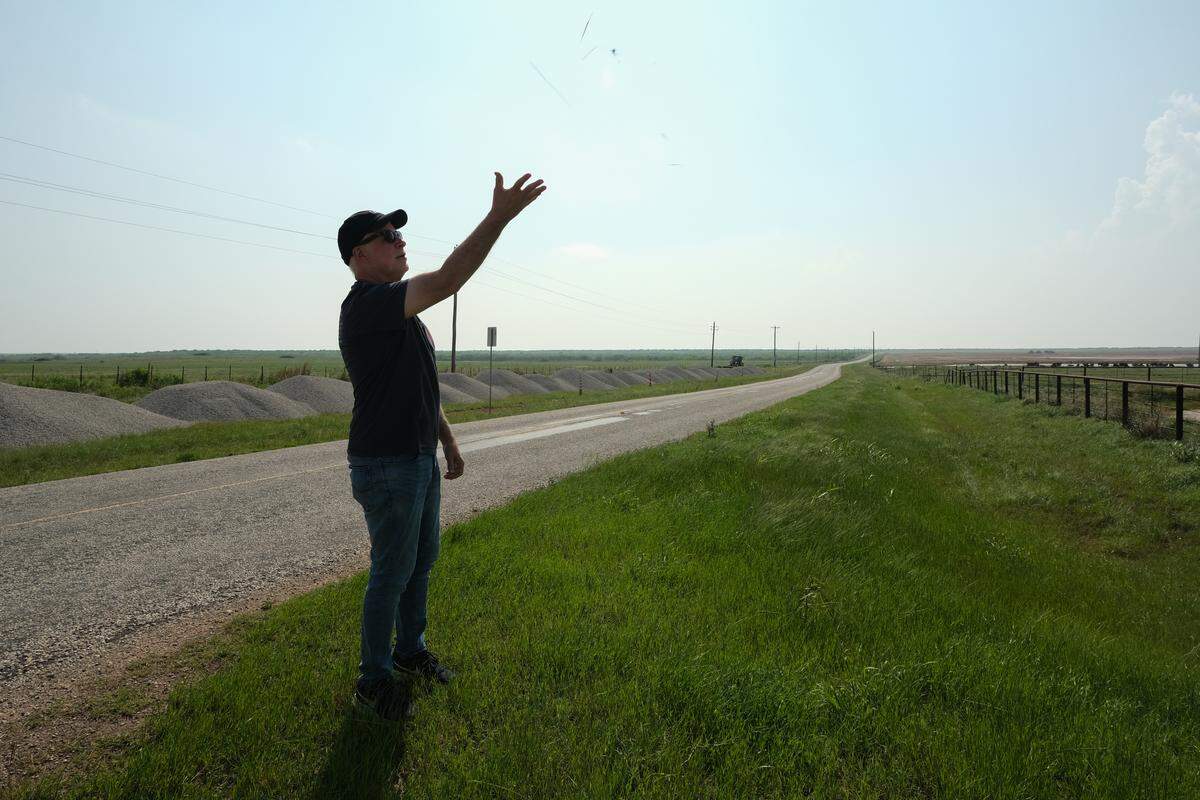
Lisius and George tossed a baseball back and forth while they waited to see if the storm would take one last swing at producing a tornado. Dark, wispy clouds floated through the air, looking close enough to reach up and touch, moving but never rotating quite enough to touch the ground.
The storm never fully fired, and Lisius and George eventually made their way back to Arlington, stopping for tacos along the way.
Some would call days like these a bust — if there’s no tornado, what was it for?
For these chasers, though, it’s about much more than the tornado itself. It’s the camaraderie. It’s the music they listen to. It’s the great taco place they find in a random town in Kansas. It’s the people they meet, and the secrets that the sky reveals if one has the time and the patience to sit and watch the clouds go by.
“When I go out to see a storm, I feel like I’m part of nature, and nature is calming for me,” Lisius said. “People can be uncomfortable, but I don’t feel that nature ever is.”
The jokes about bad diner food and roach-ridden motels are plentiful — the going can be tough on the road — but the joy and passion is palpable in any chaser the minute they start talking about their next trip.
“It’s kind of a ‘pinch me’ sometimes, like I’ve gotta pinch myself to see if this is actually real,” Burnett said. “I’m like, ‘I have two programs today. I’m tired. I have a car full of stuff from my programs. I can smell the wet tarps in the back that I need to air out, I want to change clothes,’ and then you get in front of the storm, and all of those little tiddly problems I was thinking I was having were just gone. I was just like, it’s worth it. I don’t care about all that stuff anymore.”
Jason Cooley, of Lewisville, also drives storm chasing tours in addition holding a day job in data entry and working as a storm tracker for the group Texas Storm Chasers.
It’s a lot to juggle, especially with a wife and two children, Cooley said, but the chase trips he leads are a “paid vacation.”
“I have to be a lot more selective about going out and chasing, but it’s still a hobby in my heart too, and I have the passion to witness some of Mother Nature’s craziest episodes,” Cooley said.
For people who join the tours, even without seeing a tornado, it’s a chance to watch America roll by out the window.
“Sometimes, just driving around the country is worth it to them, just to see the sights from the big city to the wide open farmland, and all of the restaurant hopping in between,” Cooley said.
This story was originally published May 19, 2026 at 10:43 AM.