Neglected cemetery is all that remains of community of formerly enslaved people
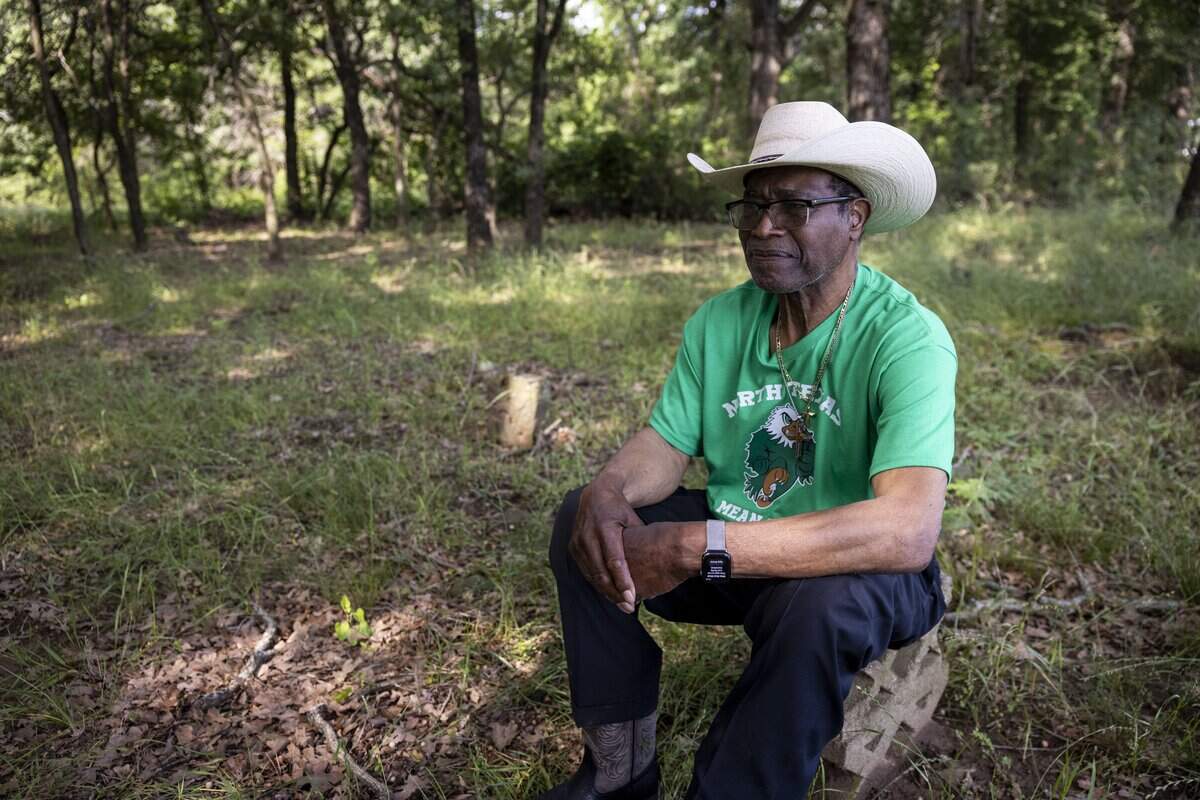
Willie Hudspeth had not set foot on the grounds of St. John’s Cemetery in nearly two years. The cemetery - in Pilot Point in northern Denton County - began in the late 1890s as a burial ground for formerly enslaved people.
Hudspeth, 80, shook his head in disbelief at the evidence of neglect he saw when he gained access to the property on a Saturday morning in May.
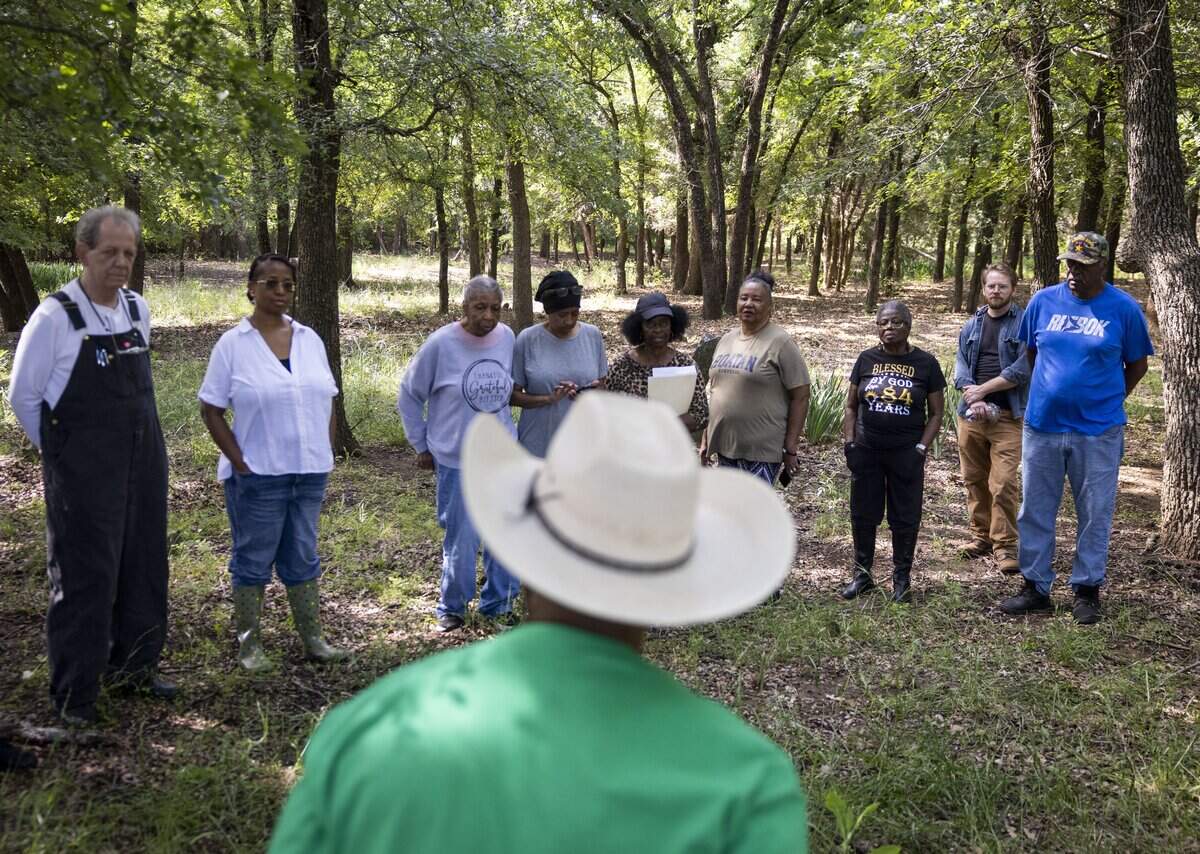
Property owners surrounding the cemetery allowed Hudspeth, a group of descendants of those buried there and members of the St. John’s Cemetery Association, formed to maintain and research the 1.5-acre cemetery, on the property that morning.
Trees tower over the cemetery, and branches stretch across the fence, concealing the entrance from passersby. Hudspeth walked gingerly through the overgrown grass as fallen leaves crunched beneath his feet. A beam of sunlight shone through the dense canopy of trees. He saw headstones discolored and cracked over years of neglect. The names, birth years and death years are illegible on many headstones. Some graves are unmarked or identified through rocks on the ground.
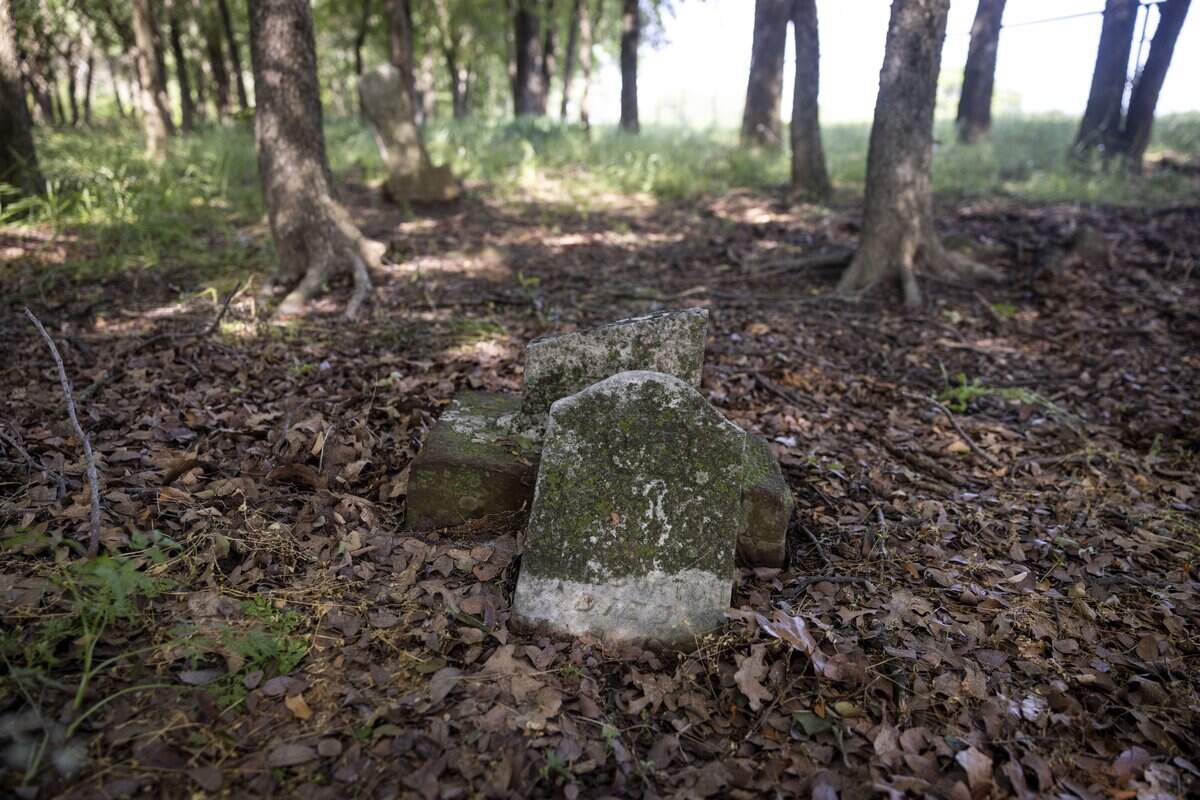
Over 400 people are believed to be buried there, but only a few dozen have been confirmed.
“What bothers me is you’re walking on people,” Hudspeth said.
The cemetery is the oldest known African American cemetery in Denton County and is landlocked between multiple property owners.
The association was formed in June 2025 and wants to gain permanent access to the cemetery via adjacent land, preserve the cemetery and facilitate research on the St. John’s community. It also wants to identify additional descendants of those buried in the cemetery and of the St. John’s community. The county has tried to act as a facilitator and to help clean up the cemetery, but the association says it has been more of a hindrance than a solution.
“Correcting the wrongs of history”
Following emancipation, formerly enslaved Black people established St. John’s Church and a school on the Bonner plantation, the largest plantation documented in Denton County records.
St. John’s Cemetery began as a burial ground for formerly enslaved persons. The oldest known tombstone the association identified is from 1892. The last deed filed with Denton County for the plot of land on which the cemetery is located was for the 1891 purchase by the St. John’s Church Trustees, John Burton, Abram Lyles, and Joseph Meadows.
The cemetery remained under the care of the church’s trustees into the early 20th century. According to Jessica Luther Rummel, lead researcher for the association, the St. John’s community was subjected to years of racial violence and unauthorized land acquisition.
Searching through newspapers, Census data, and burial records, she saw a steady increase in burials until the 1920s, when a sudden dip occurred, which coincides with a rapid reduction in Denton County’s African American population. Rummel found newspaper clippings about the Ku Klux Klan terrorizing, kidnapping, and warning African Americans to stay in line or be dealt with.
In December 1922, two African American men were abducted from the Pilot Point jail after having been accused of stealing horses. The Appeal, an African American newspaper based in Minneapolis, published a plea for help from an unknown person. In the plea, the person described how the racial violence in Pilot Point and the surrounding areas had become so dangerous that “scores of men, women and children had already left the vicinity.”
In 1918, a neighboring property sale recorded inaccurate boundaries that improperly absorbed the St. John’s cemetery into an adjacent parcel, the first of decades of land transfers that gradually left the burial ground isolated and inaccessible.
By the time the boundary issues were partially corrected in the 1960s, both the cemetery and the surrounding Black community had been largely erased from public memory. It was rediscovered in the late 1990s, but was forgotten again until scholars and advocates pushed for its preservation years later, according to the association.
The owners of the cemetery should be the descendants of the 1891 purchase by the St. John’s Church Trustees, Rummel says. According to Texas law, the cemetery is exempt from property tax because it is a burial site and not operated for profit.
Rummel says the truth of the St. John’s community must be known, from recognizing and honoring the freedmen community, to being aware of the violence inflicted by white communities in Denton County on them.
“This is about correcting the wrongs of history,” Rummel said. “This is about recognizing the kinds of sacrifices that these individuals made. This is about putting a spotlight on racist injustice that is occurring right now.”
Locals fight for the cemetery
In 2015, Hudspeth was protesting in front of the Denton County Courthouse for the removal of a Confederate statue. One day, a man approached him and told him about the neglected cemetery in Pilot Point.
Hudspeth, with the help of others interested in finding the cemetery, drove to Pilot Point. They kept driving past cemetery, and once they found it, Kim Thomas, one of the property owners, asked what they were doing. Thomas and her husband bought the property that year and were maintaining it.
Hudspeth and other volunteers took over the cleanup by picking up leaves and fallen branches and cleaning broken and toppled headstones. In 2016, John White, whose ancestors, John D. White and Sam Allen, are buried in the cemetery, joined the group. His wife, Bonnie White, said he was always interested in learning about his ancestry by collecting photos and records and using websites like Ancestry.com to learn more.
The same year, after the county learned about Hudspeth and White’s actions at the cemetery, the county approved funding for cleaning and preservation. In the agenda item, the county stated it would “serve as liaison between the property owners and the volunteers.”
Undergraduate and graduate students from the University of North Texas, along with the Denton County Office of History & Culture and other institutions, conducted a project during the spring of 2018 called St. John’s Community Project. The project researched the history of St. John’s Baptist Church and St. John’s Cemetery, the people who are buried there, and the social, religious, geographic, and economic networks to which they were connected,” its website said.
In an August 2021 Denton County Commissioner’s Court meeting, Hudspeth challenged the county about not doing enough for the cemetery. Hudspeth and volunteers, who conducted regular clean-ups at the cemetery, said they only saw the company that contracted with the county to maintain the cemetery on the site once.
County Judge Andy Eads said during the same Denton County Commissioners’ Court meeting that Hudspeth had continued to spread “misinformation” about the county. Eads said the county spent $175 on a title search in June 2016. In July 2016, the county approved maintaining the cemetery, and in August 2016, the county approved $20,000 to clean up the cemetery, Eads said. He said the Office of History & Culture organized St. John’s Cemetery Work Days for cleanup in May 2016, July 2016, August 2016, April 2017, and January 2019. Eads said he asked Hudspeth not to bring the news media to the cemetery, for fear vandalism would occur before his archaeological team could assess the site.
“People who do not speak the truth in this courtroom will be challenged,” Eads said.
In May 2023, the county applied for an Historic Texas Cemetery designation with the Texas Historical Commission, seven years after the commissioners’ court approved making the application, and it was approved in December 2023. The association did not learn of it until it submitted a public records request. The county has placed the designation on its website.
The association experienced a few setbacks over the years. In 2020, James White, the adjacent property owner who allowed the association access to the cemetery, sold his property, cutting off access to the cemetery from Highway 455. The other was the death of John White in 2021, who had been working with Hudspeth since 2016 to maintain the cemetery.
In 2024, Denton County Commissioners discontinued maintenance of the cemetery because it was not going to provide “cemetery landscaping or other services to any cemetery not owned by the county,” according to a statement sent to the Star-Telegram.
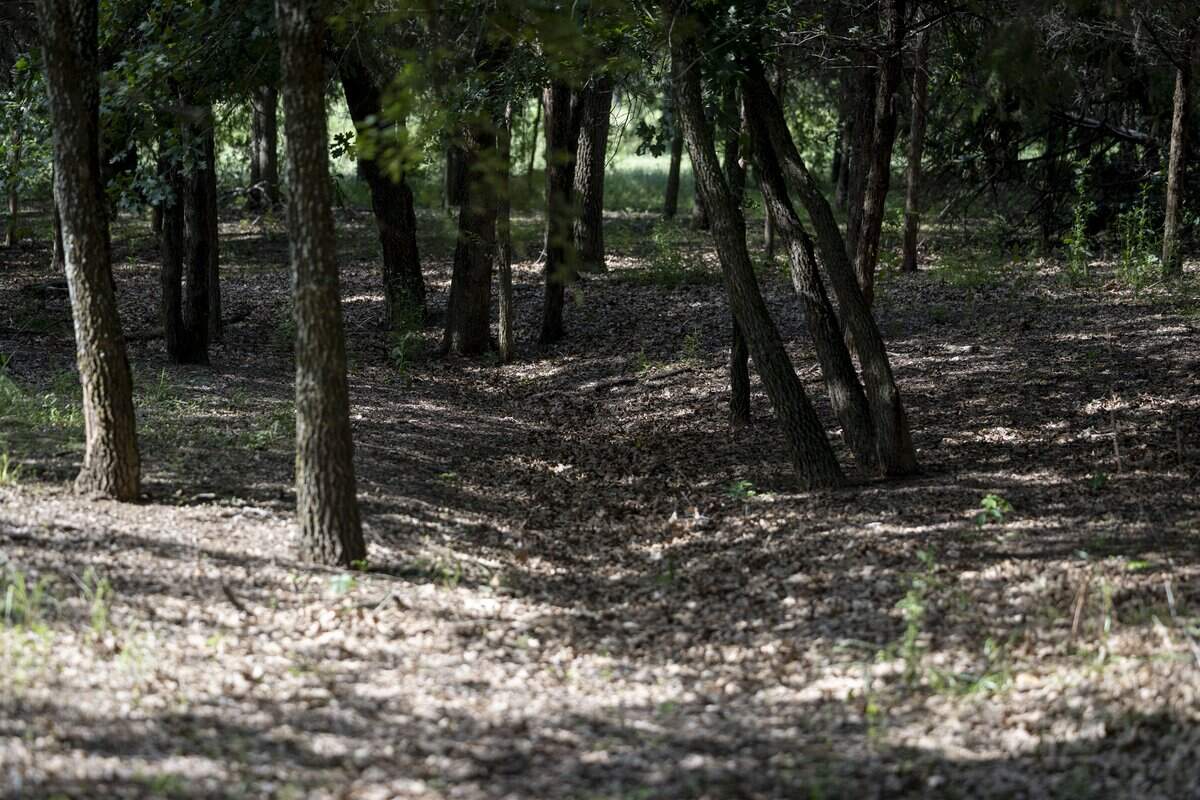
According to the county, from July 2016 through March 2024, Denton County spent over $115,000 on outside labor to clear and maintain the cemetery, which was visited an estimated 144 times for mowing, cutting tree limbs, and removing dead trees. The county also received a quote for $5,000 from Gehrig Inc., a geophysical services company, for a ground radar survey of a portion of the cemetery, but funds were not available, according to the county.
Richard Gladden, an attorney representing the cemetery association, says there are about three property owners adjacent to the cemetery.
Texas Health and Safety Code Section 711.041 guarantees the public legal and reasonable access to visit a cemetery surrounded by private property. The rights of access, the available hours, and the access routes are determined by the property owners, who may request written notice 14 days in advance if visitation is outside the agreed hours.
The association is seeking the most convenient and least disruptive easement through two properties. One of the properties is owned by Kim Thomas and her husband, who run a private foundation that rescues horses, and the other is owned by the Stinchcombs family. Both property owners have said they are open to exploring an agreement to secure reasonable and regular access via adjacent land, without resorting to legal action, Gladden says.
For Bonnie White, 2016 was the last time she walked through the cemetery, and seeing it a decade later in its current condition was disappointing.
The cemetery has been neglected for decades, but White wants to ensure its historical value is retained for those buried there who cannot speak for themselves.
“I tell people, you might not have a descendant in there, but it’s the principle of the thing, of how these graves have been mutilated and this cemetery has been cared for.”
“A New Resolve”
The association hosted a “Buried Twice: Memory, Truth, & Justice Series,” May 7-9 in venues across Denton and Pilot Point. The goal was to share information on the cemetery’s history, provide updates on preservation and legal efforts, and recruit volunteers. It was also an opportunity to help identify descendants and community partners for the association.
The May 9 event was the first time association members and other descendants living in Pilot Point were able to enter the cemetery in two years.
Mary Jackson came with family members from Pilot Point, descendants of the Allens, Wares, and Finches, who are buried in the cemetery. She said she learned a lot about the St. John’s community from John White and older family members — that it was more than a slave cemetery, but a community with a history that deserves to be told.
“I like coming out here because there’s a lot of history,” Jackson said. “I like walking down, looking at the grave and knowing that they were here.”
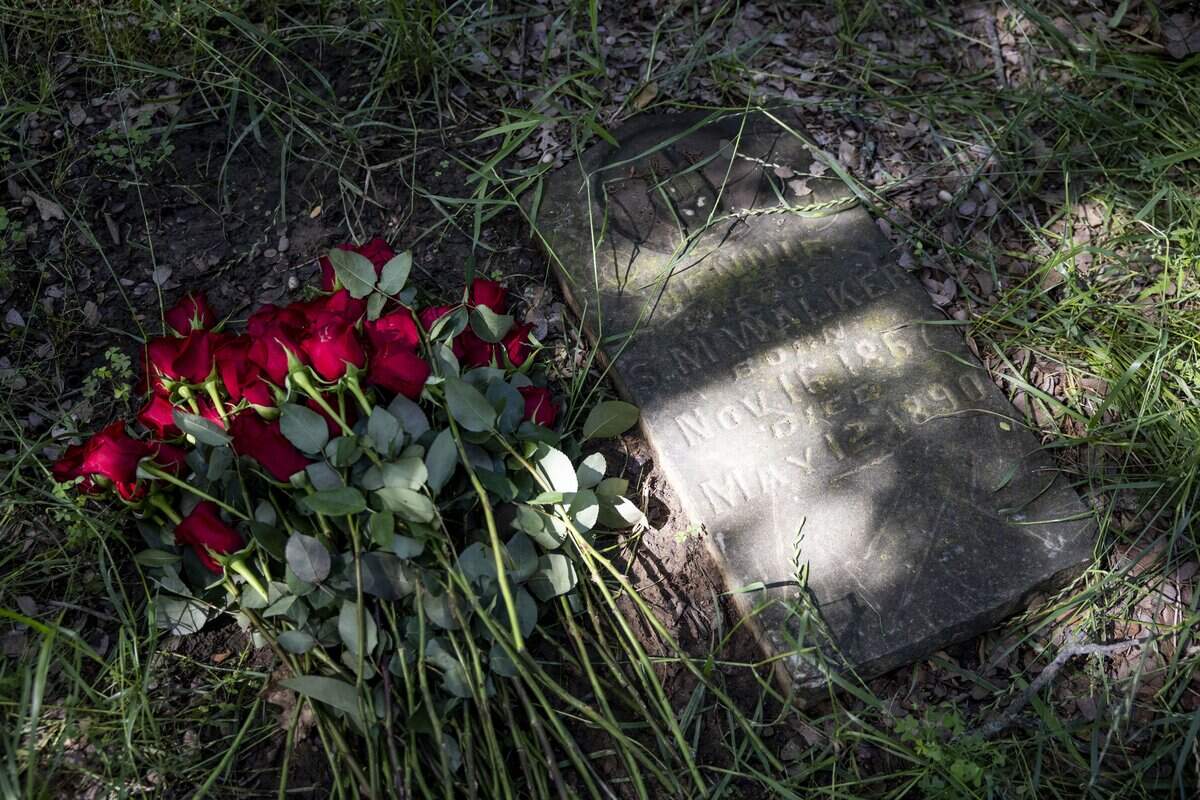
Before the group left the cemetery, they paid their respects to the 56 confirmed individuals buried there. Rummel, the lead researcher, read off each name and laid a flower on the ground.
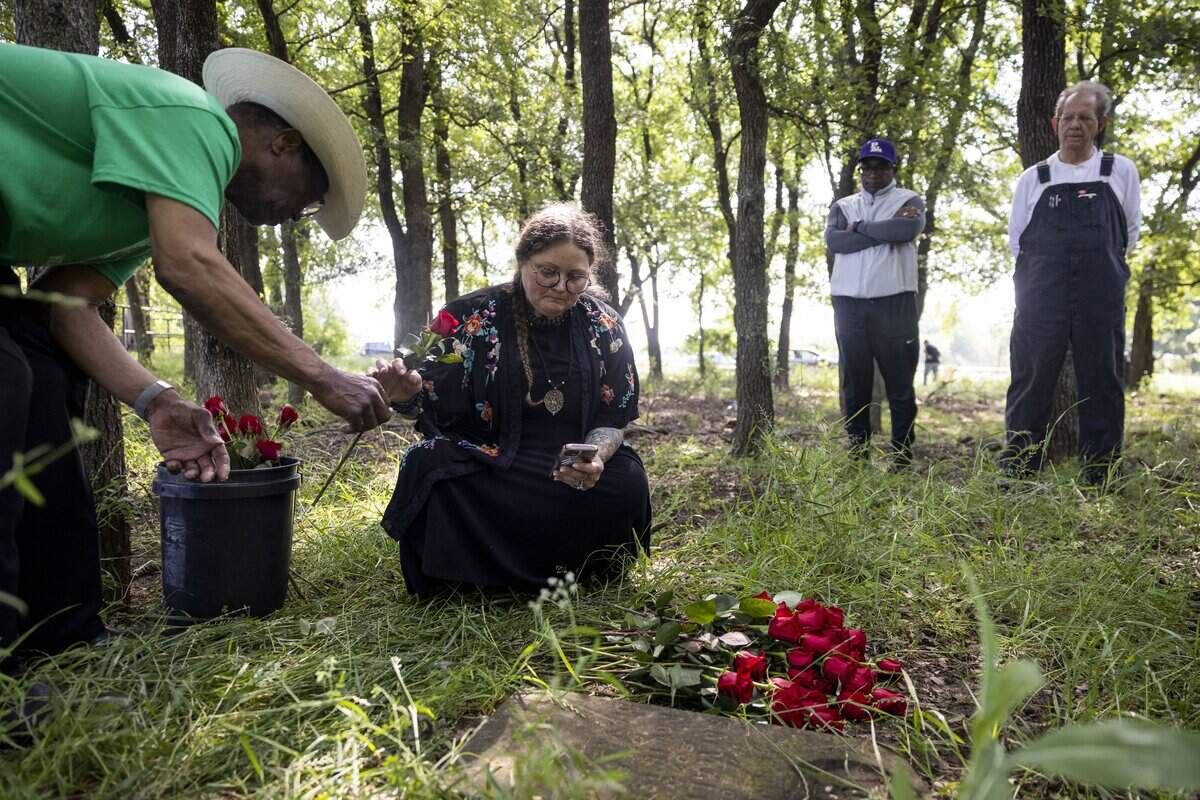
Some had names that could be read, others, only birth or death dates, while a few could only be read as “unknown identity.”
Hudspeth has spent a decade learning about and trying to gain more recognition for the cemetery. He has learned there is at least one World War I veteran and maybe more buried at St. John’s. The most glaring question he has is why the St. John’s community disappeared so fast, and how its land was seized over time without any compensation to the owners.
He was thankful for the people who came out and helped keep the history of the St. John’s community alive.
“I think God’s smiling on us because we’re doing this, and it’s important,” Hudspeth said. “There’s no fanfare, there’s nobody out here, there’s no politician or governing body, that doesn’t matter. It’s us, and I think you’re going to be just like me. I’m going to be empowered because of this get-together. I’m going to go with a new resolve.”