Restoring history: A nearly forgotten Black cemetery and community near Denton
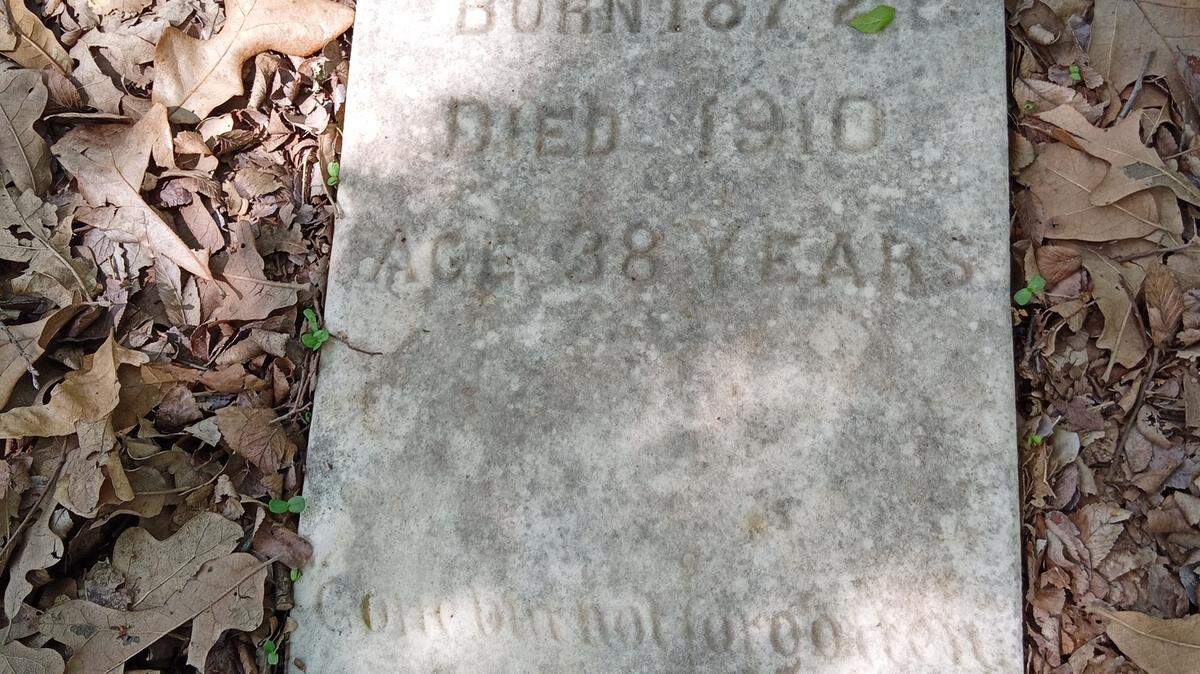
A group working to gain access to and restore the oldest known African American cemetery in Denton County, and to recover the story of the St. John’s community, has planned a three-day outreach and education campaign this week.
The Denton County St. John’s Cemetery Association is hosting the “Buried Twice: Memory, Truth, & Justice Series,” which will take place May 7 to 9 at four venues across Denton and Pilot Point. The campaign will share information on the cemetery’s history, provide updates on preservation and legal efforts, and recruit volunteers. It is also an opportunity to help identify descendants and community partners for the association.
There will be events on Thursday, May 7, at 6:30 p.m. at Recycled Books, 200 N. Locust St., in Denton; and Friday, May 8, at 6 p.m. at County Line First Baptist, 512 E. Walcott St., in Pilot Point. Two events will be held Saturday, May 9, one at 11:30 a.m. at St. James Baptist, 554 E. Burks St., in Pilot Point, and the other at 4 p.m. at Emily Fowler Library, 502 Oakland St., in Denton.
The cemetery is landlocked between private properties, and the only access point is through a private easement that cuts through the land. The association is pursuing legal action to secure reasonable and regular access to the cemetery via adjacent land.
Jessica Luther Rummel, lead researcher for the association, says the cemetery is the last known evidence of the St. John’s community. She says the series of events this week is an opportunity for the next generation to learn and take on the work that the association has begun.
“We’ve laid the groundwork, the association is here, but we need more folks to get involved, so that when we get access, we have folks ready to do the work right and do justice and honor to the individuals buried there,” Rummel said.
St. John’s is 1.5 acres and located in Pilot Point. The cemetery began as a burial ground for enslaved persons on the Bonner plantation, the largest plantation documented in Denton County records. The association plans to use ground-penetrating radar surveys to estimate the number of people buried in the cemetery.
The last deed filed with Denton County for the 1.5-acre plot of land the cemetery is on was for the 1891 purchase by the St. John’s Church Trustees, John Burton, Abram Lyles, and Joseph Meadows.
Following emancipation, formerly enslaved Black people established St. John’s Church and school, and the cemetery remained under the care of the church’s trustees into the early 20th century. The oldest known tombstone the association was able to identify was from 1892.
In 1918, a neighboring property sale recorded inaccurate boundaries that improperly absorbed the cemetery into an adjacent parcel, the first of decades of land transfers that gradually left the burial ground isolated and inaccessible. By the time boundary issues were partially corrected in the 1960s, both the cemetery and the surrounding Black community had been largely erased from public memory.
Over a decade ago, William Hudspeth, president of St. John’s Cemetery Association, helped advocate for the Denton County Commissioners Court to preserve and maintain the cemetery. The St. John’s Cemetery Association was formed to maintain and research the cemetery. The nonprofit is also working to investigate the disappearance of the St. John’s community, a history that remains only partially documented in surviving archives.
In 2016, the county passed funding to maintain the cemetery, but discontinued it in 2024.
On December 18, 2023, the Texas Historical Commission certified St. John’s as an Historic Texas Cemetery, formally recognizing its historical significance and placing it under state cemetery protections.