
Development aspirations collide with a rural way of life outside Mansfield
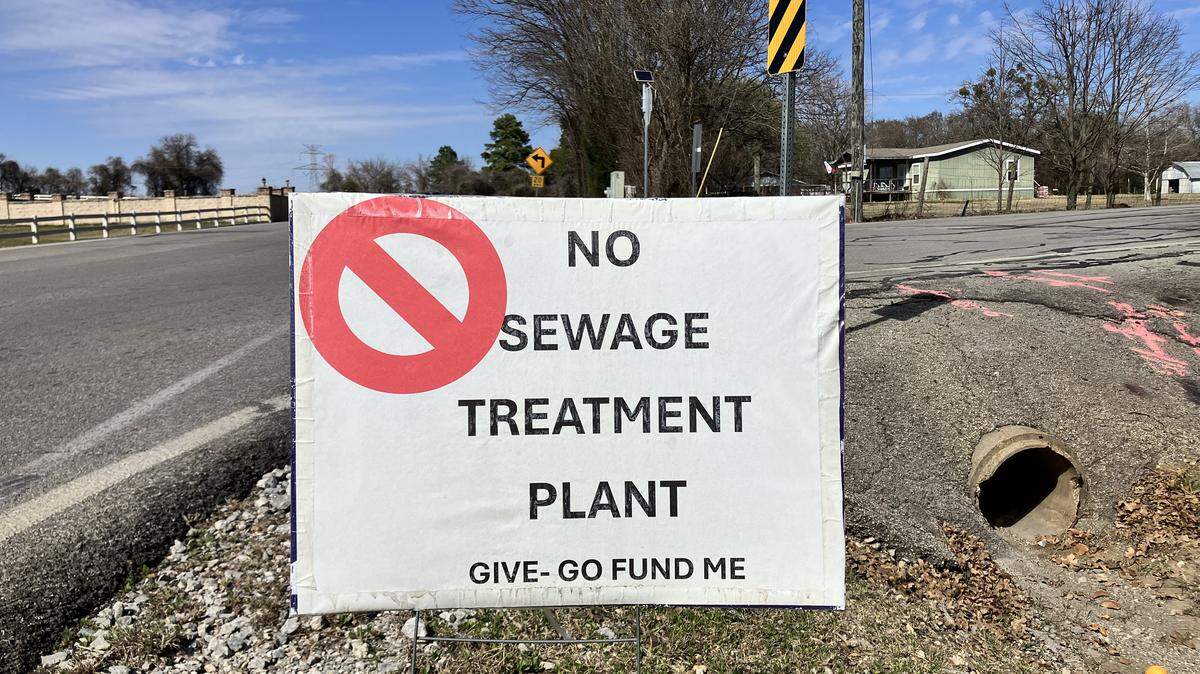
In a rural section of Tarrant County west of Mansfield, residents fear a proposed wastewater treatment facility will negatively impact their health and the pastoral surroundings they’ve come to love. On top of that, there are worries the planned residential community the treatment facility would serve will contribute to unwanted population growth and congestion.
On the other side of this contentious disagreement is the developer, who said there is demand for new housing, and the wastewater facility is a safe and necessary component to facilitate growth.
But resistance has been strong enough that the case will go before a judge with the Texas State Office of Administrative Hearings this month, with residents hoping to halt approval of the wastewater permit on which the future appears to hinge.
Developer seeking permit to send wastewater to Joe Pool Lake
In 2023, a development group under the name BL 374, LLC — now owned by Dallas-based Provident — applied for a permit from the Texas Commission on Environmental Quality that would allow for the discharge of up to 490,000 gallons of treated wastewater per day from a facility on 374 acres about half a mile northeast of the intersection of Bennett Lawson Road and Gibson Cemetery Road. The property was formerly part of Fort Worth’s extraterritorial jurisdiction. It’s now in unincorporated Tarrant County after Provident petitioned to remove the land from Fort Worth’s ETJ.
Provident is the developer behind the 5,000-acre master planned Goodland community in Grand Prairie.
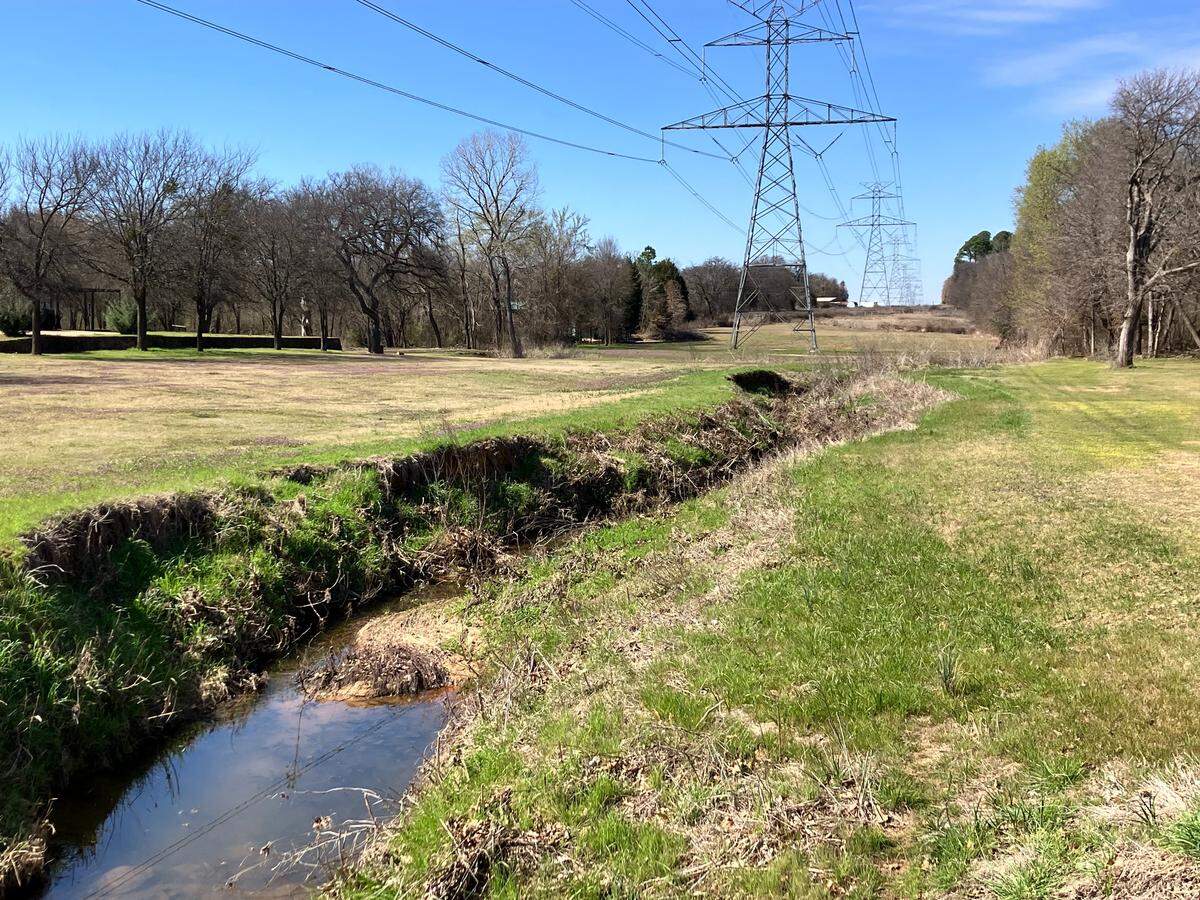
If TCEQ approves the final permit and Provident’s wastewater facility is built, treated wastewater will enter an unnamed tributary that flows to the Willow Branch creek, then to Walnut Creek, which feeds into Joe Pool Lake.
On the rural land around the Provident property, homes sit on one acre or more and are equipped with septic systems. According to the wastewater permit application, the developer met with representatives from the cities of Kennedale, Mansfield and Fort Worth, and none could easily provide wastewater infrastructure to the area.
Seth Lewis and Jan and Roger Hurlbut live just south of the Provident site. The proposed wastewater path runs through their neighborhoods, and the three spoke to the Star-Telegram on behalf of themselves and other nearby residents who are asking TCEQ to deny Provident/BL 374’s permit request.
For starters, Roger Hurlbut said, the tributary is a shallow ditch for stormwater runoff. Photos attached to TCEQ filings show it as a low spot in a wooded area. Wastewater would travel from there through a creek that passes under a small bridge not far from the Hurlbuts’ home, and Roger Hurlbut worries about the risk of flooding during heavy rains.
And during times of flooding, Lewis worries the wastewater will rise into yards, bringing with it E. coli, small quantities of which would be permitted in the treated wastewater.
“None of these people would want that in their backyards, but they’re OK putting it in our backyard,” Lewis said of the developers.
Rylan Yowell, a managing director with Provident, told the Star-Telegram the residential development would have on-site stormwater detention infrastructure to lessen the potential for downstream flooding. He also said the treated wastewater would meet TCEQ water quality safety standards.
Similarly, in a written response to resident concerns raised at a public meeting in September 2024, Kelly Keel, TCEQ’s executive director, said the wastewater treatment facility’s wastewater would not pose a health risk and that things like E. coli levels would be required to fall within safe levels.
During that 2024 public meeting, attended by at least one TCEQ representative and representatives from the developer, residents asked a multitude of questions, including ones about potential odors coming from the wastewater treatment facility. According to the wastewater permit application, the prevailing winds for the area blow south, and multiple neighborhoods lie south of the Provident site. At that meeting, Roger Hurlbut also questioned how TCEQ could grant the applicant a preliminary wastewater permit without having an inspector go out and view the proposed site.
When asked about this, a TCEQ spokesperson said the agency can conduct an on-site assessment during an application’s technical review process.
That is not, however, a standard requirement. In many cases, TCEQ relies solely on information provided by applicants for wastewater permits without conducting site visits. After wastewater treatment facilities are operating, TCEQ periodically inspects them to ensure compliance with regulations.
At the public meeting, residents also said they worried the new development will bring traffic congestion and change the neighborhood’s character, negatively affecting property values and overall quality of life.
TCEQ could not consider things like that when evaluating an application, Keel wrote in response. But, she said, a wastewater permit does not preclude property owners from taking legal action against a wastewater facility operator if they feel there has been “injury or adverse effects on human health or welfare, animal life, vegetation or property,” or if a facility’s operations “interfere with the normal use and enjoyment of animal life, vegetation or property.”
That is cold comfort to Jan Hurlbut, however. She said once the wastewater treatment facility is up and running, it would be difficult to force it to cease operations through the courts.
Questions about the size of the Provident development
The wastewater permit application says the Provident development will consist of 1,900 single- and multifamily residential units when it’s fully built out. That number of units would create an estimated 440,000 gallons per day of treated wastewater, the application said. The developer asked for a permit for up to 490,000 gallons per day to allow for further growth in the area.
However, Yowell said Provident only plans to put around 1,000 single-family residences on the site. He said these would be “high-quality” homes, with prices ranging from $600,000 to $900,000.
A close comparison, Yowell said, is Mansfield’s M3 Ranch, with homes from 2,280 square feet to more than 3,500 square feet, with 60-foot and 80-foot lots.
Still, there is concern among residents because of what’s written in the permit application. And because of the fierce opposition, TCEQ has granted a contested case hearing through the State Office of Administrative Hearings, which is akin to a civil trial. During that process, an administrative judge will listen to both sides and make a recommendation to TCEQ to either approve or deny the wastewater permit.
The first hearing in the contested case is set for March 17. Roger Hurlbut, who is himself an attorney, said that hearing would be largely procedural. The judge’s ruling will come later.
A Texas state legislator has spoken out against the development
State Rep. David Cook, who previously served as Mansfield’s mayor and who is running for state Senate, said during the 2024 public meeting that he opposed the Provident development. He alleged the developers misrepresented their plans when they approached him to craft legislation to create a municipal utility district (MUD) for the development site.
MUDs are essentially governmental entities that developers can use to finance infrastructure through the issuance of bonds which are repaid by tax revenue and fees collected from homeowners. MUDs are created by the state legislature, the county commissioners court or by TCEQ.
In 2023, Cook filed House Bill 5310, which formed Tarrant County Municipal Utility District No. 2 for the Provident development. A year later, Cook withdrew his support of the MUD and of the development plan, primarily because the wastewater permit application allowed for roughly twice the number of residential units as he was previously told.
Cook previously said he was fine with Provident putting 1,000 or so homes on the site, with no apartments, but he believed upward of 2,000 homes was too many for that area.
During the 2025 legislative session, Cook filed a bill to dissolve the MUD he had created for Provident, but that bill did not pass.
Cook did not respond to a number of questions from the Star-Telegram, including one about why the MUD dissolution bill stalled and how he feels now about what Provident is proposing.
History repeats itself with TCEQ contested case hearing
Four years ago, the Hurlbuts and a number of other neighbors convinced TCEQ to deny an air quality permit for a concrete batch plant on the same site as the proposed wastewater treatment facility.
During that fight, which lasted three years, the residents successfully petitioned TCEQ for a contested case hearing. Ultimately, their victory hinged on the batch plant operator’s inability to show it could comply with existing emissions limits on crystalline silica.
They were reportedly the first group ever to compel TCEQ to deny an air permit for a concrete batch plant.
Jan Hurlbut said that was an expensive undertaking because of the hefty legal costs, and this time is no different. Hurlbut said neighbors are pitching in to cover attorneys’ fees.
Lewis said he understood the property at Bennett Lawson Road and Gibson Cemetery Road wouldn’t remain vacant forever. He just wishes it would be developed by someone who takes into consideration the surrounding property owners.
Yowell said Provident did care about residents’ concerns, and he said company representatives had met with homeowners to alleviate those. But Lewis and Roger Hurlbut said they hadn’t heard from the developer.
“They could have approached us. They know who we are,” said Hurlbut.
In addition to residential development, Provident has a data center development division, but Yowell said there was no chance of a data center going in where the wastewater site would be.
For now, Lewis, the Hurlbuts and others are preparing for the contested case hearing. Roger Hurlbut said their group has a good attorney, the same one who represented them in the air quality permit hearing.
But Hurlbut won’t speculate on the chances of winning. He said even if the judge in the contested case hearing sides with him and the other residents, the TCEQ’s three governor-appointed commissioners would not be bound by the judge’s recommendation.
This fight comes at the same time as residents about six miles away near Burleson are requesting a contested case hearing to stop another private wastewater treatment plant that would send treated wastewater to Lake Arlington. It’s still unclear whether that hearing will be granted.
The final ruling isn’t expected until late spring or early summer in the case near Mansfield. Until then, it’s wait and see for all involved.