70 years later, a landmark will commemorate Mansfield Crisis
The Mansfield Historical Society is working to create a landmark to honor and reflect on the 70th anniversary of the 1956 Mansfield Crisis, when whites prevented Black students from enrolling at Mansfield High School after a federal court ordered it to desegregate.
The society, a nonprofit organization that studies and preserves the history of Mansfield, plans to create a landmark near Geyer Commons gazebo at 605 E. Broad St., where the high school once stood. It will be sponsored by the society, Bethlehem Baptist Church, and outside donors.
The society chose to create a landmark, not a memorial or monument, because the landmark invites people to sit and reflect on the conflict itself. This event marked a turning point in Mansfield’s history and influences where the city stands today. Unlike a memorial, it is not meant to be something to celebrate, president of Mansfield Historical Society Tom Leach explained.
“It’s hard for us to put ourselves back there, but what we can learn from is the lessons and how that reflects to us today, and it makes us look within ourselves,” Leach said.
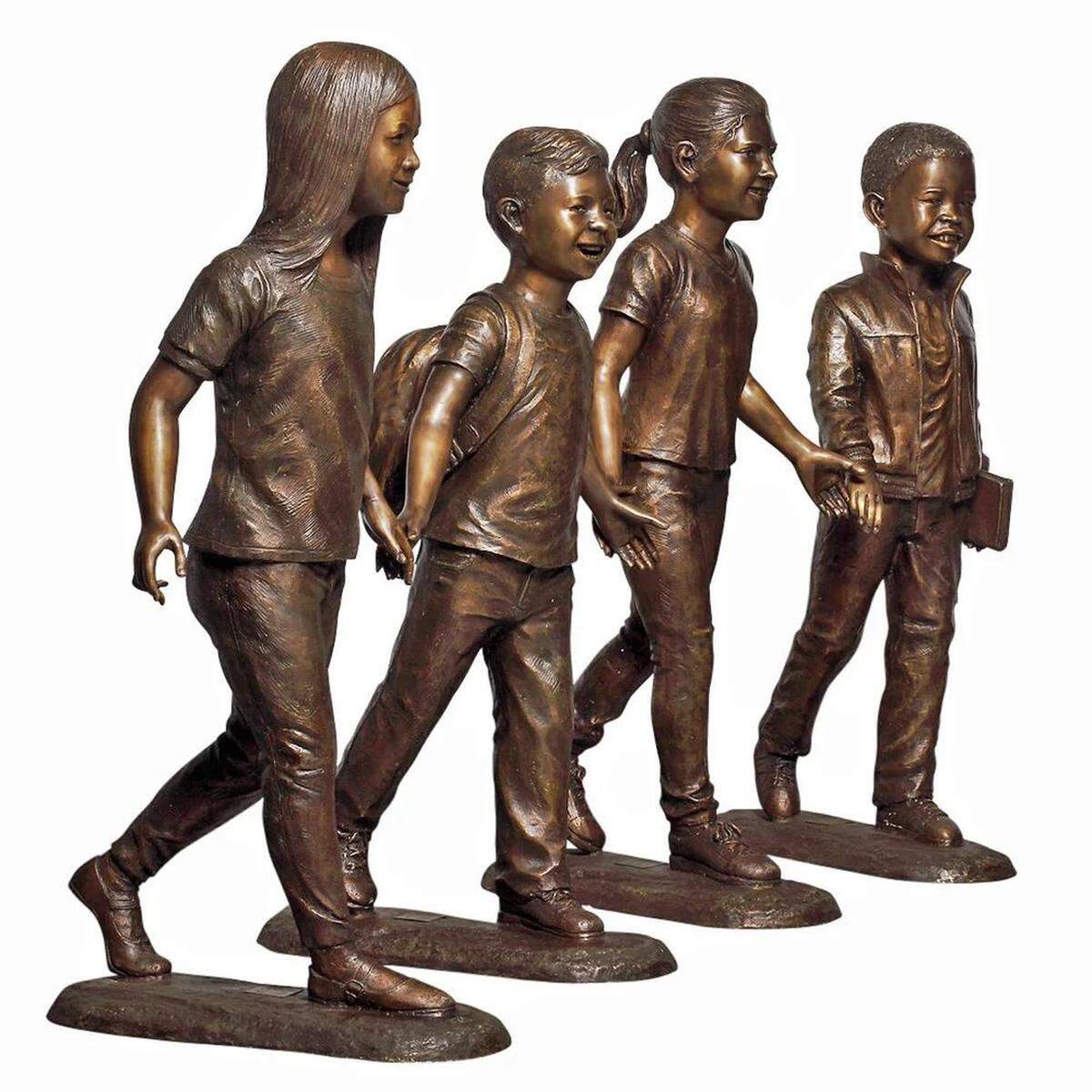
The design for the landmark is still in the planning stages. The concept for the landmark is a walkway through the park with panels showing Mansfield’s population growth over the decades. It will then lead to interpretive panels describing the case, followed by a flagpole and a statue of four children of different ethnicities.
The storyline of the landmark will be: “Moving from negative to positive.”
The Mansfield Crisis
The Supreme Court ruled in 1954 in Brown v. Board of Education that “separate but equal” in public schools was unconstitutional and violated the Equal Protection Clause of the 14th Amendment. In 1955, a second Brown decision ordered schools to desegregate “with all deliberate speed,” a vague mandate that allowed for Southern states to slowly integrate and thus resist the ruling.
In 1956, a year before nine Black students tried to integrate Central High School in Little Rock, Arkansas, Mansfield became one of the first school districts in the country to enforce the Brown ruling.
Mansfield had fewer than 700 white students and about 60 Black students. The school district segregated its Black students to a four-room elementary school called Mansfield Colored School on West Broad Street. The Black high schoolers rode a Continental Trailways bus to Fort Worth, where it dropped them off blocks away from I.M. Terrell High School.
The Mansfield National Association for the Advancement of Colored People filed a lawsuit on behalf of three Black high school students to attend Mansfield High School. They hired Fort Worth attorney L. Clifford Davis to represent them. A federal judge in North Texas ordered the Mansfield school district to desegregate, making it the first Texas school district to do so.
White Mansfield residents resisted the order. Mobs of over 300 people stopped the three Black students from enrolling on Aug. 30 and 31, 1956. During this time, Mansfield’s mayor and police chief ignored the Supreme Court ruling. Three effigies were hung: across Main Street, from a flagpole in front of the high school, and above the school’s entrance.
Texas Gov. R. Allan Shivers resisted integration and dispatched Texas Rangers to uphold segregation and authorized the Mansfield school board to transfer Black students to Fort Worth. It would not be until 1965, when faced with the loss of federal funds, that the Mansfield school district desegregated.
The 1956 event became known as the Mansfield Crisis.
The Progress of Mansfield
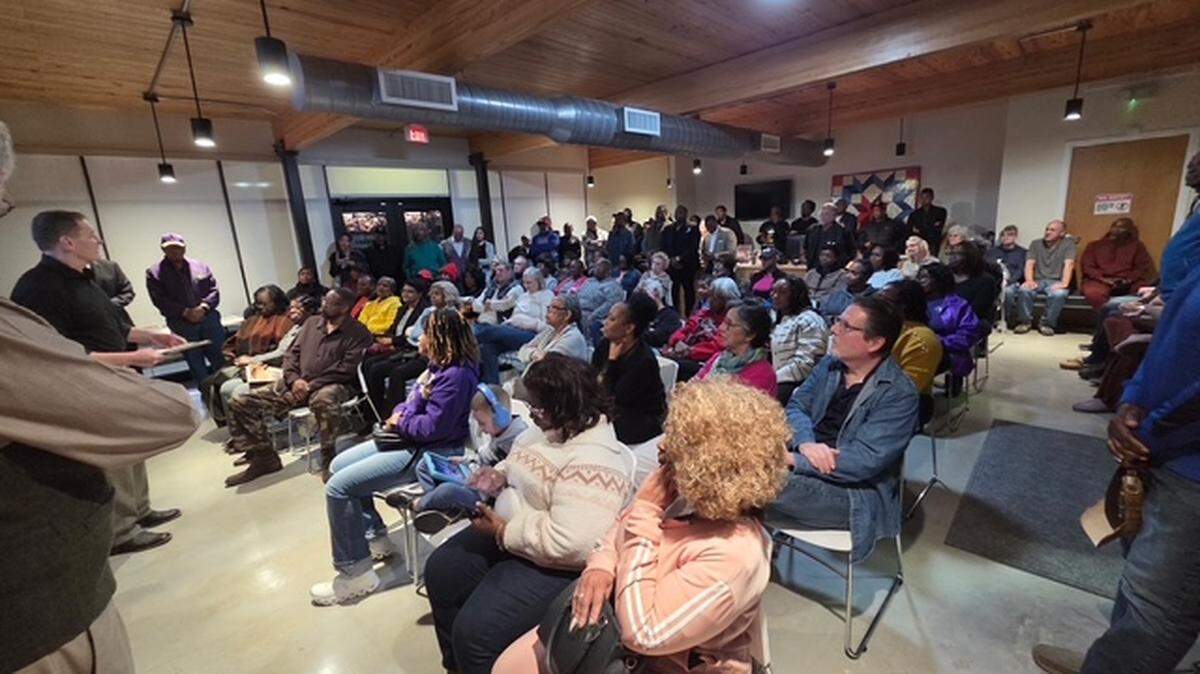
In February, the Mansfield Historical Society met at the Man House Museum, 604 W. Broad St., attended by over 100 people. The purpose was to provide historical education on the 1956 event and gather community feedback on plans for the landmark.
The goal is to have the statue completed by next summer. The next steps will be to finalize the concept, determine the budget, and outline how people can donate to it.
Mansfield’s Mayor Michael Evans said he didn’t know what to expect from the meeting at Man House. The level of emotion was so intense that people cried with happiness as they said it was finally time to reflect on the event, Evans said.
Last month, Tiffanie Spencer was hired as the Mansfield school district’s first Black superintendent, an achievement Evans noted as evidence of the progress seen in Mansfield and across the country.
“You got the first African American superintendent, Dr. Tiffany Spencer, so you see a culmination of all of that, where the entire community, all different ethnicities and from different cultural backgrounds, coming together, studying together, learning together, and building what is not only Mansfield, but what makes our nation great and it started here in Mansfield, and this is significant,” Evans said.
This story was originally published March 5, 2026 at 12:50 PM.