Denton destroyed a Black neighborhood 105 years ago. Echos reverberate today
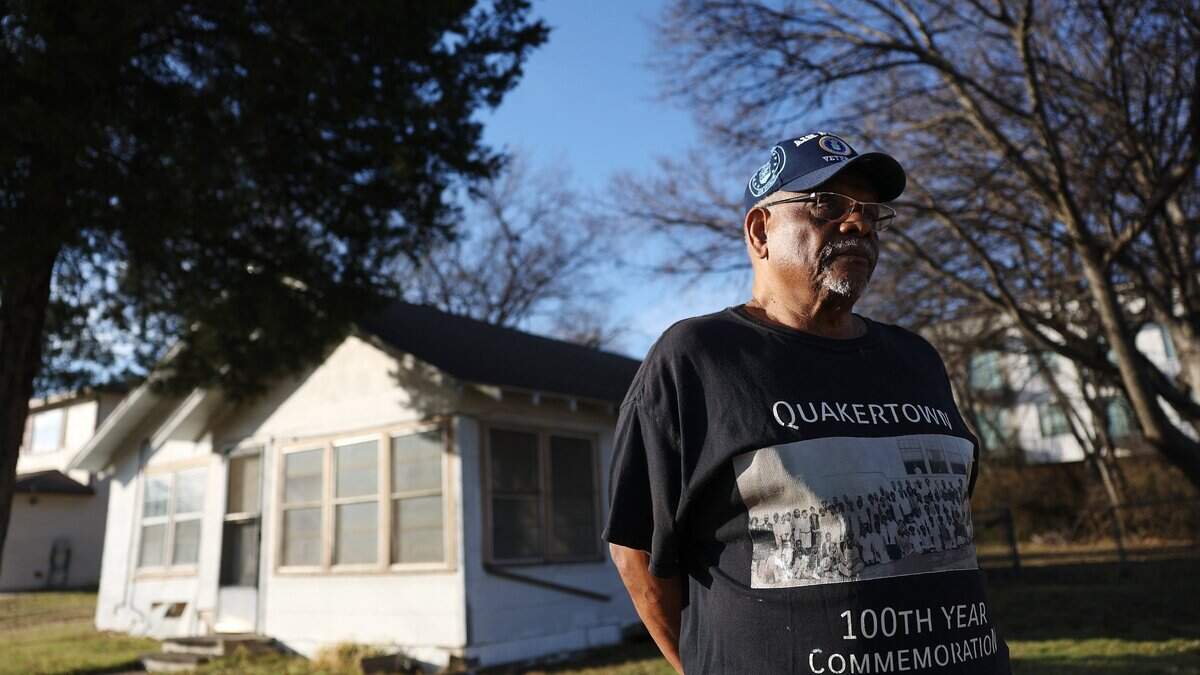
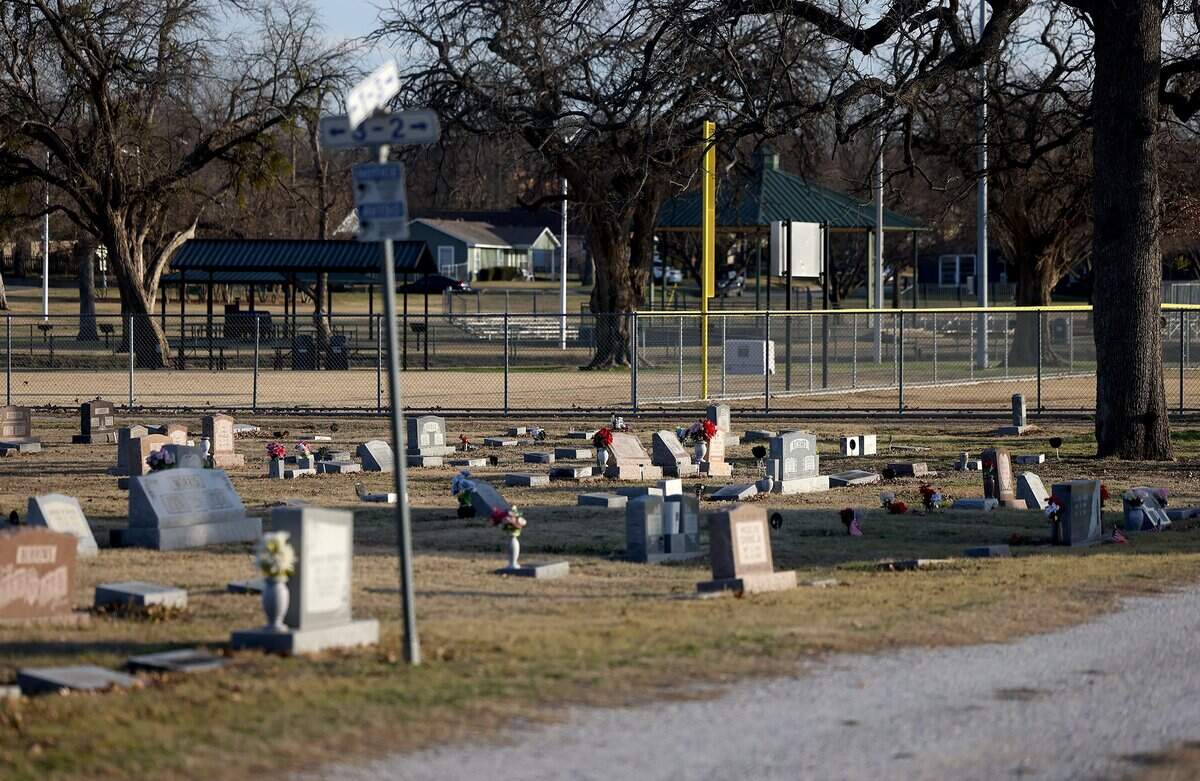
The Rev. Reginald Logan, 78, stands on East Prairie Street next to Oakwood Cemetery in southeast Denton on a Thursday afternoon. He leans against a black fence on the north side of the cemetery as he scans the cut grass and headstones.
As a child, the cemetery was his park. There, he and his friends played football and hide-and-seek and scared people who walked through. His grandfather, Lloyd Logan Sr., is buried on the south side of the cemetery. Logan still lives in his childhood home, just a few yards west of the cemetery.
Logan wears a hat identifying him as an Air Force veteran. His black shirt features a picture of students from the Fred Moore School and commemorates the 100th anniversary of Quakertown. The school, named after a longtime principal, was the only Black high school in Denton County until segregation ended in 1967. It was originally named the Frederick Douglass Colored School and was located in a downtown Black neighborhood called Quakertown, which was uprooted by a bond election for a park.
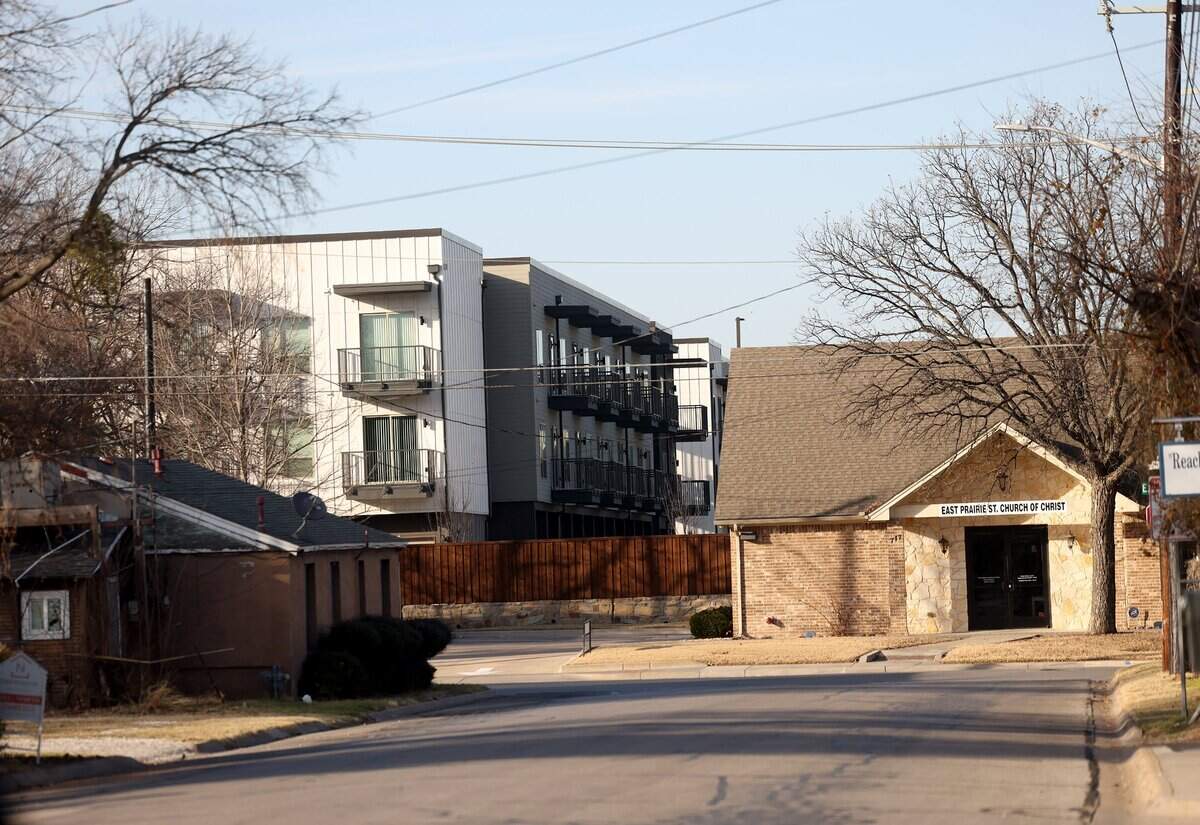
Logan cherishes southeast Denton, but is concerned about its future as development accelerates. He and others first took note in 2017 when walls went up behind the homes on East Prairie Street, and a new apartment complex was built.
“That woke us up, that let us know something had happened when the cemetery stopped at the apartment,” Logan said.
The 326-unit apartment complex exemplifies what some Black residents say is a longstanding pattern of pricing poor and working-class Black people out of southeast Denton. They’re calling on the city to help maintain housing affordability in the area, to help current homeowners stay in their homes, and prevent further displacement.
And while the situation is different, the idea of southeast Denton being gentrified reminds some of an unflattering piece of local history when the thriving Black community of Quakertown in downtown Denton was purposely displaced in 1921 in a city bond election to create a park on the site.
Memories of what happened to Quakertown have also resurfaced because the lease for the land on which the Denton Woman’s Club Building - later built on the site of the park that replaced Quakertown - is up for renewal.
“Since we have been so fractured from our ancestors going back to 1921, and to remember what we lost then, we do not want to lose again for the next generation here in southeast Denton,” Logan said.
In response to residents’ concerns about southeast Denton and the history of Quakertown, Mayor Gerard Hudspeth said the city has the opportunity to create a model for how cities handle racial issues as they learn from their past, build trust in the present, and work toward the future.
Outsiders ‘still Looking in’
Southeast Denton, long regarded as a foundation of the city’s cultural identity, faces challenges as generational trauma leaves many residents feeling disconnected from Denton’s core community, according to Councilwoman Vicki Byrd, who represents the area. She says the sentiment persists even as the city tries to respond to changing demographics and development.
“I think that a lot of them over there still feel like they’re the outsiders, and they’re still looking in,” Byrd said.
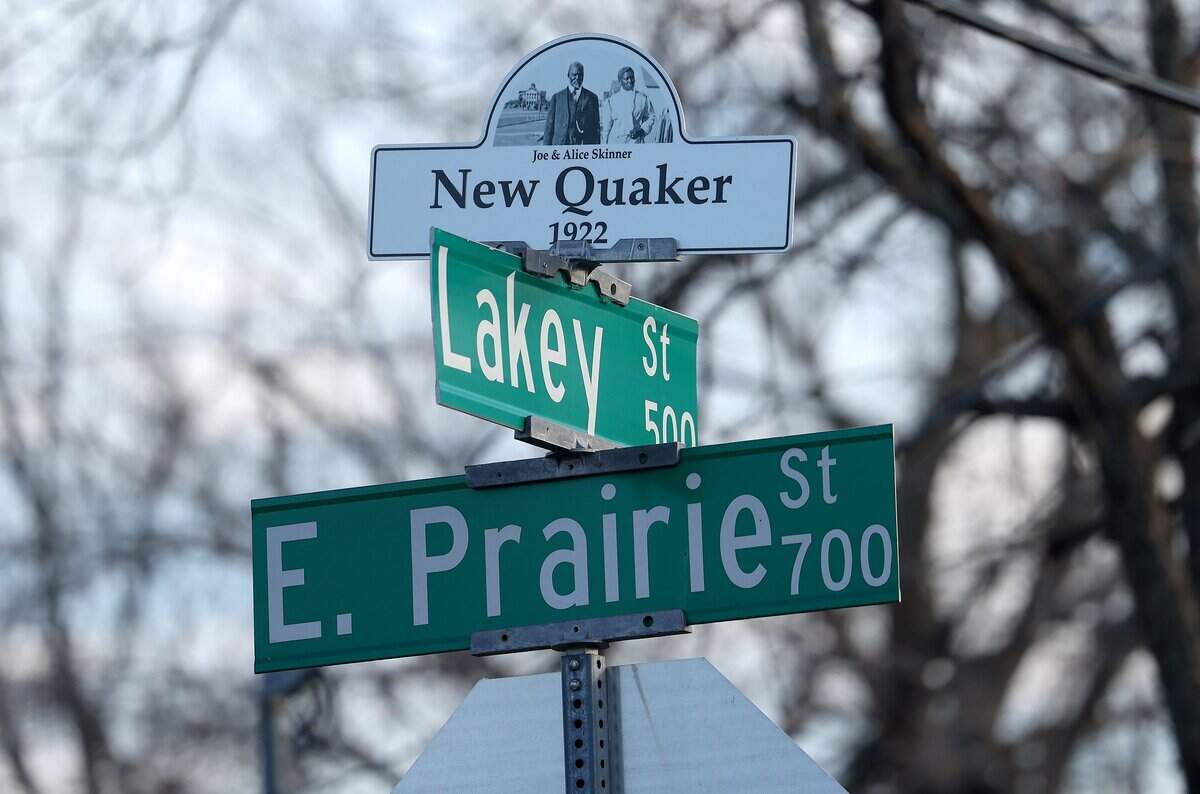
Southeast Denton, covering about 600 acres, comprises six subdivisions: Solomon Hill, New Quaker, Freedman Town, Fred Moore School, Lincoln Park, and Willow Creek. Its population is 28% Hispanic, 30% Black, and 36% white. While the rest of Denton has seen population growth, southeast Denton saw a 3% decline from 2011 to 2021, from 3,367 to 3,251 people, according to the Census.
The median home value in southeast Denton is $207,600, 19% lower than the citywide median of $257,500. Southeast Denton has over 60 acres of private land and nine acres of public land available for development.
The cheaper land costs, available vacant parcels, and its proximity to downtown Denton make southeast Denton attractive to developers.
One of the new developments is The Railyard Modern Living apartments at 650 E. Sycamore St. It is a three-story building with about 320 units and 448 parking spaces on about 9 acres. Phase one of the project was completed last year and had its opening ceremony in January.
A second phase will be on the north side of East Sycamore Street and is in development review. It will contain 227 units and 356 parking spaces.
In a statement sent to the Star-Telegram, Lang Partners, the developer for The Railyard Modern Living, says the company was in constant communication with the neighborhood association through a liaison hired by the company. The main complaints the company heard were rezoning, which happened before Lang Partners purchased the property, and affordability, which the company hopes to address in the future.
Logan, the longtime southeast Denton resident, said he and the Southeast Denton Neighborhood Association, of which he is a member, would have opposed the development if the community had known about the plans for the land.
Some projects, though, are being built to help offset gentrification and provide affordable housing.
Habitat for Humanity of Denton County bought eight acres of land between 2011 and 2015 to build over 30 homes in southeast Denton for a new housing development called “Habitat Village.”
Troy Greisen, chief executive officer of Habitat for Humanity of Denton County, explained that building costs are high and finding affordable vacant lots in Denton County has become increasingly difficult. As a result, when the chance arose to buy vacant land, the organization moved forward.
“Across Denton County, not just the town of Denton, ... finding empty lots to build homes on is nearly impossible,” Greisen said.
The new housing development will be between Duncan Street and Hill Street and along Smith Street. Habitat for Humanity will raise the $2.1 million needed for site preparation and installation of utilities and infrastructure through a capital campaign. This includes money for streets, sidewalks, utilities, drainage systems, and more. Eligibility to live in the development is open to those who don’t own a home or who live in inadequate housing.
Applicants must also be willing to partner with the organization by volunteering 350-400 “sweat equity” hours to build their home. Applicants must meet HUD income guidelines. For instance, a family of four cannot make less than $26,700 or more than $53,400 a year. The development will be finished within the next five years, Greisen said.
2040 Comprehensive Plan addresses preservation
The increase in development, concerns about gentrification, and the need to improve trust prompted the Southeast Denton Neighborhood Association and the city to work together on the 2040 Comprehensive Plan, a planning document that covers future land-use ideas, policies, and goals for the whole city. Three areas in the city were identified for addressing challenges and preserving and enhancing the character of distinct areas: Downtown, northeast Denton, and southeast Denton.
The Southeast Denton Plan, a part of the 2040 Comprehensive Plan, involved an 18-month community engagement process and was adopted in July 2024. Action items include a “live-work” overlay district connecting businesses to single-family homes, preservation of historic landmarks and conservation districts, park upgrades, and improved pedestrian and bicycle safety at intersections. To date, the city has helped the southeast Denton community apply for landmark grants and amended barriers to home-based businesses, such as expanding hours of operation for family home daycares or allowances for outdoor storage to not limit types of businesses, according to a Southeast Denton Area Plan dashboard.
The plan’s goals have timelines from one to 10 years for completion.
On April 8, the Denton Planning and Zoning Commission reviewed an agenda item to add three new overlay districts – Southeast Denton Residential Overlay, the Southeast Denton Height Overlay District and the Southeast Denton Live/Work Overlay District – “to protect the existing neighborhood character while supporting new nonresidential uses that are contextually appropriate and desired in certain areas,” according to the agenda. The overlay districts provide added guidelines over existing zoning regulations.
After public comments during which residents voiced confusion and lack of awareness of the city’s plans, the zoning commission voted 4-2 to have another round of community engagement efforts to better inform residents and for Denton’s Development Services team to make changes to the plans. In a May 27 meeting, the commission gave its final approval of the Southeast Denton overlay districts with a revision to extend the hours businesses may operate in the live/work overlay district.
The Denton city council voted June 16 to approve all three of the Southeast Denton overlay districts with the extended hours of operation to be indoors for the live/work overlay district.
Donald McDade, a former planning and zoning commissioner, said during the April meeting that many residents lack trust in the city, despite the prior efforts at community engagement, which happened over an 18-month period.
“You cannot rebuild something that was never there in the first place,” McDade said. “Southeast Denton has been around for 100 years or something, and it takes until 2026 to build trust, that’s embarrassing.”
“They ran us out of Quakertown”
Quakertown was a thriving Black community in downtown Denton that was displaced by a 1921 city bond election to create a park in its place. A 99-year lease between the city and the Denton Woman’s Club, which has a building in the park that replaced Quakertown, expires this year. The lease expiration has prompted some in the community to urge the city to find ways to acknowledge past harms and the barriers still present to Black communities today. On May 5, the city of Denton renewed the lease for an annual rent of $1,320 for 20-years with two 10-year options for renewal, totaling a potential 40-year term.
The historical roots of southeast Denton trace back to 1870 with the establishment of Freedmen Town, one of Denton’s first Black settlements near what today is the Martin Luther King Jr. Recreation Center. In the 1880s, new railroads brought economic growth and enforced segregation, physically defining the area’s boundaries and leading Black families to purchase land downtown by the 1890s, ultimately founding Quakertown.
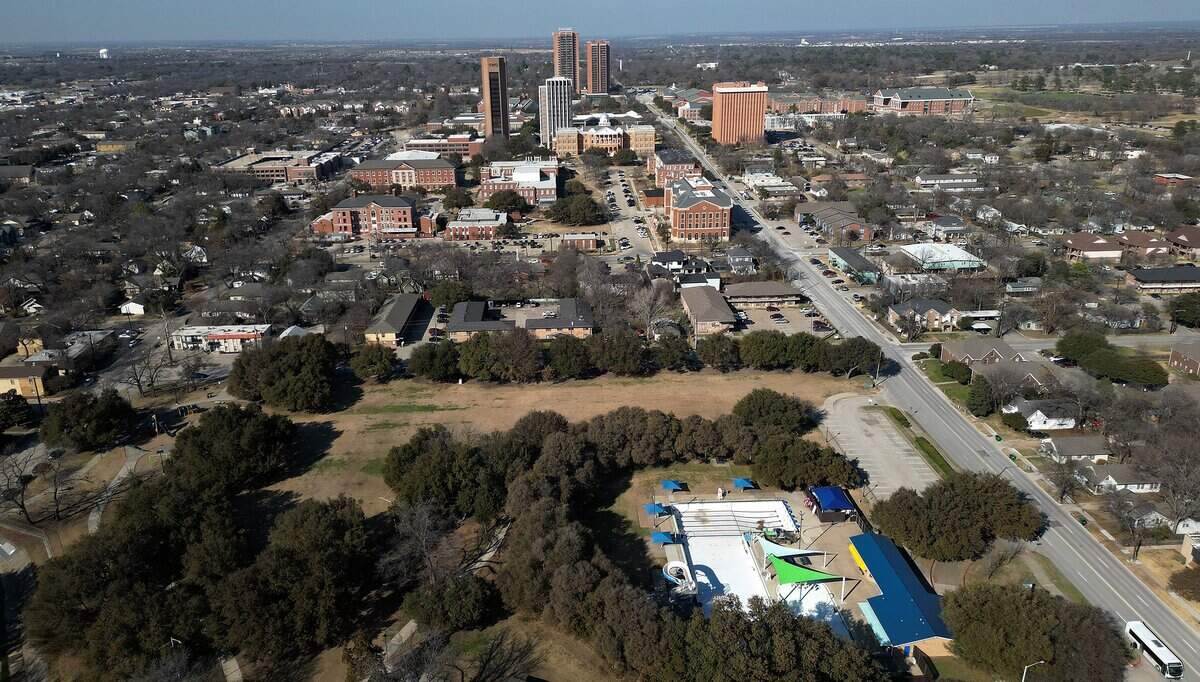
Quakertown bordered Withers Street to the north, McKinney Street to the south, Vine Street to the east, and Oakland Avenue to the west. It was south of the then-segregated College of Industrial Arts, now Texas Woman's University. Black families found the area attractive due to its proximity to downtown and jobs, as well as the opening of Frederick Douglass Colored School in Quakertown in 1878.
Quakertown was a Black middle-class community with a doctor, grocery store, drug store, restaurants and other businesses. The night before classes began in 1913, the Douglass schoolhouse was burned down. The cause remained unknown. At the time, Black residents believed it was retaliation by white residents. The school was moved to southeast Denton.
Kim Cupit, curator of collections for the Denton County Office of History & Culture, notes that the creation of Texas Woman’s University played a pivotal role in the displacement of Quakertown.
The school’s leadership detested its proximity to a Black neighborhood, which they believed would hinder its expansion, Cupit said. They also didn’t like that some of the school’s white female students had to walk through Quakertown to go to the school, she said. The Denton City Federation of Women’s Clubs, a chapter of the national Texas Federation of Women's Clubs, was founded on civic, educational, and beautification efforts and had spent years searching for a location to build a park.
Some Black Quakertown residents heard about what was happening and began leaving for southeast Denton or leaving Denton completely. Logan’s great-grandfather and his sons learned that their property could be affected and left for San Bernardino, California, in 1918.
In January 1921, a petition was presented to the city to hold a $75,000 bond election to purchase Quakertown and build a park. The vote was scheduled for April. Eight months after women gained the right to vote, Women’s Club members used their new political influence. They went door to door, spoke with their husbands, who were community leaders, and gained support for the park.
On April 5, 1921, a vote of 367 to 240 decided Quakertown’s fate. Over a month before the Tulsa Race Massacre, Denton residents legally took a step that would destroy a Black community. The history of Quakertown’s disappearance ended up being forgotten by many, according to Cupit.
“Everything was done so quietly, so under the table, and that’s why the existence of Quakertown, and what happened to Quakertown, has been quiet for decades, because it didn't have that kind of big, huge event that could have turned deadly,” Cupit said.
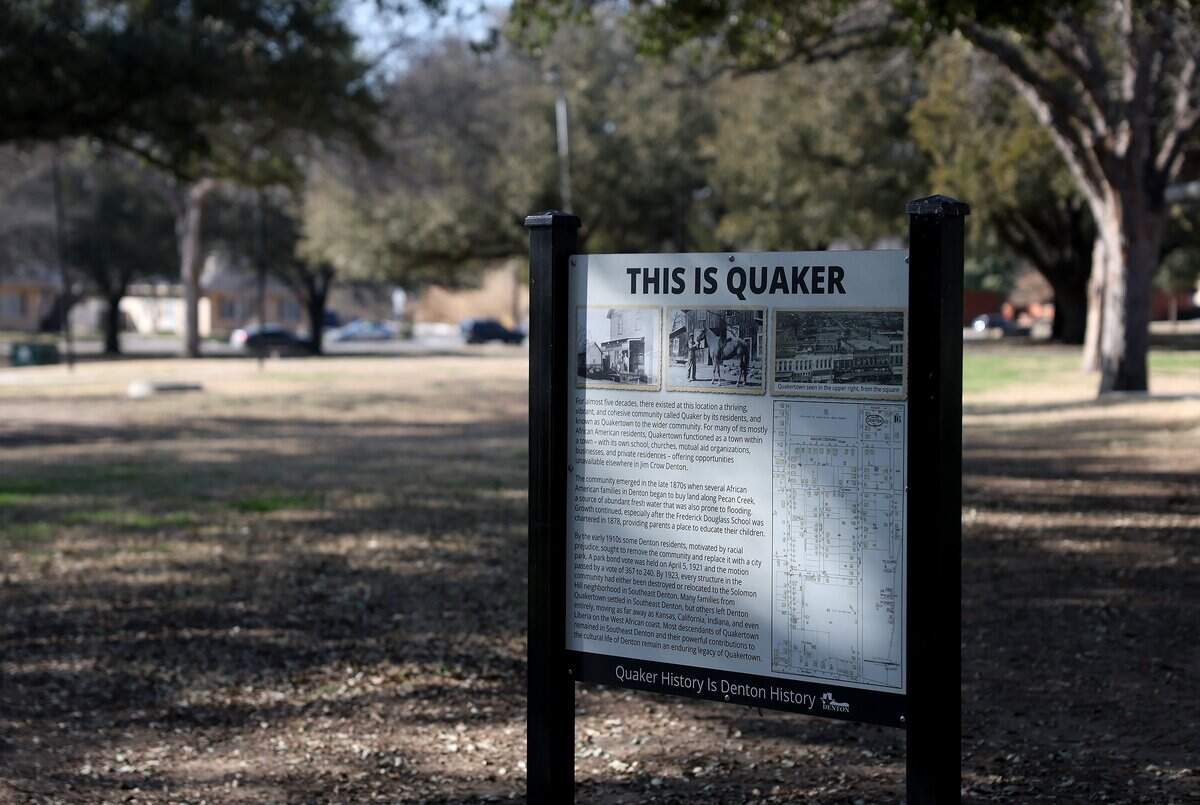
A committee was formed to purchase homeowners' properties at a reasonable price. The first homes were purchased in October 1921. Over 60 families were displaced, many of whom were moved to Solomon Hill in southeast Denton, while others moved from the area entirely.
By 1923, all the homes and residents of Quakertown were gone. In 1927, the city leased part of the Quakertown land in a 99-year agreement with the Women’s Club for $1 for the entire duration, and the next year, the Denton Women’s Club building was the first structure erected in the park. The lease ends in August 2026.
The land on which Quakertown once stood was called City or Central Park until it was renamed Civic Center Park in 1964 as part of a bond package for the Civic Center Municipal Complex. In 2007, Denton City Council officially changed the park name to Quakertown Park, to honor the community.
Quakertown Park now has multiple structures and uses, including the Denton Senior Center, Civic Center Pool, Denton Civic Center, the Emily Fowler Library, and Denton City Hall.
The Frederick Douglass Colored School, which was relocated to Solomon Hill, was rebuilt and renamed Fred Moore High School in honor of the school’s principal, who worked there for 30 years.
An effort to improve race relations in Denton
During the height of the civil rights movement in the ‘60s, a group of Black and white mothers wanted to improve race relations in Denton. The Denton Christian Women’s Interracial Fellowship, later renamed the Denton Women’s Interracial Fellowship, was founded. The members organized events such as potluck dinners for Black and white families to interact, tutoring program for students and other efforts to improve southeast Denton. The Fellowship dissolved in the ‘70s.
Linnie McAdams, 88, was one of the founding members of the Fellowship. She grew up in the metroplex, came to Denton in 1957, graduated from the University of North Texas and Texas Woman’s University, and worked as an ironer and housekeeper until she was hired by the Office of Civil Defense.
She became Denton’s second African American city council member, helped open the Martin Luther King Recreation Center, and led the way for the Denton Affordable Housing Corp., an organization that creates affordable housing in Denton County.
McAdams said residents have not had a true reckoning of Denton’s past when it comes to race relations and don’t know how to speak about it.
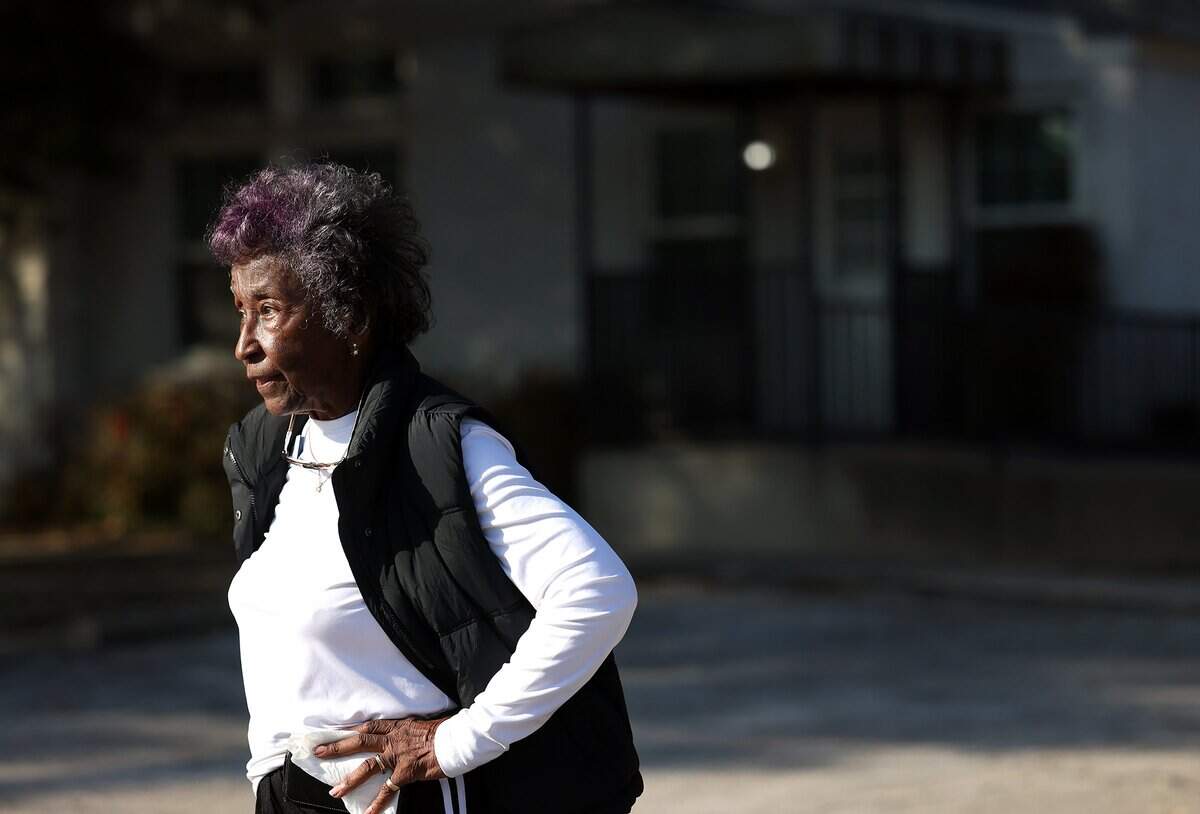
“Why can't we just be honest and talk about it,” McAdams said. “ And that's where we're going so wrong, is that we keep trying to bury things and cover them up.”
King Hollis is among the many people who want the story of Quakertown remembered.
Born in Denton but raised in Dallas, he spent his summers in Denton with his grandmother. He co-directed the film “Quakertown, USA,” about the forced removal of Quakertown residents and their relocation to southeast Denton. It was screened during the Denton Black Film Festival in January.
In 2023, the city provided $250,000 in funding for the film, which was a step toward reckoning with its past, Hollis said. He wanted to demonstrate in the film, from the burning of the Douglass schoolhouse to the forced removal of Quakertown residents, that the Black community of Denton was resilient and always found a way to rebuild.
The pain of what happened to Quakertown was shared among residents, including Hollis’ grandmother, who, when he was a child, would say to him, “They ran us out of Quakertown.”
Remembering the past, and honoring the truth
The Railyard Modern Living apartments tower over Reginald Logan’s grandparents’ home on East Prairie Street. The home’s foundation is sinking, and the paint is peeling. It was built in 1921, when they were forced to leave Quakertown and moved to southeast Denton.
Logan recalls graduating from high school in 1966. He was later stationed at Norton Air Force Base in San Bernardino, California, where he met his great-uncles, John and Arthur Logan, who had left Quakertown over four decades earlier. He had only heard stories about his uncles before, and seeing them in person was eye-opening.
Years ago, he had taken a trip to Tulsa to see how the city remembered the 1921 massacre through monuments, placards, and the Greenwood Rising Black Wall Street History Center. He was mesmerized. Just as Tulsa now remembers its past, he wants to make sure future generations know the history of what happened in Quakertown.
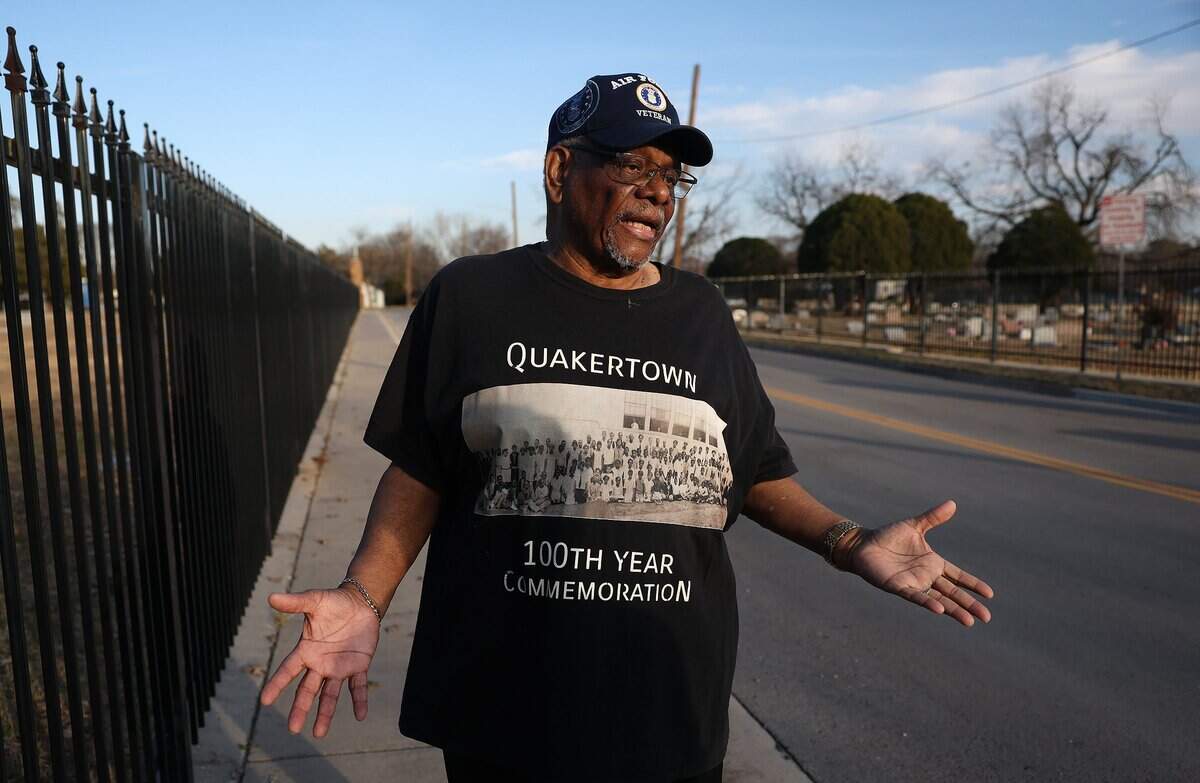
“Put up something up here that actually tells the story,” Logan said. “So when people come here, they don’t have to ask a lot of questions, they’ll see what they need to see.”
Efforts to remember Quakertown are reflected in the Design Downtown Denton Plan, a blueprint to enhance Denton’s downtown over the next 10 years, adopted on Sept. 17, 2024. It was developed over a year with input from thousands of Denton residents. The plan states that the history of Quakertown should “be well-represented in the future plans for Quakertown Park to encourage reflection on the past and help inform a more equitable future.”
A variety of recommendations to honor Quakertown were suggested, including building monuments with names of Quakertown residents who were displaced, a permanent exhibit to display artifacts and documents, an annual festival and informational signs in the park to tell an authentic story of Quakertown.
Denton in recent years faced protests with thousands rallying for police accountability after the death of George Floyd. The same month, a Confederate statue, erected in 1918 and funded by the Daughters of the Confederacy, which stood at the Denton County Courthouse lawn, was removed. It has since been placed in Denton County Courthouse-on-the-Square Museum.
Mayor Hudspeth says that, through these challenges, Denton has had a unique opportunity to lead on race relations by showing other cities how to serve their communities and move forward. This includes working with southeast Denton residents to build trust, going door to door to talk about what’s happening in their community, and finding ways to properly remember the past harms of Quakertown.
“I think Denton could be a gold standard for how communities similarly situated handle race relation issues, because I think we’ve done a great job here in the city of Denton,” Hudspeth said.
June Berry, president of the Denton City Federation of Women’s Clubs, says the group is willing to work with those who would like to place a marker outside the club’s building or host an educational series inside the building, teaching people about the history of Quakertown Park.
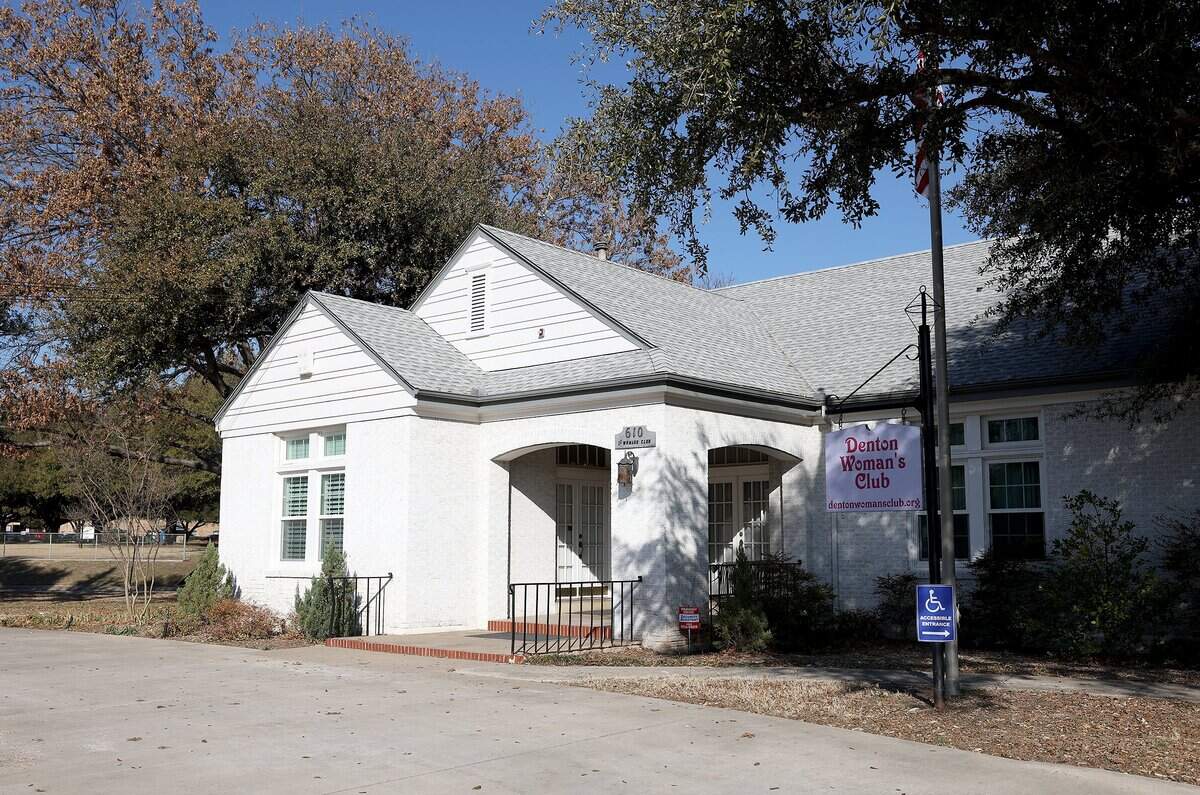
“We all feel an obligation to the community, I think that’s something that we share and that we are proud of,” Berry said. “Having this building that we can provide and the building itself is a great community resource because of all of the meetings that can happen there.”
Others like McAdams, the former council member, continue the push for truth and remembrance. On a February afternoon, McAdams stood in front of a historic landmark in Quakertown Park, reflecting on what has — and hasn’t — been acknowledged.
The landmark describes the history of Quakertown, its disappearance, and how its descendants still contribute to Denton today. But for McAdams, the landmark doesn’t tell the full truth. She remembers that when it and other historical signs were being developed, some residents didn’t want to tie Quakertown with the forcible removal of Black people or how it was considered dangerous to have white college women walk through a Black neighborhood.
McAdams says a sign should be posted at the Woman’s Club building to help people learn how it was built and how far the city has come since then. Until then, she wants the city and its residents to be honest about the past.
“I mean mistakes you’ve made in the past, you will make them again if you forget about them,” McAdams said.