
Climate change helps puts Greenland at center of power fight, UTA professor says
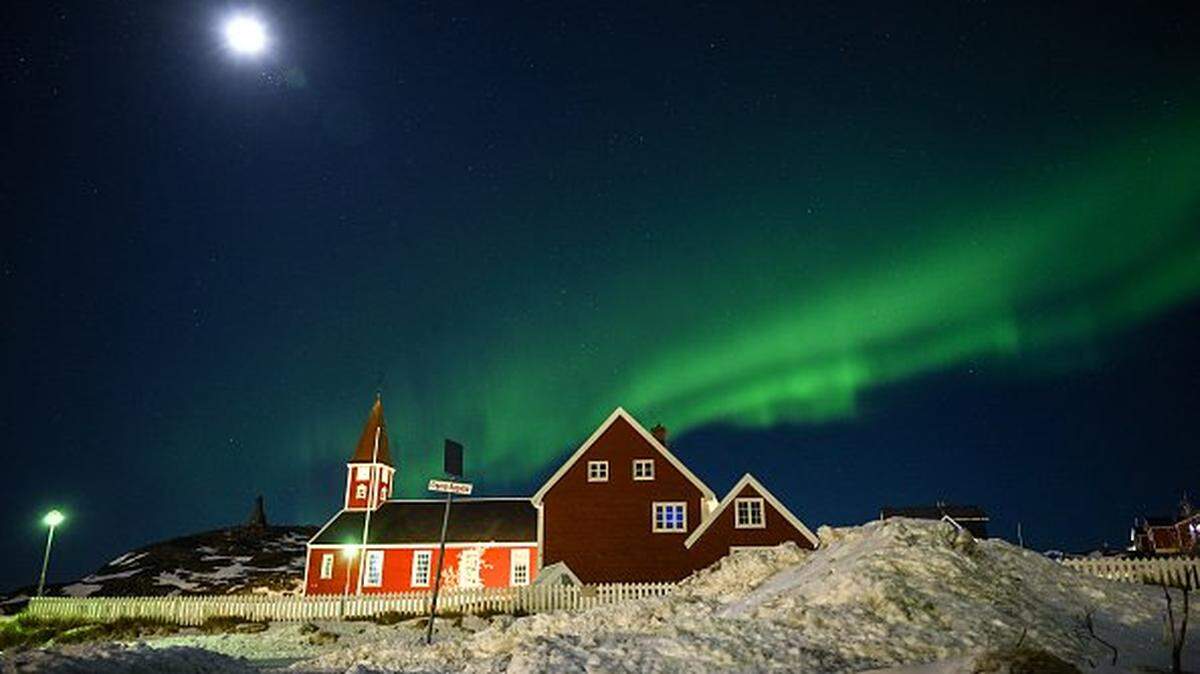
For one of the few times in the history of the remote arctic nation of roughly 56,000 inhabitants, Greenland is making international headlines. And to truly understand why it has suddenly become a geopolitical flashpoint, it helps to understand the effects of climate warming.
President Donald Trump has recently ramped up his bid to take control of Greenland, calling it critical to national security as the U.S. jockeys for power with China and Russia.
Part of that stems from Greenland’s position near the North Pole, a strategically important location for missile defense. But warmer seas have also resulted in Greenland’s waters becoming more navigable, boosting its naval importance.
At the same time, Greenland’s ice sheet has melted rapidly over the past 30 years, arguably making it easier to mine rare and valuable minerals that lie below the surface, which are needed for technological development.
Nathan Brown, an assistant professor of earth and environmental sciences at the University of Texas at Arlington, said this sort of change in Greenland’s topography has happened before.
Brown was part of a research team that released findings this month showing Greenland’s massive Prudhoe Dome ice cap completely melted during the Neolithic period, the result of climate change, and Brown said it could happen again if things like limits on greenhouse gases aren’t put into place in time to stem the tide.
“We saw 7,000 years ago, which is relatively recent geologically speaking, this Prudhoe Dome mass of ice was absent,” said Brown. “And that was a period in the climate past where it was only a few degrees, 3 to 5 degrees warmer than average. And we’re expected to hit that mark by about 2100.”
When asked about Greenland’s minerals, Brown, who admittedly doesn’t specialize in mining geology, agreed with the experts who say it will be tough to exploit whatever wealth is underneath the ground.
“You’ve seen the ice sheet retreat, but what might not be obvious is, a landscape that has undergone that dramatic change in the past decade is also really unstable in unforeseen ways.”
For example, Brown said receding glaciers leave behind U-shaped valleys walled on either side by steep cliffs. These cliffs are prone to landslides, creating safety issues. Those issues are amplified when the landslides happen on the coast, which can cause tsunamis.
Furthermore, Brown said, as the permafrost melts, Greenland’s ground will likely shift, making things like roads and runways buckled and unusable. He attributed that in part to a phenomenon known as isostatic rebound.
“If you imagine when you get up in the morning, and you’re sitting on your bed, and then you stand up. You look where you were sitting and the mattress rises up until it’s flat again, and it takes a little while. The same thing happens with the continental crust. If you put a massive ice sheet on top of it and then that ice sheet melts, there’ll be an extended period of time where the land surface rises up because it’s not weighted down anymore. That is a surprisingly strong effect, especially at first.”
Brown went on to say the rising land surface coupled with rising seas due to the melting ice sheet will make it difficult to construct harbors on Greenland’s coast. In other words, geological and climate changes will present immense challenges for those looking to build mining infrastructure.
“Yes, there are a lot of rich ore bodies in southern Greenland. But is it straightforward to extract them? From a natural science perspective, not at all,” Brown said.
Brown’s primary worry is that the climate will continue to warm and the ice sheet in Greenland will continue to melt at its current rate, which could lead to a catastrophic rise in sea levels.
“It’s not at all certain that the entire Greenland Ice Sheet will melt because of what we’ve done up until today. The choices we make to limit our emissions have significant bearing on how much of that ice sheet will melt and what the resulting sea level rise will look like.”
That rise could be as little as two feet or as much as 24 feet.
“Those are big differences,” said Brown. “If you live in Miami, you care about that difference. So, this is where I think we need to focus the conversation: How as a society can we minimize the amount of ice that we melt and the sea level rise that comes from that?”
Meanwhile, Trump is continuing his push to wrest Greenland from Denmark, which has long held a territorial claim over the country. This is in direct opposition to what the people of Greenland say they want and what the United States’ allies in Europe want.