
‘A concrete jungle?’: Uproar in rural North Texas over fate of 2000-acre ranch

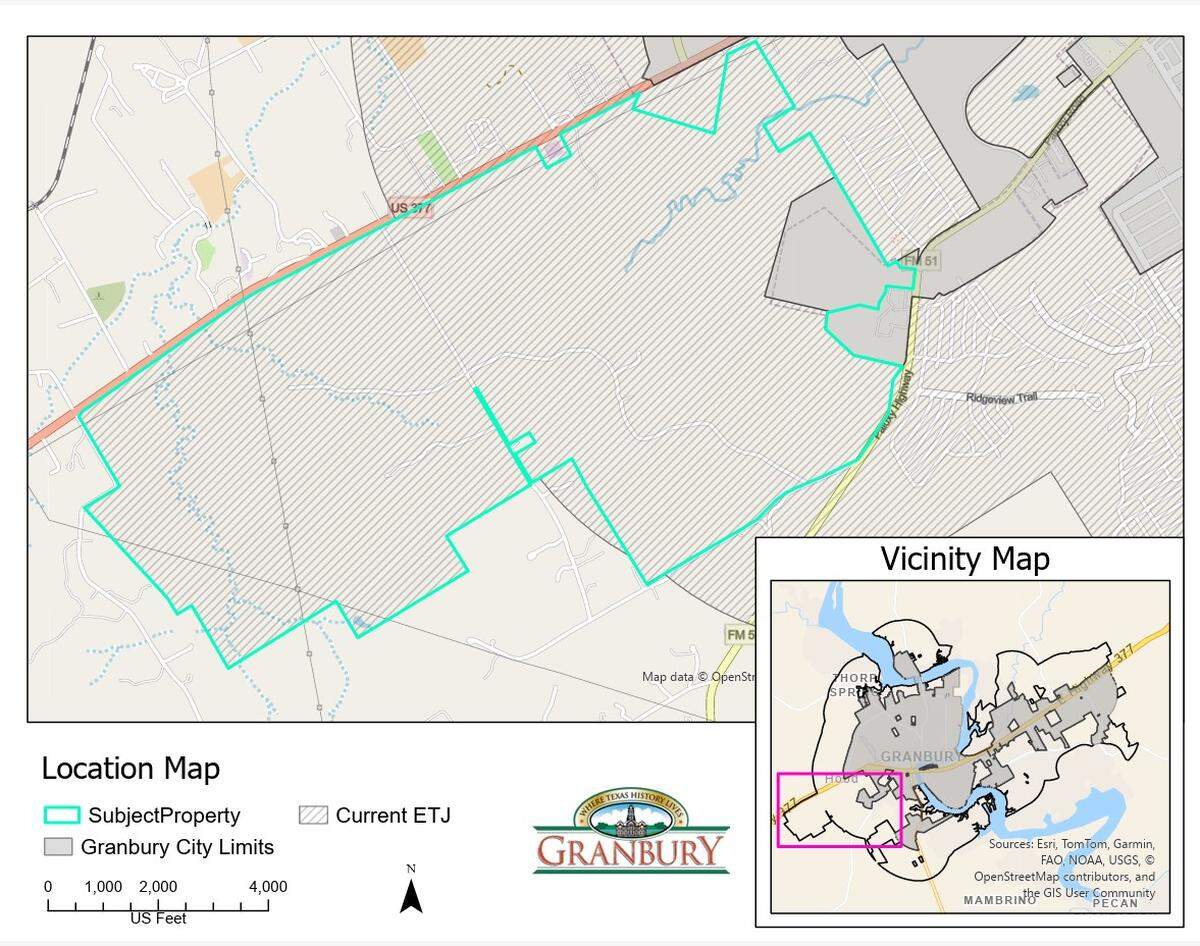
An overflow crowd that spilled out in to the hallway pleaded passionately with the Granbury City Council this week to hold off annexing more than 2,000 acres of undeveloped land just west of the city, fearing developers will build another data center or other sprawling industry.
But the council voted unanimously to approve the request from Granbury Reddy Land Partners to annex the area known as Knox Ranch, a move that could “substantially” boost tax revenue for the city of 13,000.
The controversy was the latest flash point in rural Hood County between local governments’ efforts to grow their communities economically and their citizens who want to preserve a rural quality of life. Granbury leaders stressed repeatedly during Tuesday’s contentious public hearing that there have been no discussions with the developers about plans for the land.
That did little to assuage concerns among residents, who have seen it before with a Bitcoin mining plant 10 miles to the south and a recently proposed data center near Dinosaur Valley State Park.
“What I want to know is how does the city of Granbury goes from the Celebration Capital of Texas to a concrete jungle?” resident Shawna Whalen asked the City Council. “Look at this room. We don’t want industrialization.”
The 2,090 acres annexed by the city straddles Meadow Wood Road, south of U.S. 377 and north of Paluxy Highway.
Before the public hearing and council vote, city attorney Jeremy Sorelle said that in 2019, the Legislature took away cities’ authority to involuntarily annex land, meaning property owners have to request annexation.
Granbury can now control the zoning and type of development on the land, once it is annexed, he said.
The property owner would have to tell the city if there is a request to build 5,000 homes or industry that would support the airport, Sorelle said.
“Today, you need to consider the best interests of growing the city, being able to control our corridors in and out and having some sort of controls that the county is not afforded so that we can assure that whatever goes in there is in the best interest of the community…,” he said.
“I understand there has been a lot of speculation as to what may or may not go on that property, but what I can tell you and the council and the public is there is absolutely no application for development received by the city,” Sorelle said.
Most of the speakers told the council to hold off on voting on the annexation because there were concerns about increased water use and the potential for health risks if a data center or other industry was approved for the area.
Tina Brown, a Granbury resident who lives about a mile from the site, said, “It bothers me that you want to annex property before you know what you want to do with it.”
‘We don’t want data centers in our backyard’
Chris Paulsen, a rancher from Glen Rose, told council members that they need to be concerned about water use and that it shouldn’t be for a large industry, such as a data center or power plant.
“You’ve got all this tourism going on with the lake. We need to focus on people, not money,” Paulsen said as the audience applauded.
During the meeting, Mayor Jim Jarratt repeatedly admonished speakers to stay on the topic of annexation.
Another resident, Carolyn Reeves, said not knowing if the annexation would bring in commercial or residential development raises suspicion.
“We moved to the county for a reason,” Reeves said. “We want our space. We don’t want the city in our backyard. We don’t want businesses in our backyard. We don’t want data centers in our backyard.”
Tony Calloway spoke in favor of the annexation request, saying that people and businesses want to be in Texas.
“I’m saying to you that the city doesn’t do things for the hell of it. The council represents you.”
None of the council members asked questions or commented before the vote, but Jarratt said “I understand the passion, but we’re talking about raw land.”
This story was originally published January 10, 2026 at 10:37 AM.