
North Texas veteran helps keep skies safe with ‘revolutionary’ warfare system
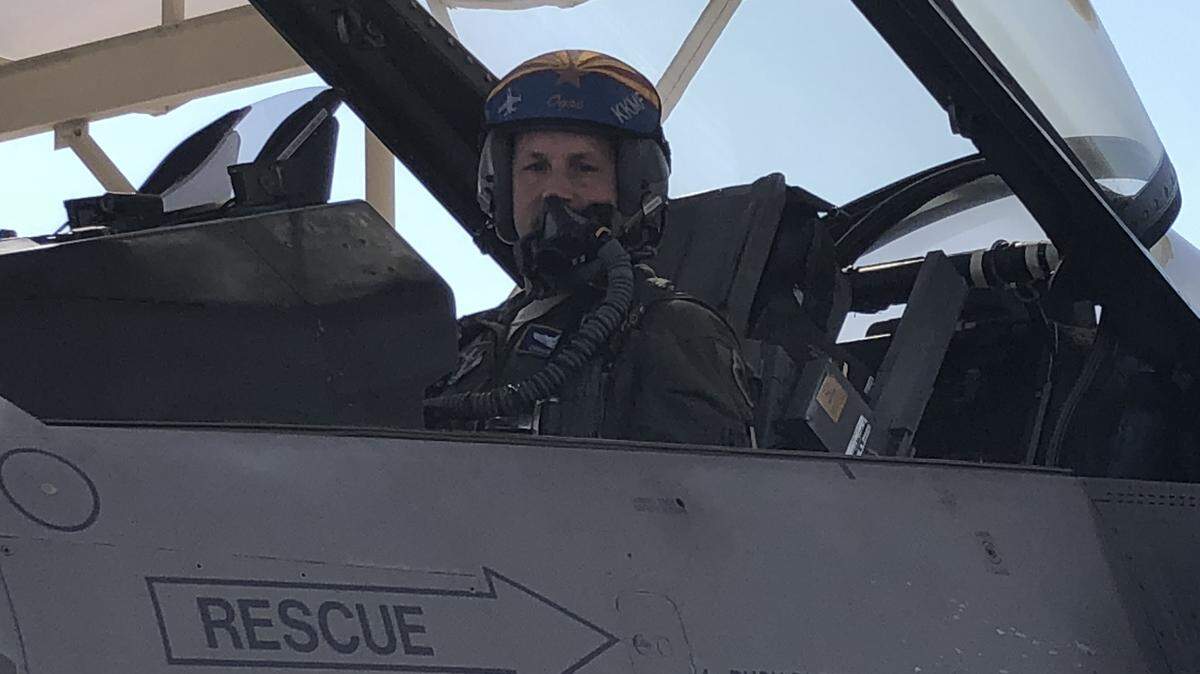
A childhood and career in the Air Force took Chuck Blank around the world. Now retired from the military and living in the Dallas-Fort Worth area, Blank is still striving to keep this country and its service members safe through his work at Northrop Grumman.
Blank was born in Japan while his father was serving in the Air Force overseas. Growing up, he spent time in places like Taiwan and Greece before the family returned stateside. Blank joined the Air Force himself in 1989 and entered flight training, where he was selected for the fighter pilot track.
For 30 years, Blank flew the Lockheed Martin F-16, and he even had a stint flying the F/A-18 Hornet — the aircraft Top Gun pilots fly — as an exchange instructor with the Navy.
In the mid 1990s, Blank was stationed in the Middle East, where he flew missions over Iraq to enforce no-fly zones when Saddam Hussein was still in power.
The jets Blank flew were equipped with what are called electronic countermeasures (ECM) pods, an electronic warfare apparatus attached to the bottom of the aircraft that jam radars and detect enemy threats.
It was, and is, life-saving technology that allows pilots to fly over hostile territory with better odds of success. But the ECMs Blank had were not perfect.
For one, they required pilots to perform complicated manual operations — like finding and pressing multiple buttons — all while in flight, and sometimes in the dark when, as Blank said, “you’ve got to do everything by feel and hope.”
Secondly, the older ECM pods were vulnerable to more sophisticated radar detection and guided missile technology.
That brings us to what Blank does today. He’s a business development manager for Virginia-based Northrop Grumman, which now offers a next-generation electronic warfare system for F-16s called the AN/ALQ-257 Integrated Viper Electronic Warfare Suite (IVEWS).
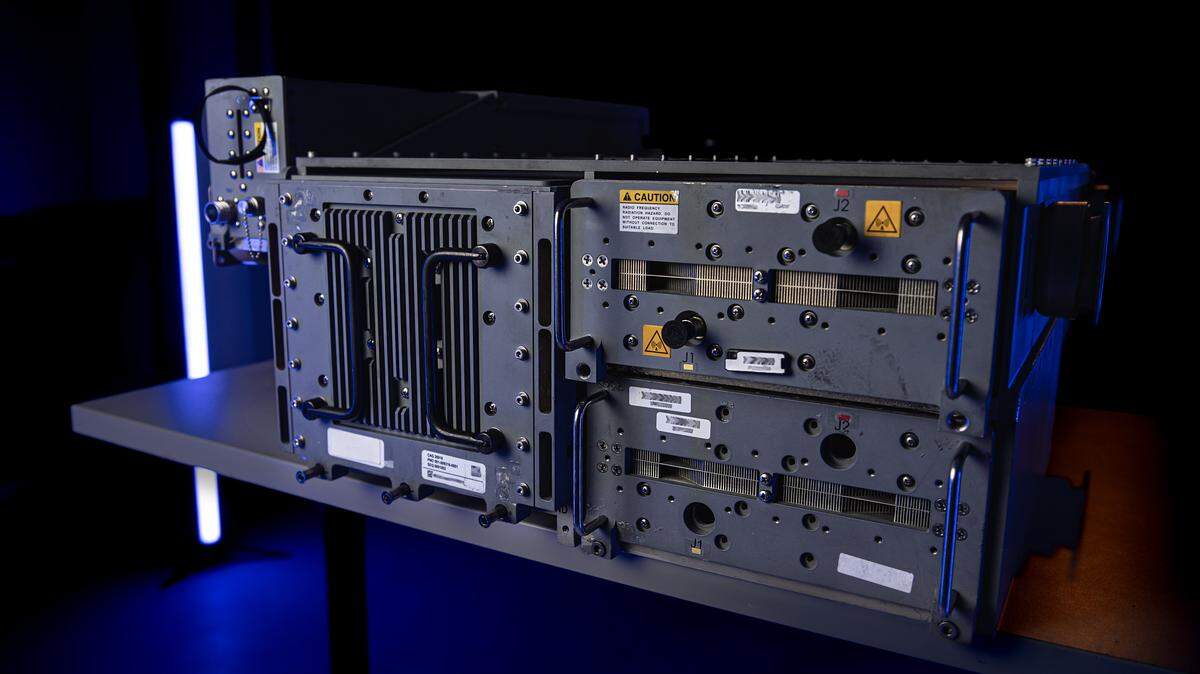
In his role, Blank sells the system to government clients, with the ability to speak to its effectiveness as one who has been in the air and under threat from enemy fire.
Unlike the ECMs Blank flew with, he said, the new system offers a broader spectrum of radio frequency protection, making the aircraft harder for air defense radars to detect, all while taking much of the manual workload off the pilots. The system is also better at identifying the exact nature of air defense threats and pinpointing their locations.
With previous electronic warfare systems, Blank said, fighter jets had a radar warning receiver and a radar jamming pod, but the two didn’t communicate well with each other. With this new technology, those systems are integrated.
The system processes the information picked up on F-16 radar detection antennas and passes it to other antennas that jam those radars, all without jamming the signals of friendly aircraft flying in the same formation, which Blank said was another problem with older systems.
“We can receive all of the threats, and we can jam threats all simultaneously,” Blank said. “And it is no interference to any of our wingmen, no interference to ourselves, and truly, that’s revolutionary.”
Congress allocated $187 million for the system in the budget reconciliation bill, and the project could receive more than $200 million more in funding in the 2026 fiscal year.
Blank said the project is fully funded, and the technology has performed incredibly well over more than 500 hours of flight testing, with a roughly 99.7% effectiveness rate. Northrop Grumman expects U.S. fighters will be flying with the new technology in the next 18 months. The technology can be retrofitted to older F-16 models and built into the newer models that Lockheed Martin produces at its Greenville, S.C., plant.
When asked what technology Northrop Grumman is working on for the Lockheed Martin F-35, which undergoes final assembly here in Fort Worth, Blank said he wasn’t authorized to discuss that. But he could say Northrop Grumman has someone on staff at the Fort Worth plant and that he visits there occasionally to discuss classified programs.
Along with their work locally for Lockheed Martin, Northrop Grumman operates a training center at Meacham Airport for the AC-208 Eliminator, a propeller-powered reconnaissance and ground attack aircraft with an airframe similar to that of a civilian model Cessna 208.
This story was originally published December 24, 2025 at 5:00 AM.