
Student pilots sue American Airlines for $36 million over racial discrimination
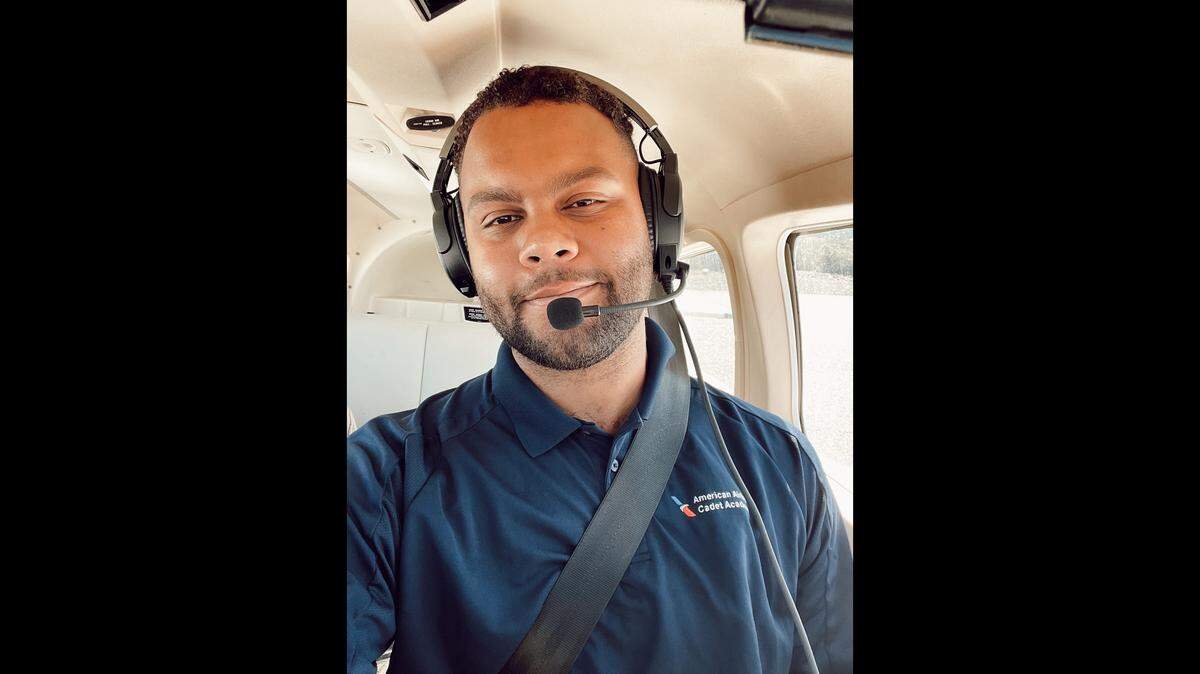
Becoming a pilot was Triston Sanderson’s childhood dream. But that dream came with challenges, and now a lawsuit against American Airlines and a flight training school.
Sanderson along with 17 other student pilots filed the lawsuit Tuesday against American Airlines, Coast Flight Training and Management, and American Airlines Federal Credit Union. The lawsuit says that the cadets were “deceived, discriminatorily targeted, and financially devastated by the American Airlines Cadet Academy.”
According to the lawsuit, “the defendants made false and misleading statements to eighteen student pilots ... and targeted the Cadets, all people of color, to induce them to attend a discriminatory pilot training academy.”
The cadets are seeking $36 million in damages for allegations of fraud, deceptive trade practices and civil rights violations, according to the lawsuit filed in U.S. District Court in California, where Coast Flight Training has its headquarters.
The federal lawsuit alleges that between 2018 and 2023 the American Airlines Cadet Academy at Coast Flight Training made false statements about a fast-track course through which students could become pilots within a year at an all-inclusive cost covered by a single loan.
The lawsuit alleges that American Airlines and the academy promised the students that they would fly five days a week, be paired with an American Airlines pilot mentor, receive an interview with American’s wholly owned regional carriers upon completion, and would be “well on [their] way to working at American Airlines.”
But the program did not deliver as advertised, with limited aircraft, infrequent training, few mentors, and costs and completion times exceeding what was promised, leaving none of the cadets finishing within the advertised time or budget, according to the lawsuit.

In a statement sent to the Star-Telegram regarding the lawsuit, American Airlines said, “To run the best airline in the world, we need the best and brightest people — and the American Airlines Cadet Academy is an important part of that mission. Through this program, we have sought to expand the pipeline of talented cadets from all over the country, many of whom now enjoy rewarding careers at American Airlines. We take seriously the concerns raised by this group of former cadets, but we believe the allegations are without merit.”
Coast Flight Training did not immediately respond to a request for comment.
Student’s experience
“My first flight was when I joined the military and I was heading to basic training, and that’s really where my jump with truly wanting to be a pilot started,” Sanderson said in a conversation with the Star-Telegram. “I’ve always had dreams of being a pilot when I was a kid and seeing flying in the air, and just had aspirations of one day being one.”
Sanderson said American Airlines stood out to him because he lived in the Dallas area, where the Fort Worth-based airline operates a major hub.
When he inquired about Coast Flight Training’s Dallas program, they “made it sound like a foolproof way to become a pilot in a streamlined process,” he said. He was told there were thousands of applicants and that the companies carefully hand-selected candidates they believed best fit the program and “would make an amazing pilot,” Sanderson said.
Sanderson said that about six months into the program, he realized it failed to live up to how it was advertised, including its promises about diversity.
As he made it further along, Sanderson noticed that people of color just weren’t in school as often. Eventually, almost every single person of color who had joined the academy before him was being released from the program, he said.
Sanderson was also one of the students released from the program. “During my interview, they said they had lost faith in me, that I was a troubled student, and that no one else wanted to work with me,” he said.
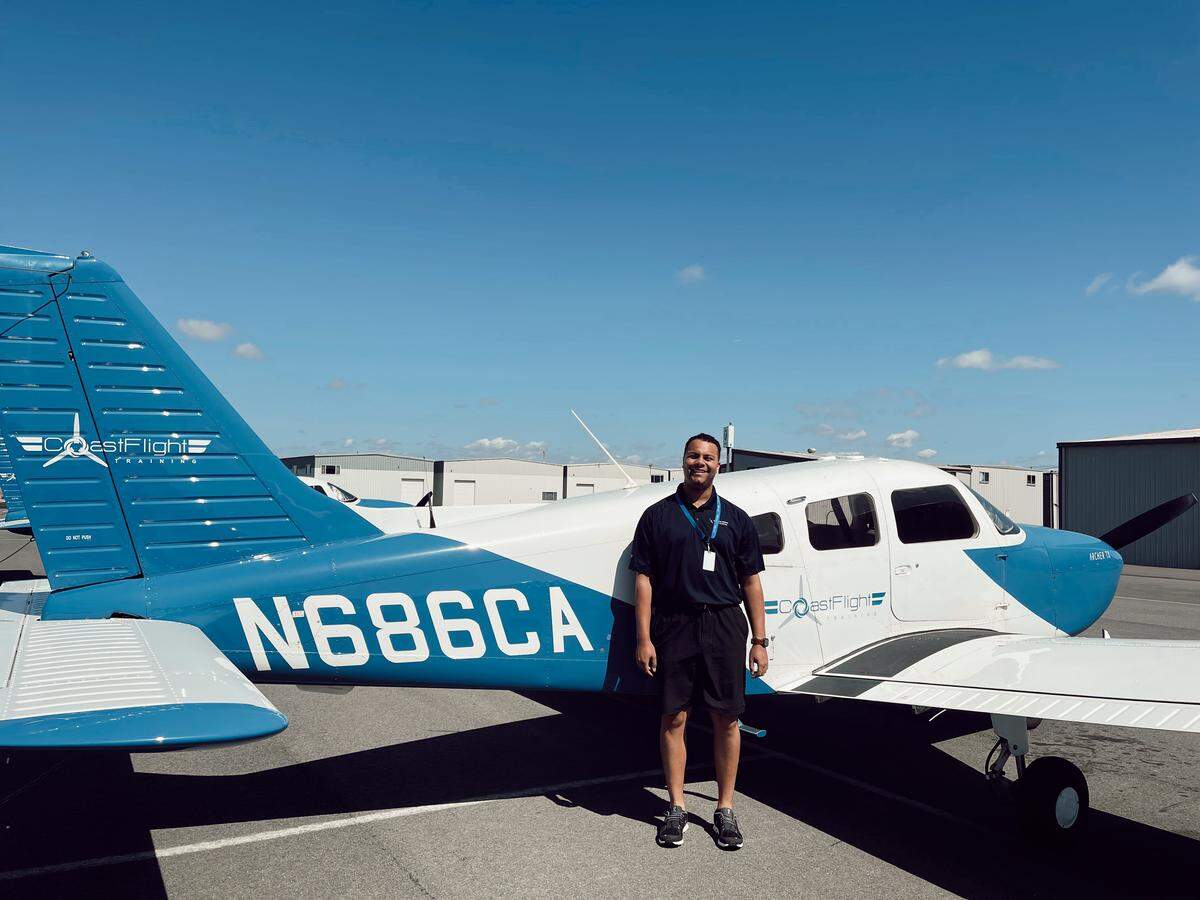
“People of color were being held back and had to pay extra money, and I started to notice that the only people graduating from the program and receiving offers from regional airlines and American Airlines were white students,” he said.
Sanderson said the cadets had “thousands of dollars in debt — the last thing we wanted was to be released from a program and stuck with no job and no backup to pay off this loan.”
The most striking moment for him came when the site director at Coast Flight Training called him into her office and told him that when she spoke with American Airlines about his progress, she had nothing positive to say and described him as a “troubled student,” he said.
“This situation that I’m in, and that of the other 17 cadets who were also part of this lawsuit, means our dreams are delayed, not denied. We belong in every space,” Sanderson said. “People of color do have to work 10 times harder to get to the same place as their white cohorts, but with perseverance, commitment and dedication, we will make it there.”
After he left the American Airlines Academy, Sanderson continued his training at another flight school in Ohio and received his commercial pilot license, he said.
The federal lawsuit also alleges that the 18 cadets were “treated less favorably than white students, including by providing them with fewer training opportunities than their white peers, grading them more harshly, and ultimately railroading many non-white Cadets into a dead-end remedial program that led to their dismissal from the program.”
According to the lawsuit, Coast and American Arline staff made racially derogatory statements about numerous cadets, calling them “ghetto,” “dirty,” “aggressive,” “hostile,” and “tiny-brained.”
Attorney Saba Bireda, who represents the cadets along with other lawyers from Sanford Heisler Sharp McKnight, said, “There are a lot of emotional costs that our clients experience, in many cases, severe emotional distress as a result of going through this experience.”
“They wanted to make a better life for themselves, their families and pursue these dreams,” Bireda said. “They left their jobs, scholarships, educational opportunities, and relocated in pursuit of this dream.”
Bireda said the 18 clients attended the academy across different locations over several years and reported nearly identical experiences. They were given the same descriptions of the program’s cost, length, flight frequency and mentor availability, and “they all have similar stories about bias in favor of white students,” she said. “We are focused on making sure that we obtain justice for them at the end of this.”