Tarrant County university leads Texas in bachelor’s nursing degree graduates
Caroline King froze.
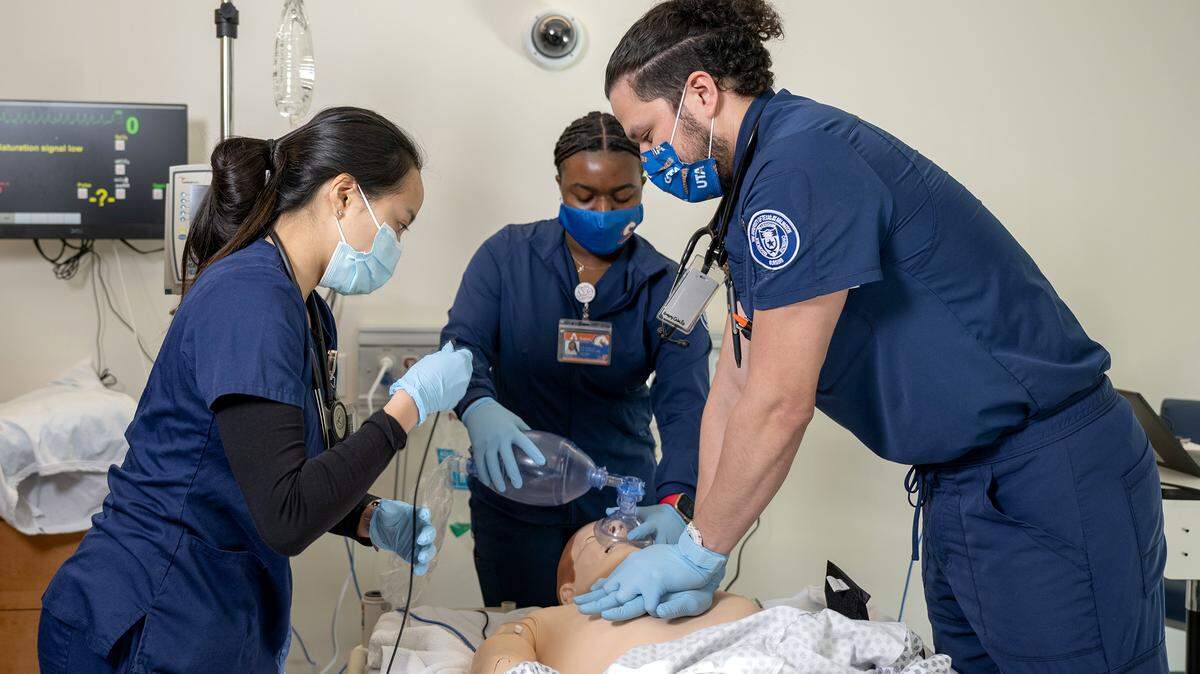
King, a nursing student, was practicing what to do during a code blue — a medical emergency — in a simulated emergency room. In this case, King and her fellow students were learning what to do when a patient has an unusually rapid heartbeat (supraventricular tachycardia, in medical language).
But King couldn’t move.
“I was so scared that I was going to mess it up,” King, 22, said. “But my professor, she was able to talk with me and walk me through it.”
After a pep talk from her professor, King was able to treat her “patient.” Now, she says, she looks back on that experience as proof to herself that she knows how to respond in emergencies.
“This is why we have these simulations, so that when you get there, into the real world, and you have a real code blue — when your patient stops breathing, when you can’t find a pulse, whenever they’ve passed out — you have this experience to look back on and to just center yourself and to keep moving forward,” she said.
This simulated emergency was part of King’s nursing education at the University of Texas at Arlington, where more students get a bachelor’s in nursing than any other program in the state, according to data from the Texas Board of Nursing. Last year, more than 2,000 students graduated with bachelor’s degrees in nursing from UT Arlington, out of a total of 11,550 graduates statewide, according to the board. The school has been the largest producer of baccalaureate-educated nurses in the state since 2014.
Online offerings helped grow UTA nursing program
The school’s nursing program grew rapidly between 2010 and 2020. In that decade, enrollment quadrupled to 25,000 students across all nursing programs, according to data from the school. Much of that growth is linked to the addition of online nursing programs, spokesman Drew Davison said.
Online programs have allowed the school to educate students across the state, said Tanya Sudia, the interim dean and chief nursing officer of UTA’s College of Nursing and Health Innovation.
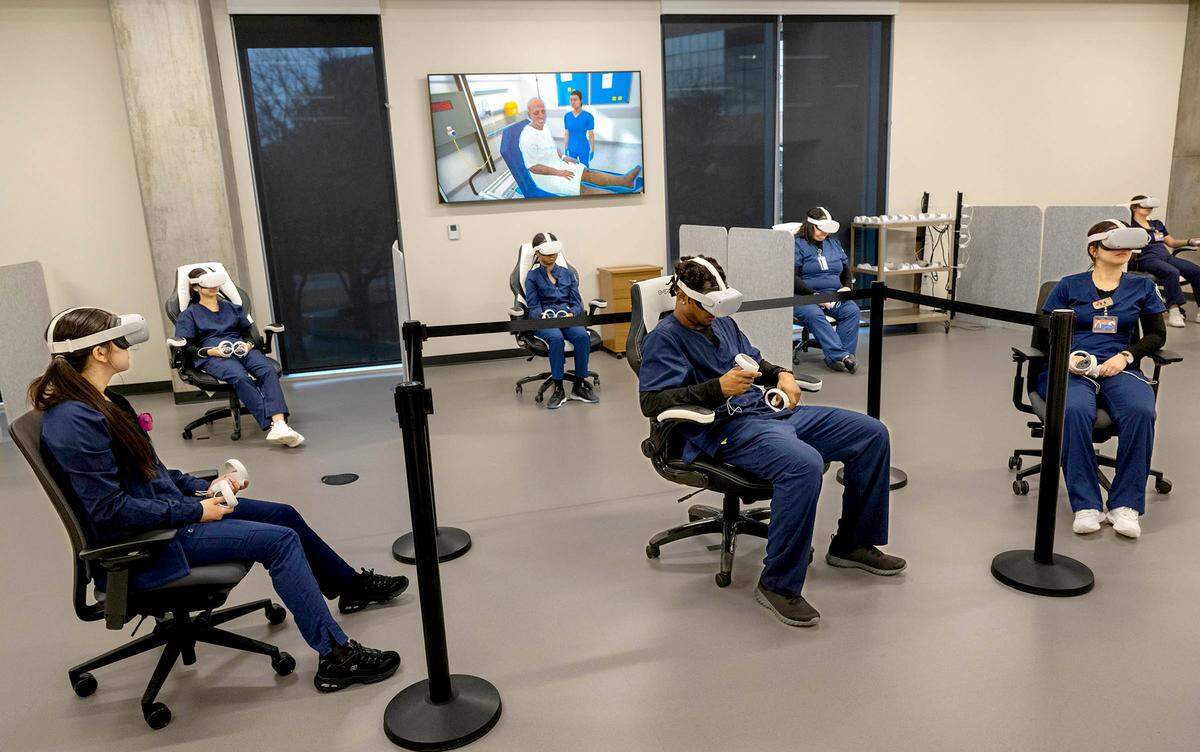
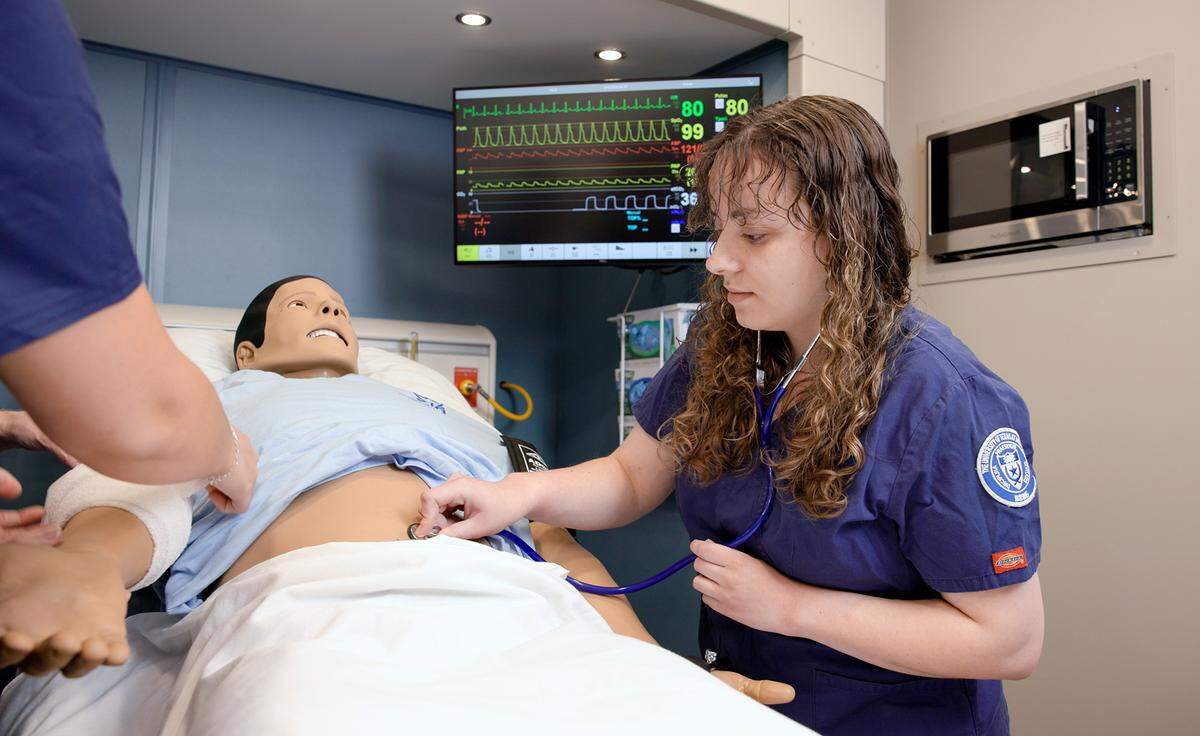
Simulated medical events like the one King experienced are a signature part of the school’s nursing program. The school has a “smart” hospital, complete with mock patient rooms and about 80 mannequins that nursing students can use to practice everything from inserting IVs to childbirth, Davison said. The smart hospital also includes a virtual reality immersion room, where students can practice responding to different scenarios, Sudia said.
In addition, the school recently added a mobile simulation lab, to take training to online students in rural areas. Students also receive clinical assignments at health care settings throughout the state.
Nursing shortage grows in Texas
The thousands of nursing students being educated at UTA are desperately needed in Texas. The field is still recovering from the COVID-19 pandemic, which left nurses and other health care providers exhausted and burned out. Before the pandemic, just 5.9% of RN positions were vacant, according to the Texas Center for Nursing Workforce Studies. Last year, 16.4% of RN positions were empty, according to the center. And the demand is only going to grow: By 2036, the state is expected to be almost 57,000 nurses short.
“We need to have as many people enter the nursing programs as possible,” said Stephen Love, the president and CEO of the Dallas-Fort Worth Hospital Council. Love added that nurses are needed not just in hospitals, but in nursing homes, clinics and schools as well.
UTA is well equipped to help fill the gap. Texas recently approved more than $5 million in funding to UTA through its Nursing Shortage Reduction Program. The money will go toward enrolling and retaining additional students, among other expenses.
King, the nursing student, will graduate with honors in December, after which she hopes to participate in a nurse residency program in her hometown of Wichita Falls.
“I’m interested in taking care of people,” she said.
This story was originally published August 18, 2025 at 4:55 AM.