
Is your house now flood prone? What to know about increased rainfall in Texas
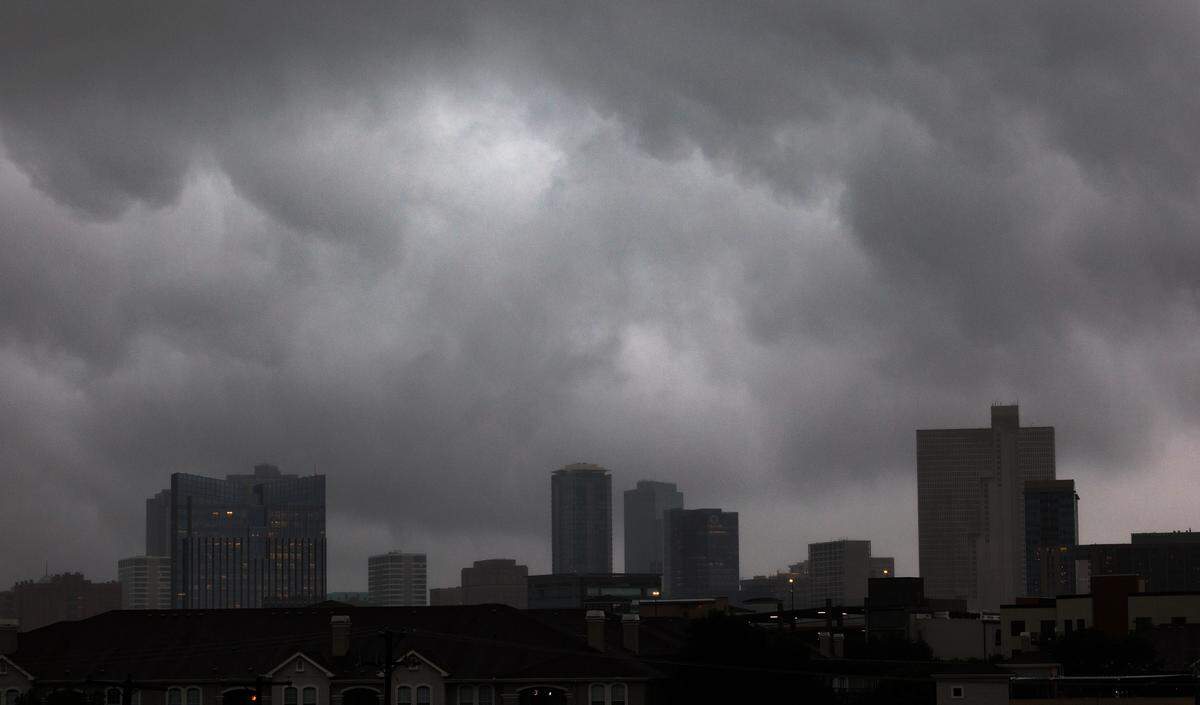
North Texas weather has gotten more severe in recent years, with heavier rainfall, a higher risk of flooding and worse humidity, according to meteorologists and the state’s top climatologist.
And it’s something homeowners, especially, need to understand as we head into the next decade.
Past, present and future trends
National Weather Service data shows that through May of this year, the Dallas-Fort Worth area has gotten more than 18 inches of precipitation. It was the fourth time in the last 10 years that we’ve met or exceeded that amount through the first five months of the year. During the same time span 50 years ago, from 1966 to 1975, we reached or exceeded 18 inches of precipitation three times, but the average total precipitation for January through May during that period was 3 inches less than what we’ve seen this decade.
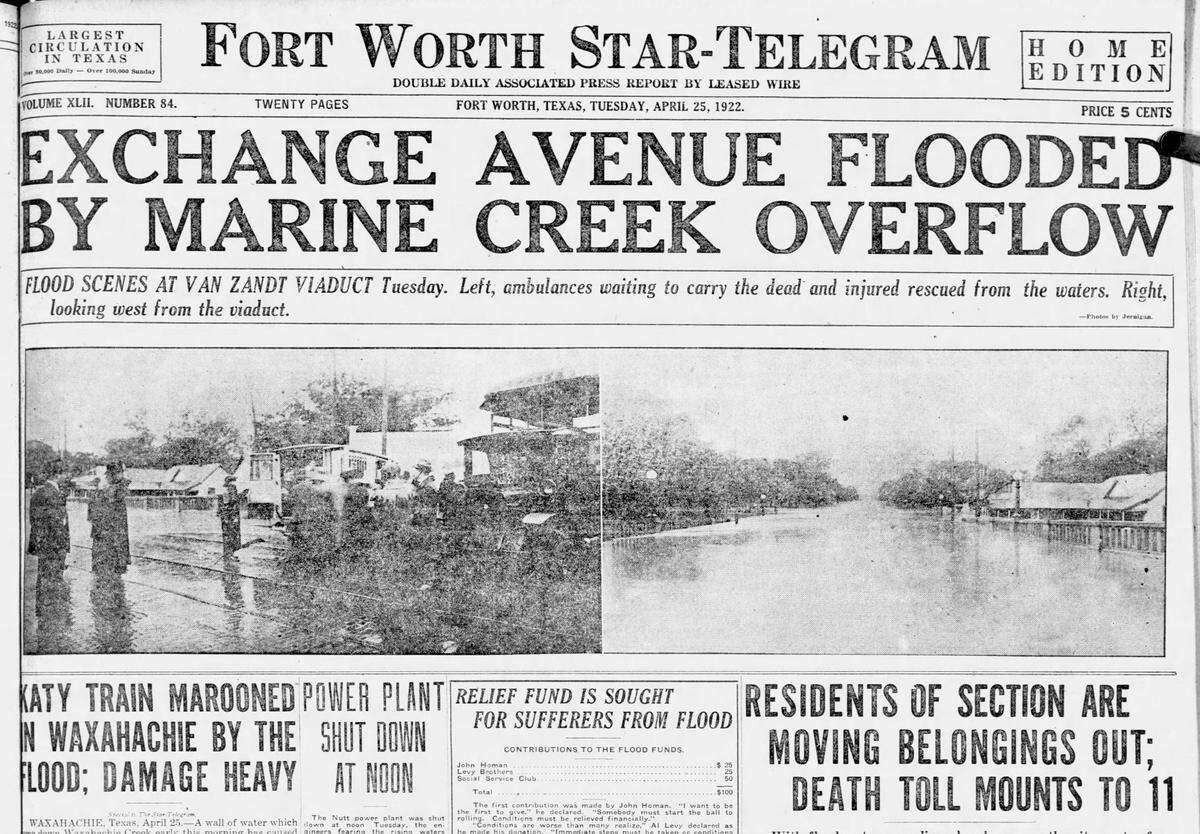
Go back 100 years, from 1916 through 1925, and we reached or exceeded a January-May precipitation total of 18 inches only twice, and the average was more than 2 inches less than what it’s been from 2016 through 2025. There would have been a bigger variance had it not been for the whopping 17 inches of rain that fell in Dallas-Fort Worth in April 1922, the same month that floodwater devastated Fort Worth.
Looking to the future, John Nielsen-Gammon, a professor at Texas A&M University and the Texas state climatologist, said “extreme rainfall is generally getting worse.”
In a 2024 report, Nielsen-Gammon estimated that rainfall intensity will increase by 10% over the next 10 years compared to what it was from 2001-20, and it will increase by 20% compared to 1950-1999.
Nielsen-Gammon believes Dallas-Fort Worth is one of six urban areas in the state that will be at a higher risk of flooding in the coming decade, second only to the Houston area. That could spell trouble for homeowners.
“The biggest challenge, as rainfall becomes more intense, is that the area subject to flooding increases,” Nielsen-Gammon pointed out, meaning homes just outside historical floodplains may very well lie within them now.
Nielsen-Gammon advised homeowners to not wait until floodplains are reanalyzed, but instead get ahead of the potential danger and look into the issue themselves. Homes in floodplains are harder and more expensive to insure, which also makes them more difficult to sell.
A warming planet
The reason for all this rain is simple: The planet has gotten warmer. That means warmer air temperatures. Warmer air holds more water vapor, which results in more rain, ice and snow.
AccuWeather’s Paul Pastelok, a long-range weather forecasting expert, pointed to a warmer Pacific Ocean as one of the causes of the severe storms in North Texas in recent years.
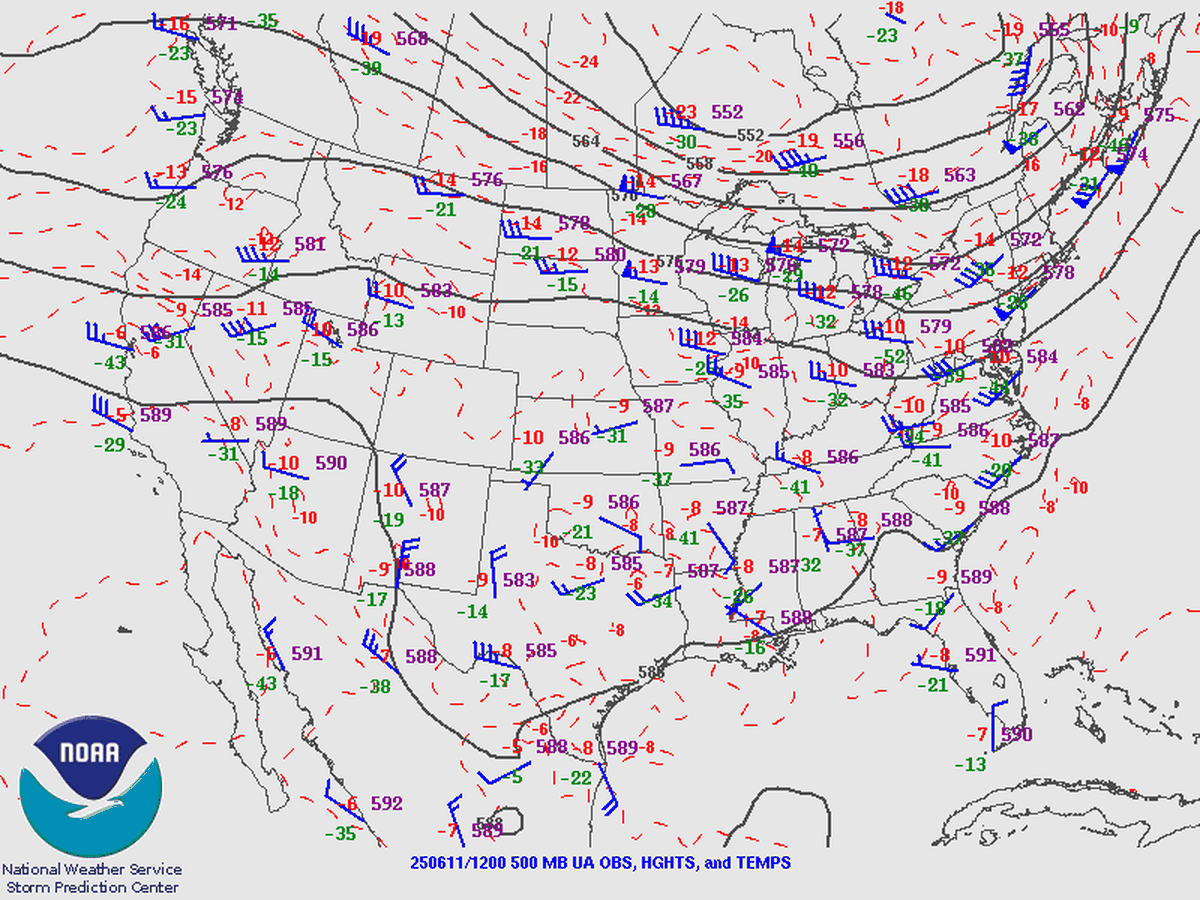
Since the early 1900s, average sea surface temperatures have risen globally. Warmer air over the Pacific follows the jet stream from the northwest to the southeast, dipping down into Texas and the Gulf of Mexico before turning northeast toward the Atlantic Ocean.
If the jet stream dips low enough that the warm air reaches the Four Corners region, where Utah, Colorado, Arizona and New Mexico all meet, Pastelok said, it means Texas is probably going to experience severe spring weather with an increased tornado risk. Couple that with a high-pressure system coming up from the southeast, Pastelok added, and we’ll have a significant amount of rainfall, too.
Pastelok also said winter precipitation helps him predict how the warmer months will look. A dry winter typically means a dry May and June. But, as Pastelok put it, “rain begets more rain.”
This winter was one of the wettest ones Dallas-Fort Worth has seen in the past 25 years. Based on what Pastelok said, that means we went into the spring with more moisture in the soil and in the vegetation. As temperatures rose, that moisture evaporated and formed clouds, which resulted in the rain we’ve gotten this spring.
Nielsen-Gammon said rain in Texas generally comes from the Atlantic Ocean and the Gulf of Mexico, but, like Pastelok, he said the Pacific has a hand in our North Texas storms.
“The extreme rainfall happens when you have Pacific moisture aloft, so the rain drops don’t evaporate as they’re falling,” he said. That means more water reaches the ground before drying up, which can result in the kind of torrential downpours we’ve experienced in our area over the past couple of months.
Worse humidity
Pastelok referenced a study conducted by the National Weather Service in Austin that showed that the dew point in Texas has risen, on average, since the 1940s. The increase hasn’t been dramatic, Pastelok said, but it could mean the atmosphere is holding more moisture today than it was 80 years ago.
Nielsen-Gammon agreed that’s possible. “As temperatures go up, the dew point goes up also,” he said. “It really doesn’t take a lot of change in dew point to add a lot of moisture.”
If the dew point rises by 3 degrees Fahrenheit, from 74 to 77 degrees, the amount of moisture in the air increases by more than 10%, Nielsen-Gammon said.
Dew point is another way of measuring humidity. The higher the dew point, the more moisture in the air, the more humid it is. With a dew point of 55 degrees or lower, the air feels “dry and comfortable,” according to the National Weather Service. When the dew point is between 55 and 65 degrees, the air is “sticky” and evenings are “muggy.” When the dew point exceeds 65 degrees, it’s “oppressive.”
The average dew point hits 64 in May in North Texas. It rises to above 70 in June, July and August before falling back to just above 65 in September.
A local perspective
WFAA meteorologist Jesse Hawila likewise said the dew point in North Texas has risen over the years, and he said that’s contributed to more rainfall. He traces that back to warmer waters in the Gulf of Mexico. When warm air from the gulf moves into Dallas-Fort Worth, it can bring rain as well as severe thunderstorms.
“Increased moisture content from the gulf can increase instability,” said Hawila.
That instability, added Hawila, causes another serious concern for North Texans: hail.
Two years ago, Hawila said, the largest hailstone ever recorded in this area fell in Sanger. It was 5.5 inches in diameter, about the size of a cantaloupe.
While hail of that size is certainly an anomaly, Hawila said there’s been a trend toward more and larger hail during North Texas storms. Hail, Hawila pointed out, can cause hundreds of millions of dollars in damage, and it’s another reason why some Dallas-Fort Worth residents are paying more for home insurance or even finding it difficult to insure their homes.
Insurance providers changing their practices here locally is “a strong red flag,” noted Hawila, that weather is indeed getting more severe.
What do you do?
When talking about weather trends, Nielsen-Gammon, Pastelok and Hawila all cautioned against making definitive statements about what the future holds. Reliable meteorological records only go back as far the late 1800s, and 150 years, give or take, is too small a sample size to truly determine if the wet weather we’ve been experiencing is more than just a “blip” in history.
“Meteorology is a pretty young science compared to others, like physics,” Hawila said. Satellite and radar imagery technology has only been around for a few decades, so data quality and quantity, said Hawila, has only recently begun to improve.
With that said, there are still those, like Nielsen-Gammon, who expect flooding to become more of a problem in Dallas-Fort Worth. If you’re worried about your area being flood prone, there are a few things you can do.
The Federal Emergency Management Agency offers tools to help assess your home’s flood risk, but an article published by Yale Climate Connections warns that FEMA floodplain maps are outdated.
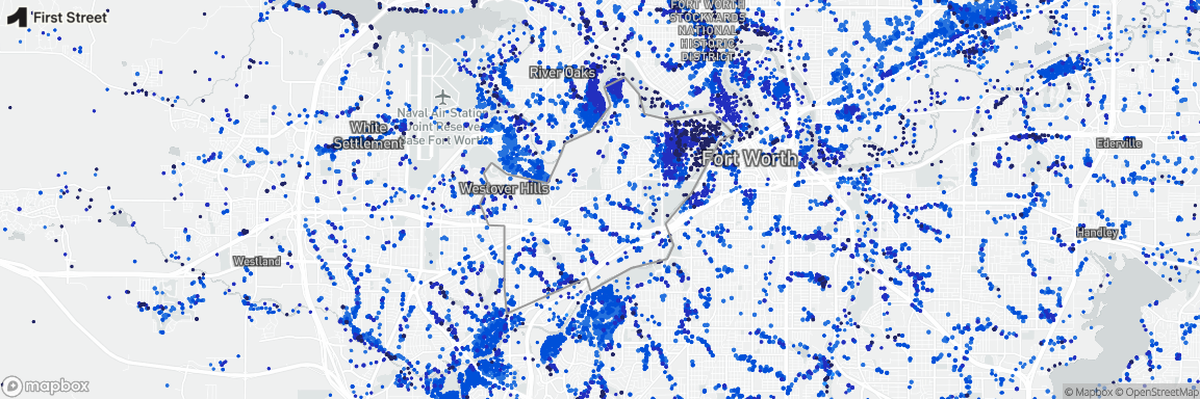
The First Street Foundation, a for-profit public benefit corporation, has more up-to-date flood risk maps. You can visit their website, firststreet.org, and type your home’s ZIP code in the search field at the top of the page, where it says “enter an address.” That will provide a detailed overview of your area’s flood risk. Unfortunately, First Street charges for reports on specific addresses.
A sample report analyzing the 76107 ZIP code in central Fort Worth, shows major risk of a flood, according to First Street.
Once you’ve assessed your risk, FEMA does offer advice for minimizing flood damage and protecting your property. The website texasflood.org also provides resources, including contact information for floodplain administrators in Texas cities.