
The future is bright for solar energy, but some in Hood County fear a dark side
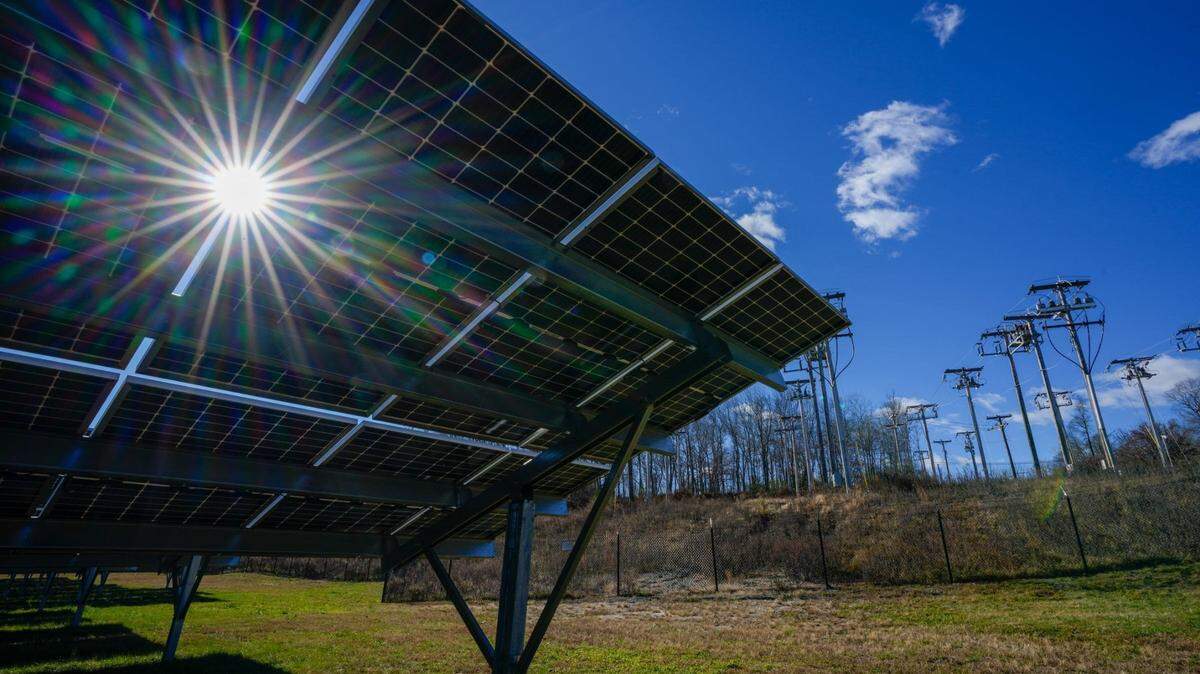
An 810-acre solar farm with a lithium battery storage system is coming to the Granbury area, and despite the positives that accompany such developments, some residents in Hood County are raising alarm bells. At the same time, the company behind the solar farm says it’s doing all it can to ensure safety.
Long associated with fossil fuels, Texas is now the clean energy leader in the U.S., generating more than 20% of the renewable power in this country — more than any other state — according to the U.S. Energy Information Administration. While that is good for the environment and good for grid stability, there are, some say, drawbacks.
At the March 11 meeting of the Hood County Commissioners Court, several residents voiced concerns about what the Rain Lily solar project — which will be operated by EE North America, a subsidiary of Denmark-based European Energy — will mean for them.
Fire danger related to the battery storage system was chief among the worries. Cindy Highsmith, who lives in the Pecan Plantation community near the planned Rain Lily facility, cited a blaze earlier this year at the Moss Landing battery storage plant in California. Highly combustible batteries storing solar power were to blame for that fire, which resulted in the evacuation of approximately 1,200 people. The Moss Landing plant, operated by Vistra Energy, is one of the largest battery storage systems in the world, comprising tens of thousands of lithium batteries, with a total storage capacity of 750 megawatts. Rain Lily will generate approximately 190 megawatts of solar power once operational in 2027. There was no word from EE North America regarding battery storage capacity.
Carla Benson, another Pecan Plantation resident, shared Highsmith’s concerns, noting that the solar farm will lie less than a mile from the community’s clubhouse.
“My husband and I have lived very frugally,” Benson said. “We worked very hard to achieve that American dream of home ownership, and these types of developments, not only will they affect our property values ... most importantly of all, it increases the risk to our health and safety.”
That was in reference to the photovoltaic panels used to capture solar energy, which often contain heavy metals like zinc, nickel, lead, cadmium and mercury. While those hazardous materials are sealed within the panels, the worry is that damaged panels can leach them into surrounding soil and water. It’s also a reason why solar panels are notoriously difficult to recycle once they’ve outlived their usefulness, which is usually around 30 years.
The Rain Lily development site is near the Brazos River off County Road 326 in southeast Hood County.
Bills about energy storage and generation
The comments from Highsmith, Benson and others were sparked by a resolution put forth by Hood County Precinct 2 Commissioner Nannette Samuelson, who asked colleagues to support four bills under consideration in Austin related to energy storage and generation.
House Bill 1343 would require energy storage equipment or facility operators to obtain a special permit before they could supply power to Texas’s electrical grid. House Bill 1378 would prohibit the construction of energy storage equipment or facilities within 500 yards of a property owned by another party without that party’s written consent.
Senate Bill 1754 would restrict property tax incentives for renewable energy facilities, and Senate Bill 878 would require municipalities to hold a public hearing before giving grants or loans to any entity in conjunction with a tax abatement.
Tax abatements are a way to attract businesses and other economic drivers to a community, but the argument is that renewable energy facilities typically don’t provide long-term employment opportunities once construction is completed.
EE North America’s Michael Klein, the Rain Lily project manager, disputes that. He said the development is estimated to bring more than 200 construction jobs and 40 long-term operational jobs to the area. He also said he’s been working to assuage other anxieties about Rain Lily.
“Over several years of discussions, initial concerns included visual impacts, glint and glare, wildlife protection and water quality,” said Klein. “We’ve proactively worked with officials to address these concerns and modify project specifics accordingly.”
Fire danger
Regarding the potential fire danger, an EE North America spokesperson cast doubt on the notion that a Moss Landing-type incident could happen in Granbury. He said Moss Landing was an older facility, lacking the state-of-the-art safety mechanisms that will be present at Rain Lily. He also said Rain Lily’s lithium-ion batteries are more stable than the type used at Moss Landing, with a built-in feature to keep fire from spreading between battery units. Finally, he said the Rain Lily project “meets or exceeds” all industry safety standards, and that EE North America is working with area fire departments to unsure preparedness.
As for benefits to Hood County, Michael Klein said residents could expect increased tax revenue once the Rain Lily project is fully operational, and he promised EE North America’s full cooperation with county leaders and residents to minimize any negative impacts on the community. Klein also said an increase in solar power generation for the Texas electrical grid could mean lower prices for consumers.
Additionally, Klein said EE North America would restore the land to its original condition at the end of Rain Lily’s lifespan.
“Equipment will be removed, and the majority will be recycled,” he said. “Our goal is to leave the site better than we found it.”
However, Cindy Highsmith, who said she’s been involved in discussions with Klein said, “I don’t feel at all reassured by that company.”
She’s not for or against renewable energy; all she wants is to feel safe, and she wonders what will happen if a fire breaks out at Rain Lily similar to the one at Moss Landing. The nearest emergency responders are the Somervell County Fire Department, whose primary station is 14 miles away in Glen Rose. Highsmith worries that Rain Lily’s batteries could reach the point of thermal runaway by the time firefighters arrive.
It should be noted that some area residents are a little more sensitive than they might otherwise be about the solar farm given recent experience. In 2017, Constellation Energy opened Wolf Hollow II, a 1,115-megawatt natural gas-fueled power station that looms large over the once-pastoral country landscape. In 2022, a Bitcoin mine operated by Marathon Digital opened next to Wolf Hollow. Neighbors blame that for a host of health issues stemming from noise pollution caused by fans cooling the mine’s thousands of computers. Last year, residents opposed a plan to expand the Wolf Hollow site.
This story was originally published March 19, 2025 at 3:48 PM.