A Tarrant County clinic has provided relief for low-income residents for decades
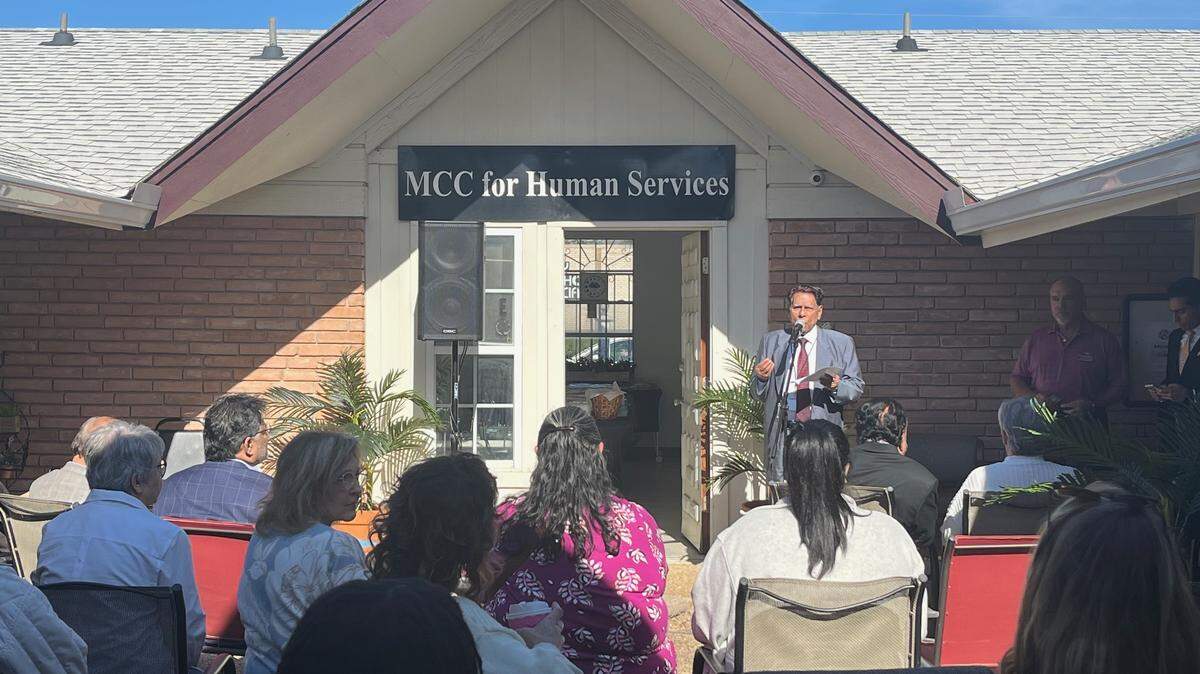
The morning sun rose over the Muslim Community Center for Human Services, where about 50 people gathered Saturday for an open house showcasing an organization that has provided services to a community for nearly 30 years.
“Together, we are building a stronger, more compassionate community,” Dr. Basheer Ahmed told the crowd. “The challenges are significant, but so is our collective strength, and that’s what I’m relying upon. By working together, we can make a lasting impact, one person, one family, one community at a time.”
The Muslim Community Center for Human Services is at 7600 Glenview Drive in Richland Hills.
Those gathered were donors, board members, local organizations and supporters of the Muslim Community Center.
Ahmed founded the organization in 1995, when Catholic Charities sought his help with Bosnian and Somali refugees settling in the area. There were no services at the time to provide services for Muslim refugees.
There are over 31,000 Muslims in Tarrant County, according to data from The Association of Religion Data Archives.
Ahmed met with about 35 Muslim leaders in the area and soon established a help line in his garage, fielding questions about local mosques, schools and more. Eventually, the Al-Shifa Clinic opened, providing free and low-cost medical services to patients with no health insurance or exorbitant deductibles.
It eventually grew to provide dental, mental health, domestic violence prevention and social services.
The center has over 20 volunteers in medical and social services, from counselors to psychiatrists and therapists. They treat some 1,600 to 1,800 patients a year; low-cost lab work and prescription drugs are available.
The organization relies on volunteers, donations and grants to maintain its services.
State Rep. Salman Bhojani, one of the first Muslim and first South Asian state representatives, spoke about the honor it is to see Ahmed and the center provide much-needed services.
“He’s not saying, ‘Oh, I’m from the Muslim community, I’m going to help only the Muslim community,’” Bhojhani said. “He’s saying it’s non-denominational, it’s non-ideology, and no matter what your ethnic background is, what your gender is, he wants to open this up for everybody and he has been doing it.”
Azhar Azeez, CEO of Muslim Aid USA, said his organization will continue to give grants to the organization because of the important work the Muslim Community Center is offering.
Ahmed “has contributed so much, not only building Islamic centers and community building, but also establishing this legacy project,” Azeez said.
This story was originally published November 23, 2024 at 4:58 PM.