It’s an El Nino year: Will North Texas see more violent tornadoes? What the data shows
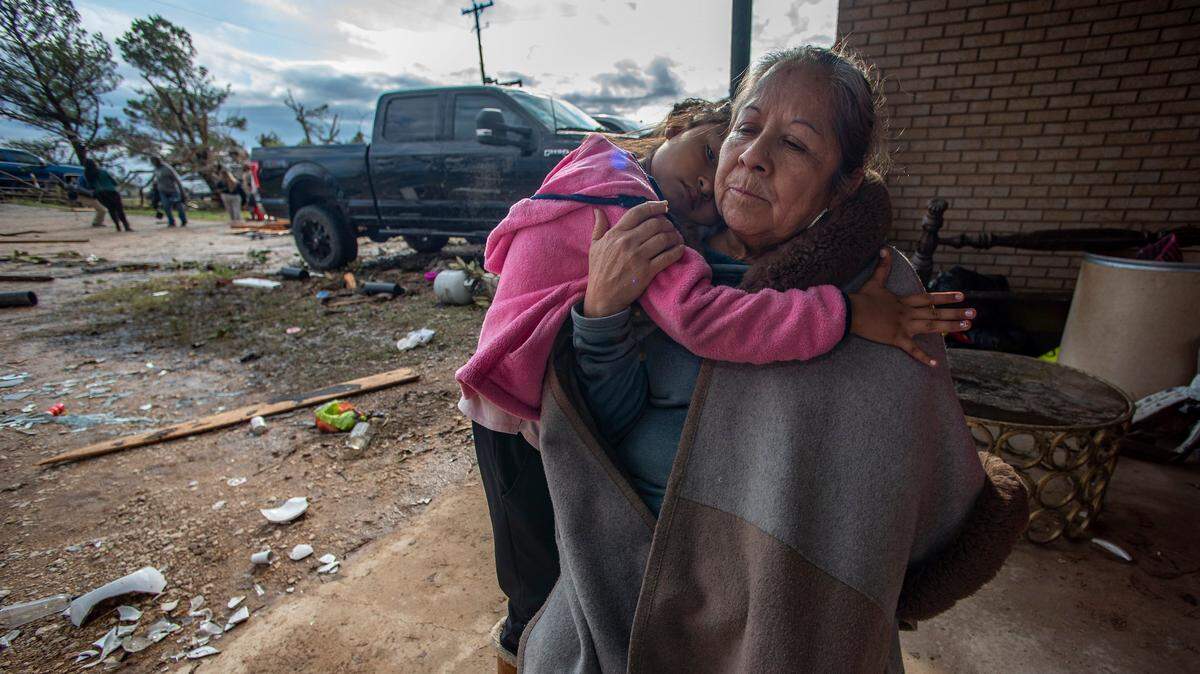
Isabella Gonzalez was in the bathroom getting ready for work when she heard a boom. Power goes out. In the darkness she could hear her mom, Bertha, screaming.
The North Texas family was caught by surprise as an EF-2 twister ripped the roof right off their single-story home near Decatur on Dec. 14, 2022.
“The house was shaking and ... like the windows, were making a really loud noise. And then I heard, like all the windows shattering in the kitchen,” Gonzalez told the Star-Telegram two hours after her horrifying experience.
At this time last year, the National Weather Service confirmed at least five tornadoes touched down in the Dallas-Fort Worth area — up to a dozen were later confirmed — tearing up roofs and toppling large trees, terrifying residents from Richland Hills to Decatur.
Will Dallas-Fort Worth see twisters of similar intensity touchdown this season? Here’s what these studies show.
Difference between tornado activity during La Nina, El Nino years
After three consecutive years of La Niña, Spring 2023 saw the return of El Niño.
La Niña years show a large increase in large tornadic outbreaks as well as an increase in the number of devastating tornadoes, according to research from the Center for Ocean-Atmospheric Prediction Studies, while El Niño years show a significant decrease in devastating tornadoes and less potential to create large outbreaks.
“The results indicate that El Niño events reduce tornadic activity in the southern plain states, while El Viejo events increase tornadic activity in the Ohio River Valley and Deep South,” the study reads. “Results further show that El Niño inhibits the chances of multiple tornado outbreaks, while La Niña facilitates large tornadic outbreaks and produces more devastating tornadoes.”
In a list of top 15 tornadic outbreaks, only one outbreak occurred during an El Niño event. Six of the top 15, including two of the top three, occurred during a La Niña event, while the remaining eight occurred during neutral years.
Tornadoes during La Niña events were also typically stronger than their non-La Niña counterparts. La Niña years saw an average of 16.2 EF-4 and EF-5 tornadoes, while neutral and El Niño years only saw 8.42 and 8.2 EF-4 and EF-5 tornadoes.
How La Nina, El Nino weather affects tornado alley
Another study from the Storm Prediction Center used tornado data from the region known as “tornado alley,” eight states including Texas lying between the Mississippi River and the high plains. The differences between tornado occurrences for El Nino, La Nina and neutral years were found to have no significance.
“None of the statistical comparisons that we presented allow us to differentiate tornado activity as a function of the ENSO phase,” the research says.
How about the frequency of tornado and hail?
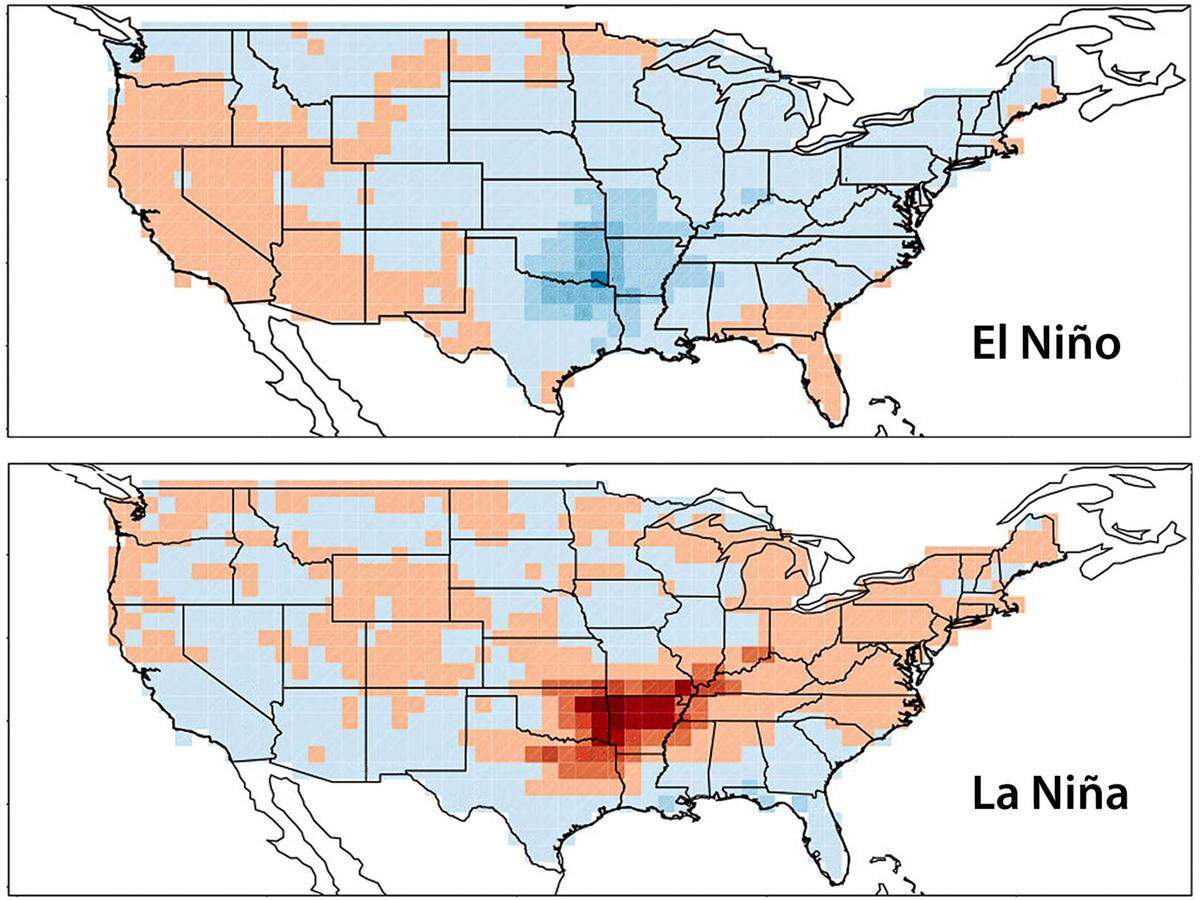
A more recent study published in Nature Geoscience in 2015 shows that fewer tornadoes and hail events occur over the central U.S. during El Niño and more occur during La Niña conditions.
During La Niña, southern winds from the Gulf of Mexico bring warmth and moisture over the central states, creating thunderstorms and tornadoes there.
Maps using data from the study show that Texas is at enhanced risk for springtime twisters during La Nina and at diminished risk during El Nino.