‘I really don’t believe God wanted him to die that way.’ Broken A/C deadly during TX summer
READ MORE
SPECIAL REPORT: ‘You’re putting these children’s lives at stake’
A Star-Telegram investigation finds Fort Behavioral Health rife with problems.
The thermostat in Robert Lee Robinson’s apartment was set at 60 degrees, but the actual temperature inside his apartment was much warmer.
On July 3, when Robinson didn’t answer repeated phone calls from her sister, a relative went to check on him in his senior living community. Robinson didn’t answer the door. His family called an ambulance.
Inside the apartment, emergency responders found Robinson fully dressed and lying on his bed, with his keys and phone nearby. His sister, Dwendolyn Benjamin, speculated that he was waiting for someone to come to his apartment to fix his air conditioner.
Robinson, 74, died from hyperthermia, according to the Tarrant County Medical Examiner’s office. On the day he died, the heat index was 103 degrees in Fort Worth.
About three weeks later and 47 miles away in Denton, a colony of dirt daubers was building its characteristic nest on the exterior of Max Wiesen’s window air conditioning unit. Wiesen’s friend, Phil Knox, reminded him every spring to clean the wasps’ nest off of the unit.
But either the pesky wasps rebuilt their nest, blocking the flow of air through the unit, or the aging equipment simply gave out. Either way, the window unit was broken as July continued its unrelenting succession of triple-digit days.
On the night of July 26, Wiesen called his fiance Elizabeth Joyce, as he did every evening. He told her he wasn’t feeling well, she said.
“I feel very strange,” Wiesen told her, according to Joyce’s recollection.
“I said, “Are you OK? and he said, ‘I’ll be fine, it’s just hard to talk,’” Joyce remembered.
The next morning, Wiesen missed their typical morning phone call. Joyce knew something was wrong. She called police and asked them to perform a wellness check on Wiesen.
Like Robinson, Wiesen, 75, died from hyperthermia, inside a home that was simply too hot without a functioning air conditioner. It was 101 degrees on the day he died.
Robinson and Wiesen are two of numerous North Texans who have died from heat so far this summer. In Tarrant County alone, there have been 17 confirmed heat-related deaths this year, according to the medical examiner’s office. Last year, there were 18 confirmed heat-related deaths recorded in the county. But the number of people who have died from extreme heat this summer and in previous summers is likely higher than the official totals, experts said.
Both men lived alone, and were over the age of 65, putting them at extreme risk from the perilous temperatures of 2023’s unusually warm summer. And climate change continues to bring longer and hotter summers to North Texas, more people like Robinson and Wiesen are at risk of dying preventable deaths.
‘We told each other everything’
Elizabeth Joyce had other plans for the day she laid her fiance to rest.
On Sept. 16, she had hoped to go to Las Vegas with Wiesen, where the two would get married and start the rest of their lives together.
Joyce and Wiesen’s long-distance relationship was marked by the regularity of their phone calls. He would call her every morning, and she would call him every evening. They would talk about everything: Religion, politics, science, astrology. Sometimes they would just listen to music together.
“We told each other everything,” she said.
Like Joyce, Robinson’s sister realized something was wrong when her brother didn’t answer his phone. They usually talked several times a week, and would often go to church together on Sundays.
Benjamin recalled her little brother as soft-spoken and generous. On a recent Wedesday morning, she held a small stack of framed papers signifying his accomplishments: His high school diploma from 1967, when he graduated as valedictorian from Hillsboro High School as one of the first Black students to attend the school after it was integrated. His college diploma, noting that he graduated magna cum laude with a degree in chemistry. His honorable discharge from the U.S. Army. More recently, a certificate of appreciation for Robinson as the “teacher of the month” at his church’s Sunday school program.
Tracking heat-related deaths
Precisely tracking the number of people who have died from extreme heat is notoriously difficult, in part because heat doesn’t necessarily produce “structural changes in the body,” said Dr. Jeff Johnston, the chief medical examiner for Maricopa County, Arizona.
By nature of its location in the Sonoran Desert, Johnston’s office and others in Maricopa County have been at the forefront of addressing climate change as extreme heat becomes increasingly more dangerous. In 2018, Johnston’s office revised the way it defines a heat-related death, so that the office could have a more consistent way of counting deaths caused by extreme heat and thus more reliable data to use in public health, he said.
One significant change was labeling what the forensic pathologists were tracking. Many offices, including the Tarrant County Medical Examiner’s Office, use hyperthermia when listing a cause of death caused by heat. But Maricopa County decided to use the term “environmental heat exposure,” to ensure that pathologists were only tracking deaths caused by external sources of heat, and not, say, an infection that caused the body’s core temperature to rise to a fatal level.
Some medical examiners and coroners throughout the U.S. will only declare a death to be heat-related if the person’s core body temperature was recorded at least 104 degrees or higher, which meets the clinical definition of a heat stroke. But for a hot climate like Arizona, Johnston said, recording body temperatures wouldn’t necessarily capture all of the deaths caused by heat.
The Tarrant County Medical Examiner’s office did not answer an emailed list of questions about how its pathologists identify a heat-related death.
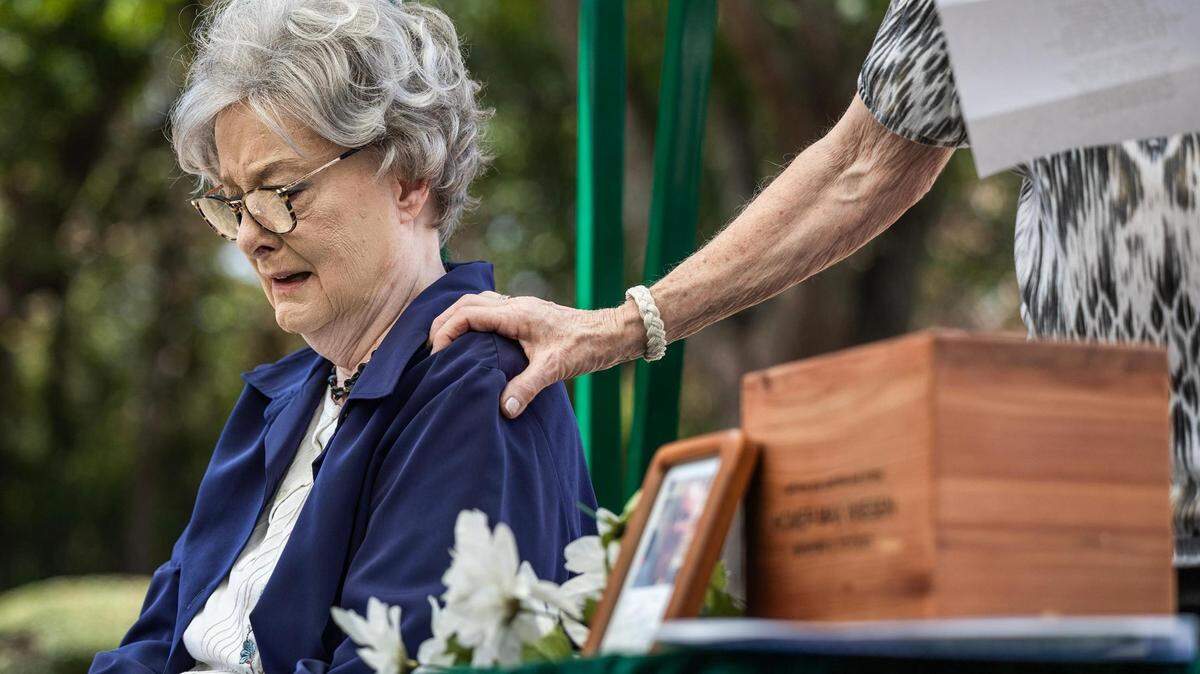
Both Benjamin and Joyce have laid their loved ones to rest.
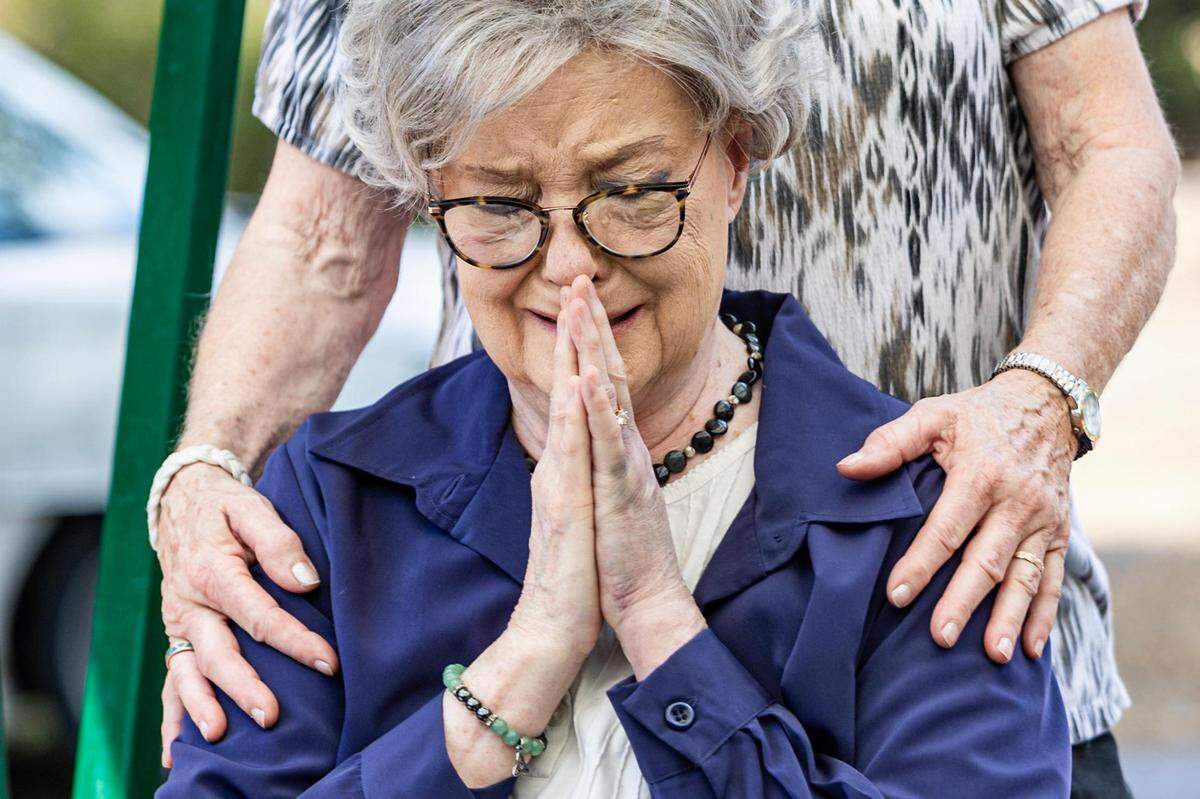
Joyce gathered with a few friends and some of Wiesen’s neighbors for a small memorial service in Denton, at the cemetery where Wiesen’s parents are also buried.
Benjamin organized a military service for her brother, as he requested.
Both women said they were devastated by the way their loved ones died.
“I know God is in control,” Benjamin said. “But I really don’t believe God wanted him to die that way.”
This story was originally published September 22, 2023 at 6:00 AM.