How do you know if you have the flu, COVID or RSV? Quick guide to symptoms.
The possibility of a triple threat of the flu, RSV and COVID-19 is a concern many Texans have this season.
The Centers for Disease Control and Prevention warned last Tuesday that RSV cases are increasing in the Southeastern U.S. While the RSV season begins in September or October, flu season is also on the horizon, with flu activity often beginning to increase in October.
Meanwhile, COVID hospitalizations and deaths are continuing to increase in Texas, and the CDC on Tuesday recommended everyone 6 months and older get an updated COVID-19 vaccine to “protect against the potentially serious outcomes of COVID-19 illness this fall and winter.” Updated COVID vaccines from Pfizer and Moderna will be available later this week.
Do I have the flu, RSV or COVID-19?
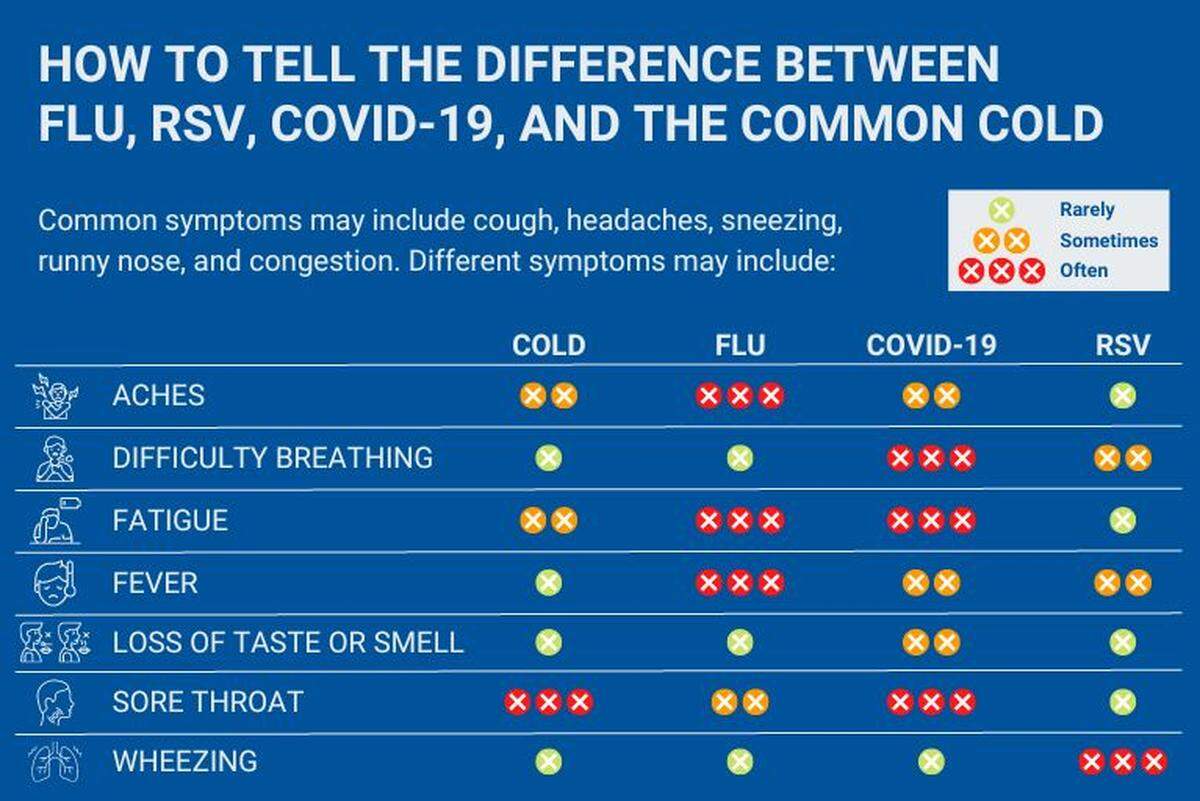
All three are highly contagious respiratory infections caused by viruses. Symptoms of a cold, the flu, respiratory syncytial virus and COVID-19 may look the same. While it’s important to contact a doctor to help diagnose your symptoms, here is a comparison of common characteristics of each, per the American Academy of Pediatrics.
RSV symptoms
Fever
Cough
Fatigue
Stuffy nose
Shortness of breath
Sneezing
Fast/short breaths
Flaring nostrils
Wheezing and grunting
No appetite
RSV symptoms are usually the worst on the third through fifth days and they last between one to two weeks.
Flu symptoms
Fever
Chills
Headache
Body aches
Dry cough
Fatigue
Stuffy nose
Sore throat
Flu symptoms show up about one to four days after exposure.
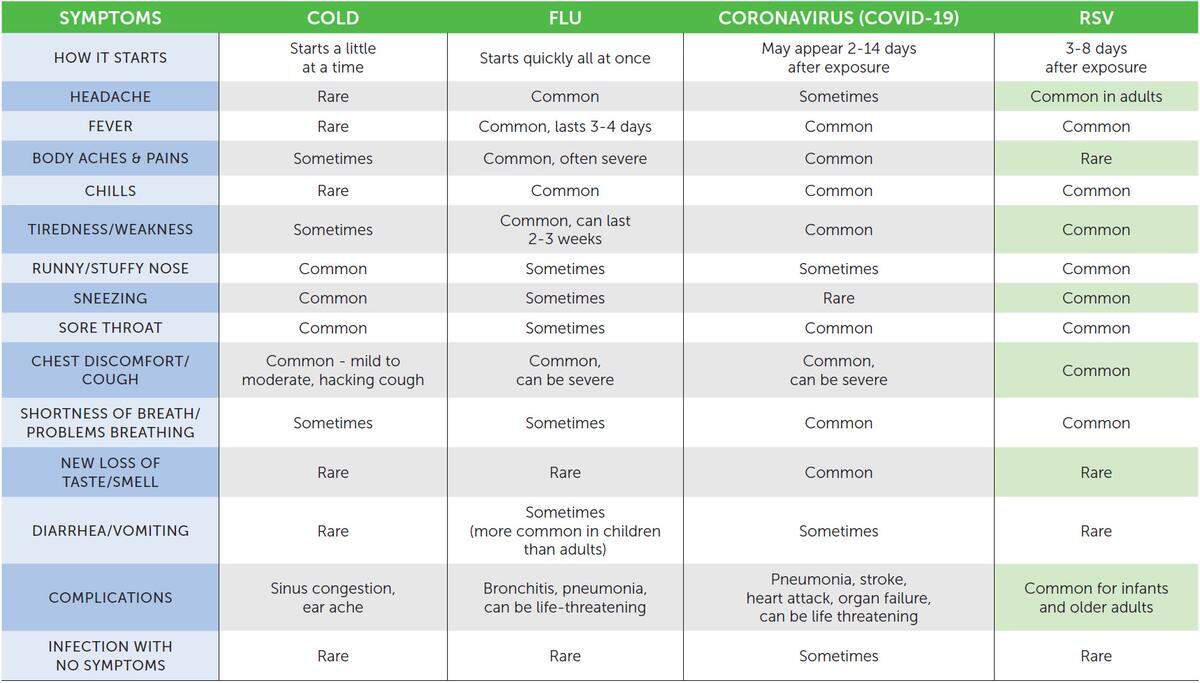
COVID symptoms
Fever
Cough
Fatigue
Muscle or body aches
Congestion
Shortness of breath
Sore throat
Headache
Sneezing
Vomiting/diarrhea
Loss of taste/smell
Coronavirus symptoms show up two days to two weeks after infection.
Cold symptoms
Fever
Cough
Fatigue
Stuffy nose
Sore throat
Sneezing
Slightly swollen glands
How to curb “tripledemic” threat
UT Health San Antonio physicians encourage Texans to get vaccinated for both the influenza and COVID-19, wash their hands frequently, stay home when feeling sick, cover sneezes and coughs and wipe down surfaces. Washing your hands can reduce the transmission of respiratory infections by 16% to 21%.
They also recommend the flu vaccine early to the parents of children 6 months and older, which “gives the body enough time to build antibodies before the virus spreads quickly.” The CDC recommends babies under 8 months receive RSV immunization, and that older adults consider getting the new RSV vaccine to protect them from severe illness.
This story was originally published September 13, 2023 at 12:15 PM.