Does Texas heat impact air quality? What to know about the air you breathe in Fort Worth
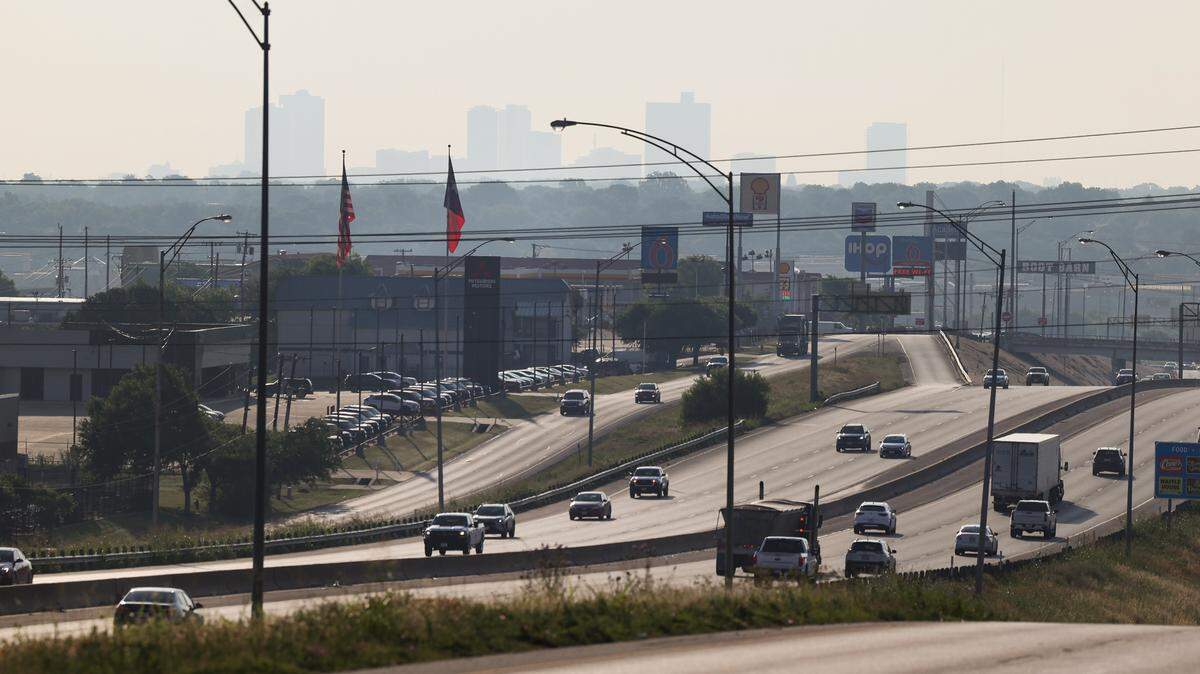
Air quality concerns due to wildfire smoke from Canada impacted parts of the United States this week, but, for now, air conditions in Texas may be more related to heat.
Texas is under a high pressure ridge — creating a heat dome — which trapped pollution earlier this month causing hazy skies in Fort Worth.
Here’s what to know about air quality and how it is influenced daily.
What is air quality?
Air quality is based on pollutants present in the air at a particular location and can be influenced by the movement of air and human action.
U.S. Environmental Protection Agency’s Air Quality Index is used to report daily air quality conditions.
What are air quality levels?
The air quality index runs from zero to over 300 — the higher the level the greater the health concern.
Six colors are assigned to each level.
- Green: Good, 0-50
- Yellow: Moderate, 51-100
- Orange: Unhealthy for sensitive groups, 101-150
- Red: Unhealthy, 151-200
- Purple: Very unhealthy, 201-300
- Maroon: Hazardous, 301 and higher
Does heat impact air quality?
Typically in the summer months, hot air rises and disperses pollutants from the Earth’s surface through the upper troposphere, according to the University Corporation for Atmospheric Research.
However, hot and sunny weather can increase ground-level ozone levels which can reach dangerous levels in cities and nearby rural areas.
Extreme heat and stagnant air during a heat wave can also lead to poor air quality, according to the UCAR. Drought conditions caused by a heat wave can lead to wildfires which create more carbon monoxide and particle pollution in the air.
Humidity helps decrease ozone pollution. The UCAR reports that thunderstorm clouds block sunlight, causing ozone production to slow while moisture from the storm destroys the ozone that formed.