Here’s how Tarrant County manages its water supply in a drought, when to conserve
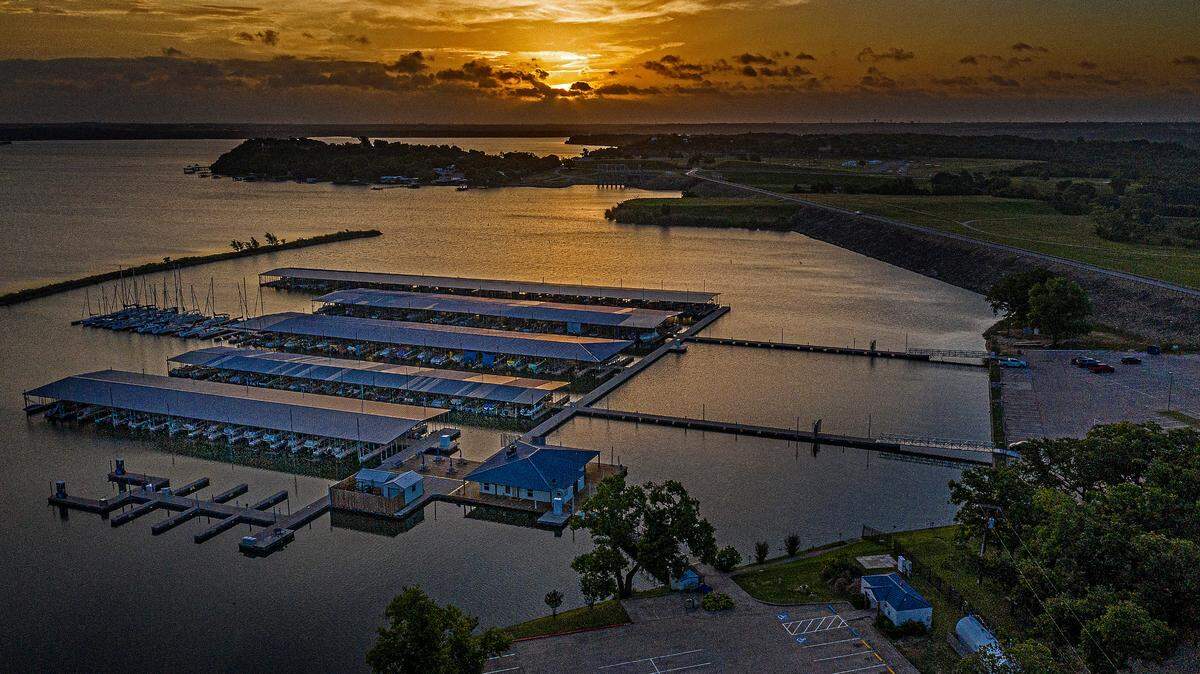
The Tarrant Regional Water District keeps a close eye at the water levels in all of its reservoirs when drought conditions in Texas persists.
The TRWD owns four lakes: Bridgeport, Cedar Creek, Eagle Mountain and Richland-Chambers. TRWD has over 250 miles of pipelines and also stores water from Lakes Arlington, Benbrook and Worth.
Here’s what to know about the three stage drought response.
Stage one: Water Watch
A water watch is put in place when water demand, either citywide or in a specified portion, reaches or exceeds 90% of reliable delivery capacity for three consecutive days. The watch is also put in place for delivery capacity reasons, major water systems failures and water contamination.
The Tarrant Regional Water District applies a water watch for similar reasons, including if the total raw water supply in its western and eastern division reservoirs drops below 75% of the conservation storage. In a stage one water watch, water use is reduced by 5% but the number can be increased if necessary.
Under a water watch, residents using a sprinkler or irrigation system are limited to two watering days a week and have to water outside of the hours between 10 a.m. to 6 p.m. Residential addresses ending in an even number may water on Wednesdays and Saturdays while residences ending in an odd number can water on Thursdays and Sundays.
Lawns and landscaping may be watered on any day, at any time, using a handheld hose, drip irrigation, a soaker hose or tree bubbler. According to the city’s Drought Contingency and Emergency Water Management Plan, this allows for the protection of structural foundations and trees.
Under this stage, vehicle washing is limited to the use of a hand-held bucket or a hand-held hose equipped with positive-pressure shutoff nozzle for quick rinses.
In a water watch, residents are discouraged from filling, draining, or refilling pools and hot tubs except to maintain adequate water levels for structural integrity, proper operation and maintenance and to alleviate an issue that poses a public safety risk.
Stage two: Water Warning
In order to issue a water warning, water demand would have to reach or exceed 95% of reliable delivery capacity for three consecutive days, both citywide or in concentrated areas. TRWD initiates stage two if the total water supply in its western and eastern division reservoirs drops below 60% of the conservation storage.
In a water warning, water use is to be decreased by 10%, with landscape watering reduced to once a week using a sprinkler or irrigation system. Landscapes can still be watered any day and time using a handheld hose, drip irrigation, soaker hose or tree bubbler, according to the emergency plan.
Stage three: Emergency Water Use
This stage is put into effect when water demand citywide or in a specified portion reaches or exceeds 98% of reliable delivery capacity for one day. TRWD puts stage three into effect if the total water supply in its reservoirs drops below 45% of conservation storage. During stage three, water use is decreased by 20%. During an emergency water use stage, landscape watering, including at parks, golf courses, and sports fields, is prohibited except with a handheld or soaker hose.
This story was originally published July 19, 2022 at 3:50 PM.