Is a chupacabra on the loose in Grapevine?
Grapevine resident Kim Cooley first spotted the animal that looked something like a wolf or a dog from her kitchen window last Monday evening, while it walked across the backyard. The next day she spotted it right in the middle of her backyard and called her husband Steve Cooley who went out and shooed the animal until it ran away, but it just kept coming back.
Looking at it through binoculars, he saw an emaciated hairless animal with wrinkly gray skin, long pointy ears and bright blue eyes. Although he’d encountered lots of animals in his Dove Road Ranchetts backyard, none had looked quite like this.
“We just couldn’t tell what it was,” he said. “And then it kept hanging around in our yard and my neighbor’s yard and just kind of hanging out. Then I was out working in the yard mowing the grass, and it was coming out of the woods and sitting there watching me, which is not normal coyote behavior.”
The Cooleys have a large backyard that connects to undeveloped Corps of Engineers property with a small creek running through feeding into Grapevine Lake. That’s made it home to various types of wildlife.
“We see lots of random animals walking along the edges of the woods, passing through our backyards, so it’s not unusual to see deer, or coyotes, or bobcats,” Steve said.
He said it didn’t look like a coyote, however. It was lankier with a more pointed nose, larger ears that stood out to the side and a long skinny droopy tail. Another difference — most coyotes would run into the woods as soon as they saw or heard someone coming, he said, but this animal stuck around for about five days.
“I’ve not seen anything exactly that looked like this,” Steve said. “All the different things we’ve seen over the years, this guy was one of the more strange looking and less identifiable.”
Steve said it would sit out in the yard and just look at him “like it wanted me to do something,” and it didn’t respond to whistling. It wasn’t aggressive, he said, and would move away if someone walked toward it. His neighbor told him it was the mythical chupacabra, a creature said to drink the blood of livestock.
That’s when Steve took to Facebook, sharing a photo of the animal and asking what it could be.
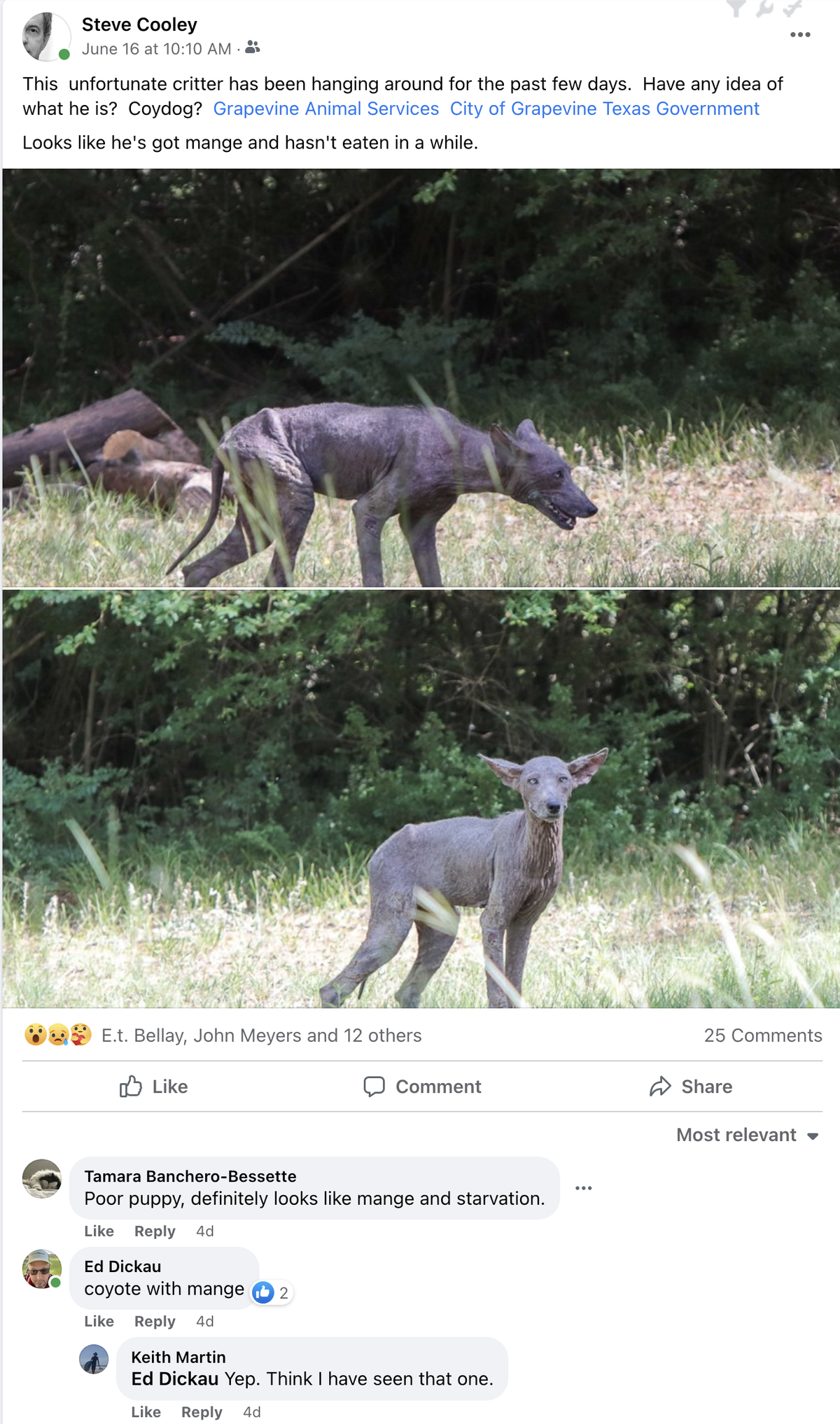
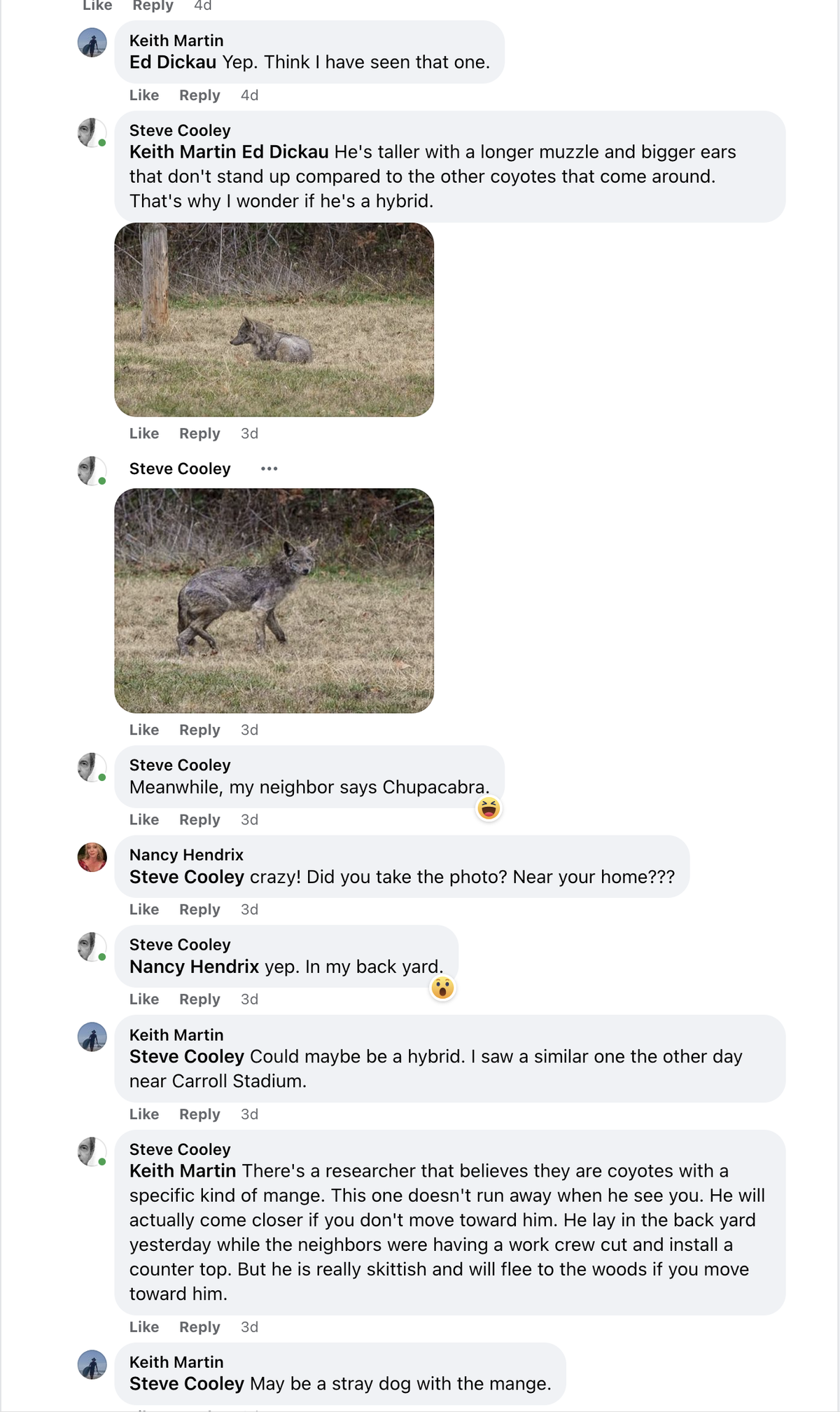
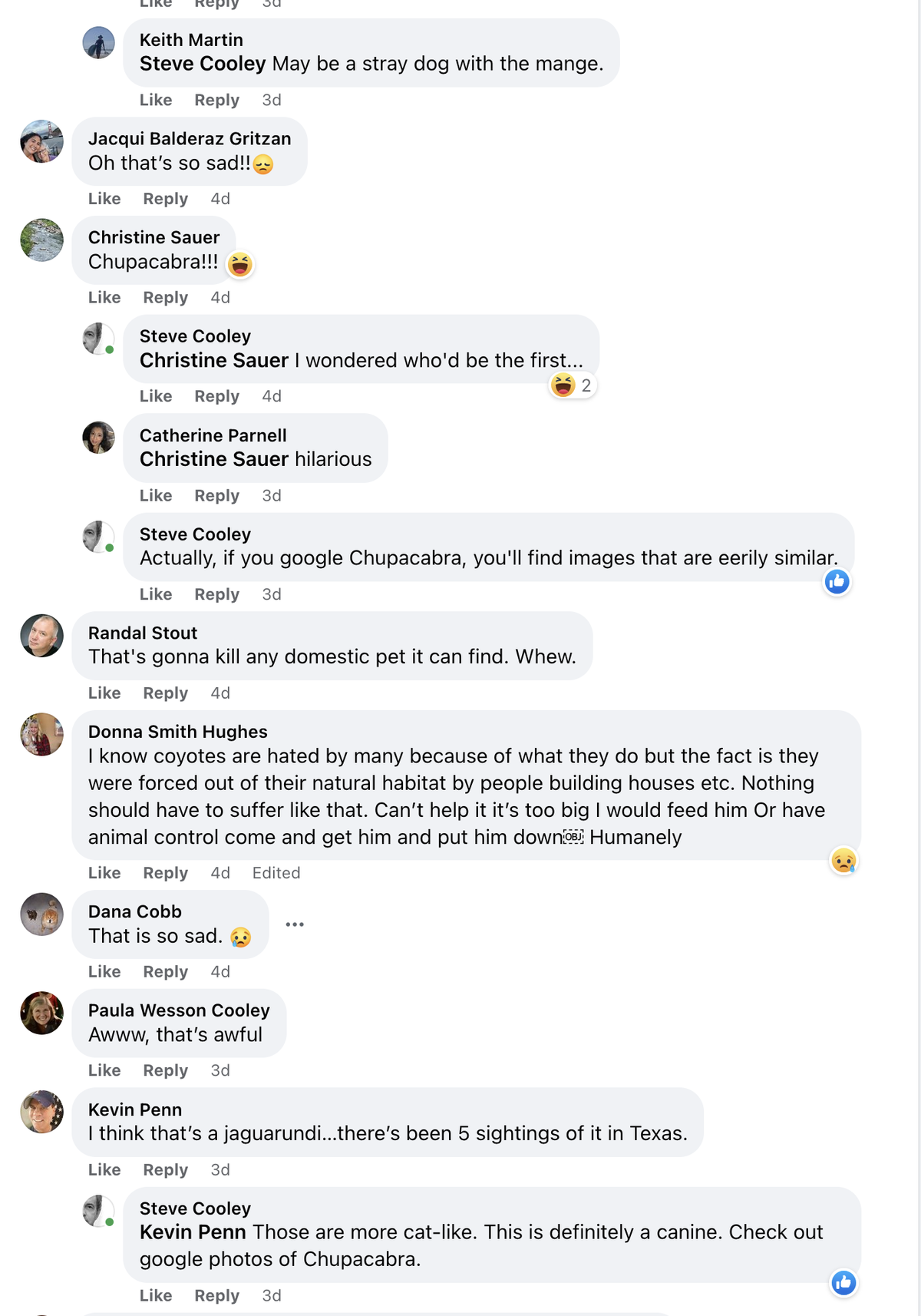
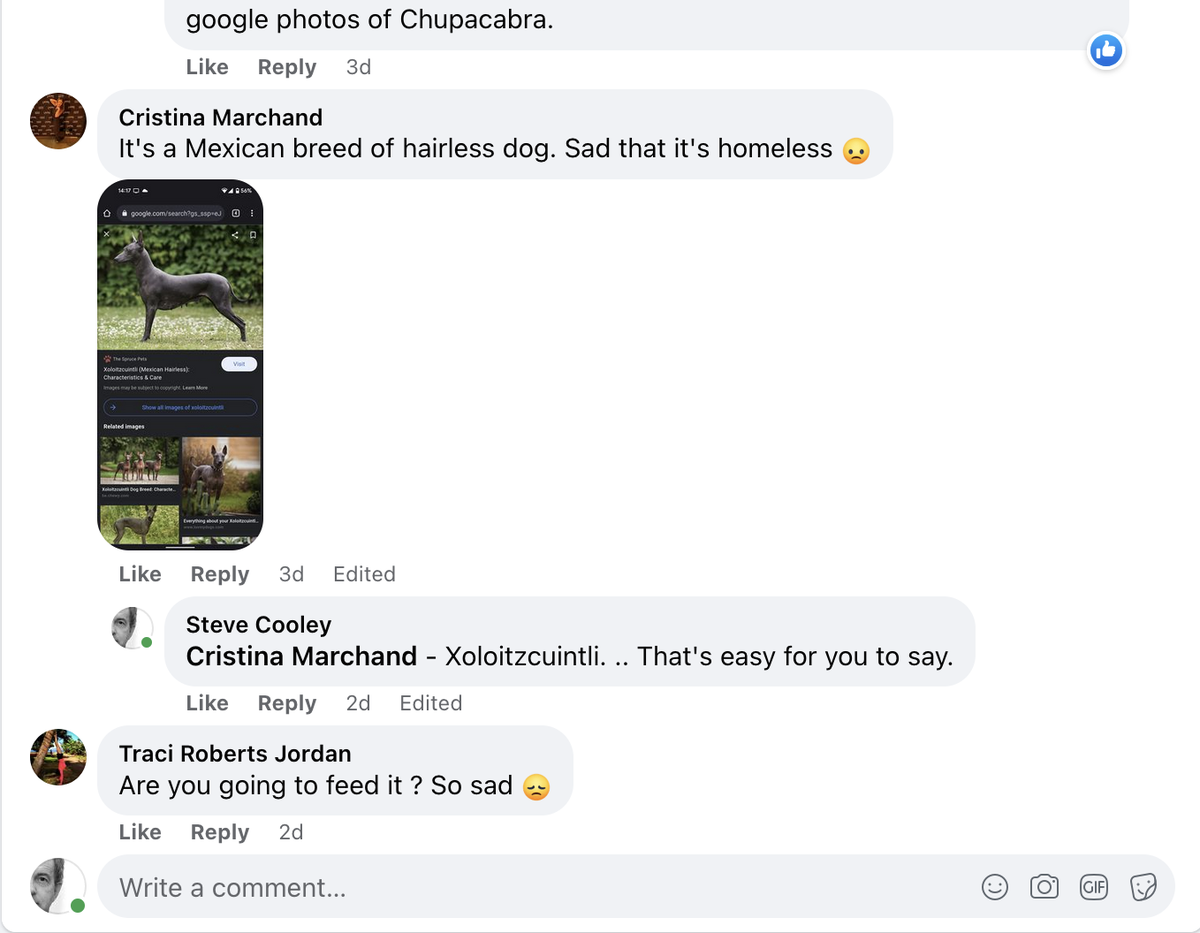
The general consensus was “poor thing,” Steve said. Most said it was a dog or coyote with mange, while some said it was another animal like a xoloitzcuintle (Mexican hairless dog) or jaguarundi (wild cat). A few had a theory aligning with that of his neighbor: they said the animal was none other than a chupacabra.
Steve said it looked different from a coyote with mange that had crossed his yard a few years ago; that canine had some patches of fur while this animal was completely hairless. While he says the animal looked eerily similar to chupacabra images he had seen online, one explanation he thought was more plausible was that the animal was a xoloitzcuintle.
“I’m wondering if it was an animal that maybe had belonged to someone that wandered off,” he said.
What could this creature be?
We spoke with three Dallas-Fort Worth animal experts, who identified the animal as a canine with a severe case of mange (also known as scabies) — a debilitating disease caused by mite infestation. Mites burrowing into the animal’s skin to lay their eggs cause skin irritation and alopecia, which could explain the hair loss and scaly gray skin. The condition, common and highly contagious, can become chronic, leading to behavioral changes or even death.
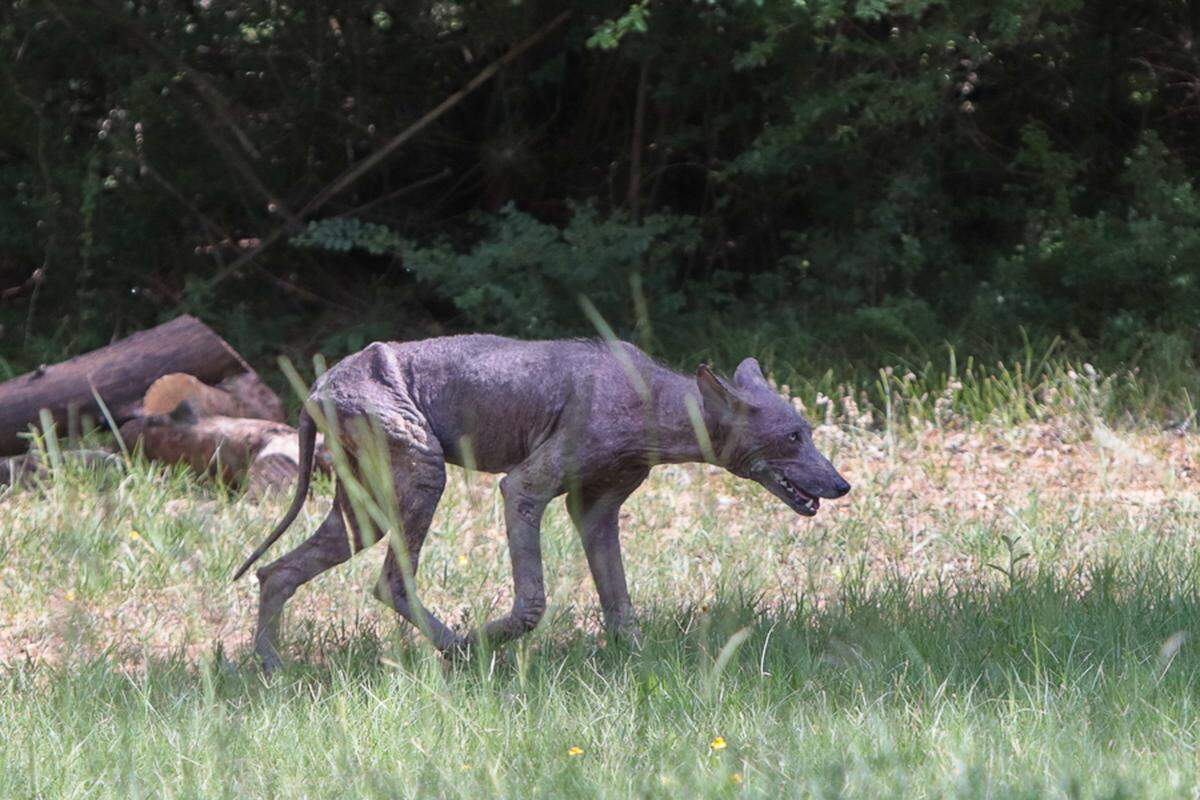
It’s unclear whether the animal is a coyote or dog afflicted by the skin disease.
Wildlife rehabilitator Katherine Bryson, who works at A Wildlife Pro DFW, says it’s a coyote, the most frequently reported type of “chupacabra.”
“Unfortunately, our coyote population suffers terribly from mange infections and this is a common sight across Texas and the U.S.,” Bryson said.
Veterinarians at the Texas Avian & Exotic Hospital, on the other hand, say the animal is a dog (breed unknown) with mange.
One thing that is certain, however, is that the animal is extremely sick. Texas A&M wildlife specialist John Tomecek says the animal looks typical for very late stage mange.
“This is very sad, and the animal is suffering,” Tomecek said. “They do not typically recover from this advanced a case.”
What to do if you spot an animal with mange
According to Tomecek, common symptoms of mange include intense itching, skin rash, alopecia, and skin crusting. Severely infected animals like the one in Grapevine may lose all of their hair, look extremely emaciated and be in poor health. At this stage, almost all of their body is hairless, except along the spine, comprising most of the ruff. Lesions may be scaly, and the skin is fully darkened and appears very thick.
Because mange is contagious, it’s important that you contact your local animal shelter or canine rescue to pick up the animal for treatment, says John Bennett, hospital manager at Texas Avian & Exotic Hospital. You can also call Texas Parks and Wildlife to direct you on what to do.
Contact with the animal should be avoided, experts say. The same as with finding a coyote on your property, you should shoo the animal away using a method called “hazing.” Don’t feed it, Bryson said, as that could be dangerous to you and could cause the contagious skin mites to spread to other animals.
Keep an eye on pets that may be susceptible to mange. Consider bathing them with acaricide if mange is common where you live and consult with a licensed veterinarian at the first sign of mange, Tomecek says.
Humans can contract mange, which often leads to scaly skin and red-purple rashes on the arms, chest, and neck. It usually clears up once the symptomatic animal is removed.
If you are experiencing livestock losses due to infected animals, contact a wildlife biologist or wildlife damage specialist such as those working for Texas Wildlife Services, Tomecek suggests. If you spot the carcass of an infected animal, contact a licensed veterinarian for advice on how to proceed.
This story was originally published June 21, 2022 at 11:20 AM.