How to see the total lunar eclipse ‘Flower Moon’ in North Texas on Sunday evening
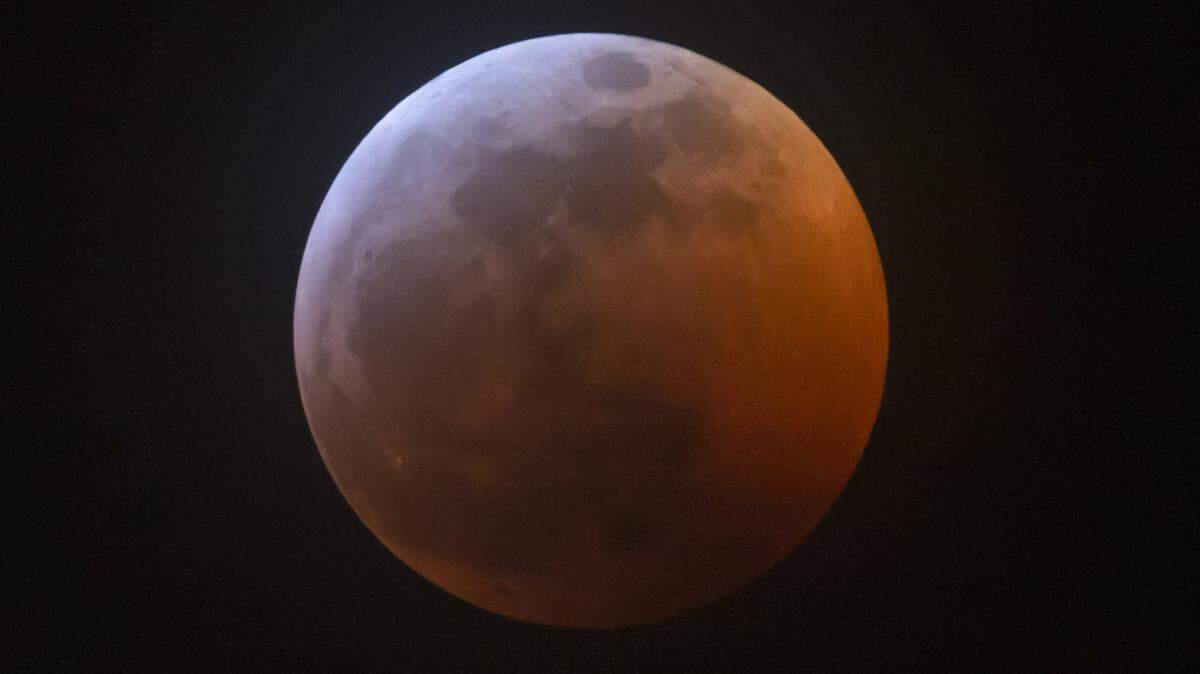
A total lunar eclipse will be visible early in the night for North Texans on Sunday.
UTA Planetarium director Levent Gurdemir said the eclipse will be visible within an hour after sunset on Sunday, around 9:30 p.m., with a full dark red color seen after 10:30 p.m.
The May full moon is also known as the Flower Moon, named by the Algonquin tribes for the abundant flowers during this time of year.
Lunar eclipses are not rare events, Gurdemir said. On average the Earth sees two a year — the last one was in November 2021 and the next one will be in November this year.
Why is the moon red during an eclipse?
During a lunar eclipse the moon goes into Earth’s shadow, cutting off its exposure to the sunlight. Gurdemir said Earth’s atmosphere reflects light and the red reflected light hits the moon making it appear a dark red color.
To see the full eclipse, viewers will need patience, he said. The most red will happen after 10:30 p.m. and by midnight Monday morning the moon will start recovering its brightness.
Do I need eye protection for a lunar eclipse?
Unlike solar eclipses that require eye protection and specialized telescopes for viewing, a lunar eclipse can be seen with the naked eye, Gurdemir said.
“It is perfectly safe to watch with bare eye,” he said.
The moon rises from the east, so anyone with a clear view of the sky should be able to catch a glimpse of the eclipse. As of Wednesday, the National Weather Service in Fort Worth forecasts clear skies for Tarrant County and other parts of North Texas.
What makes this lunar eclipse different?
Eclipses are dependent on the angle of the sun or moon. Total lunar eclipses happen when the moon is entirely in Earth’s shadow while partial eclipses happen when part of the moon is in its shadow.
“Most of the time common celestial events are marketed as rare events, but not really,” Gurdemir said. “Total lunar eclipses are happening quite often.”
The moon is at the nearest point to the Earth in May, making it slightly larger in the sky, he said, although the size difference may not be too noticeable to viewers.
He said the moon has an elliptical orbit, changing its distance back and forth with the Earth.
This story was originally published May 11, 2022 at 4:13 PM.