What is Shen Yun, and why are we seeing signs for it everywhere?
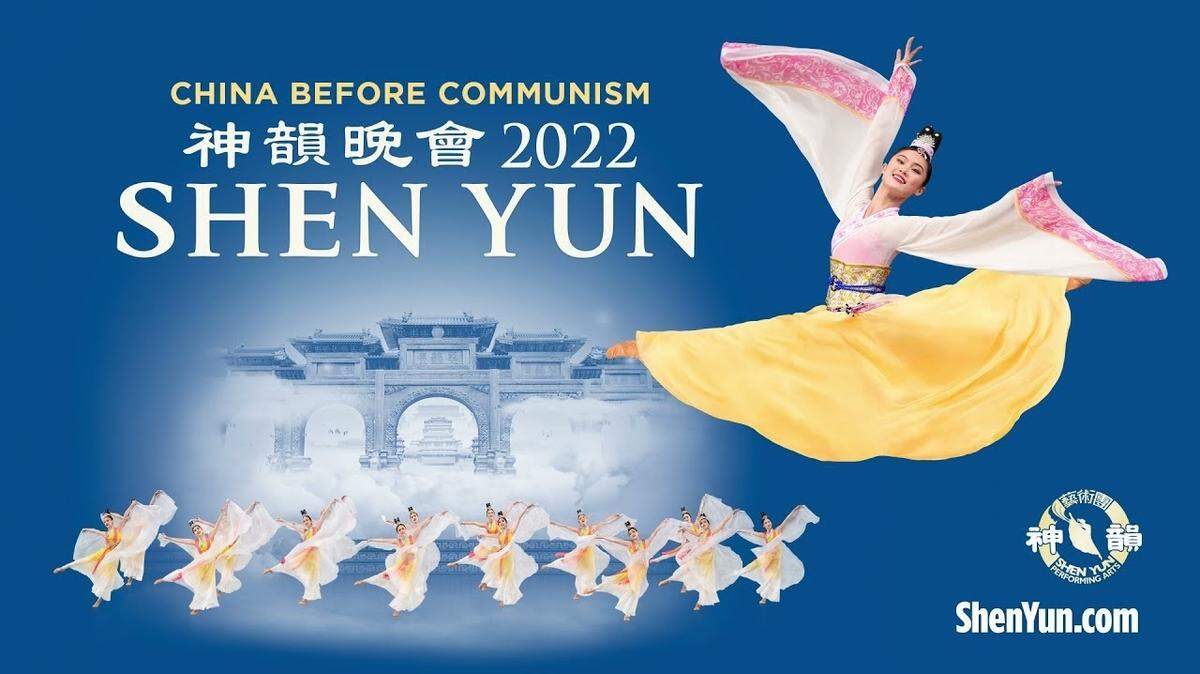
If you’ve driven on a Dallas-Fort Worth highway recently, visited a coffee shop or surfed the web, you may have noticed advertisements for this performance. A viral meme joked that they were everywhere.
Shen Yun Performing Arts is coming to Dallas this weekend, bringing a “unique blend of stunning costuming, high-tech backdrops, and an orchestra like no other,” according to the event page.
What is Shen Yun?
Shen Yun is a classical Chinese dance company that, according to a press release, aims to revive 5,000 years of traditional Chinese culture.
The traveling group performs a range of traditional Chinese ethnic and folk dance, bel canto solos, and an orchestra blending Eastern and Western traditions with 3D digital backdrops.
According to its website, classical Chinese dance has helped preserve a cultural heritage with thousands of years of history.
What is Falun Dafa?
Shen Yun, based in New York, was established by Falun Dafa practitioners in 2006, the website says. The company’s mission is “to use performing arts to revive the essence of Chinese culture.”
In its nonprofit documents, Shen Yun Performing Arts says its mission is “to carry forward the goodness of FLDF and universal principle of Truth, Compassion and Forbearance. To bring together talented artists of different nationality to revive the true, five-millenia-old artistic tradition of China.”
Falun Dafa, also known as Falun Gong, self-described as a practice that combines ancient Chinese teachings with meditation exercises, was banned in the People’s Republic of China in 1999 after being designated a cult.
“Most of the group’s practices fall roughly within the traditions of Tai Chi and Qigong, and the group itself can be situated within China’s long history of apocalyptic sects promising redemptive transformation, such as the White Lotus Society, which dates to the Ming dynasty,” writes Jia Tolentino in The New Yorker in 2019.
What is Shen Yun’s relationship with the Chinese government?
Tolentino describes Shen Yun in The New Yorker article as “religious-political propaganda — or, more generously, an extremely elaborate commercial for Falun Dafa’s spiritual teachings and its plight vis-à-vis the Chinese Communist regime.”
Li Hongzhi registered the group with the Chinese government in 1992, Tolentino writes. “Falun Gong started holding enormous gatherings; by the mid-nineties, there were more than two thousand Falun Gong practice stations in Beijing alone,” she wrote.
Prior to the Chinese government’s 1999 ban on Falun Gong, there were an estimated 70 million adherents, according to the U.S. Department of State. Not wanting the population to become more loyal to Li than to the Communist Party, the government cracked down on Qigong groups and banned sales of Falun Gong publications. More than 10,000 FLDF practitioners gathered for a silent protest in front of the central government compound in Beijing.
An arrest warrant was issued for Li, who had moved to Queens, after which the Chinese legislature enforced anti-cult law.
“Whether Falun Dafa — the name is used interchangeably with Falun Gong — is a cult, in either a strict or loose sense, is debatable,” Tolentino wrote. “Its practitioners have no record of violence, and the organization does not appear to be coercive.”
Falun Gong alleges that thousands of its members have been killed in state custody.
“Forced organ harvesting in China appears to be targeting specific ethnic, linguistic or religious minorities held in detention, often without being explained the reasons for arrest or given arrest warrants,” the UN Human Rights Commissioner said in June 2021.
UN human rights experts said they received reports alleging organ harvesting targeting minorities, including Falun Gong practitioners, Uyghurs, Tibetans, Muslims and Christians, in detention in China. According to the report, UN human rights experts previously raised the issue with the Chinese government in 2006 and 2007.
What do their beliefs have to do with dancing?
Shen Yun, translated as “the beauty of heavenly beings dancing,” is said to honor spirituality.
“Throughout history, almost every culture looked toward the divine for inspiration,” the website reads. “Art was meant to uplift, bringing joy to both the people who created and experienced it. It is this principle that drives Shen Yun performers and their art.”
The founder says Shen Yun uses dance “to offer deliverance in the human world.”
Li Hongzhi is a controversial figure, having expressed beliefs that people of different races will be separated in heaven and that aliens were attempting to control humans by making us dependent on modern science, according to The New Yorker. A San Francisco man said his parents refused lifesaving medical treatment because Falun Gong teaches that sickness is based in karma.
In its marketing materials, plastered across the U.S., the show brands the performance as a “China before communism.” The website says that Falun Dafa practitioners in China continue to face abuse and persecution, and that the Chinese Communist Party has harassed Shen Yun performers in the United States.
What is the Shen Yun performance like?
In defining classical Chinese dance, Hongzhi writes about conflicting views about the dance form that the group has with the Beijing Dance Academy, saying that Shen Yun’s version is more traditional and authentic.
“Classical Chinese dance dates back thousands of years. Dynasty after dynasty, it was enriched and refined, becoming one of the world’s most comprehensive dance systems,” the website reads. “In China today, it’s regularly mixed with military or modern dance styles to the point that people don’t know what exactly they’re watching. Only Shen Yun performs classical Chinese dance in its purest form, preserving its traditional aesthetic the way it was originally passed down.”
A press release says the dance expresses a variety of feelings through techniques like flips, spins and tumbling.
This weekend’s show was brought to the AT&T Performing Arts Center–Winspear Opera House by the Southern USA Falun Dafa Association, a 501 (c)(3) non-profit organization based in Texas.
Yelp reviews of the performance are mixed.
“I think the Shen Yun performance should be categorized as religion event that preaches about Falun Dafa. If we knew about it we would not go,” writes Valeriya V.
Others have been fascinated by the performance. Actress Cate Blanchett called it “Exquisitely beautiful. An extraordinary experience for us and the children.”
The show is profitable: The Shen Yun organization made $22.5 million in 2016, according to Business Insider.
This story was originally published April 15, 2022 at 12:41 PM.