An exotic beetle is killing a Texas tree species. Here’s what’s being done to stop it.
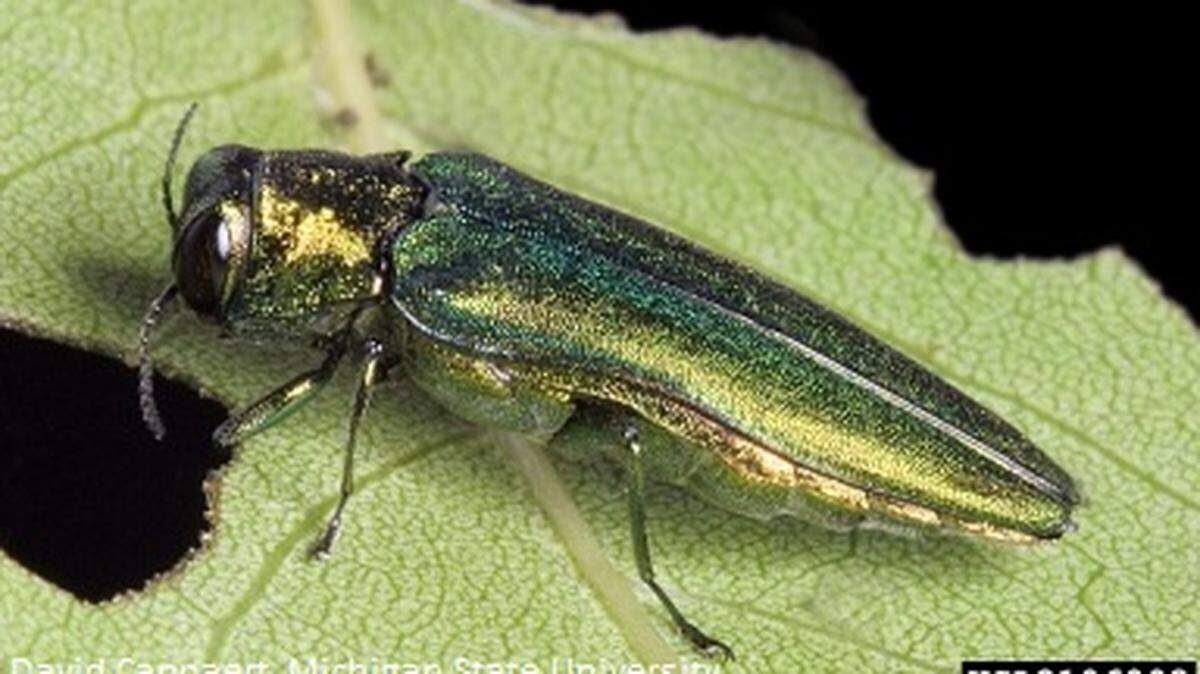
The emerald ash borer, an invasive wood-boring beetle first discovered in Texas in May 2016, could be infesting and killing the state’s ash trees starting this spring.
“When this insect shows up, ash trees lose,” said Allen Smith, Texas A&M Forest Service regional forest health coordinator. “You can grow the world’s healthiest ash tree, and if the emerald ash borer shows up, they will kill it. There’s a danger that we lose ash as a species out of our environment.”
Texas A&M Forest Service, which began monitoring the pest in 2012, is deploying up to 600 detection traps in counties across the state this spring and summer. Traps are monitored for four months during the insect’s peak emergence and movement, from late March to July.
Where has it been found in Texas?
Six Texas counties have been infested by the wood-boring beetle.
The discovery of the beetle in 2016 was in traps deployed in Harrison County in Northeast Texas. Now, the insect is found throughout North Texas. Infested ash trees were found in Tarrant County in 2018. Later, adults were found in Marion, Cass, Bowie and Denton counties.
What does the emerald ash borer look like?
Several dozen native Texas species look fairly similar to the emerald ash borer, Smith says, making identification of the beetle difficult.
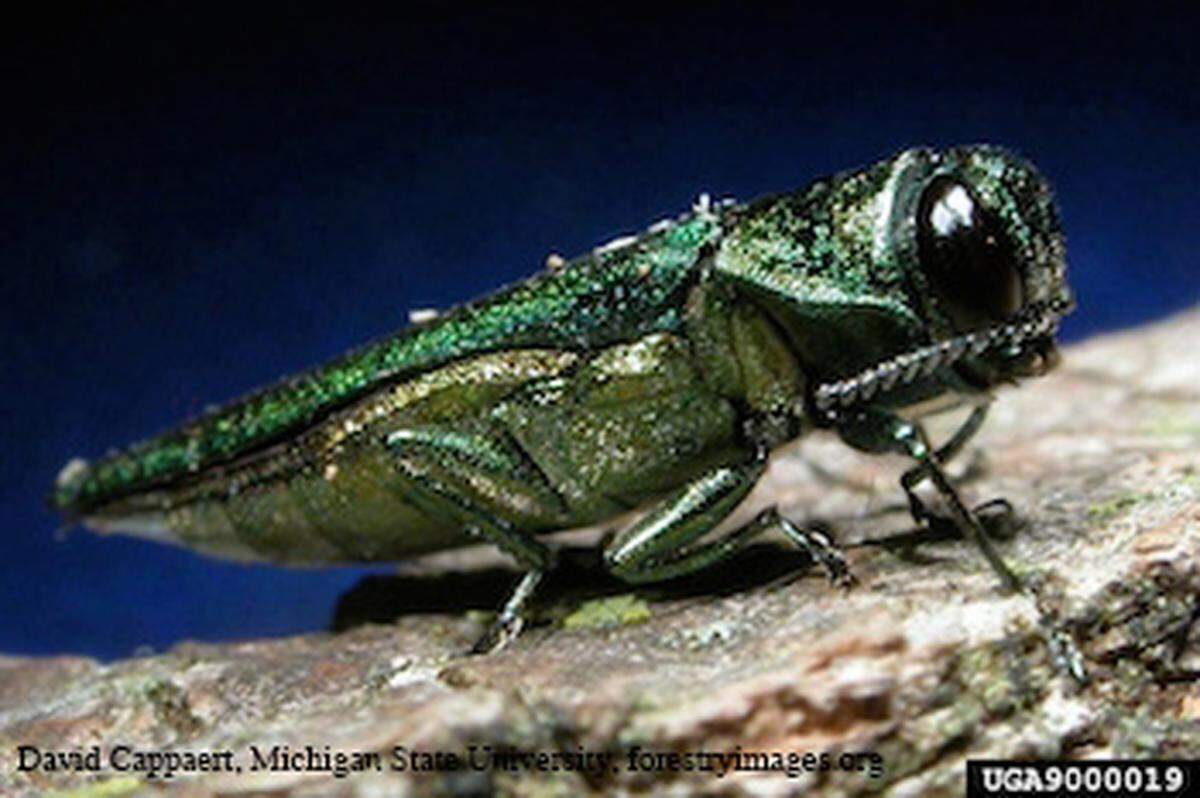
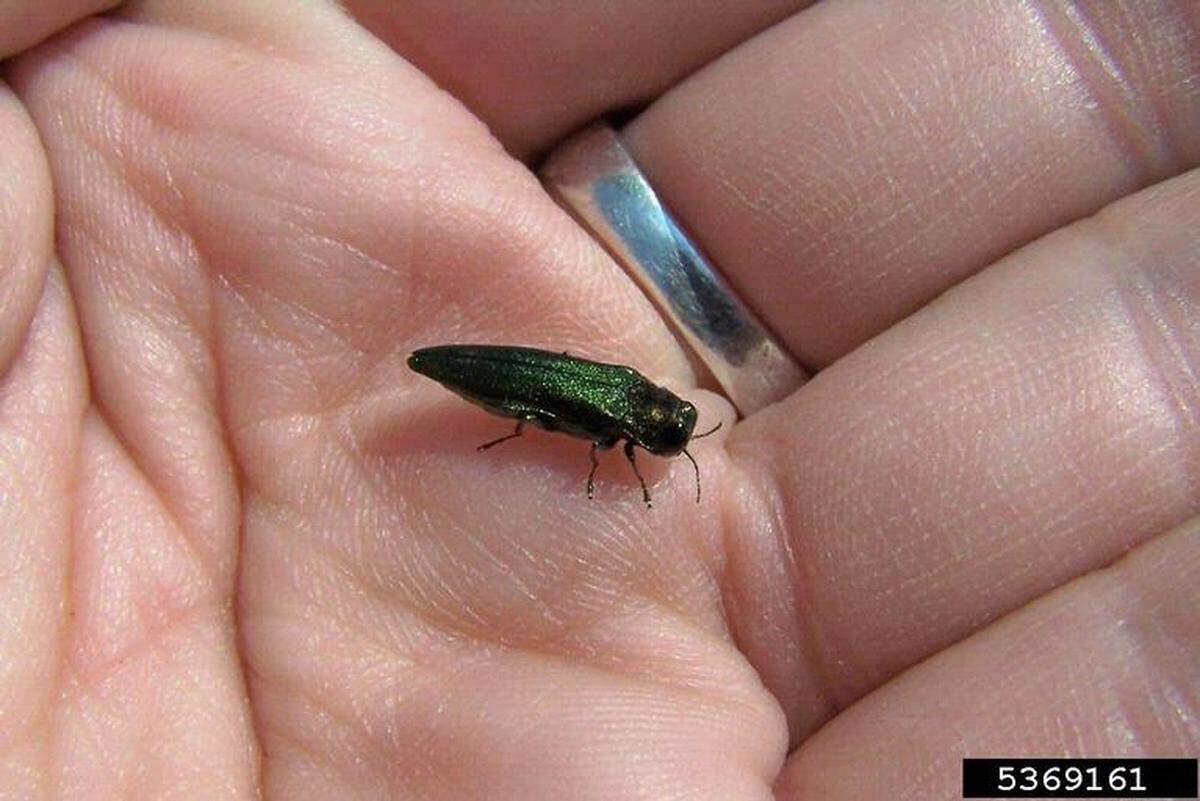
They are small, roughly 1/2 inch long and 1/8 inch wide, and metallic emerald-green with a cylindrical body. Females can lay up to 100 eggs in bark crevices.
Emerald ash borers can be distinguished from similar wood-boring beetles by their copper red abdomen. Other beetles have a black, green or blue abdomen.
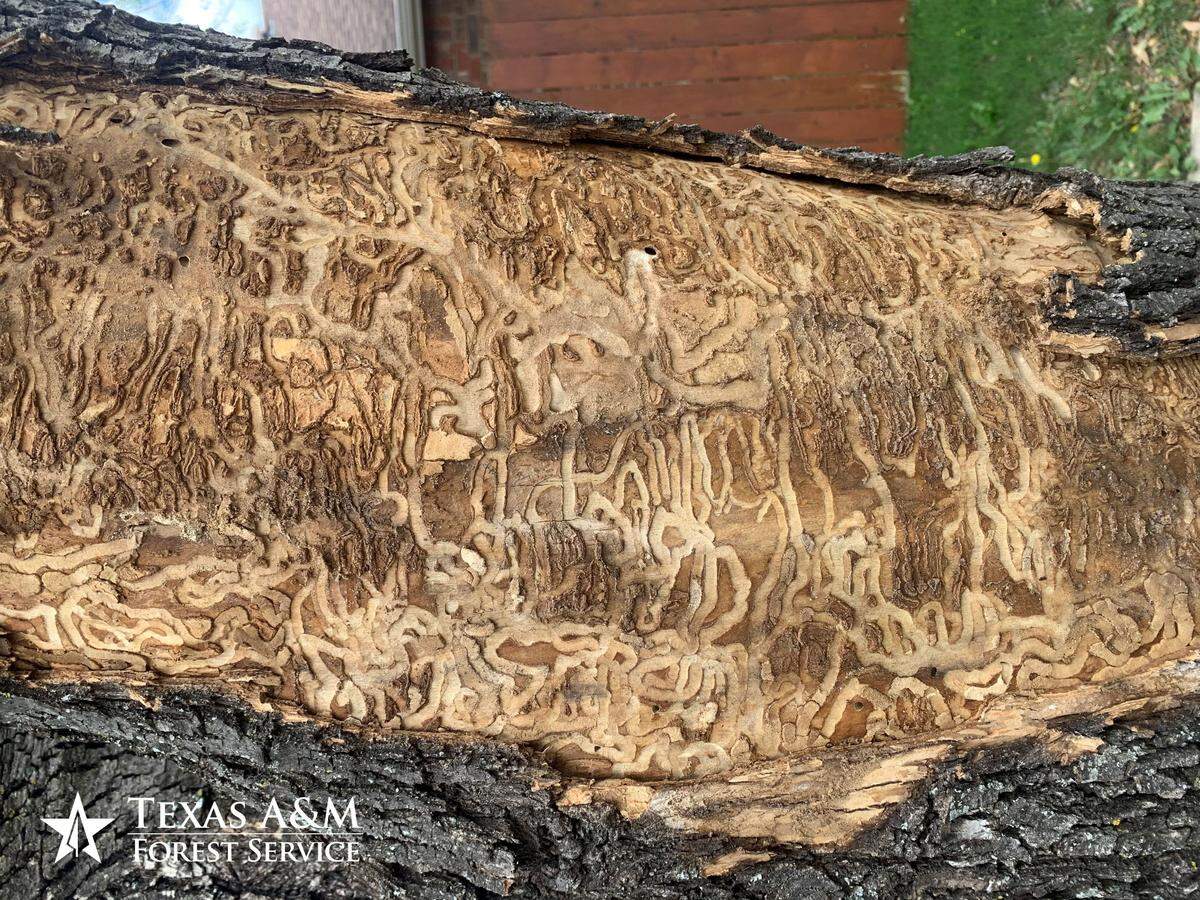
The emerald ash borer is not always visible because the adults are small enough to fit on the head of a penny. It burrows under bark, often going unseen until the ash tree begins to die.
What’s being done to prevent the beetles from spreading?
The forest service places purple box traps in trees to determine whether the borers are in the area. They’re coated with an adhesive that captures them. The agency’s goal is to stop the spread of emerald ash borers and the threat they pose to the state’s forest ecosystems, private property and timber industry.
Once the borer is detected in an area, the Texas Department of Agriculture, the state’s regulatory agency, establishes a quarantine, restricting movement of certain forest products and tree debris and waste outside of the quarantine area. That process typically takes 60 to 90 days. Currently, quarantines have been established for Harrison, Cass, Marion, Tarrant, Bowie and Denton Counties.
TAMFS is also helping communities across Texas develop, communicate and implement local preparedness plans.
What impact does the emerald ash borer have?
The emerald ash borer destroys habitats of native animals and plants, increases fire risk from dead trees, and results in high costs of insecticide treatments and dead tree removal.
Since being discovered in the U.S. in 2002, the northeast Asian beetle has killed millions of ash trees. As of 2020, 35 states have detected emerald ash borer infestations. In some of the places where it’s taken hold, 99% of ash trees have died.
Texas has eight native ash species, all of which are vulnerable to the emerald ash borer. The borer blocks a tree’s nutrient flow, eventually killing it. Once an area is infested, the trees typically die two or three years after, and the cost to remove infested trees is significantly high. Infestations can also negatively affect property values and hurt industries such as lumber and tourism.
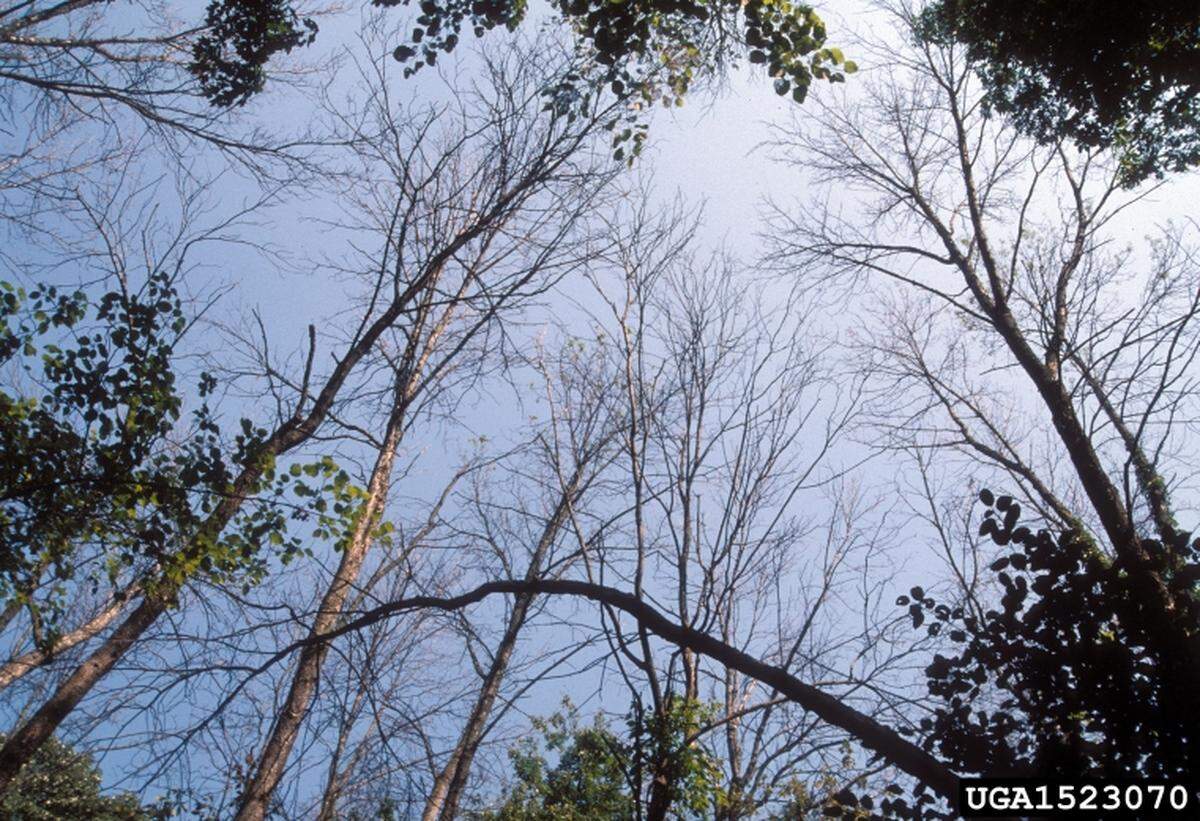
“In the state of Texas, ash trees were planted as an urban planting all across the landscape, and when the emerald ash borer starts killing all these urban trees, you end up with a whole host of problems,” Smith said.
“So what do you do with all the dead trees? As the trees die from emerald ash borer, ash trees get very, very brittle so they break very easily, they fall on people, they fall on cars. That makes it more difficult and therefore more expensive to trim them, to cut them down because they’re more of a hazard.”
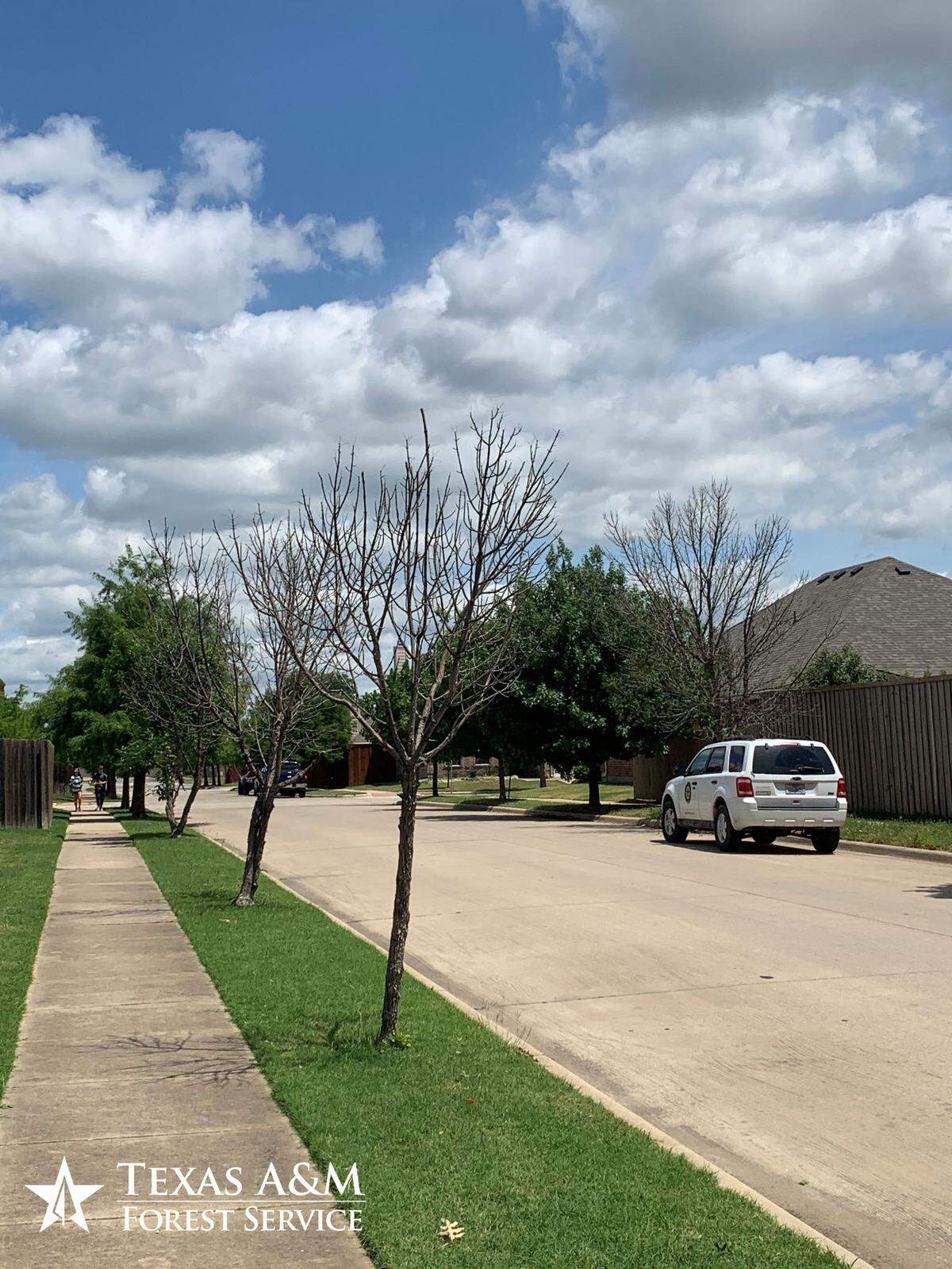
Losing trees to borers can be harmful to Texas ecosystems. At least 43 insect species rely on ash trees for food or breeding, and those insects in turn provide food for birds.
Ash trees also protect from soil erosion and provide shade, habitat and water filtration. Losing ash trees causes decreased air quality, increased electricity use during hot weather and loss in the long-term supply of ash wood.
How can you tell if your ash tree is infested?
Emerald ash borers prefer trees already weakened by pests or adverse environmental conditions. Remove poor condition ash trees before infestation occurs and replace them with a non-ash species.
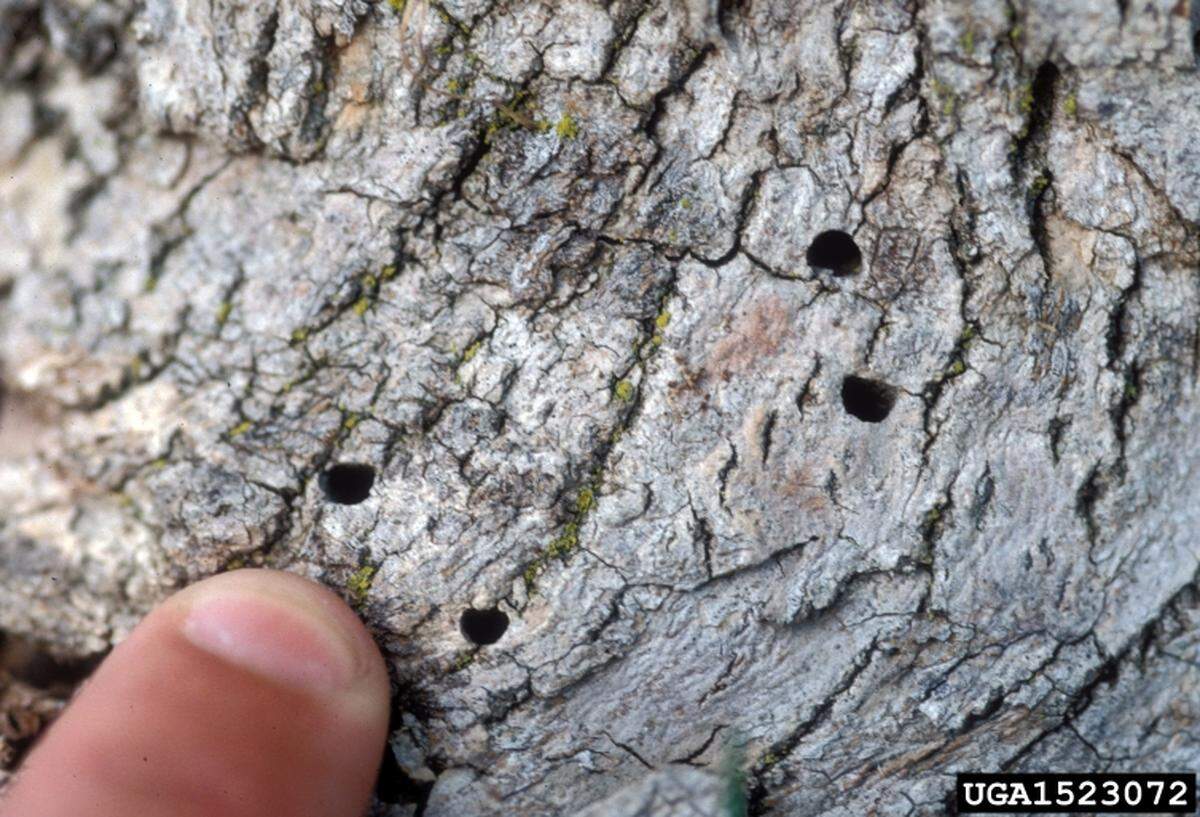
Symptoms of an infestation can include any or all of the following, according to TAMFS:
- dead branches near the top of a tree;
- leafy shoots sprouting from the trunk;
- bark splits exposing larval galleries;
- extensive woodpecker activity;
- D‐shaped exit holes in bark;
presence of the beetle itself;
heavy feeding by woodpeckers.
If emerald ash borer activity is confirmed within a few miles of your area, treat ash trees with insecticide. Work with a forester or a certified arborist to evaluate your treatment options.
How can you prevent an infestation?
Because the emerald ash borer can hide in cut wood, a primary way to ensure that you don’t spread it is to not move firewood from areas with a known infestation, particularly across state lines.
“Don’t chance in bringing infested wood from place to place,” Smith says.
TAMFS is asking Texans to follow these rules:
- Leave firewood at home. Don’t transport firewood, even within the state.
- Burn firewood where you buy or cut it. Or purchase firewood that is certified to be free of pests (it will say so on the label included with the packaging).
- If you have moved firewood, burn all of it before leaving your campsite.
If you spot dead or dying ash trees or the beetles themselves, take a picture of the ash tree or borer, record its GPS location and report it online or call the hotline at (866) 322-4512. TAMFS personnel will come to you and take a closer look at the insect.
The Lady Bird Johnson Wildflower Center is collecting seeds from Texas ash trees to aid in future ash restoration projects. You can assist them in identifying the location of ash trees so that they can be monitored. Send GPS coordinates, what species you think it is and photos (one closeup of the leaf and one of the entire tree) to ashseed@wildflower.org.