Fort Worth activists decry ‘double standard’ of police at D.C. riot vs. summer protests
Trice Jones remembers the events of May 31 vividly.
She recalls the Fort Worth officers lined up on bicycles, blocking the end of the West 7th Street bridge. Police in riot gear stood behind the bicycle-barricade, wearing bulletproof vests, helmets and, eventually, gas masks. As the hours passed and tensions mounted, Jones saw a water bottle fly through the air and behind the police line.
A few hours after sunset on the hot summer night, police deployed flash bangs and tear gas into the crowd of about 300 Black Lives Matter protesters. By the end of the night, Fort Worth police had arrested 50 protesters who were accused of rioting. At the order of Police Chief Ed Kraus, those charges were later dropped.
In an explanation of why tear gas was used on the crowd, Kraus said some protesters threw bottles of bleach and frozen water bottles at officers blocking the bridge. A firework was also detonated, Kraus said.
On Wednesday, a mob of extremists challenging the results of the presidential election rushed into the U.S. Capitol building. Four people died and, as of Thursday afternoon, 70 people were arrested. Video and firsthand accounts of the hours-long riot called into question the differences in how police handled a group of primarily white people breaking into a federal building as opposed to how police treated Black Lives Matter demonstrators protesting police brutality over the summer.
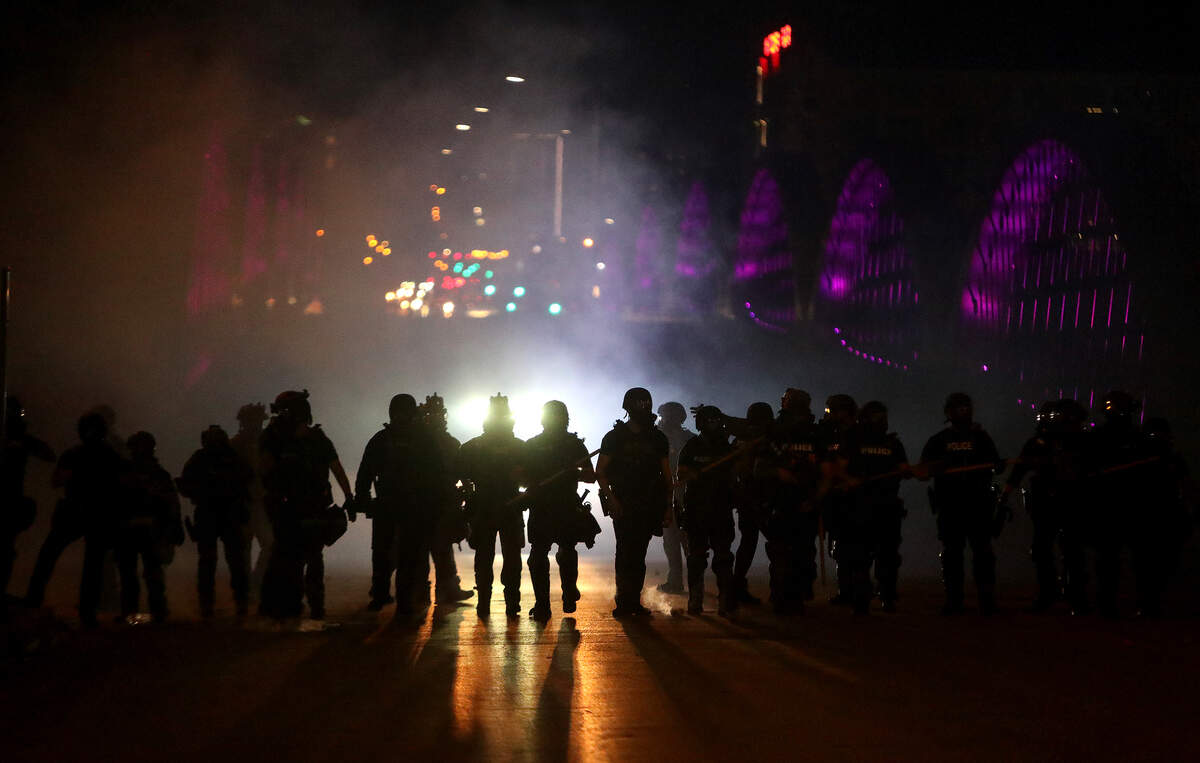
To Jones, and others who participated in Dallas-Fort Worth protests after George Floyd’s death, those at the U.S. Capitol seemed like they got off easy.
“Yesterday confirmed for me that the militarization of the police was designed for Black Lives Matter and anyone that supports that movement,” Kwame Osei, a leader of the social justice group Enough is Enough, Fort Worth, said Thursday.
Policing the protests
Last summer, protesters in Fort Worth and Dallas were met with curfews, cops in SWAT gear and handcuffs. May 31 was the first time Fort Worth police had tear-gassed citizens in at least 30 years. In Dallas, police hit bystanders with rubber bullets and corralled a large group of protesters on a bridge, leading to mass arrests.
Other Texas cities, including Austin and Houston, similarly saw sometimes violent clashes between protesters and police. At times, protesters threw objects such as rocks or vandalized buildings.
On Thursday, Jones stood in front on the West 7th Street bridge, wearing a black T-shirt that said, “We Would All Be Dead”
“When it was Black people people protesting this past summer, it was ‘when looting starts, the shooting starts’” she said, quoting a tweet President Donald Trump sent on May 28. “I could have sworn that was 45 who said that.”
But on Wednesday, police seemed unprepared and unable to stop the “thousands of individuals involved in violent riotous actions as they stormed the United States Capitol Building,” as described by the Capitol Police chief in a statement.
Near the end of May and in June, protests in Dallas ended with some groups looting and vandalizing retail shops.
“The reaction to that was much more aggressive than people walking into the Capitol and literally stealing podiums,” said Ayah Hamza, a 26-year-old Fort Worth resident who participated in protests in Fort Worth and Dallas over the summer.
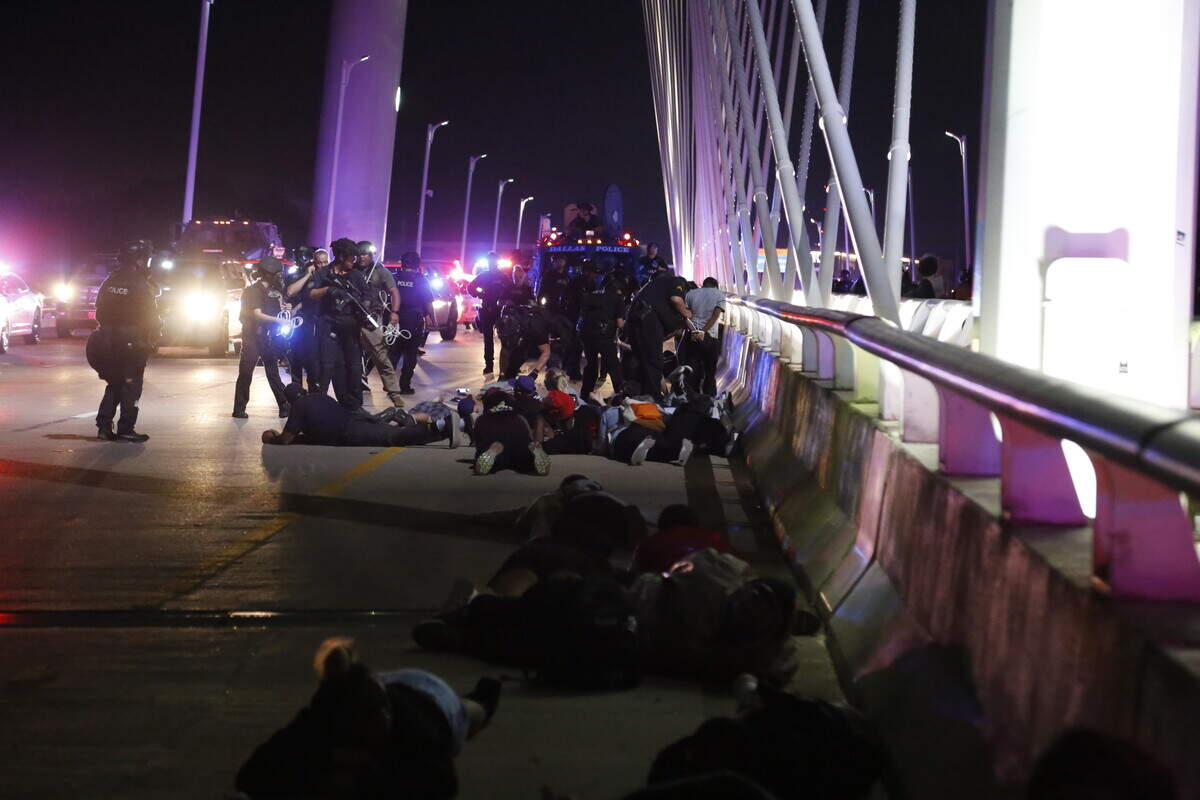
At a Dallas march, she saw one man, despite cries from others to stop, smash a car window. Police launched tear gas.
“Immediately, police pull up in dark vans, men in military gear with rifles came out,” Hamza said. “They were ready for it. They started tear-gassing the entire crowd and shooting rubber bullets. Instead of grabbing that one person and arresting him.”
The way the D.C. mob was treated when it came to looting and vandalizing was not the only difference Hamza noted. While BLM protesters sometimes fear their identity being publicized will put them in danger, people inside the Capitol “are proudly taking picture of themselves.”
“There is a double standard,” she said. “And it will always be hard for people who don’t suffer from that double standard to understand and accept that.”
On Thursday morning, President-Elect Joe Biden also said a double standard existed for the different groups.
“No one can tell me that if it had been a group of Black Lives Matter protesting yesterday, they wouldn’t have been treated very, very differently from the mob of thugs that stormed the Capitol,” he said during an event in Wilmington, Delaware.
Riot vs protest response
On Thursday, Capitol Police Chief Steven A Sund announced his resignation after many lawmakers and officials condemned the department’s response to the Pro-Trump extremists. Washington Mayor Muriel Bowser called the police’s actions “a failure,” USA Today reported.
Sarah Russell, a local activist and teacher, said the lack of preparation itself was evidence of the underlying racism of police — and American — culture. A Black Lives Matter protest is seen as a possible riot, while “30,000 white people storming the Capitol is not as big of a threat,” she said.
“It just showed me how ingrained racism is in people, especially in white people,” Russell said. “They truly fear Black people. They are truly scared.”
Government officials publicly questioned why the police seemed unprepared for an event that law enforcement was aware of for weeks. On Thursday, the secretary of the Army and the chief of D.C.’s police force said they did not expect Trump’s supporters to try to enter the Capitol building, the Washington Post reported.
“(Police use of force) was about Black people protesting,” Jones said. “It was about Black people not sitting down and being quiet. It was never about the protest — it was always about the fact that it was Black people who were protesting.”
Osei said he did not want police to handle Wednesday’s rioters more violently — he instead wishes police had shown that same restraint in response to protests last summer — especially since what the groups are fighting for is vastly different.
“We’re protesting for our liberties in this country,” the 37-year-old said. ”They are upset that they’re not getting their way. No rights have been taken away.”
Protest arrests
After protesters were tear-gassed on the Fort Worth bridge, those who were arrested had potential charges dropped. But the arrests continued.
Two weeks later, three leaders of the activist group Enough is Enough, Fort Worth were arrested during a nonviolent demonstration downtown. One was charged with giving a false identity to officers, another with interfering with public duties and the third with obstructing a highway.
On June 12, Jones, 34, was charged with criminal mischief for hitting a restaurant table with dishware as a group of protesters chanted inside. Ten Special Response Team officers surrounded her house to arrest her, she said. She thought she was going to be killed.
“This is my story, but I want to make it clear that this story is the same almost across the board with police departments,” she said.
Jones, Osei and Hamza agreed that they had many emotions about Wednesday’s events — but surprise was not one of them.
“Everyone says this is not our America,” Hamza said. “But it is. Our America was built on terrible things that stemmed from racial inequity. We’re just seeing the consequences of our country’s actions.”
This story was originally published January 7, 2021 at 9:27 PM.