
The Debt Trap: Borrowers should make sure they understand reverse mortgages
Editor’s note: The Debt Trap is a collaborative project by the Star-Telegram, WFAA and the Austin American-Statesman aimed at shining a light on loans that either help the economically disadvantaged or devastate them, depending on whom you ask. This installment explores reverse mortgages. An upcoming installment will look at student loans.
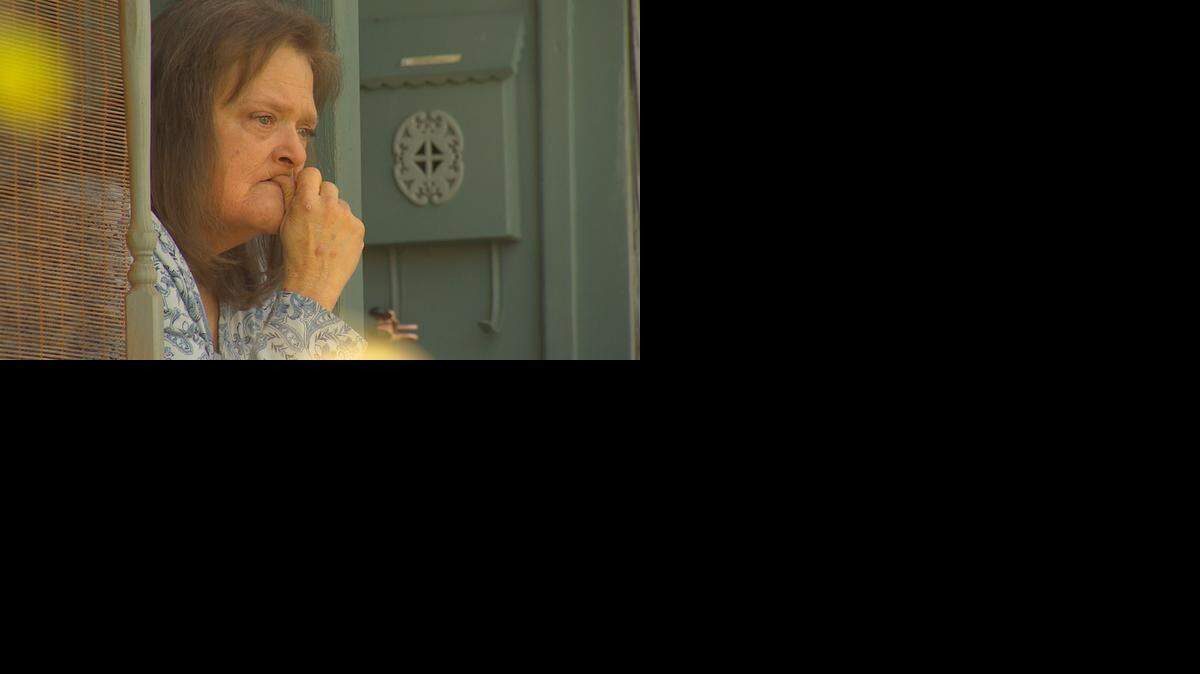
Josalyn Cassatt lost her mother in 2014 after a long illness. Now, she’s about to lose her home.
Cassatt spent the last decade living at her mother’s Haltom City house, taking care of her ailing mother full-time. She thought she would simply inherit the house after her mother died, but she discovered paperwork showing her mother had taken out a reverse mortgage in 2006.
With a reverse mortgage, heirs can keep the property if they pay off the outstanding loan balance in full or if they buy the property for 95 percent of the appraised value. Cassatt couldn’t afford to pay off the loan or the required 95 percent of the current appraised value, $103,500, which she says had increased by about 25 percent in the nine years since the reverse mortgage.
“Around December first or fourth, I get a letter saying the house is going on auction Jan. 6 — foreclosed on by the reverse mortgage because she is deceased,” Cassatt said.
Opponents of reverse mortgages dislike the many ways — more than a dozen — to default on one. On the other hand, Michael Jones, a branch manager and loan originator at Georgetown Mortgage in Dallas, and other proponents say the loans should be considered a retirement funding tool.
A client of his, 69-year-old David Alley of Dallas, figures he’s saving $1,000 a month with his reverse mortgage, which he considers “perfect” for his situation.
Cassatt suspects her ailing, elderly mother didn’t understand how the reverse mortgage worked.
“I really don’t think she understood what she was doing,” Cassatt said. “She always wanted to make sure I had a roof over my head.”
Texas has become one of the busiest reverse mortgage markets in the country, but California lays claim to the largest number of loans.
In the last two fiscal years, Texas ranked second in the nation with 5,125 reverse mortgages in fiscal year 2013 — 8.55 percent of the national total — and 3,843 in fiscal year 2014, which is 7.45 percent of the national total.
In Dallas and Tarrant Counties, there were a combined total of 821 reverse mortgages in fiscal year 2013 and 687 in fiscal year 2014.
Nationally, since the reverse mortgage program began in 1989, more than $203.9 billion has been distributed through 904,170 loans; about three quarters of them are still active accounts. The overall number of reverse mortgages has generally declined in recent years after record tallies in 2007-09. Those three “Great Recession” years mark the only period in the history of reverse mortgages where the annual number of loans was above the 100,000 mark.
How they work
Those are all figures for a type of reverse mortgage known as a Home Equity Conversion Mortgage or HECM — almost all are this type. To qualify for an HECM, a homeowner must:
▪ Be 62 years of age or older;
▪ Own the property outright or have it paid down a considerable amount;
▪ Occupy the property as principal residence;
▪ Not be delinquent on any federal debt;
▪ Have financial resources to continue making timely payment of ongoing property charges, such as property taxes, insurance and homeowner association fees, etc.;
▪ Participate in a consumer information session given by a HUD-approved HECM counselor.
HECMs are insured by the Federal Housing Administration.
The amount of a reverse mortgage loan is based on a property’s appraised value and the percentage of the homeowner’s equity in the property. In general, the older the borrower is, the more valuable the home and the lower the interest rate, the higher the loan amount.
The borrower pays closing costs that run into the thousands of dollars. The loans also incur a monthly servicing fee. The Department of Housing and Urban Development directs online visitors to a reverse mortgage calculator at reversemortgage.org to estimate the costs and benefits of a potential loan.
Reverse mortgage borrowers can get a one-time, lump-sum payment, a monthly distribution, or a line of credit.
In a traditional mortgage, the borrower must pay property taxes, property insurance premiums, and principal and interest on the money borrowed.
In a reverse mortgage, the borrower pays taxes and insurance, but does not pay principal or interest on the loan. The lender collects what it is owed when the home is sold, when the homeowner leaves the home for an extended period or when the homeowner dies.
An online resource from aarp.org notes that reverse mortgages are “rising debt, falling equity” products, and a retired individual with a lot of equity may want to make use of that equity. But if the homeowner takes out a lot of cash, there may be very little equity left for heirs. See the AARP pamphlet here.
Some of the more prominent default triggers include failure to pay property taxes and insurance, failure to maintain the property to the lender’s standards, and failure to occupy the home as a primary residence, such as in cases when an elderly person enters an extended-care medical facility.
It works for some
Alley moved back to his native Dallas from California last November.
“It was time to come back home,” he said. He took advantage of an “HECM for purchase,” in which a borrower takes out a reverse mortgage and buys a home all in one transaction. Alley’s real estate agent gave him the idea.
“This is perfect for me,” he said. “It was a no-brainer. It probably took me a half-hour to make the decision.”
Alley says it allowed him to buy “more house” than he would have been able to afford had he used a traditional mortgage.
He says he has peace of mind that he’ll be able to stay in the home for the rest of his life. After that, he says he has no problem with his property reverting to the lender rather than to his heirs.
“My relatives are very well set,” he said. “They have their own homes, and they don’t really need this place.”
Jones said he was skeptical of reverse mortgages initially.
“When I first heard about reverse mortgages in 2012, I said, ‘I don’t really care to learn about these. This is not something I think I’m going to offer to my clients.’”
But after educating himself on the loan product, “I walked away completely changed. I would recommend this to my parents, my grandmother.”
Jones said he believes a reverse mortgage should actually be used before tapping into an IRA or proceeds from a 401k so that retirees can “allow those stocks, bonds and securities to continue to grow.”
‘Elder financial terrorism’
Sandy Jolley of California, who crusades against reverse mortgages, doesn’t see it that way.
“This is a very dangerous way to use your largest single asset,” she said. “I would say it may be right for less than 5 percent” of those who have reverse mortgages.
For Jolley, who says the loans are “elder financial terrorism,” it’s a very personal issue. “My parents were sold a reverse mortgage they didn’t need. My dad was in the last month of his life with terminal cancer on narcotic pain medication. My mother had Alzheimer’s disease. They had plenty of money.”
She fought her parents’ lender, and has since taken on the fight for other borrowers and their heirs. “I have hundreds of files here from all over the country,” she said. “It’s really a mission in my life right now. I do not profit from this. I help consumers all the time without charging them one dime.”
HUD has announced new financial assessment requirements for reverse mortgage applicants. Prominent lender AAG describes on its website some of the qualifications applicants will have to satisfy, including credit history documentation, income verification, asset verification, residual income analysis and calculations for life expectancy set-asides
The new guidelines were scheduled to be implemented by HUD starting March 2. But the National Reverse Lenders Mortgage Association reports the changes are now being delayed another 60 to 90 days.
Cassatt’s mother’s home reverted back to the reverse mortgage lender and was recently auctioned. At 61, long unemployed and broke, she is looking for a new place to live.
Cassatt echoes one point shared by proponents and opponents of reverse mortgage: Before entering into one of these loans, there should be a thorough discussion among the homeowners, the heirs, and anyone else who might be affected by the decision now or in the years ahead.
Online
Government online resources with details about reverse mortgages are at HUD.gov, which has a portal specifically about reverse mortgages, and the Federal Trade Commission’s consumer information page at http://www.consumer.ftc.gov/articles/0192-reverse-mortgages
This story was originally published February 20, 2015 at 5:30 PM with the headline "The Debt Trap: Borrowers should make sure they understand reverse mortgages."