Fighting sex traffickers with candles? A North Texas company does just that
Hundreds of shrinkwrapped boxes filled with candles line the back wall of Calyan Wax Co.’s shipping room, ready to be sent to distribution centers across the country.
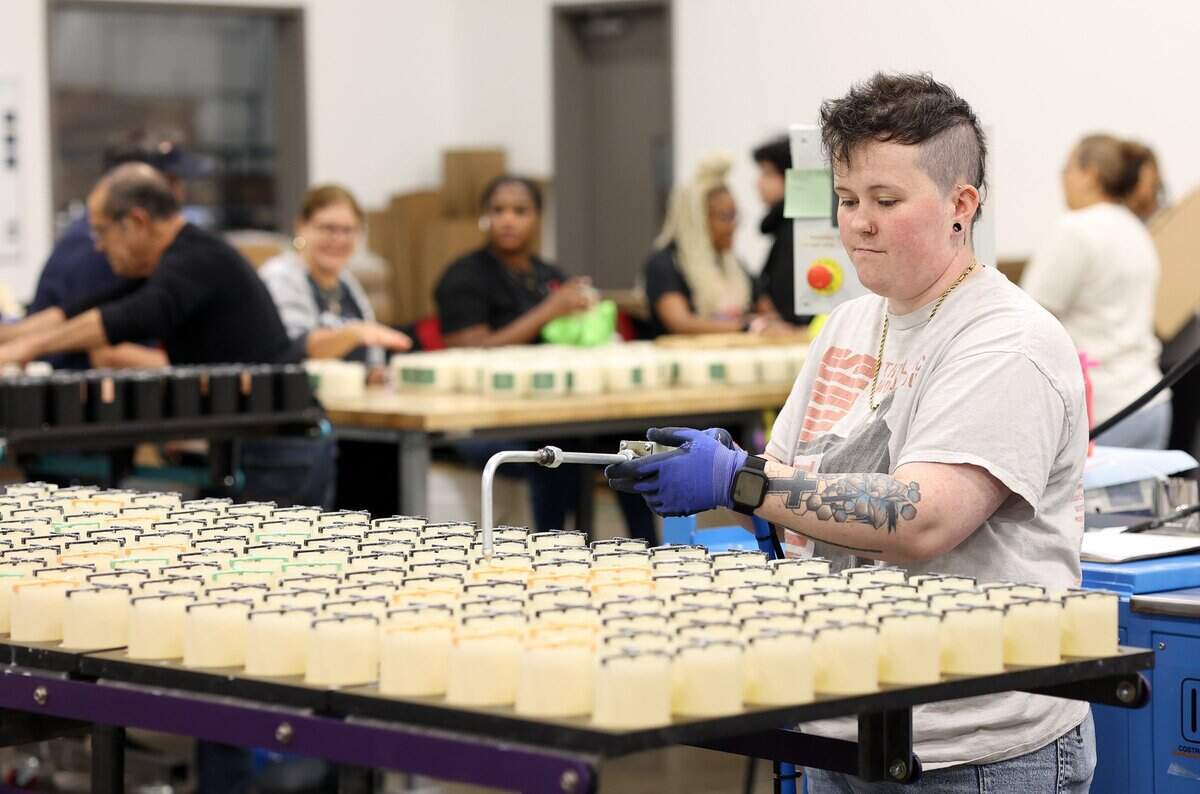
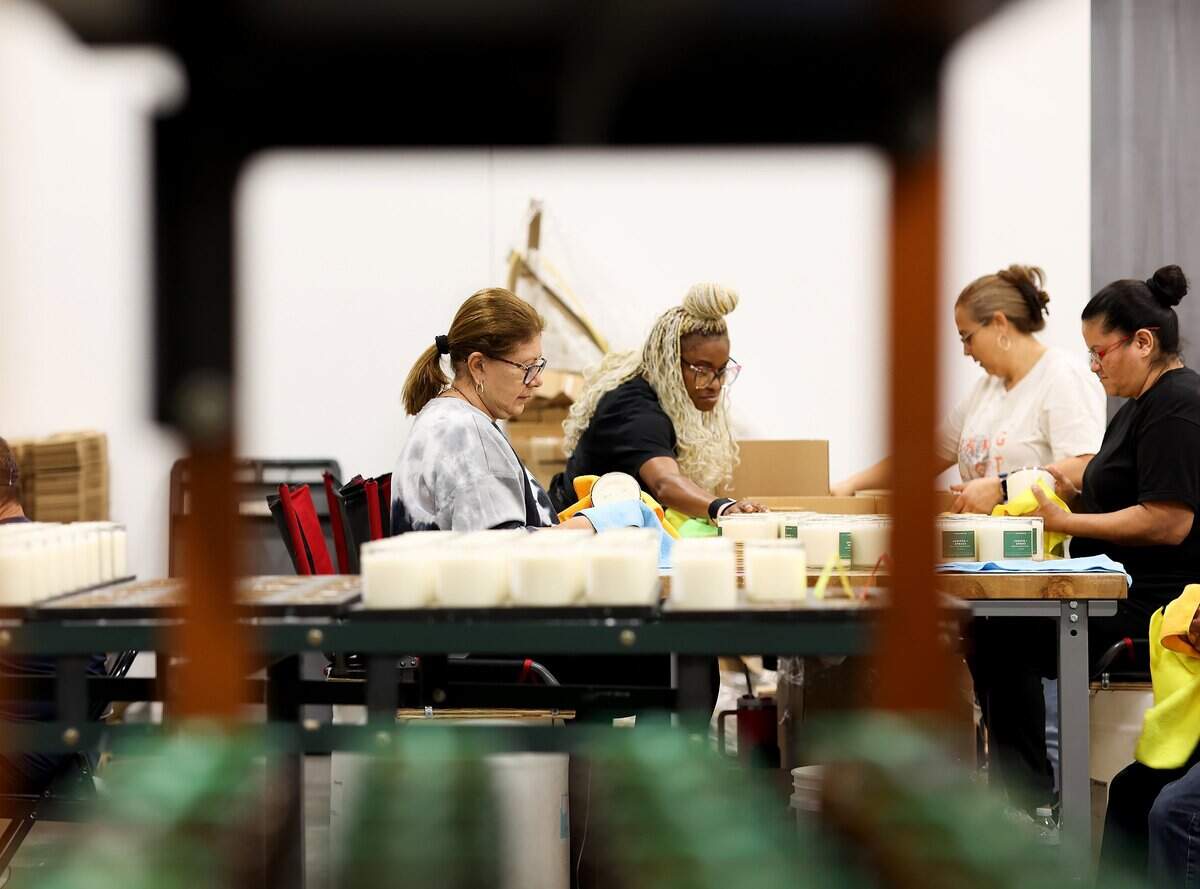
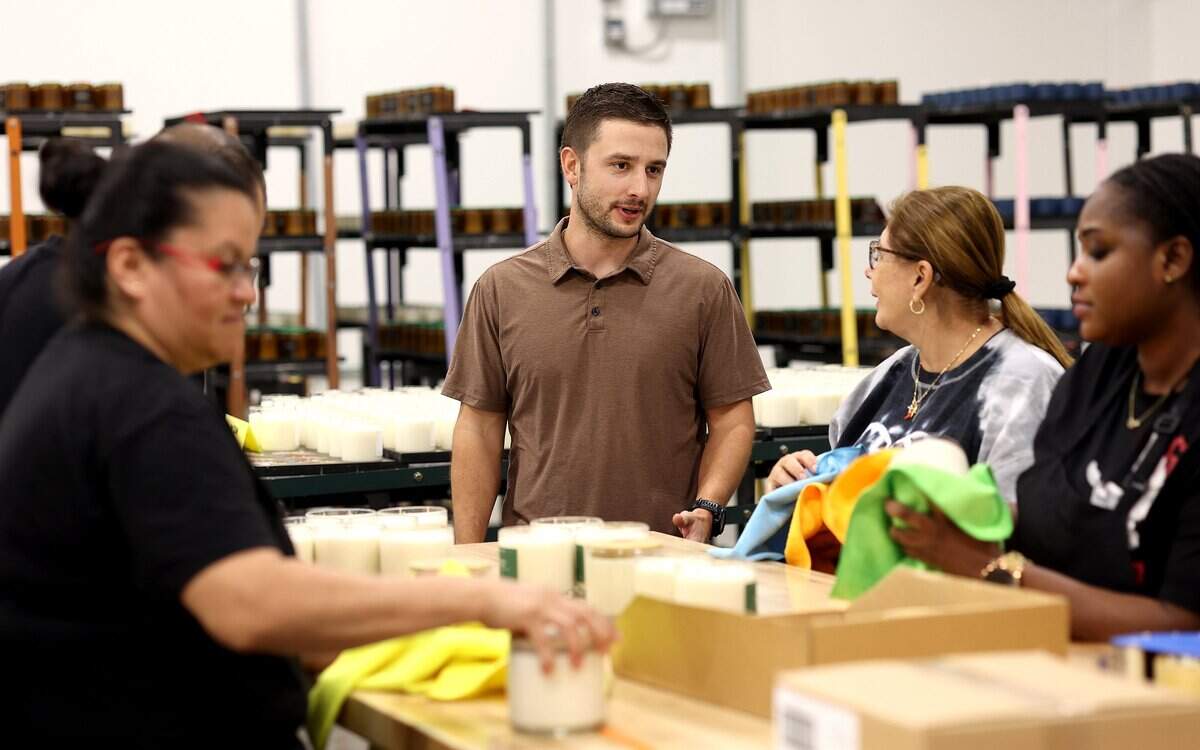
In the production room next door, workers pour soy wax and fragrance into glass containers and carefully add cotton string wicks. A whiteboard on the wall shows they’ve nearly met the week’s goal of 14,750 candles.
Calyan founder and CEO Jacob Johnson started making candles on a hot plate in his bedroom in 2017. Today the company has over 40 employees and operates out of a 30,000-square-foot facility in south Arlington.
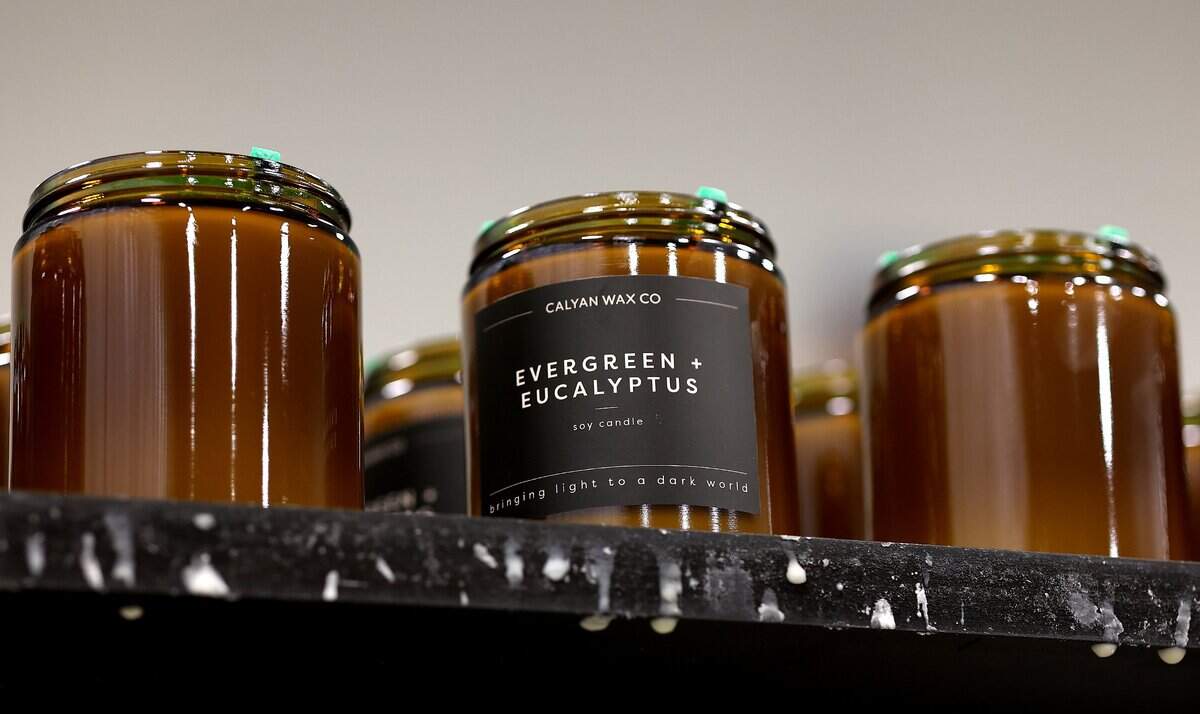
A label on each candle container reminds customers of Calyan’s mission — to end human trafficking, especially sex trafficking, in the United States.
“If there’s something to spend a lifetime fighting, why not this?” Johnson says.
What is Calyan?
A human-trafficking awareness conference Johnson attended during his college years helped put the issue on his radar. Seeing the long-term effects of sex trafficking in someone he knew helped soften his heart to survivors, and a dream was born.
He realized a lot of nonprofits are doing great work to combat human trafficking, but they’re limited by funds. Johnson believed that was a problem he could solve.
“We just need to connect a consumer to a social mission with a product,” he said.
The challenge was finding a consumable product that was fairly simple to make and that people would want to buy. Someone mentioned candles during a brainstorming session, and Johnson said he became obsessed with the idea.
He admits his first candle-making efforts — prepared over the kitchen stove — weren’t great, but the concept was there. Production moved from the kitchen to Johnson’s bedroom, and he officially launched Calyan in 2017. Johnson’s mother, Vivian Johnson, allowed him to move his fledgling business into a 300-square-foot shed behind her house.
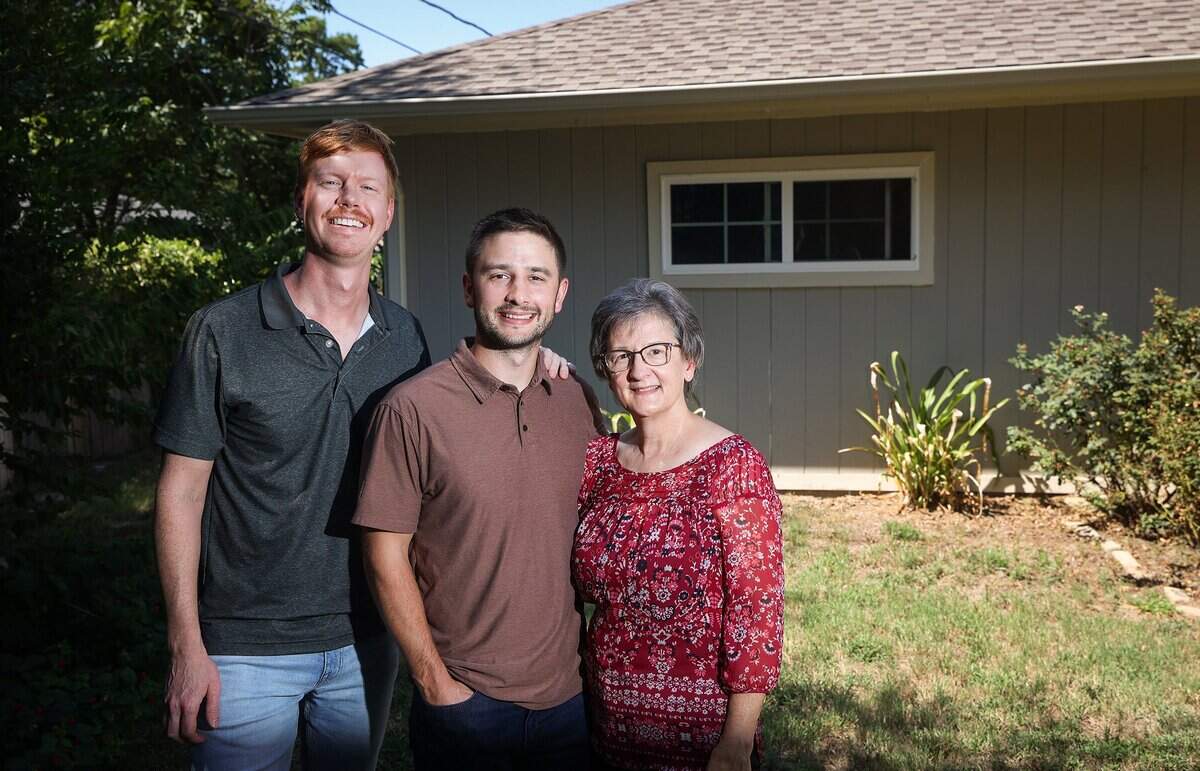
The company’s name, originally intended for a chocolate dipping business Johnson wanted to start after a summer working in California, combines California and Vivian. The first venture didn’t pan out, but the name stuck.
“Calyan candles flowed really nicely,” Johnson said. “And so Calyan got, in a positive way, recycled over into the candle world.”
In the beginning, Johnson would go out and promote the candles and then come home and make enough by hand to fill the orders. He visited farmers markets and anywhere else he thought he could find customers. Wrare, a home accent store in Fort Worth, was one of the first shops to give them a chance.
The company was still operating out of the backyard shed when Whole Foods ordered candles for about 50 of its stores.
“We celebrated,” said Stephen Engstrom, one of Calyan’s first employees. “But then we’re just like, ‘Wow, we have a lot of candles to make.’”
Today Calyan candles are sold in every state. They can be found online and in boutiques and in big grocery stores like Sprouts Farmers Market and H-E-B. The company added a line of scented sprays to its inventory in 2023.
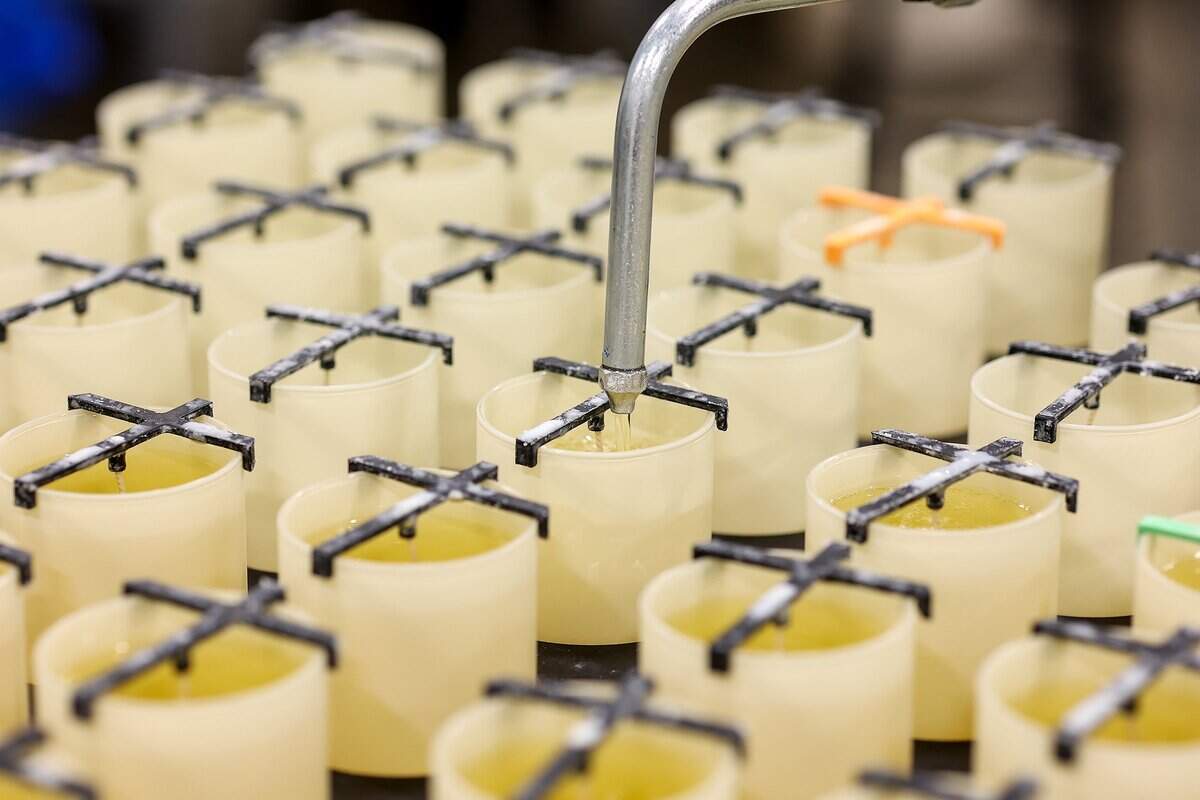
Johnson said Calyan has found a home in the eco-friendly subset of candles. The 100% soy wax provides a clean burn and all the ingredients are vegan, non-toxic and cruelty-free. The design is minimalist and comes in a variety of glass or ceramic containers.
“Only what you need to have a beautiful candle experience,” Johnson said. “Nothing more, nothing extra, nothing distracting.”
The company operates on a give-back model, and 5% of profits are donated to a select number of nonprofits that Calyan has vetted. Since its founding, Calyan has donated a total of nearly $900,000 to six anti-trafficking organizations.
In 2026, Johnson says they are shooting to hit $1 million.
“We have a double bottom line,” he said. “We want to be profitable to be sustainable and take care of shareholders, and we want to be profitable so we can be really generous.”
Human-trafficking problem
Katie Burkhart, Calyan’s director of marketing and e-commerce, said people often think of human trafficking as something that just happens in other countries. In reality, it’s hidden in plain sight in the United States, often disguised as a legitimate business, she said.
“You don’t think it’s happening in your neighborhood, but it is,” she said.
The Department of Homeland Security defines human trafficking as forcing a person to provide labor or services or participate in commercial sex acts. Using a minor for commercial sex is considered human trafficking even if no coercion or force is used.
Because of the hidden nature of this crime, exact statistics are hard to come by. It’s estimated about 28 million people are in forced labor around the world, and nearly 25% of these victims are trafficked for sex. Other studies indicate the figures are higher. What’s certain is that human trafficking is a multi-billion dollar industry that’s destroyed countless lives.
Nearly 1,400 cases were reported in Texas last year, according to the National Human Trafficking Hotline, which is second highest in the nation. California came in first at over 1,700.
“It’s a really dark world,” Johnson said. “It’s tough to talk about. It’s hidden, so there’s a lot of misinformation.”
Traffick911 supports victims of child sex trafficking in six North Texas counties. Chief Development Officer Ashley Garner says it’s the only nonprofit in the Dallas-Fort Worth area that provides 24/7 crisis response for children.
According to Garner, the majority of minors they work with are between 13 and 16, but they’ve seen children as young as 9. Garner said the young people usually come from unstable home situations. Many are in foster care. Some are trafficked by their own parents or other adults they know. Others run away from home and a trafficker offers them food and a place to stay.
“Within 48 hours, a huge percentage of children who run away are approached by someone that wants to traffic them,” Garner said. “And so many times they’ve run away from something to unknowingly run into something else.”
Traffickers in the U.S. commonly use drugs to control their victims, but Garner says they rarely hold them captive like you see in movies. Instead, traffickers psychologically manipulate children and exploit their vulnerability, she said.
“A lot of the time this person that is selling them, they think it’s their boyfriend, you know, they call them their boyfriend,” Garner said. “They think this is love, because they don’t know what real healthy love looks like.”
When police remove a minor from a trafficking situation, an advocate from Traffick911 shows up with a hot meal and a backpack filled with clothes, toiletries and a teddy bear. They build a long-term relationship with the young person and help them set goals for their life. Garner said some of the kids have big dreams like attending college. Others just want to know what it feels like to eat in a nice restaurant, an experience advocates are happy to provide. If the child’s parents or caregivers weren’t involved in the trafficking, an advocate is assigned to them too.
“A lot of things went wrong before a child is trafficked for sex,” Garner said. “And so we’re helping these families heal.”
Traffick911 is on track to serve 375 young people this year, according to Garner. The organization receives some money from the state, but there’s a funding gap of about $15 per child per day.
“The only way we can do what we do is because people like Calyan choose to show up and choose to care and to give,” she said.
At the company’s annual Donation Day in October, Calyan gave a combined total of $140,000 to Traffick911 and three other nonprofits: Allies Against Slavery, Justice Defense Fund and The Network. Each organization focuses on a different angle in the fight against human trafficking.
“That’s really exciting to put more fuel, more awareness behind and help these nonprofits do more of what they’re good at,” Johnson said, “what they’re really passionate about, what they’re effective in.”
What can I do?
Johnson believes the real power of Calyan is providing a way for the average consumer to participate in the fight against human trafficking. A simple candle purchase is a step toward advocacy, he says.
He also hopes customers will become more aware of anti-trafficking nonprofits in their area and engage directly with them.
“We’re constantly working to showcase that impact back to our customers to say, ‘Hey, that small, little candle that you bought, or that purchase that you made three months ago, in aggregate, led to this impact,’” Johnson said.
This story was originally published November 6, 2025 at 4:45 AM.