‘100% preventable’: Arlington record logs draw ire in child’s brain-eating amoeba death
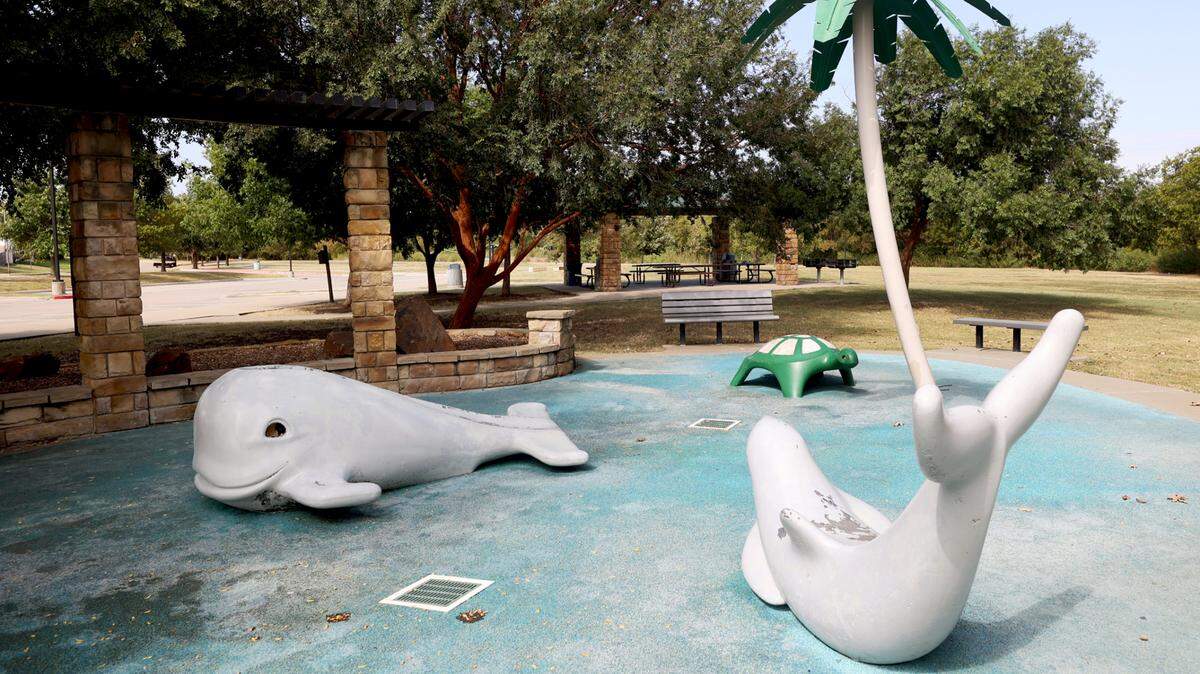
Maintenance staff did not record water quality at Don Misenhimer Park’s splash pad for over 60 of the 100 summer days the fountains ran, according to city documents, one of the tools experts say is the best way to prevent a rare brain-eating amoeba from thriving.
Now, the missing readings and incomplete picture of chlorine treatments are at the center of a city investigation and imminent lawsuit after a 3-year-old boy died from parasitic amoeba he encountered at the park.
The child, who has not yet been publicly identified, was hospitalized Sept. 5 at Cook Children’s Medical Center with primary amebic meningoencephalitis, a rare but fatal disease that attacks the nervous system and destroys brain tissue. The disease is caused by the amoeba Naegleria fowleri, which thrives in warm freshwater streams and in untreated water, and infects humans when it enters the body through the nose.
His family has retained Bedford personal injury attorney Brian Hargrove. Hargrove called the gaps in water quality documentation “egregious” in a phone interview.
“At this point, we know there is no doubt that the city of Arlington is responsible,” Hargrove said. “This is a complete systems failure on their part, and this innocent 3-year-old child’s death was 100% preventable.”
Hargrove said the family will provide more information on their son and his sickness Monday afternoon.
The city and Tarrant County Public Health first announced the boy’s death and the investigation into maintenance and testing procedures on Monday. The city and county received positive test results from the Centers for Disease Control and Prevention on Sept. 24, confirming the amoeba’s presence at Misenhimer Park. The CDC returned positive tests for viable cases of the amoeba from the dolphin, whale and turtle splash pad features, as well as from swabs of the splash pad’s east and west drains and one of the manhole overflow tanks.
Deputy City Manager Lemuel Randolph said in a press release Monday the city will further investigate “gaps” in daily inspections.
“Those gaps resulted in us not meeting our maintenance standards at our splash pads,” Randolph said. “All of the splash pads will remain closed until we have assurance that our systems are operating as they should, and we have confirmed a maintenance protocol consistent with city, county and state standards.”
Park maintenance
Maintenance employees recorded less than 40 days of inspections at both Don Misenhimer Park and the splash pad at the year-old Beacon Recreation Center, according to a review of both logs.
Misenhimer Park entries were left blank for as long as eight consecutive days, and there were discrepancies in dates recorded, including skipped days and duplicate entries with different readings. A fraction of the recorded days include treatment details, including whether the water was treated with shock, a chemical used to boost chlorination levels.
Consistent recordings, as well as maintaining minimum chlorination levels of 1 part per million, are the most effective tools in killing Naegleria fowleri, according to Dr. Anjan Debnath, a pharmacy professor at the University of California San Diego specializing in drug development for parasitic diseases.
“Mainly the best way they have to check regularly that the chlorination is maintained, that it is regularly chlorinated, then there should be no case of Naegleria infection,” Debnath said.
A city spokesperson said crews of three or four maintenance employees are assigned duties at up to 15 parks. The spokesperson did not say whether parks and recreation officials had previously tried to improve water quality test documentation or whether employees will face disciplinary action, citing the city’s investigation into practices.
City officials closed Misenhimer park’s splash pad Sept. 5 after the child was hospitalized, and proactively closed the rest of the four public splash pads for the rest of the year.
Public safety and the park
Sweltering summers and freshwater respites make Texas the state with highest amount of cases recorded by the CDC between 1962 and 2020. However, primary amebic meningoencephalitis remains highly rare, with only 148 cases on record, 39 of which were in Texas.
The amoeba, upon entering the body through the nose, can cause symptoms commonly associated with bacterial meningitis within nine days, including headaches, nausea, vomiting and fever. Later stages include stiff neck, seizures, coma, altered mental status and hallucinations. In all but four U.S. cases, the disease has killed victims within 18 days of reported symptoms.
Arlington’s case occurred about a year after 6-year-old Josiah McIntyre died from the disease when he became infected at a public splash pad in Lake Jackson in Brazoria County.
Josiah’s parents, Maria Castillo and Anthony McIntyre, have reached a settlement with the city government and have an outstanding lawsuit against Brazosport Water Authority. Lake Jackson officials have closed the splash pad indefinitely. The amoeba caused city, state and federal agencies to rush to clear the town’s water supply and Gov. Greg Abbott to issue a disaster declaration for the county.
Castillo described the news out of Arlington as “heartbreaking.”
“I know exactly what this family went through and the shock that they felt whenever they find out what it is, where it came from and how the little boy contracted it,” she said. “It’s kind of like reliving the moment over again.”
Castillo said she has not reached out to the family yet, but plans to offer support as other families who have lost relatives to the disease supported her family in the last year.
Several families who have lost children to the disease have created awareness organizations, spreading educational materials and advocating for research surrounding the deadly disease. The Kyle Lewis Amoeba Awareness Foundation, created in memory of a Mansfield boy, has raised tens of thousands of dollars for various research efforts and development of drug treatments.
Like others, Castillo spreads awareness of the disease and preventative measures — primarily avoiding untreated water or wearing nose plugs when jumping into water. The CDC also warns that disturbing sediment in warm, shallow freshwater streams can stir the amoeba from the ground.
“(Children) are not going to like them, but they also don’t understand that this amoeba is obviously in lakes and rivers and warm waters,” Castillo said. “The last place you’d ever think of it to be is at a splash pad.”
Misenhimer Park’s splash pad was in its final week of daily operations when officials shut it down indefinitely after the child’s hospitalization. After Labor Day weekend, the park’s splash pad other pads at the Beacon, Brantley Hinshaw Park and California Lane Park were to run only on weekends through the end of September.
Megan Cummings said Misenhimer Park’s pad, stationed in the middle of suburban south Arlington, is a popular draw for her, her son and neighbors. Now, she is not sure whether she and her son will return when the water does.
“I know it’s a rare condition, but you don’t know how often it will happen to another kid,” Cummings said as she watched her child play.