Stealth omicron is now 15-17% of COVID cases in North Texas. Will it be another surge?
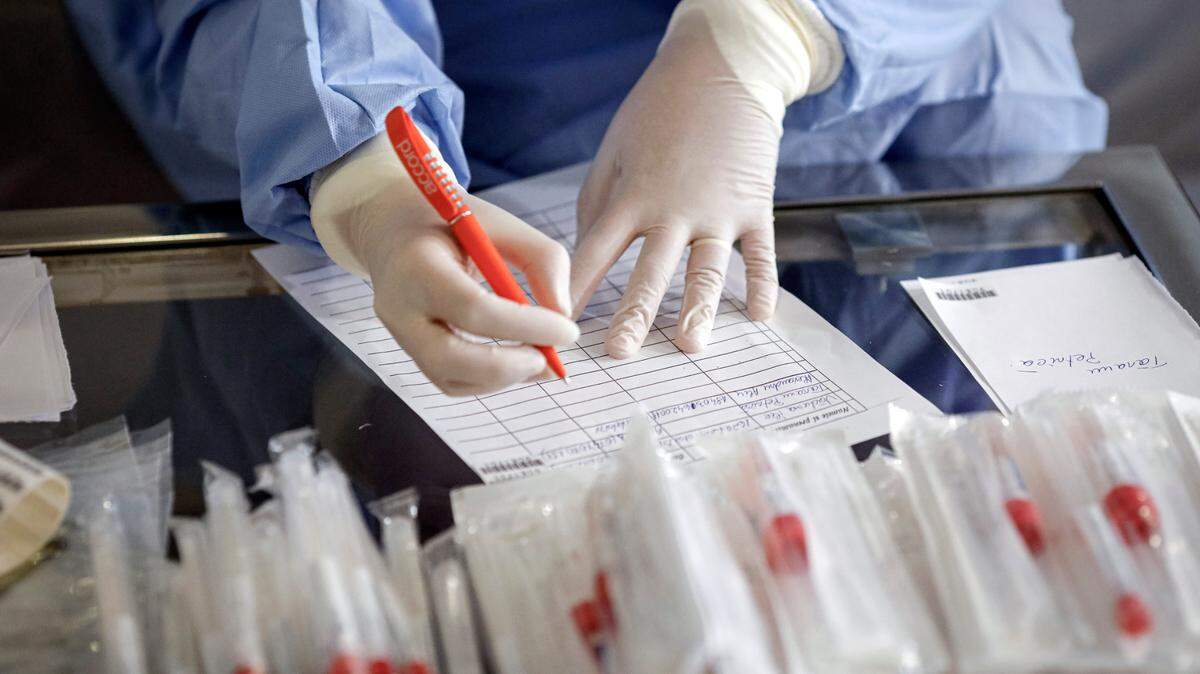
“Stealth” omicron first emerged in North Texas in late January. Now, researchers at UT Southwestern Medical Center say there are about 20 confirmed cases of the relative of the omicron variant in the area.
While stealth omicron now makes up 15% to 17% of COVID cases in North Texas, the lab told the Star-Telegram that overall coronavirus cases are continuing to decline.
How is stealth omicron different?
Stealth omicron, a subvariant of omicron also known as BA.2, got its name because it’s harder to distinguish from other variants. Now that the delta variant has dissipated, however, it’s easier for researchers to tell the difference between omicron and its subvariant.
“Back when we had delta, it was hard to know the difference between stealth omicron and delta,” says UT Southwestern researcher Dr. Jeffrey SoRelle. “But with there having been no cases of delta in the last several weeks, then it’s more safe to assume that the stealth omicron actually can be detected from the omicron at this point.”
There are no major differences between the severity of stealth omicron and omicron, SoRelle says. But the two are treated differently in a clinical setting. Sotrovimab, the monoclonal antibody used to treat omicron, is not effective against stealth omicron. A newly approved antibody, bebtelovimab, is used instead.
The key difference is that stealth omicron has been found to be more transmissible than omicron. A Danish study found that people infected with BA.2 were roughly 33% more likely to infect others, compared with those infected with BA.1.
“That’s mostly the characteristic that would be driving its increase over omicron, competitive advantage from being more transmissible,” SoRelle says.
Could you get infected with stealth omicron if you’ve already had omicron? Sorelle says it’s unlikely. “The portion of the virus that is similar is in the part that gets recognized by the immune system, and there’s definitely differences in other parts of the virus, but that part’s pretty similar,” he said.
One study found that reinfection by BA.2 happens, but it is rare.
Are stealth omicron cases increasing?
“We have seen more cases of it,” SoRelle said. “And I’d say that the percentage of cases is increasing. But the overall number of cases is kind of declining.”
SoRelle says it’s likely that stealth omicron will take over an increasing percentage of COVID cases, becoming the dominant strain. The U.S. is starting to see that elsewhere in the country, particularly in New England, and Texas will likely follow.
Cases of the subvariant are already doubling in the U.S. every week. BA.2 was responsible for over 11% of coronavirus cases last week, the Centers for Disease Control and Prevention estimates, 5 percentage points more than the week before.
Infections from the subvariant are worse in other parts of the world.
In the U.K., stealth omicron has already become the dominant variant, making up 57% of cases. It’s behind a surge in cases and hospitalizations, experts say. France, Switzerland, Italy, Germany and the Netherlands are also seeing another rise in COVID infections, largely driven by BA.2. The subvariant is fueling China’s biggest COVID-19 outbreak since 2020.
Is stealth omicron driving another surge?
If there’s another surge, SoRelle says, stealth omicron won’t be to blame. With more variants continually popping up around the world, the surge would be driven by a new variant.
“In the U.K., they’re seeing stealth omicron becoming dominant and that seems to be driving their increases, but I just wouldn’t expect it to cause a surge onto itself, because I think it’d be sort of a minor increase or mini surge,” SoRelle said. “But it’s entirely possible the new variants will come out, and those seem to be driving the turnarounds and surges the most over the last year.”