J&J COVID booster is effective against omicron, company says. But should you get it?
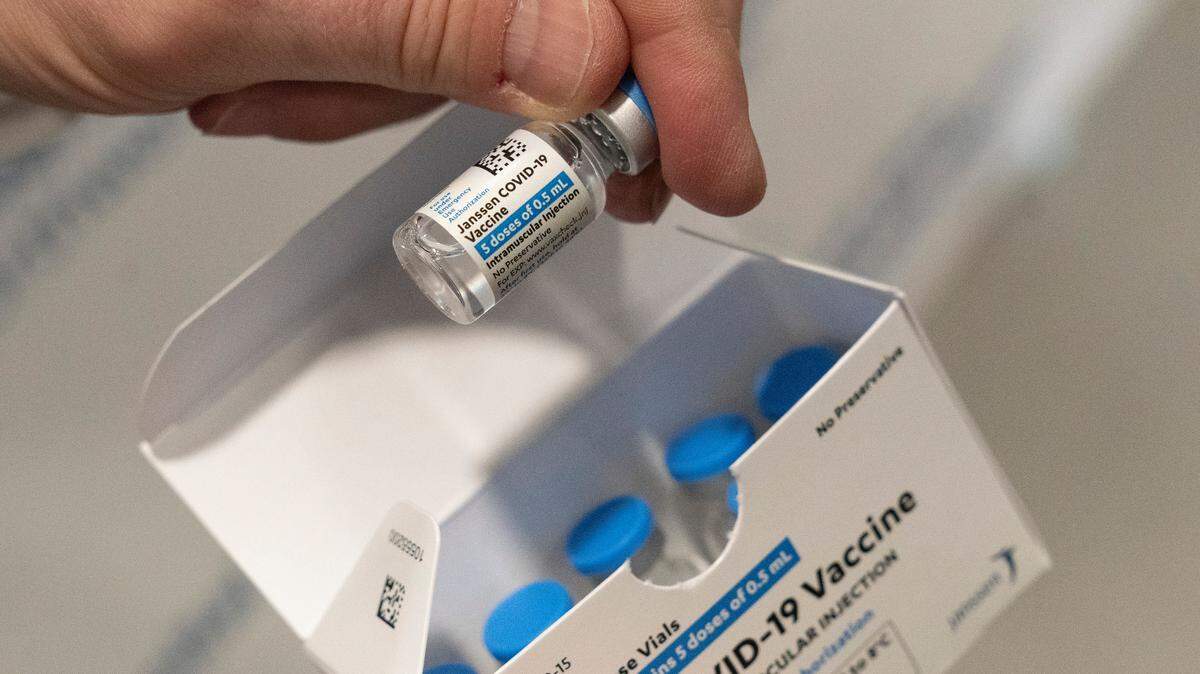
The upcoming new year has brought good news for Johnson & Johnson COVID-19 vaccine recipients.
A new real-world study among health care workers in South Africa found a J&J booster, followed by a single dose of the same shot, is 85% effective against COVID-19 hospitalization caused by the omicron variant one to two months later, according to the company. Study participants received their boosters six to nine months after their first dose.
An earlier study from South Africa found two doses of the Pfizer vaccine offered 70% protection against COVID-19 hospitalization.
But experts warn direct comparisons between early data on vaccines, their boosters and the omicron variant should be made with caution because populations studied and research methods vary.
A separate laboratory-based analysis conducted in the U.S. found a J&J booster following two doses of the Pfizer vaccine produced a 41-fold increase in antibodies a month later, and a 5-fold increase in CD8+ T-cells within two weeks.
CD8+ T-cells are other members of the immune system that kill foreign invaders, like the coronavirus. Researchers say the surge in these special cells “may be key” in the J&J booster’s high effectiveness against severe COVID-19, given the omicron variant has been shown to evade antibodies to different degrees across all available vaccines.
The same U.S. analysis found a Pfizer booster followed by two doses of the same shot generated a 17-fold increase in antibodies a month later and a 1.4-fold increase in CD8+ T-cells within two weeks – a weaker response compared to Pfizer doses coupled with a J&J booster.
“This adds to our growing body of evidence which shows that the effectiveness of the Johnson & Johnson COVID-19 vaccine remains strong and stable over time, including against circulating variants such as omicron and delta,” Dr. Mathai Mammen, global head of Janssen Research & Development, a pharmaceutical company owned by Johnson & Johnson, said in a news release.
Expert recommendations are complicated
On Dec. 16, however, the Centers for Disease Control and Prevention announced it had a “clinical preference” for the Pfizer and Moderna vaccines over the J&J shot after a review of the latest data showed the J&J vaccine prevents fewer COVID-19 hospitalizations, intensive care unit admissions and deaths than the other two shots, overall.
Among primary concerns were the risks associated with the J&J vaccine, including a rare blood clotting condition called “thrombosis with thrombocytopenia syndrome” and “Guillain-Barré syndrome,” which tricks your immune system to attack your body’s nerves.
Laboratory data found a Pfizer booster following two doses of the same shot increased antibody levels 25-fold against omicron a month later.
A Moderna booster — currently authorized as half the dose of the primary shots (50 micrograms) — increased antibody levels 37-fold against omicron a month later. A booster of the same dose as the primary shots (100 micrograms) increased antibody levels 83-fold.
The CDC emphasizes, however, that any vaccine is better than being unvaccinated, and that anyone who doesn’t want a Pfizer or Moderna shot or cannot receive them for medical reasons will still have access to the J&J vaccine, which is authorized for emergency use for adults 18 years and older.
Beware: delta variant is still spreading
Although the J&J data is promising news as the highly transmissible omicron variant spreads, experts warn delta still lurks.
In fact, the CDC recently lowered its estimate of omicron’s prevalence in the U.S. from 73% of cases in the week ending Dec. 18 to about 59% in the week ending Dec. 25.
That means the delta variant still likely makes up many of the infections we’re seeing today, which offers “at least one potential upside”: the nation’s surge in hospitalizations may be driven by delta, and all vaccines and treatments are still effective against it, Dr. Ashish Jha, dean of the School of Public Health at Brown University, told NBC News.
This story was originally published December 30, 2021 at 1:59 PM with the headline "J&J COVID booster is effective against omicron, company says. But should you get it?."