COVID vaccine mandate for domestic flights? Fauci supports it — here’s what to know
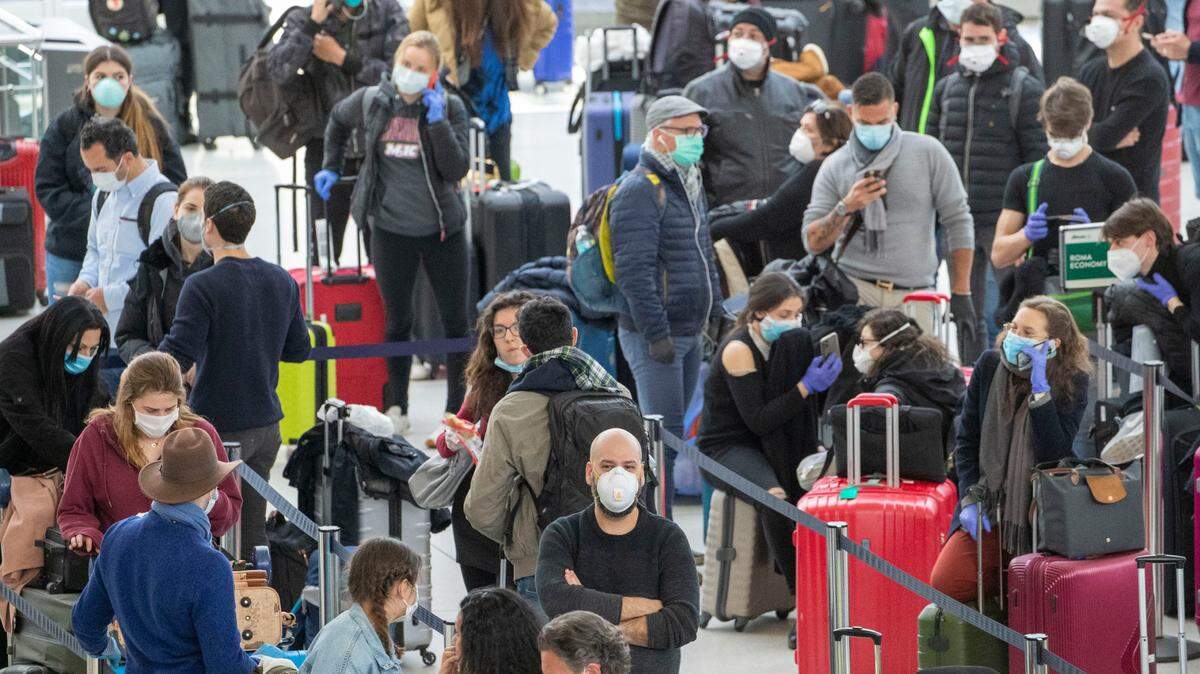
Millions of people in the U.S. remain unvaccinated against COVID-19 — and local, state and federal officials seem to be running out of creative incentives to change their minds.
But experts say one move may convince some to roll up their sleeves: a vaccine mandate for all flights within the U.S.
The idea has been brought up several times throughout the pandemic, but the omicron variant’s high transmissibility has renewed talks of a vaccine travel mandate as hospitals and businesses overwhelmed with sick employees struggle to stay afloat.
Dr. Anthony Fauci, chief White House medical adviser, fancied the concept during a Dec. 27 interview on MSNBC’s “Morning Joe.”
“When you make vaccinations a requirement, that’s another incentive to get more people vaccinated,” Fauci said. “If you want to do that with domestic flights, I think that’s something that seriously should be considered.”
Later that day, however, Fauci cast doubt on a COVID-19 vaccine travel mandate going into effect anytime soon.
“When I was asked that question, I gave an honest answer, it’s on the table,” he told CNN, though he declined to share whether he has recommended the requirement to President Joe Biden.
Biden on Dec. 28 told reporters that he would support such a mandate “when I get a recommendation from the medical team,” according to The Hill. On the same day, Centers for Disease Control and Prevention Director Dr. Rochelle Walensky told NPR that mandating proof of vaccination for domestic flights “has been a topic of conversation,” before adding that it “is not something we’re revisiting right now.”
The U.S. Travel Association back in September expressed its opposition to a COVID-19 vaccine mandate on domestic flights following a similar comment from Fauci, citing data that shows coronavirus transmission risk is low on planes and the “unfair, negative impact on families with young children who are not yet eligible to get the vaccine.”
It’s clear Americans are more comfortable with air travel now compared to the pandemic’s early days.
More than 109 million people are expected to travel 50 or more miles via car, plane or other transportation method between Dec. 23 and Jan. 2, according to the American Automobile Association — a nearly 34% increase from holiday travel in 2020.
And while airlines are estimated to see a 184% increase in activity from last year, the omicron variant is putting a damper on the rise. More than 6,000 flights were canceled over Christmas weekend alone, in part because of the variant’s spread, along with technical difficulties and weather conditions, CNN reported.
Is it safe to fly as the omicron variant spreads?
Data collected in the early days of the pandemic, even before the delta variant emerged, suggested the risk of contracting the coronavirus during a flight is low, thanks to high-efficiency air filters onboard.
“The air circulation on a plane is better than in an office building, better than your apartment because the air is changed more times per hour ... plus it’s filtered, which isn’t the case in your office or apartment,” Dr. David Freedman, an infectious disease doctor at the University of Alabama at Birmingham, told The New York Times.
There were instances of coronavirus spread in planes in 2020, though data remains lacking in the U.S.
Thirteen of 49 passengers on a 7.5-hour flight to Ireland tested positive for COVID-19 and another 46 people who had contact with the infected passengers later got sick themselves. A similar scenario occurred on a flight from Dubai to New Zealand where one infected person spread the virus to seven of the plane’s 86 masked passengers.
However, omicron is more contagious; initial studies were conducted before the variant emerged.
Now, the risk of catching the coronavirus on a plane could be “two to three times greater with omicron” compared to the delta variant, Dr. David Powell, a physician and medical adviser to the International Air Transport Association, told Bloomberg.
Still, Powell said an airplane “doesn’t shout ‘risk’” to him.
“It’s an enclosed space, but it’s a leaky box, and we pressurize it by putting a huge airflow on one end of it, and then having an exhaust valve out the other end,” Powell told the outlet. “An Irish pub with a fan in the corner shouts ‘risk’ to me, or a gymnasium with a whole lot of people shouting and grunting and sweating.
“We’re not saying it’s perfect, but compared with restaurants, buses, subways, you know, nightclubs, gyms, all of those that have been studied…. the likelihood of transferring [the coronavirus] to another person is less on an airplane,” Powell added.
Experts suggest you wear high-quality masks such as N95s on planes and avoid touching your eyes, mouth or nose during flights to stay safe.
What to know about traveling in the U.S. as of Dec. 29
As of Dec. 29, any traveler – regardless of vaccination or citizenship status – flying into the U.S. from another country must show proof of a negative COVID-19 test or documentation of recovery from COVID-19 before boarding a plane, according to the CDC.
Non-U.S. citizens who are nonimmigrants, meaning they are not lawful permanent residents, U.S. nationals or people traveling on immigrant visas, have to show proof of complete vaccination against COVID-19 before flying into the U.S.
In general, the CDC suggests you delay travel until you’re fully vaccinated, defined as people who are two or more weeks out from their second dose of the Pfizer or Moderna vaccines or two or more weeks out from their single Johnson & Johnson shot. The agency also recommends you get a booster shot when eligible. The extra jab has shown to offer more protection against the now-dominant omicron variant than primary vaccination.
The federal face mask mandate for travel is still in place, too.
On Dec. 2, the president extended the requirement to wear masks on airplanes, trains and other public transportation hubs and terminals to March 18. Fines for unruly passengers also remain intact, with a minimum fine of $500 and maximum of $3,000 for repeat offenders.
This story was originally published December 29, 2021 at 1:53 PM with the headline "COVID vaccine mandate for domestic flights? Fauci supports it — here’s what to know."