Abbott has not banned vaccine tracking, but Tarrant County schools are avoiding it
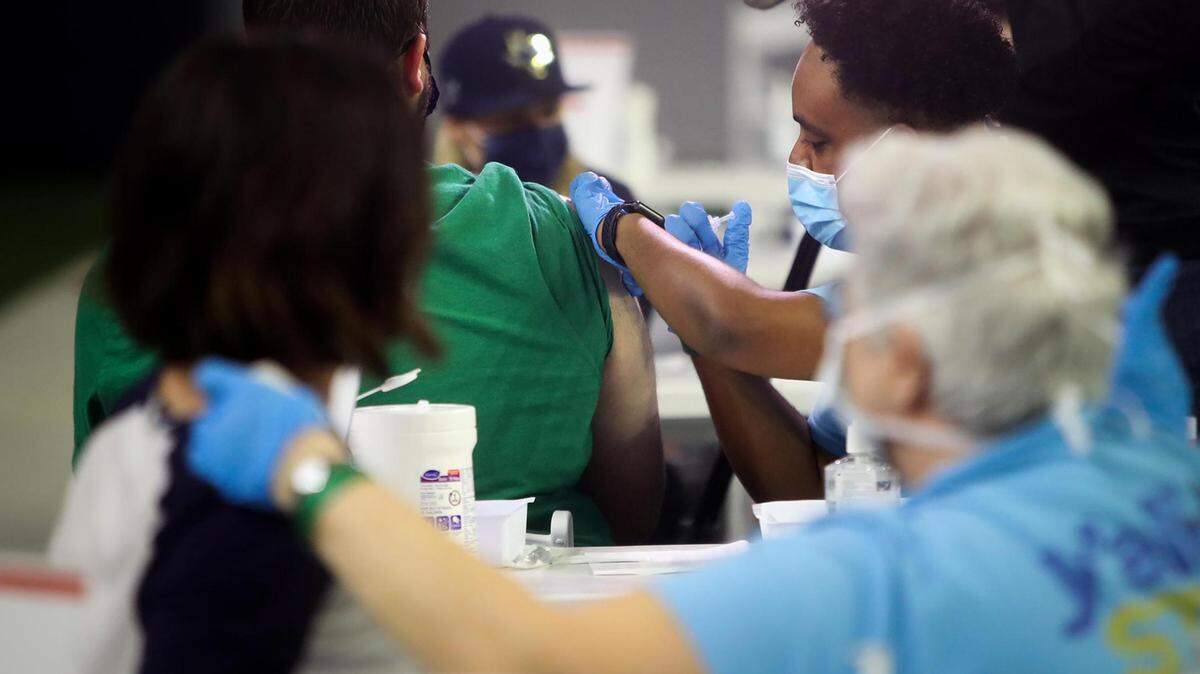
As the struggle over COVID-19 vaccine and mask rules continues in Texas, the governor’s executive orders have also affected another pandemic measure.
Across Tarrant County, officials at schools and universities say they aren’t tracking how many students and staff are vaccinated against the virus, under the impression that even asking about vaccination status could break the rules.
Accurate data could help indicate the vulnerability of each particular community, and be used to inform safety measures.
“Are we interested in knowing how many people are vaccinated? Of course,” said Elizabeth With, the University of North Texas’ vice president for student affairs. “Any exact data that we can rely upon would be helpful.”
The Arlington, Eagle Mountain-Saginaw and Fort Worth school districts, along with the University of North Texas and the UT Arlington, all said they are not tracking student or staff vaccination data except through voluntary programs.
“For right now, that’s private health information that we’re not collecting because it’s not required to be shared with the school district,” said Hollie Smith, the director of health services at Eagle Mountain-Saginaw.
Officials say they believe they are unable to track or otherwise collect coronavirus vaccination information because of the governor’s executive orders that ban certain types of pandemic measures, including vaccine mandates and passports.
In particular, the governor issued a late August order that prohibits publicly funded organizations from requiring COVID vaccination “documentation” from any “consumer.” The phrasing is vague enough that it’s unclear how or whether it applies to schools and universities, according to SMU law professor Tom Mayo.
With the lack of clarity of who constitutes a “consumer” and what constitutes “documentation,” Mayo said schools and universities likely have legal ground to track vaccination status of their students and staff, particularly if the question is asked orally and doesn’t require anyone to submit medical documentation.
“Wearing my public health hat, I would certainly prefer a less conservative interpretation and less cautious interpretation,” Mayo said.
But there’s a significant risk attached to potentially violating an executive order. Texas Attorney General Ken Paxton has sued a number of school districts for violating an order that banned mask mandates (last week, a federal judge effectively overturned Gov. Greg Abbott’s ban on mask mandates in schools; the governor’s other orders still stand).
“I can see why a school board [or] Board of Trustees of a school district or a private school might say, ‘Look, we don’t want to go anywhere near that. That’s just expensive, disruptive. Let’s figure out how we can mitigate risk and still satisfy the executive order,’” Mayo said.
At UT Arlington, Lisa Nagy, the vice president for student affairs, said officials opted to align with what they believe is the intent behind the governor’s executive order. The university, Nagy said, doesn’t want to create a situation where unvaccinated people felt “like they are being outed in any way.”
“We tried to adhere to the spirit of the executive order a little bit that there is not a requirement to get it or to answer the question,” Nagy said.
A number of schools and universities are trying a different approach: vaccination incentives.
UNT has offered free meals, book stipends and scholarships. UTA has offered free laptops and parking passes. The Fort Worth school district is offering a $500 vaccine incentive for employees.
Because incentive programs lead students and staff to upload proof of vaccination, the programs also provide some information on the community’s vaccination rate. In addition, some schools and universities have sent voluntary surveys about vaccination status.
But with incomplete response rates, it’s unclear how much information those voluntary programs and surveys actually provide.
In recent weeks, Texas’ and Tarrant County’s COVID-19 numbers have shown steady decline, particularly compared to the late summer surge. But most recent data shows slight increases in the county’s seven-day test positivity rate and hospital beds occupied by COVID patients.
Tarrant County is reporting hundreds of new cases per day; Texas is reporting thousands.
According to CDC data updated Sunday, Texas reported more than 900 COVID-19 deaths in the prior seven days (a recent report from the Texas Department of State Health Services showed unvaccinated Texans were 20 times more likely to die of COVID-19 compared to vaccinated people).
With a somewhat limited toolbox, Texas education officials say they’re instead leaning on tried-and-true measures such as testing, contact tracing and encouragement of vaccines.
“We strongly encourage our staff members to get vaccinated if they can, because we know that that truly is how we see ourselves out of this pandemic for the long term,” said Arlington school district spokesperson Anita Foster.
This story was originally published November 18, 2021 at 5:30 AM.