Can ancient mushrooms and Chinese herbs treat COVID? Clinical trials set to find out
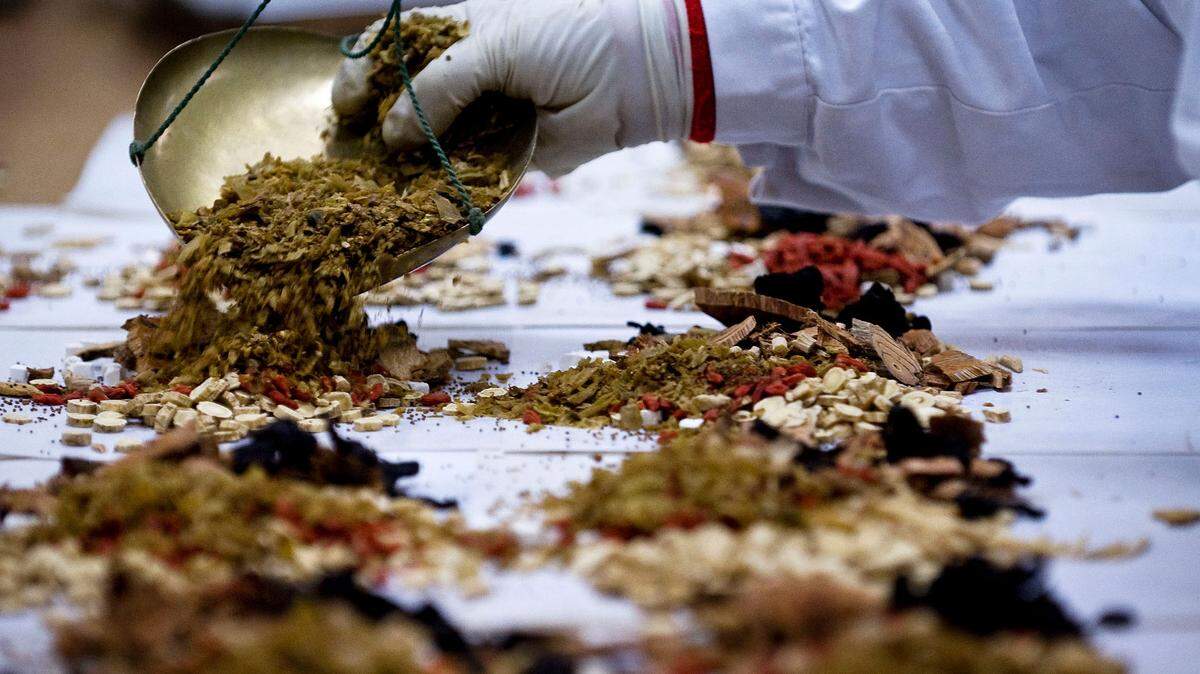
California researchers are running three clinical trials designed to test whether ancient mushrooms and Chinese herbs used to treat infectious diseases for centuries can help prevent moderately sick COVID-19 patients from progressing to more severe illness.
The trials, led by experts at the University of California, San Diego School of Medicine and the University of California, Los Angeles, are “among the first” to study approaches to medicine that veer away from traditional Western techniques in randomized, double-blind, placebo-controlled trials — the gold standard for understanding the effectiveness of medical interventions.
Only until recently have some integrative medicine techniques been gaining popularity and acceptance among the medical community, such as acupuncture, researchers said, even though natural therapies have been used to fight epidemics for centuries.
“Like the population as a whole, the [Food and Drug Administration] has, in recent years, become more aware of integrative, complementary medicine and has shown more of a willingness to find ways to study these approaches,” principal investigator of the clinical trials Dr. Gordon Saxe, director of research at the Centers for Integrative Health at UC San Diego, said in a news release. “If we can demonstrate success, it may open up interest in looking at other botanical formulas and approaches.”
The FDA has approved one drug for COVID-19 treatment as of Nov. 15. The antiviral called remdesivir was approved on Oct. 22 for hospitalized patients ages 12 and older. There are a handful of different monoclonal antibodies that have been given an emergency use authorization, but none have been approved as a COVID-19 treatment.
Mushrooms as a COVID-19 treatment?
One of the clinical trials will have a total of 66 volunteers take either placebo pills filled with organic brown rice or experimental ones with a 50/50 blend of the agarikon and turkey tail mushrooms over two weeks.
The trial began in December 2020 and is expected to run until December 2022. Participants should be COVID-19 positive with mild to moderate symptoms. Researchers will investigate how the mushroom pill affects disease severity.
The specific mushrooms were selected because of their long history of anti-viral and “immune-enhancing” properties, researchers said.
Agarikon, in particular, has been shown to block influenza A and herpes viruses from replicating. Researchers also note Greek pharmacologist Pedanius Dioscorides prescribed agarikon to his patients with pulmonary infections 2,300 years ago.
Dioscorides is credited with naming the agarikon mushroom “elixirium ad longam vitam,” which translates to the elixir of long life.
“Mushrooms have the advantage that they co-evolved with us,” Saxe said. “So bacteria, viruses and other fungi prey on mushrooms just like they prey on humans. And mushrooms have developed exquisite defenses against those pests, and we believe they can confer those to us when we eat them.”
The same mushrooms will be included in a separate clinical trial involving 45 participants that will test whether the pill, given at the time of COVID-19 vaccination, can boost antibody levels and other immune responses. The trial began in June and is expected to finish in June 2022.
“Vaccines lead to the production of antibodies that can destroy the virus in the blood. Mushrooms may not only increase the number of these antibodies, but also enhance T-cell immunity against virally infected cells,” Saxe said in the news release.
“Further, because mushrooms bind to receptors on human immune cells, they can modulate our immunity — boosting it in some ways and calming it down in others. And this property of mushrooms may also reduce vaccine-related side effects,” he added.
Chinese herbs as a COVID-19 treatment?
Another clinical trial, which began in July and is still recruiting volunteers, is testing whether a blend of 21 Chinese herbs in pill form from Taiwan called “Qing Fei Pai Du Tang” can treat mild to moderate COVID-19 over two weeks.
The formula is already used as a coronavirus remedy in China.
Blood tests will be done on the first and last day of the treatment to determine coronavirus viral load, or the amount of virus in participants’ blood. The team will also investigate how the blend affects disease severity among the 66 total participants.
Chinese herbs have been studied as medical treatments for stroke, heart disease, mental disorders and respiratory diseases, but many “have been of poor quality,” according to the National Center for Complementary and Integrative Health.
This means “no firm conclusions can be made about their effectiveness.”
Still, one survey showed about 20% of Americans use Chinese herbs for health-related reasons.
The NCCIH, part of the National Institutes of Health, said Chinese herbal products have been found to be contaminated in the past with “undeclared plant or animal material,” drugs such as blood-thinners, heavy metals like lead and arsenic, and pesticides.
This story was originally published November 15, 2021 at 3:08 PM with the headline "Can ancient mushrooms and Chinese herbs treat COVID? Clinical trials set to find out."