‘I don’t know the truth.’ Children of Azle Manor residents dead of COVID seek answers
Jacqueline Meador watched her father get worse through the blinds of a window.
On most days between the end of July and the beginning of August, she and her mother would look into Jack Roeder’s room at the Azle Manor nursing home from the lawn outside, holding their hands like visors above their eyes. The 80-year-old would turn each time to give them a thumbs up or a thumbs down, depending on how he felt. They had learned on July 15 he had the coronavirus, and only 48 hours later he took a turn for the worse.
He was rushed to a hospital with problems breathing, Meador said. He stayed there three days and three nights before coming back to the nursing home, weaker and relying on oxygen, but still himself.
He would often talk to them through a cell phone as they stood outside, one day even asking if they would bring him a miniature radio with earbuds so he could listen to music. Nurses were telling family he was getting better, Meador said — he finally got back a negative test result, and was apparently showing small signs of improvement.
But, by Aug. 11, he stopped talking. Meador started making arrangements to move him to a hospice center where she could guarantee family could be with him before he died.
He went in his sleep just after midnight on Aug. 13. She was close to finalizing her plans.
“I was just glad that he wasn’t suffering anymore. And he’s out of that place, and he’s out of his wheelchair, and he’s much happier where he is now,” Meador told the Star-Telegram. “It’s hard because we’ll never know now how much longer he would have been with us. We’ll never know, would he have made it to 90? Would he have made it to 85?”
A total of 16 residents of the nursing home have died from the coronavirus, almost a quarter of the 69 cases reported since March, according to the facility’s self-reported data to Texas Health and Human Services. There have also been 38 cases among employees, data shows.
The number of COVID-related deaths could be higher because residents who tested negative before they died might not have been counted, according to an Azle Manor employee who spoke with the Star-Telegram on the condition of anonymity. Also, the employee said, there’s no internal system at the nursing home to track coronavirus deaths. When a COVID patient dies, their cause of death is listed as a symptom of the virus — like respiratory problems — and not the virus itself.
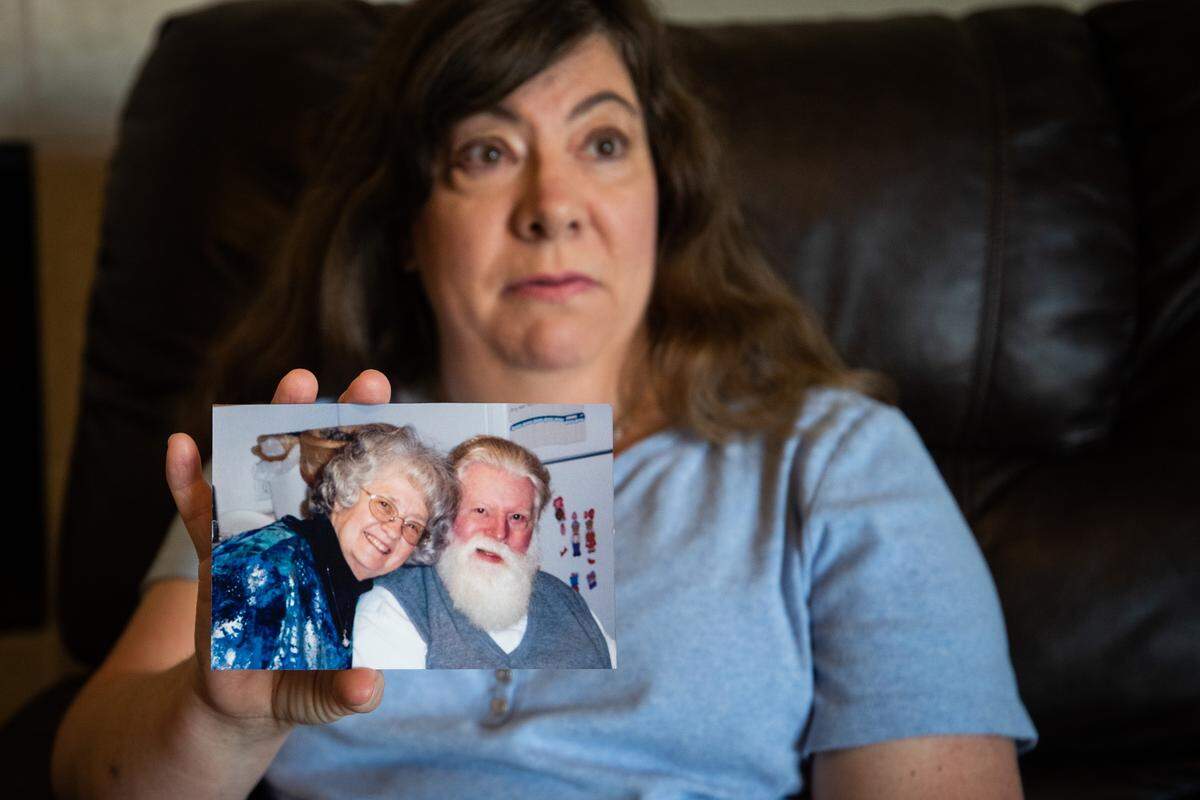
The way in which Roeder died was in one way a blessing, Meador said — from the time he was a young father raising three children in Arlington and then Corsicana, he would talk about hoping to one day leave this world unaware and at peace. “The best thing anyone can hope for is to just die in your sleep,” she can remember him saying.
But she said she also knows there was nothing right about the way he died, or the tumultuous months that preceded it.
She is one of several people to lose loved ones inside Azle Manor who say the nursing home made efforts to hide the timeline and scale of its coronavirus outbreak — until it became impossible to ignore.
Azle Manor Administrator Kinny Pack said he had no comment on this story when reached over the phone Wednesday evening. When asked if he would be willing to listen to specific allegations and respond, he said, “I don’t care. I’m not going to make a response.”
The Centers for Medicare and Medicaid Services required Texas HHS to conduct an inspection control survey at Azle Manor starting on July 18, a CMS spokesperson said in an email. The first day of the investigation resulted in HHS handing down a ruling of “immediate jeopardy” to the nursing home, according to documents provided by the spokesperson. That ruling indicated there were issues that needed to be fixed at once.
The documents, which include descriptions of infractions, show Azle Manor didn’t have an adequate infection control program in place with “a system for preventing, identifying, reporting, investigating and controlling infections.” Several observed instances went against federal guidelines for nursing homes, from COVID-positive residents wandering out of their units, to employees failing to wear their masks correctly, or at all, inside of COVID units.
The immediate jeopardy classification was removed on July 21 when HHS left the facility, though Azle Manor remained out of compliance at a level of “no actual harm with potential for more than minimal harm.” HHS conducted follow-up visits to Azle Manor on Aug. 11 and Sept. 9, the documents show, and concluded it was in compliance with federal regulations set by CMS and the Centers for Disease Control.
Russell Jones, the chief epidemiologist for Tarrant County Public Health, said in an email every time there’s a death at a long-term care facility like Azle Manor, the department launches an investigation into safety measures and training practices. That “includes one or more visits by our medical authority and support staff,” he said.
“We assign a liaison to monitor the situation, request records for new cases, and facilitate testing of staff and residents to find others who may be shedding virus,” Jones said.
He didn’t answer questions specifically about the coronavirus at Azle Manor or the nursing home’s deaths. But Brian Murnahan, a public health department spokesman, said over the phone that when a “person passes away, there’s a final address associated with them ... And I can tell you that I’ve seen Azle Manor.”
The children of three residents who died of COVID-19 spoke with the Star-Telegram about what they described as a failure by leadership, starting with Pack, to be forthright about the outbreak. By the time they learned their parents had the virus, they said, they didn’t have a chance to move them out of the facility. And then they had to say goodbye.
Jan Stallons agreed to an interview in late July after her mother, Anita Mayfield, an Azle Manor resident, died of the coronavirus inside of Texas Health Harris Hospital. Almost two months later, Stallons said she feels the nurses cared for her mother with compassion, making it better than any other nursing home she looked at.
But she — like the other children of residents — said those in charge at the nursing home need to be held accountable for their decisions.
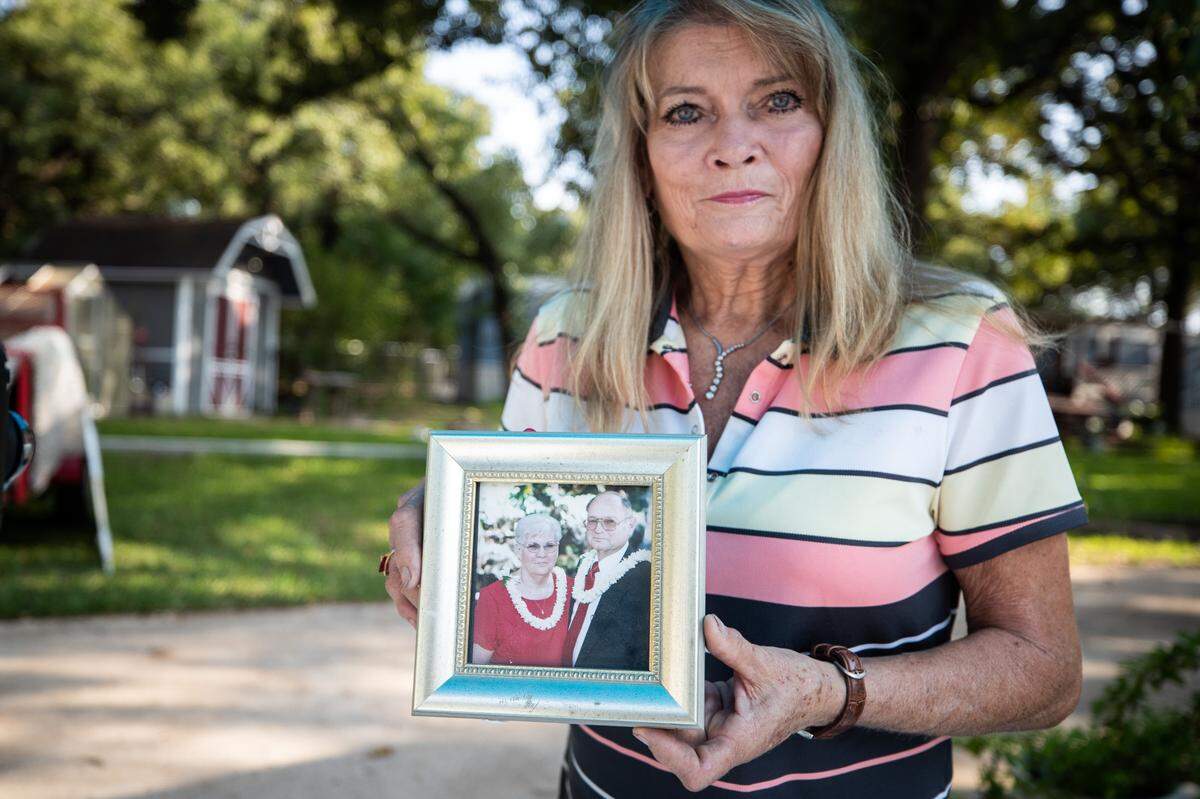
“Management is the one that needs to be punished in my book because they’re the ones that dictated what the employees do, and look what happened,” Stallons said. “There’s been a lot of lives lost.”
‘At the end of the day, it is a business’
The moment Azle Manor management crucially messed up was in their response to the first cluster of six or seven cases that came toward the end of June, according to the employee who spoke anonymously.
There had been a single case in April, which was when Texas HHS came in to test every resident and found no one else was positive, the employee said. But between then and June, the employee said, residents had relative freedom to wander the halls without masks on, especially those with advanced brain conditions like Alzheimer’s who have a harder time grasping the COVID guidelines.
The first sign of an outbreak in June, with a handful of positive cases, represented a chance for the nursing home to correct its path, the employee said — to move forward with transparency, science and an apology.
It didn’t happen, the worker alleges.
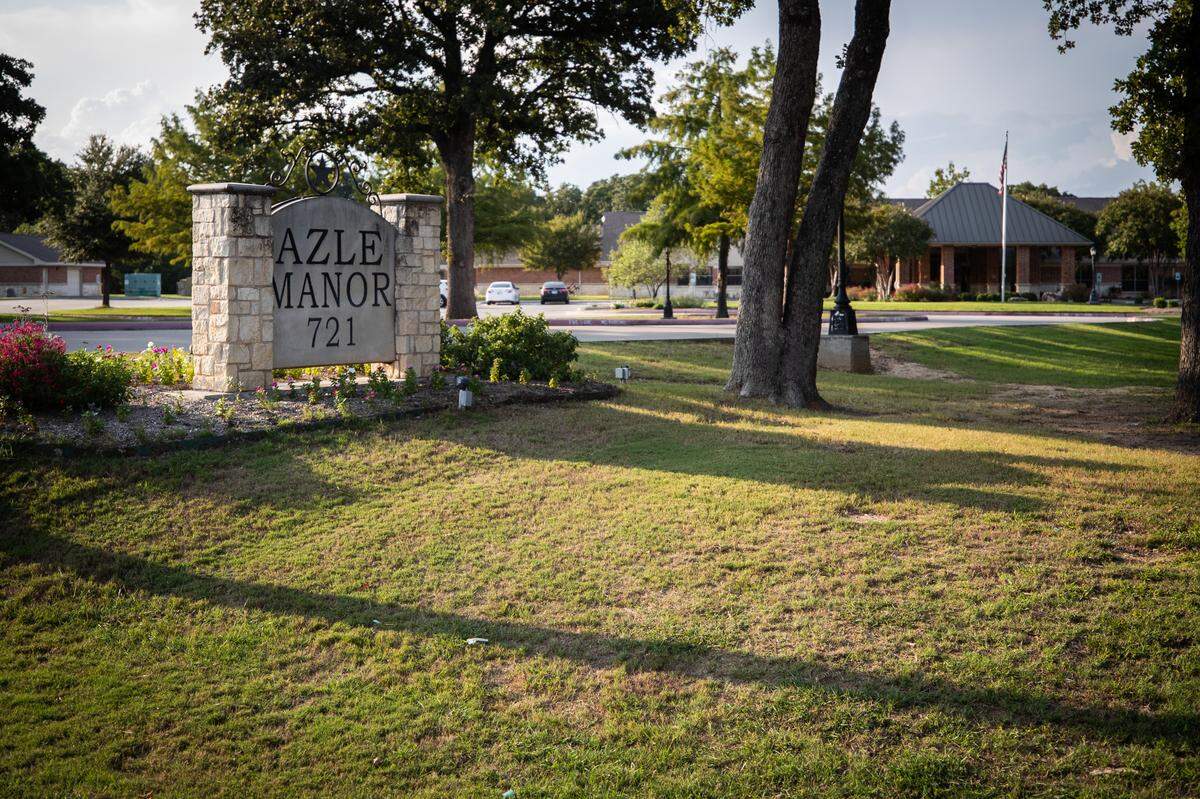
The employee said management neglected to disclose those first cases, even to staff who were left unaware of who had COVID, or who had possibly been exposed. Children of residents told the Star-Telegram they didn’t know coronavirus was in the facility until July 9, when officials informed them there was one case.
Around this time, the staff member said management brought in a lab to test residents as well as employees, representing the first mass testing for them. The administration, led by Pack, hoped for a similar result this time but were upset to learn more than 60 residents had tested positive in addition to 25 staff members. So the leaders, the employee alleges, brought in another lab that gave them more favorable results.
“I think it was very mishandled,” the employee said of their response. “I don’t know what I would do differently if I was them, except for be more honest about it and then you can get a firm hold of it.”
When Texas HHS officials visited Azle Manor on July 18, the employee said, they stood at the doors of COVID units and took note of the residents who wandered away.
Investigators identified 10 random residents to monitor, and found two of these residents, both positive for COVID-19, were allowed to walk out of their isolated units multiple times, according to the HHS documents. This required Pack, Director of Nursing Maxine Hatton and a social worker to grab and redirect them, none of whom were wearing gloves or gowns, the documents show.
Hatton, in interviews with investigators, admitted the residents shouldn’t have been allowed to leave their units. Part of the correction plan issued by HHS involved having staff members assigned to wandering patients, trying to keep them in their rooms and wearing face masks when necessary.
But, to the employee, the plan didn’t result in meaningful changes at the facility. Following the visit, the staff member said, there were multiple instances in which patients were allowed to wander out of COVID units and into non-COVID units.
There was also a marked change in testing, the employee said: Whereas before they would re-test individuals who had previously tested positive and negative, they now are only permitted to re-test people who had been positive. They also only tested residents showing symptoms.
“I don’t think they care about their employees and for the protection of the residents,” the employee said. “At the end of the day, it is a business.”
‘I don’t know what the truth is’
For months, Angie Harvey, 55, and her sister, Georgia Dodd, 53, say Azle Manor didn’t allow them to see their mother, Ruth Irene Carrell, even standing outside her window or an exit door. They couldn’t figure out why, they said.
Harvey spoke at least weekly with a different nurse or nurse’s aide who would often tell her the decision came from above them, she said. Carrell didn’t have a positive COVID test result through June, she said, but staff indicated she wasn’t well enough to have visitors. She was living in the facility because severe, and early, brain damage had led to her to getting Alzheimer’s at the age of 71. Harvey or Dodd had to drop off diapers each week because she could no longer use the bathroom on her own.
They got phone calls toward the beginning of July that their mother wasn’t eating, putting food into her mouth but not swallowing. Though it wasn’t COVID, Harvey said, her dementia had worsened, and she was becoming malnourished. They brought in a nurse from Solaris Hospice in Springtown for the anticipated end of her life.
On July 20, Harvey said she had a voicemail on her phone from the nurse stating her mother had tested positive for the coronavirus. She and Dodd claim at no point did they hear from Azle Manor about her testing positive.
Three days later, on Carrell’s birthday, the sisters were again refused the opportunity to visit with her, they allege. They were, however, permitted to see her in a FaceTime call on July 25.
They said they didn’t recognize the frail woman looking back at them, her typically round face appearing narrow and shrunken.
“It wasn’t even the same person,” Harvey said. “In four months time, she went down that hard, that fast? I couldn’t even look.”
The sisters turned to each other, shock on their faces, they said. They told their mother they loved her. They said it was OK for her to let go.
She died two days later, on July 27, in her sleep.
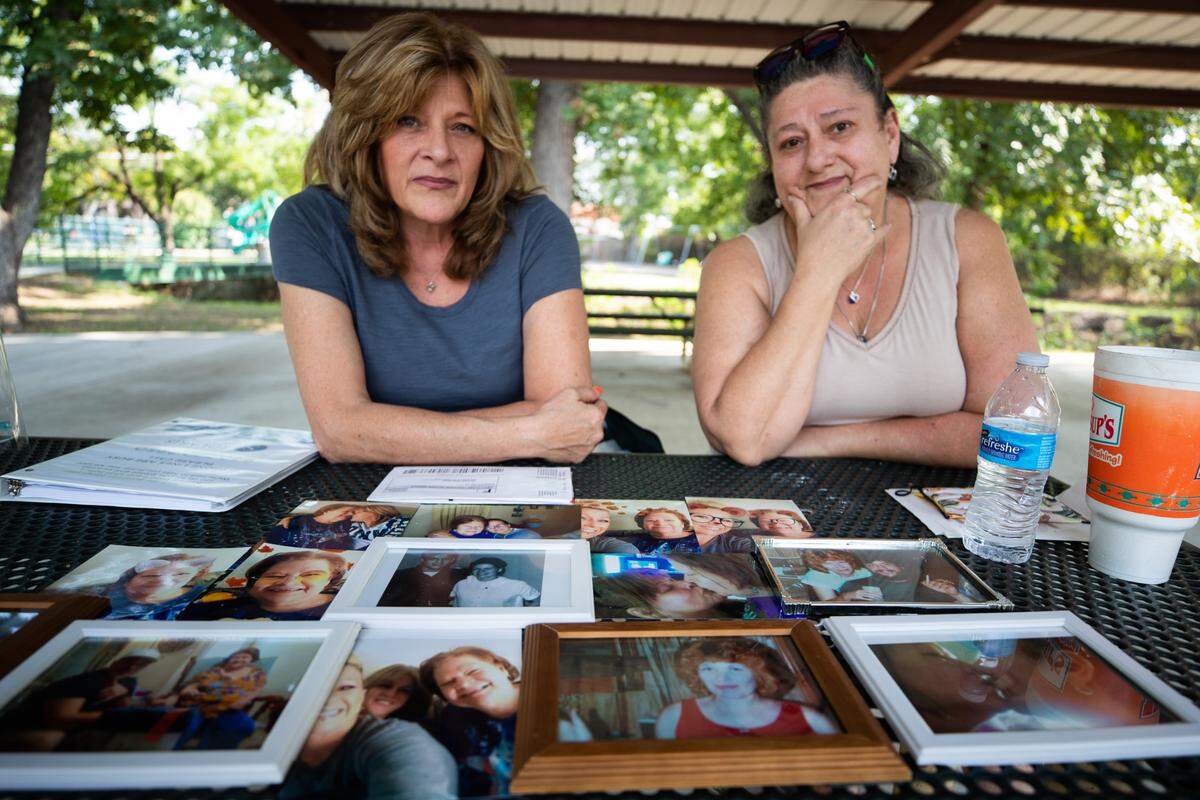
It was the second death within two months for Dodd, whose husband passed away on June 2 of two ruptured hernias, after she said he had been unable to have surgery due to the pandemic. She got to see him, she said, for around two hours as he was being kept alive by machinery inside of a hospital. She wishes she had been given the same chance with her mother.
“We didn’t get to say our goodbyes,” Dodd said, sniffling through tears. “I didn’t see her. I didn’t get to kiss her.”
Harvey, also crying, said, “I couldn’t be her voice.”
Though the cause of Carrell’s death on her death certificate was listed as COVID-19, Dodd and Harvey said, they still believe she died of Alzheimer’s.
Harvey acknowledged, however, “I don’t know what the truth is. ... They would tell me one thing, turn around and tell me something else.”
Her gut tells her, almost two months after her mother died, Azle Manor management wasn’t allowing her or her sister to see their mother because they didn’t want them to see how bad she had gotten, she said.
If she had been let in, “I probably would’ve went to jail for seeing my mother looking like she did,” she said.
“It was their job to take care of her,” she said. “It was their job to let me and Georgia know that my mother was fixing to pass.”
‘He should have been protected’
A few days after Jack Roeder died, Meador’s mother found a tropical-looking plant on her front doorstep, with an accompanying letter from Azle Manor expressing their deepest sympathies.
Her mother, Meador said, thought of it as a nice gesture from Pack and the other leaders at the nursing home in the wake of their tragedy. Meador saw it as an insult.
At the end of July, weeks before her father died, she spoke with the Star-Telegram for its first story on Azle Manor and what a nurse described as an outbreak overwhelming the facility. She requested to stay anonymous because she didn’t want to risk starting a bad relationship with the facility at that time, and felt she should give them the benefit of the doubt. Her feelings, though, have changed — and she felt it when she saw the potted plant.
“When you send a plant, you send it to someone saying, ‘We’re so sorry for your loss, we’re showing sympathy.’ That would make sense if my dad had just died of old age, or it was just his time to go,” she said. “But when you are directly responsible for what happened because of your negligence, it’s just kind of a slap in the face to send a plant.”
Before her father tested positive for COVID, Meador would visit with him outside of a clear door, where she could see him sitting upright in his powered wheelchair. She thought then the facility was doing everything in its power to avoid an outbreak, reassured by nurses walking the hallways with masks on. Someone had been calling her mother every time a resident showed symptoms, assuring her they tested negative, she said.
She assumed they would tell her if and when there was a positive case, she said. It gave her a feeling of security.
“Maybe I just really needed to believe he was safe in there,” she said. “And that was just taken away from me the day I found out they had a positive case.”
In his final days, Jack would tell her he didn’t believe he was going to make it. He had been dealing with headaches, fatigue and diarrhea, on top of his trouble breathing.
Though the nurses and her mother were holding out hope until the end, she felt certain he was going to die.
“I also lost my little boy to cancer, back in 2002,” she said. “When I see death, I know what I’m seeing.”
Her father, she said, started a trust fund for some of her son’s expenses and paid to put them up in hotels in other cities when they were seeking second opinions.
His large stature and long white beard had led him to portray Santa Claus within their family and elsewhere over the years, she said. To her, the role of the cheerful giver was a perfect fit.
Meador feels there’s an attitude in society that “since COVID mostly affects older people” who were perhaps going to die within a few years anyway, they’re worth sacrificing in order to reopen businesses. In late April, Texas Lt. Governor Dan Patrick sparked a conversation on the elderly and COVID-19 when he said “lots of grandparents” would be willing to die to save the economy.
“My father served this country, and he deserved to be protected during this pandemic. He actually lost his grandfather to the last pandemic of 1918,” Meador said. “He didn’t deserve to die without his family being able to be with him.”
Her brother, Joe Roeder, still has a hard time talking about Jack’s death. What has made the experience harder, he said, has been the months-long realization that Azle Manor was trying to pretend nothing was wrong.
Joe would like to see management at the very least apologize, and admit what happened.
“They just need to come forth with everything,” Joe said. “To tell the truth.”
This story was originally published September 24, 2020 at 5:00 AM.