Fort Worth parents in ‘impossible position’ with schools restarting online amid COVID
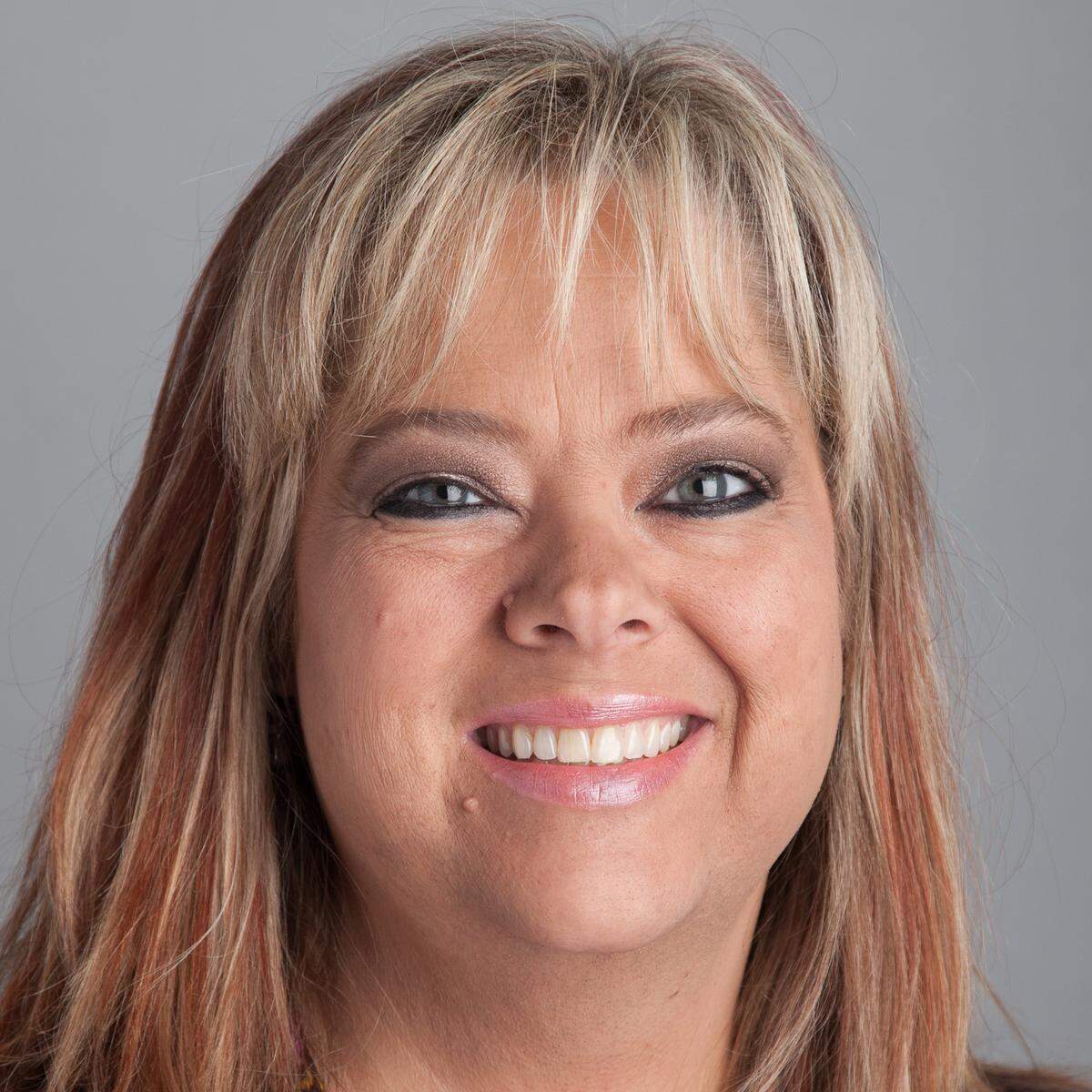
For Christina Segundo-Hernández, returning to her job handling packages for the United Parcel Service full-time depended on her kids going back to school this fall.
But after Tuesday’s announcement that Tarrant County schools will start online only for six weeks, she said she will have to go back to being a stay-at-home mom and full-time teacher.
Over the summer, she’s been able to pick up a few shifts at UPS after she left in April to care for her four school-aged kids, including an 8-year-old boy with autism. Her husband works in construction, so it was up to her to make sure they were getting school assignments done.
“It’s not like I could just hand my boy with autism an iPad and expect him to learn,” she said. “Childcare for him alone costs more than what it costs for my three girls. And now, with unemployment gone and no stimulus check, I definitely don’t have a choice.”
Like Segundo-Hernández, many parents across Tarrant County are facing difficult decisions because they’ll have to continue online learning for at least another six weeks.
They know many kids have been cooped up at home, first for stay-at-home orders and then as the number of coronavirus cases grew locally and across the state and country. And many parents say their children need the face-to-face interaction with teachers and students alike to thrive.
That’s likely why many parents chose the in-person option when they registered their students for the upcoming school year.
But parents also have their own jobs to navigate, some who must physically go to work every day, with few options to help watch or teach their students.
Some parents are coming up with solutions, from creating learning pods where tutors or teachers will come to homes and work in-person with students to staying home and giving up their income to take care of and teach younger children.
“We’re all in the same storm, but we’re in very different boats,” said Carla Morton, who has two sons in the Fort Worth school district, including one with special education needs.
‘It’s a very impossible position...’
Tuesday’s announcement that most children won’t be able to physically return to school for the beginning of the 2020-21 school year left parents with mixed emotions.
When Sarah Angle heard the news, she was concerned.
Yes, she wants to make sure her 8-year-old daughter, Amelia, is safe and healthy in third grade at the Alice Carlson Applied Learning Center.
But she also knew, as a single mom who works full time as a professor at TCU, that even if she works from home, she won’t have much time to help Amelia with online school work.
“It’s a very impossible position for working parents and for parents in general,” Angle said.
Lonnetta Wilson, a single mom with three kids who are going into first, third and seventh grade, was relieved when she heard public health officials had signed the order. She’s not excited about having to return to virtual learning, but she was grateful a decision was made — especially since she hadn’t yet made one herself.
With cases still rising in Tarrant County, she was planning on waiting until the last possible minute to have to decide whether she would send her kids back in-person or stick with online learning. And as a single mom, a large part of her decision would be based on whether she could continue to partially work from home.
“It’s almost like my choice wouldn’t have been based on what I think is safe. It’d be based on what’s going to allow me to still provide for my children,” Wilson said.
Dealing with uncertainty
For Segundo-Hernández, her family was among the millions of mixed-status families nationwide excluded from the $2 trillion Coronavirus Aid, Relief, and Economic Security, or CARES, Act because one member of the family, her husband, does not have a Social Security number.
The $600 in weekly unemployment benefits she’s been receiving ran out earlier this month.
“I’m not sure what’s going to happen,” she said. “I definitely feel like many of us have been walking a tightrope with no safety net.”
There are plenty of details that still need to be worked out on how districts will adjust to the county’s order. But one thing that is certain, is that special education can still be held on campus when necessary, as long as social-distancing measures and face coverings are in place.
Morton’s oldest son, Collin, who will be entering the sixth grade at McLean Middle School this fall, would likely benefit from that option. Collin had a stroke when he was born, and has physical issues, severe language deficits and ADHD related to his brain injury.
“School is difficult for him and he will avoid doing things, if at all possible,” Morton said. “He also has lots of attention problems, so it’s so important for him to get classes at a certain time, like early in the day when his medication is helping to keep him focused.”
Even with his special education teachers’ support, virtual learning was still a struggle at times. Morton said they had Collin focus primarily on his reading and math, rather than participating in the larger class meetings, because they were often only able to get limited periods of good work out of it. And if virtual learning has even higher expectations of students in the fall, Morton isn’t sure how she and her husband, who both work full-time, will be able to manage.
Morton has anxiety over what the fall will look like as she waits for more details, like how often special education students may be allowed to return to campus and to which ones. But she also knows it’s a feeling nearly everyone is facing.
“I don’t blame the school for the changing of plans because we’re chasing a ghost,” Morton said. “We don’t know what to expect.”
Despite the sacrifices many are having to make, Angle said she believes county health officials made the right choice to delay in-person school.
“It will give the mask mandate possibly more time to be effective ... and the infection rate will go down too,” she said. “I think we have to put lives first.”
Learning pods
While they wait for more concrete answers, some parents are working on their own alternatives.
Angle and other parents decided to set up a learning pod, where three or four Alice Carlson third-graders with the same classwork could learn together at one of their homes and tutors could be there to help with in-person instruction.
It won’t be inexpensive, but she said it’s worth it.
“We are just developing the idea,” Angle said. “We could have two tutors, one in the morning and one in the afternoon ... and split the cost of the tutors between the families.
“My daughter is doing the best she can, as many students are, with online classes,” she said. “But an 8-year-old does not have the self-discipline to do her work by herself without someone supervising them.”
Amanda Wear, another Fort Worth mom, also has been working with other parents to create home school pods for her two sons and some other students who planned to attend the GreatHearts Lakeside charter school in Fort Worth that was scheduled to open in August.
Her sons, who will be in the first and fourth grades, will be grouped with a few others going into the same grade at the school and work with a teacher for at least half a day at the home of one of the participating students.
The cost will total about what she and her husband, who works in health care, spent on private school tuition.
”We are making the best of it,” Wear said. “However, this puts a lot of families in a bind. Unfortunately, every family doesn’t have the opportunity to do this.”
Wear said she was disappointed that the county’s health order didn’t include an exemption for non-religious private, charter or small schools that may have been working on special plans to keep children safe.
And Wear, like many others, wonders if students will really be able to go back to school after the first six weeks.
“I’m not sure what they think will change between now and Sept. 28,” Wear said. “I have fears it’s going to keep getting pushed back.”
Alternative online classes
As coronavirus cases grew in Tarrant County earlier this year, Kelly Soter-Gunn said she had a feeling the virus wouldn’t subside by the time school began again in the fall.
So she switched her 10th-grade son, Ben, and 11th-grade daughter, Helen, from Paschal High School to iUniversity Prep, a tuition-free, online public school provided by the Grapevine-Colleyville school district.
Even if COVID-19 cases dropped by the time school started, Soter-Gunn said she felt there would be times the school district needs to switch to online classes to keep students, teachers and staff safe from the novel coronavirus.
“I feel like switching between in-person and online school is disruptive,” she said. “So we’ve chosen this option.
“This way, no matter what does happen this year, my kids’ education will keep rolling.”
And if COVID is under control next year, she hopes one or both of her children can return to in-person schooling.
The current situation is a struggle for everyone — students, teachers, parents and school staff, Soter-Gunn said.
“It’s hard,” she said. “Whatever solution people find, we have to make the best of it.”
This story was originally published July 24, 2020 at 11:24 AM.