
Landlords, business owners navigate new economic reality amid coronavirus pandemic
When the stay-at-home orders were issued earlier this spring, Sue Schulz, who owns What’s Poppin Texas, saw her sales fall drastically.
She worried about paying her rent, keeping her employees and running her small business where she sells 70 flavors of popcorn and candies.
“I am considered an essential business, but the first week was dreadful with people not coming in,” Schulz said, describing what it was like when the stay-at-home order took effect.
Schulz said her sales fell by 75 percent. Business picked up with Easter and graduations, but she is taking a day-by-day approach.
Commercial landlords and their tenants are navigating an uncertain future brought on the coronavirus pandemic. Some landlords are working with their tenants on a case-by-case basis to provide rent relief although they have mortgages and other financial obligations.
Schulz’s landlord, Michael Zimmermann, who owns and manages Bedford Meadows and other shopping centers in North Texas and the U.S. through his company Green Earth Realty, gave Schulz a break on her rent. Schulz is still waiting to find out whether she will receive help from the Paycheck Protection Program (PPP), which is part of the Coronavirus Aid, Assistance Recovery and Economic Security (CARES) Act.
Under PPP businesses must use 75 percent of the money they receive for salaries, and the remaining 25 percent can be used for other expenses such as utilities or rent.
Schulz said she had money to pay her rent in April, but she said Zimmermann told her to “hold off” and see if she gets assistance from the PPP. This break on her rent meant she could keep her employees so that she wouldn’t have to run the store by herself.
“I feel really lucky. I know there are landlords out there who haven’t been so understanding,” Schulz said.
Working with tenants
Zimmermann said when his tenants began losing business or just couldn’t stay open, he took a case-by-case approach.
“Nobody really knew what was going on or how long it would last or what the impact would be. I knew it (the pandemic) wasn’t going to be good,” he said.
Some businesses did not want to open while the occupancy rate is 25% because the tenants worried about not making a profit, Zimmermann said. Others were concerned that if they opened, they wouldn’t get customers because people are still worried about going to places.
Zimmermann also sent emails to his tenants encouraging them to apply for the PPP, and he made arrangements with his bank to help tenants who did not apply with completing the complicated paperwork.
“It’s tough... I have to help everybody based on their situation, what do they get from the government, can they afford to pay anything? In most cases, I’ve had to forgive a portion of the rent,” Zimmermann said. He applied for the PPP assistance and received $46,000, as he has “exponentially” more than that in rent that he hasn’t collected.
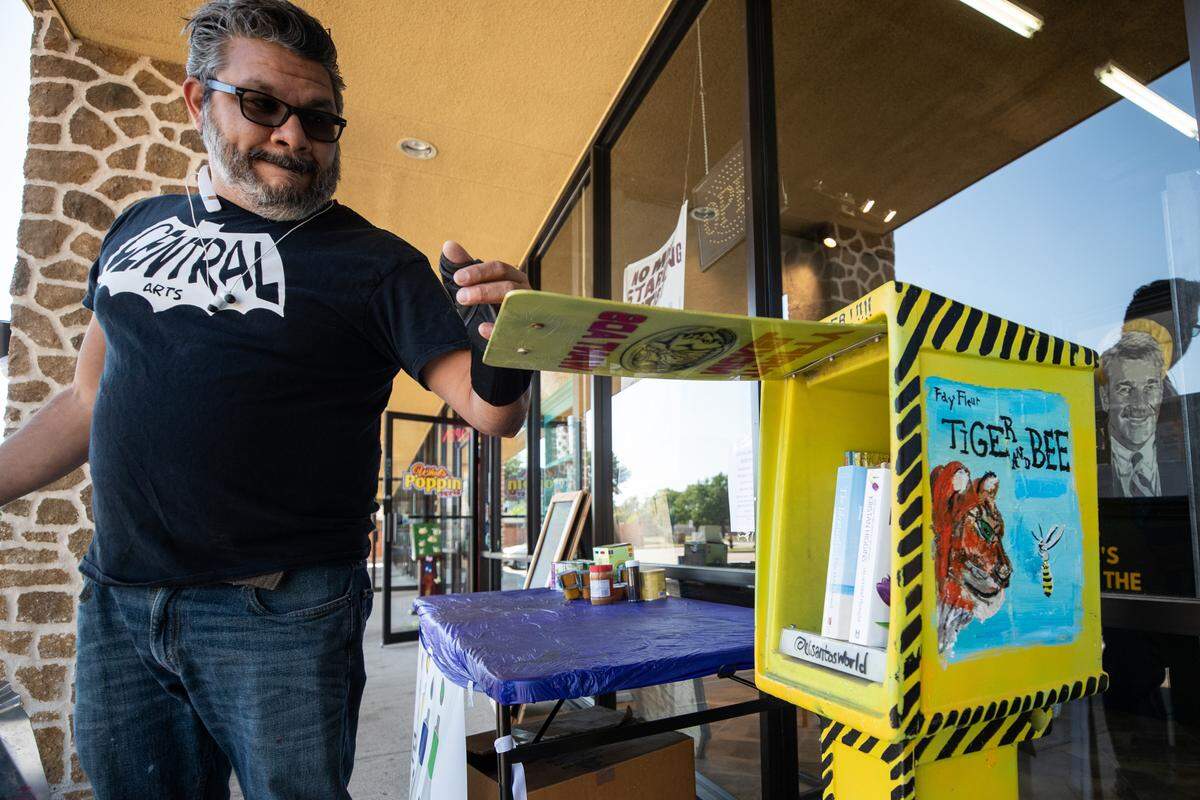
Josh Santillan, who founded the nonprofit Central Arts Bedford, leases space in the Bedford Meadows shopping center. Central Arts offers classes for children and adults, and Santillan closed his storefront and lost revenue from the fees he charged for the classes, but he continued to get donations for his projects, including a food bank that he organized in response to the economic downturn.
Zimmermann forgave a portion of the rent to Central Arts, Santillan said.
“We’re not impacting Michael’s financial standing. He is a businessman, and I understand that. I also understand the economic impact this (the coronavirus pandemic) is having on him also.”
A case-by-case approach
Robert Gleason, CEO of the Greater Fort Worth Association of Realtors, said in an email to the Fort Worth Star-Telegram that members that deal in commercial leasing are getting relief requests from their tenants, particularly bars, restaurants, retail and some small office leasing.
Gleason added that he hasn’t heard anything about the large industrial and warehousing market in terms of asking for assistance.
“What I have heard is just anecdotal, but commercial landlords that are having tenants request assistance are then having to go to the lenders and work with them on their own loans for the property. So, they’re pressured from both sides, first from trying to work with tenants, and then trying to negotiate with their lenders,” he said.
Saul Waranch, president and founder of the S.F. Waranch Company, also manages commercial properties in the Dallas/Fort Worth area.
Waranch said he is also working with his tenants on a case-by-case basis, but he said he is not “giving rent away.”
“I manage with my heart and with my brain…” he said.
“It’s heart-wrenching that we’ve had a tenant for 20 years who calls and says, ‘Saul, I can’t pay anymore.’ Then, a large company that is just scamming you and you know it, and they write a letter saying they can’t pay rent. I’m sure they’re getting a huge payment from the PPP,” Waranch said.
Leah Dunn, a commercial real estate broker who also manages properties, said she adjusted rent for three of seven tenants including a public relations firm, an auto body shop and an electrician.
Dunn said that during her real estate career, she experienced 9/11 and the 2008 financial crisis, but there is no precedent for the fallout from COVID-19.
“The hardest part for me is hand-holding with buyers and sellers. I don’t have a playbook for what is going to happen,” she said.
Tough times ahead
Meanwhile Zimmermann said he will continue working with his tenants as the tough times continue.
He realizes he will likely lose some tenants and see fewer leasing opportunities in the short term.
“I can imagine that I can get every one of these rents over time and be made whole during this period. I just don’t believe that it is fair…” Zimmermann said. “I just can’t imagine telling someone, you didn’t pay $10,000 in rent for two months and spread it out over two years. They (tenants) will owe me X amount more per month, and your business is struggling. I just don’t feel that I could face them.”
Bill Stonaker, president of Wilson & Stonaker, a commercial real estate investment firm with properties throughout the Metroplex, said he negotiated with tenants, deferring rent in some instances, but his company did not give a break to a Fortune 500 company that requested lower rent.
“My letter back to them was, ‘I don’t think so,’ ” he said.
Stonaker said his industrial tenants are doing pretty well, but he is concerned about retail and the possibility that the area could lose 25 to 30 percent of the restaurants.
“We’ve got to open back up and get going,” he said. “You’re not going to keep the United States down, and you’re not going to keep Texas down. We’re not going to put up with it,” he said.
This story was originally published May 26, 2020 at 6:00 AM.