‘That’s our duty right now.’ More North Texas residents wearing face masks in public
Adrienne Phillips and her 16-year-old daughter, Lila Phillips, have evolved on the use of face masks.
When the two visited Texas A&M in College Station in late January as part of a round of college tours, they found it odd to pass other people on campus with cloth covering the bottoms of their faces — an overreaction, they thought, to a virus that had only recently arrived in Washington. “They’re so funny,” Adrienne remembers thinking of all those who looked dressed for a hospital. “They’re really freaked out.”
She and her daughter have changed their attitudes, as each week has brought more research about COVID-19 and how it spreads, and new guidance.
“Now I’m like, ‘Well, maybe they were the smart ones,’” Adrienne said.
On Friday, the mother and daughter from Aledo wore N95 respirator masks as they walked into the Target off of West Seventh Street in Fort Worth. Adrienne and her husband had stowed the masks away years ago as a precaution, in case there was ever a situation when their family of six would need them.
That moment, which Adrienne never imagined would happen in a world before the coronavirus, came last week.
“Listening to that this next two weeks is going to be really hard for Texas, and kind of a peak ... that just made me want to be more and more careful,” she said. “I do feel like that’s kind of our duty right now. It feels really ridiculous sometimes, but I feel like that’s the smallest thing I can to try to keep other people safe, and my family safe.”
Her shift in thinking is representative of those of countless Texans who have heeded recent advice from the Centers for Disease for Control, after the agency altered its original position on face masks on April 3. Throughout March, the agency had suggested masks only needed to be worn by elderly people or individuals with underlying health conditions, and weren’t necessary for members of the general public.
But continuing research on the high percentage of asymptomatic coronavirus carriers spreading the virus led officials to reconsider that stance. Even a home-made or rudimentary mask can block infected droplets that come from a person’s nose or mouth, according to recent studies compiled by the CDC.
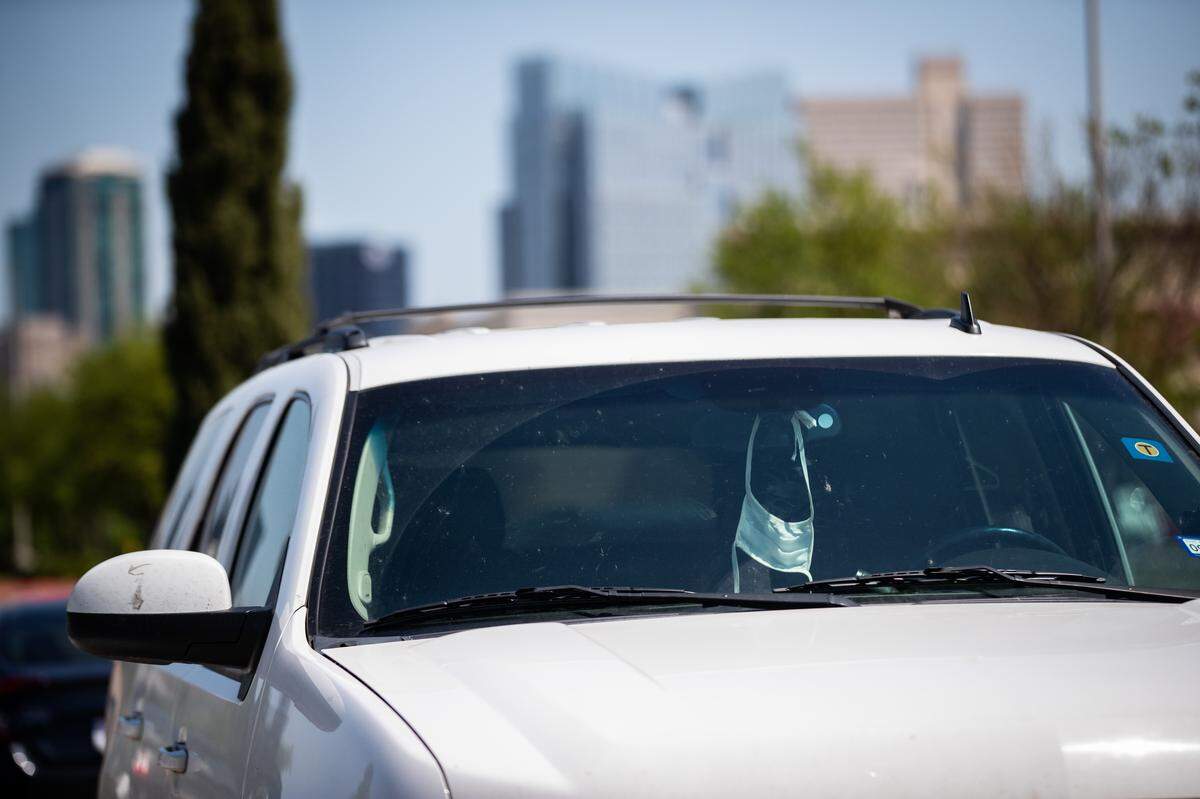
So wearing a face mask isn’t so much about protecting oneself, the research says, but about taking part in an act of social solidarity that could help protect others and slow the spread of COVID-19.
Across Fort Worth, many residents leaving the comfort of their homes can be seen wearing some form of face mask — in their cars, shopping in supermarkets, walking or jogging on sidewalks. Some wear medical masks like the N95, which have been in short supply across the country. Many others are donning simple cloth or paper versions, or turning articles of clothing like bandannas into makeshift masks.
People who spoke with the Star-Telegram over the past couple of days said they started wearing masks recently because they’re worried about unknowingly passing on the virus to strangers or loved ones. People also said they’re choosing to wear them in times they’re more likely to encounter crowds.
Katie Allen and Robert Ortiz, a Fort Worth couple, weren’t wearing face masks on Saturday afternoon as they waited for their order outside of Melt Ice Cream on a fairly empty Magnolia Avenue. But they said they have been wearing medical face masks when picking up food at restaurants or shopping in grocery stores.
Ortiz, though he has been feeling more “paranoid” the more time he spends in isolation, said he likely wouldn’t be wearing the masks if it wasn’t for Allen, a nurse at Baylor Scott & White All Saints Medical Center.
She tries to let Ortiz run most of their errands since she’s been working in an environment where it’s possible she could’ve been exposed to the virus. And at the hospital, she said nurses are wearing face masks at all times throughout their shifts, “just because we’re around other co-workers” and “who knows who’s been exposed.”
“I feel like I have been probably been exposed at some point, so like I don’t have any symptoms or anything, but that doesn’t mean I might not have it,” she said. “If I could be a carrier of it, I don’t want to expose other people to it.”
Heath and Nikki Bowman, of Burleson, picked up about 10 to 15 paper masks from a gas station at $2 apiece. They said on Friday they believe officials within their city want citizens to be wearing face masks in public spaces, so that’s what they’ve been doing when they go out. It was Nikki’s first time leaving the house in seven days, she said.
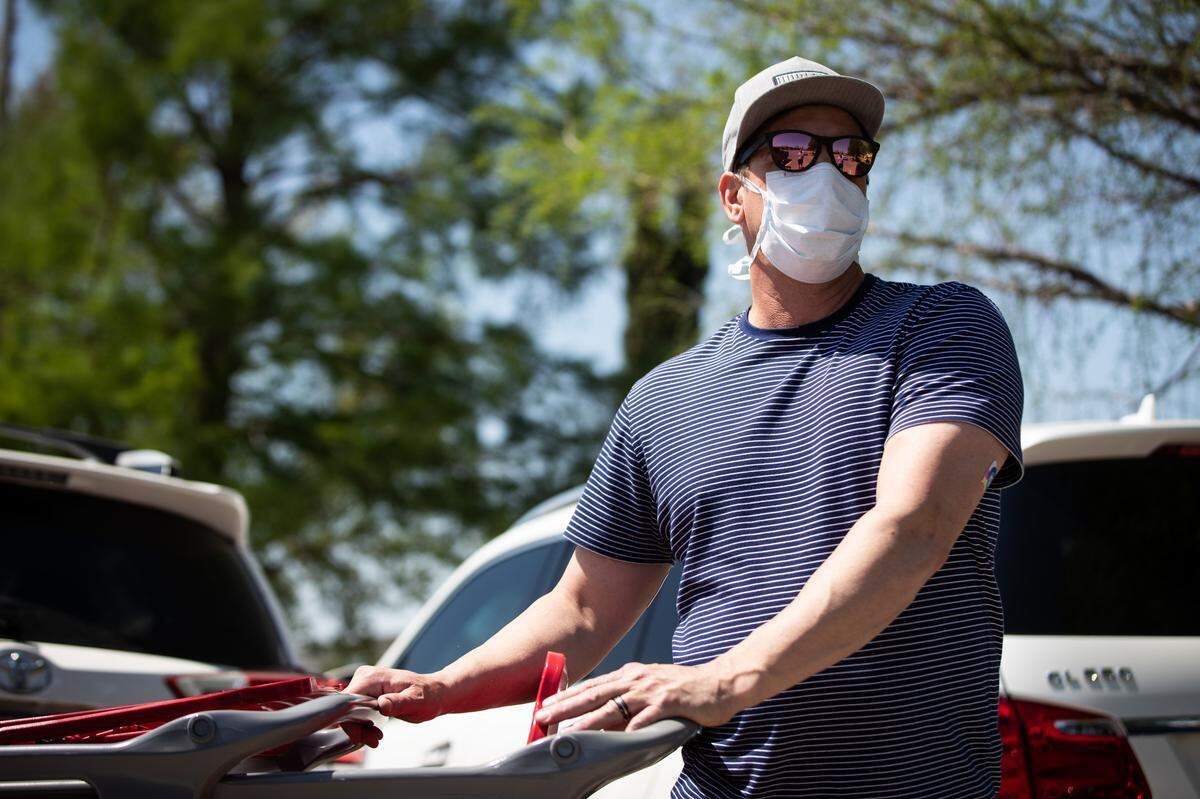
Wearing the mask doesn’t bring her an added sense of security, she said, and it often makes her feel like she has trouble breathing. But she and Heath are wearing the masks based on the idea that — if they’re asymptomatic carriers of the coronavirus — it could prevent them from spreading it.
The pandemic has become much more real in their lives, after they lost a family friend to the virus on Friday. Tarrant County officials said on Saturday four more people had died of the coronavirus, bringing the total to 25.
Nikki said their experience with coronavirus was almost like a car crash, so sudden and devastating. Their friend was in the hospital for five days, she said, and “he fought hard.” Family members couldn’t be with him.
He was 59, Nikki said. He didn’t have any underlying conditions.
“That kind of makes it a reality,” she said.
What to know about wearing face masks
Cloth face masks, in order to be effective, need to be worn properly, according to the CDC.
The masks should fit snugly and comfortably around a person’s face, secured with ties or ear loops, the agency said in its guide to cloth face masks. They also need to include more than one layer of fabric, allow for easy breathing and be capable of being washed without damage.
Masks should be washed routinely, depending on the frequency of use, according to the CDC.
When taking off the mask, according to the CDC, people need to be careful to not touch their nose, eyes or mouth. Individuals are also advised to wash their hands immediately after taking off their face mask.
The CDC, in its cloth face mask guide, provides instructions on how a person could sew their own mask at home.