Could mobile homes be a solution to Dallas-Fort Worth’s affordable housing crisis?
Even in the triple digit heat, Patrick Teague’s porch plants are thriving.
Against the cornflower blue of his 1997 Palm Harbor trailer, the waxy green leaves of Teague’s many ivy plants angle themselves sunward. Behind his trailer, he’s building a greenhouse.
As a single retiree, a hobbyist, a father and a grandfather, Teague’s 16-by-18-foot trailer provides what he needs: ample outdoor space for tending to his many plants and a dedicated room for his young grandson’s toys.
When rent began to increase at his downtown Fort Worth apartment in the mid-2000s, Teague, 59, started to look for something more permanent.
He found a 12-year-old mobile home that needed some work but had good bones, and he’s never looked back. In fact, he convinced his daughter to buy one down the street in the same southeast Fort Worth neighborhood.
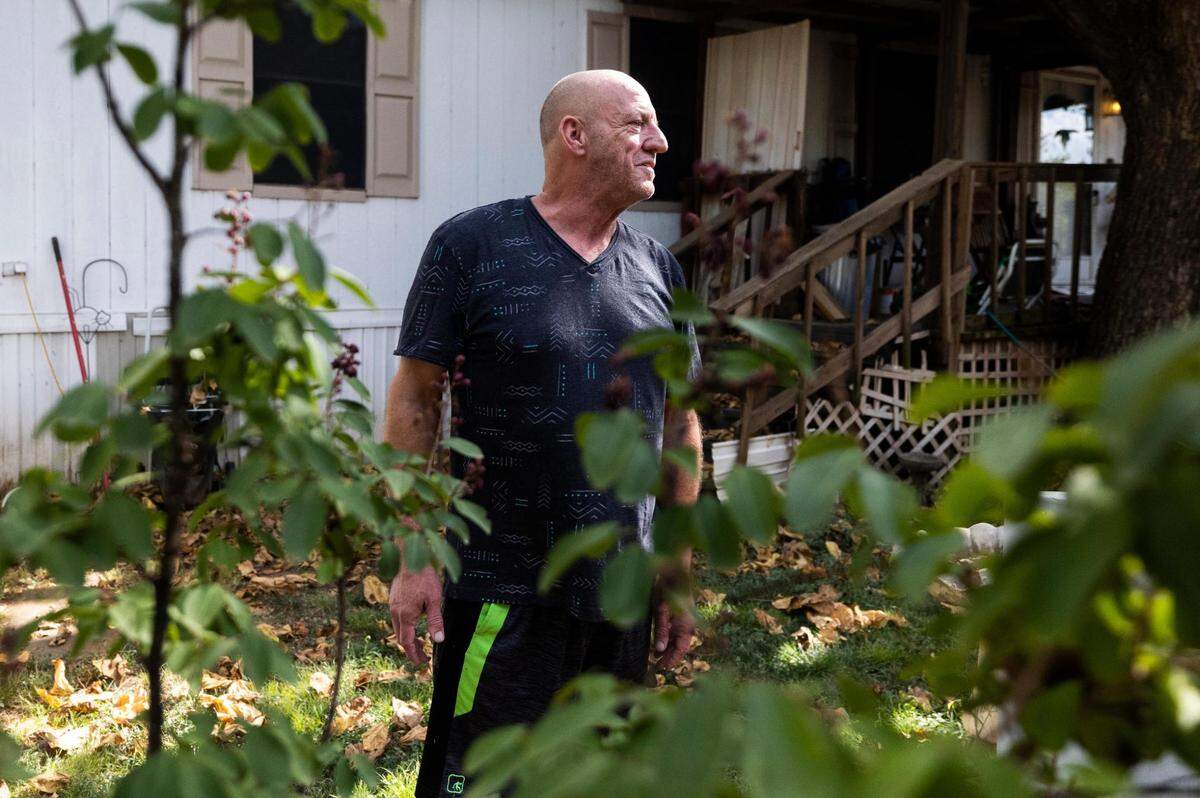
“I have a roof over my head. I’m warm in the winter and cool in the summer, and it’s paid off,” he said.
Since the onset of the coronavirus pandemic, more renters and homeowners are taking the path Teague did — looking beyond the cultural stigma of manufactured homes and seeing the culturally maligned housing product for what it could be: a comfortable and affordable housing solution.
Between April 2021 and April 2022, the median home price in Fort Worth rose 28.6%, from $276,000 to $355,000. Meanwhile, inventory remains perilously low — April marked six months of inventory below one month in Fort Worth — and mortgage rates have climbed 2% this year. The jump in interest rates has increased payments on a $350,000 mortgage by $400 a month.
In the same time period, rents in Dallas-Fort Worth were up 17.3%, according to ApartmentData.com.
Experts say manufactured homes could provide much-needed entry-level housing, but a web of disadvantageous policy is holding the industry — and its potential — back.
Manufactured housing’s new buyers
When the pandemic took hold in 2020, Sheila Beard, general manager of Fort Worth-based manufactured housing retailer Legacy Housing Outlet, thought sales would slow.
But, prices for site-built homes skyrocketed, and the opposite happened: buyers started looking for other options.
“People are out looking for site-built homes, and they have a budget they have to meet,” said Beard. “So they have to look for homes less than $200,000, and there’s nothing out there.”
That’s what happened to Patrick Teague’s daughter.
She and her husband initially intended to enter the traditional housing market. Unable to find a site-built home in their price range, they followed Teague’s advice and found a home in Redwood Estates, where he lives.
Beard also saw interest balloon from another group spurned by the brutal housing market — homeowners increasingly encumbered by Texas’ rising property taxes, which have risen more than 20% since 2017, according to the Texas comptroller’s office.
In 2021, no new site-built home cost less than $125,000, versus 67.3% of new manufactured homes, according to the 2021 U.S. Census Bureau Survey of Construction.
At Legacy, manufactured homes range from $40,000 to about $200,000. Some retailers also offer top-of-the-line “CrossMod” homes, which can sell for up to the mid $300,000s.
While the manufactured housing industry saw price increases caused by inflation and supply chain issues, “Even if manufactured home prices increase, it’s still more affordable than buying a site-built home,” said Beard.
Just like other neighborhoods
Teague’s community has all the trappings of your average Fort Worth neighborhood.
Residents decorate their front porches with hardy summer plants. On a weekday evening, there’s a young man in scrubs pushing his daughter on a swing in front of their house.
Redwood Estates features a playground, a community center with a fitness room and an outdoor pool for neighborhood residents.
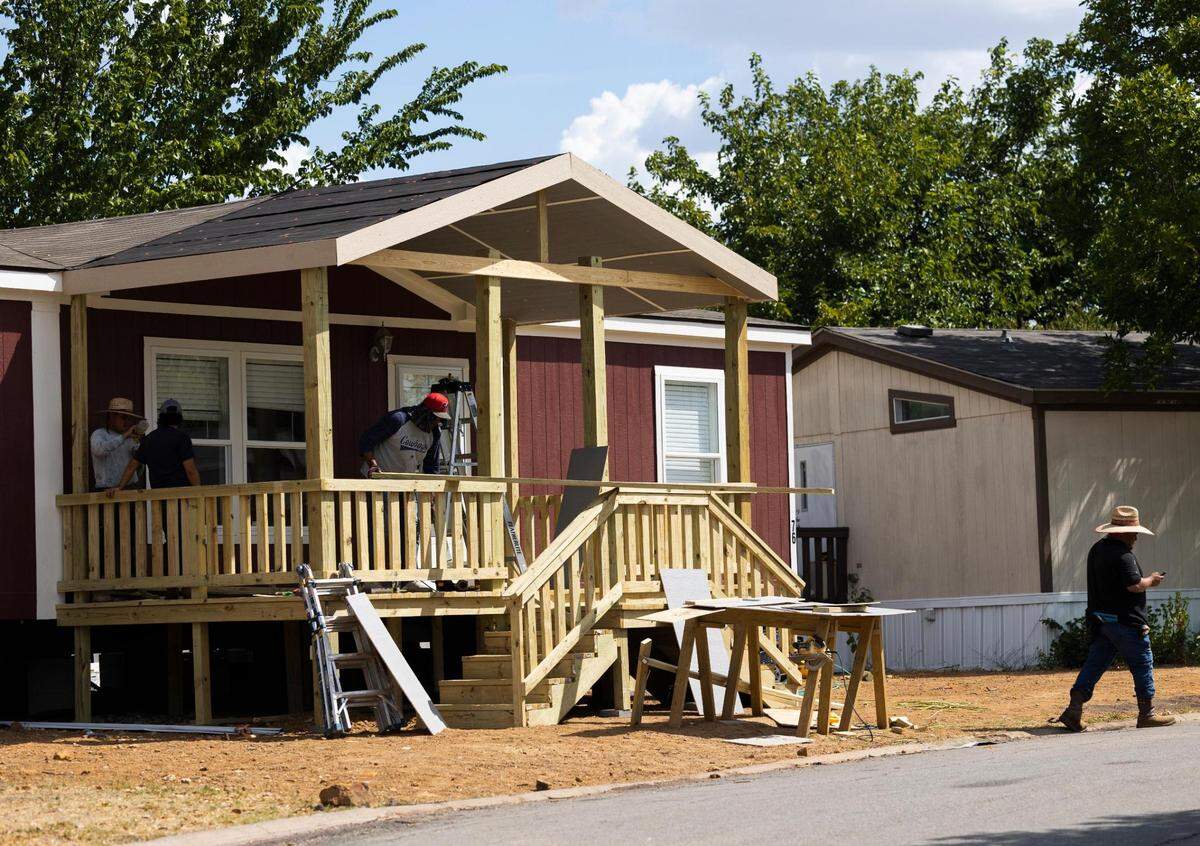
Some modern manufactured housing communities are elevated beyond traditional neighborhoods, like Oceanway outside of Houston.
The neighborhood, built by Inspire Communities, features rows of bright pastel homes along the beach as well as a boardwalk, pavilion, playground and pier.
Inside, the “trailers” are nearly indistinguishable from new site-built homes. For example, one 1,500-square-foot listing has three bedrooms, two bathrooms, granite countertops and molding throughout the home.
On the Legacy Housing Outlet sales floor, Beard recalls recent customers who told her, “‘I never dreamed I would purchase a manufactured home, but here we are.’”
Customers are shocked to see how much nicer these homes can be compared to the stigmatized homes in what are derisively called “trailer parks.”
National lawmakers had the same reaction when the Manufactured Housing Institute set up multiple modern products on the National Mall as part of the U.S. Housing and Urban Development’s Innovative Housing Showcase earlier this summer.

“We just can’t continue to build the houses we grew up in,” HUD Secretary Marcia L. Fudge told Bloomberg News in June. “These houses are more efficient, more resilient. But the other thing is, we need so much new housing. These can be built quickly, installed quickly. They are at a great cost point. And so it is a big part of the solution.”
Walking through modern products in manufactured housing can help break down stereotypes, said DJ Pendleton, executive director of the Texas Manufactured Housing Association.
“We’re very proud of the modern houses that we’re building,” he said. “We wish that more people could see the quality of our modern homes.”
Cities’ role
Despite the increased aesthetic appeal of modern manufactured homes and the dearth of affordable housing nationwide, new communities of manufactured housing aren’t going up at the same clip as “stick” homes.
The biggest challenge to increasing manufactured housing stock, says industry advocates, is city-level zoning.
Cities can restrict manufactured housing in both obvious and subtle ways. They can outright ban manufactured housing. Or they can make it harder to build a manufactured home community by requiring that the land be a certain size, for example.
“We’re cut out of those markets,” said Pendleton. “If we could get some level of zoning parity so we could build and supply those houses, we would love the opportunity to compete on a level playing field, give the customer an option between us and a site build and let them pick.”
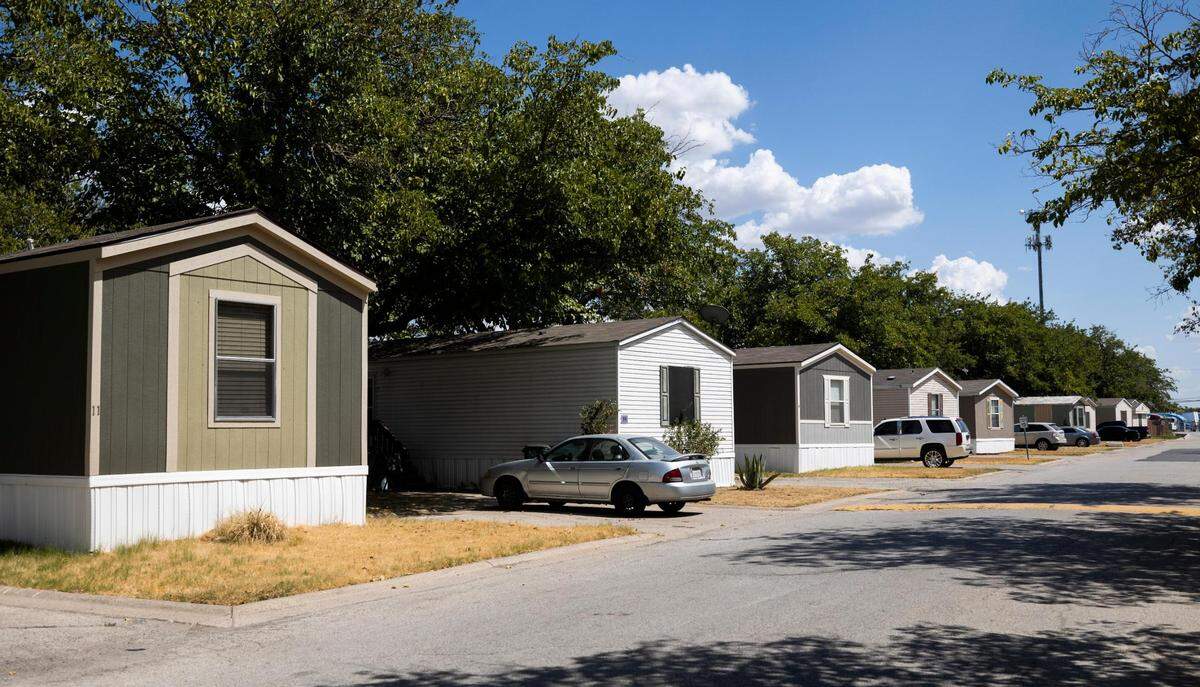
Fort Worth allows manufactured housing in areas zoned MH. There are about 70 mobile home parks in Tarrant County, mostly southeast and northwest of Fort Worth at least several miles from downtown.
There are 22 MH districts in the city, totaling 858 acres or about one square mile of Fort Worth’s 355.56 square miles.
In the last five years, only six cases came before the Fort Worth Zoning Commission proposing to change zoning to manufactured housing. Two were dismissed. Four were accepted. They include:
- 7500-7700 blocks of Forest Hill Drive, 68.4 acres
- 7780 Forest Hill Drive, 9.8 acres
- 7900-8100 Forest Hill Drive, 91.1 acres
- 13229 Sehapayak Road, 0.5 acre
The accepted zoning changes are concentrated on Forest Hill Drive south of Interstate 20. Five of the city’s 22 existing are also in this area.
“Increasing the supply of affordable housing” is listed as a goal of the city of Fort Worth. But in the city’s 26-page comprehensive plan for housing, manufactured housing is not mentioned.
When asked about manufactured housing, District 9 council member Elizabeth Beck said nothing has come up in her district, but she’s curious to see what some of the new manufactured housing products look like.
“I think it’s an interesting idea,” she said.
“I think there is a stigma around the idea of a modular home or a prefab home. Whatever community that went in, you would have to work with the neighbors. We want to make sure it’s a good product, and that’s really all I care about. That it’s something that lasts, that we’re not just giving someone a consolation prize.”
With limited options in city limits, owners of manufactured homes are pushed to rural areas, where they aren’t bound by city zoning.
And, recently, purchasing rural land hasn’t been cheap.
In the last 40 years, the price of rural land has skyrocketed from $725 per acre in 1980 to $9,763 per acre in 2021 in the Fort Worth Prairie, which includes Parker, Palo Pinto, Wise, Tarrant, Hood, Somervell and Johnson counties, according to data from the Texas Real Estate Research Center.
Plus, there’s the cost of utilities, specifically septic and water, which often requires drilling a well.
“The problem is, in order to solve the affordable housing crisis in America, these cities need to open their minds to MH home parks as being a realistic and … attainable … housing option for people,” said Hudson Bird, a broker with Denton-based Sunstone Real Estate Advisors.
Paying for manufactured housing
In many manufactured housing communities, residents own the home but rent the lot.
For many of these owners, their rent — like everyone else’s — is going up.
This year, Teague will pay $439 a month in rent.
“It’s been increasing,” he said. “Their goal probably is about $550, $575 before it’s over.”
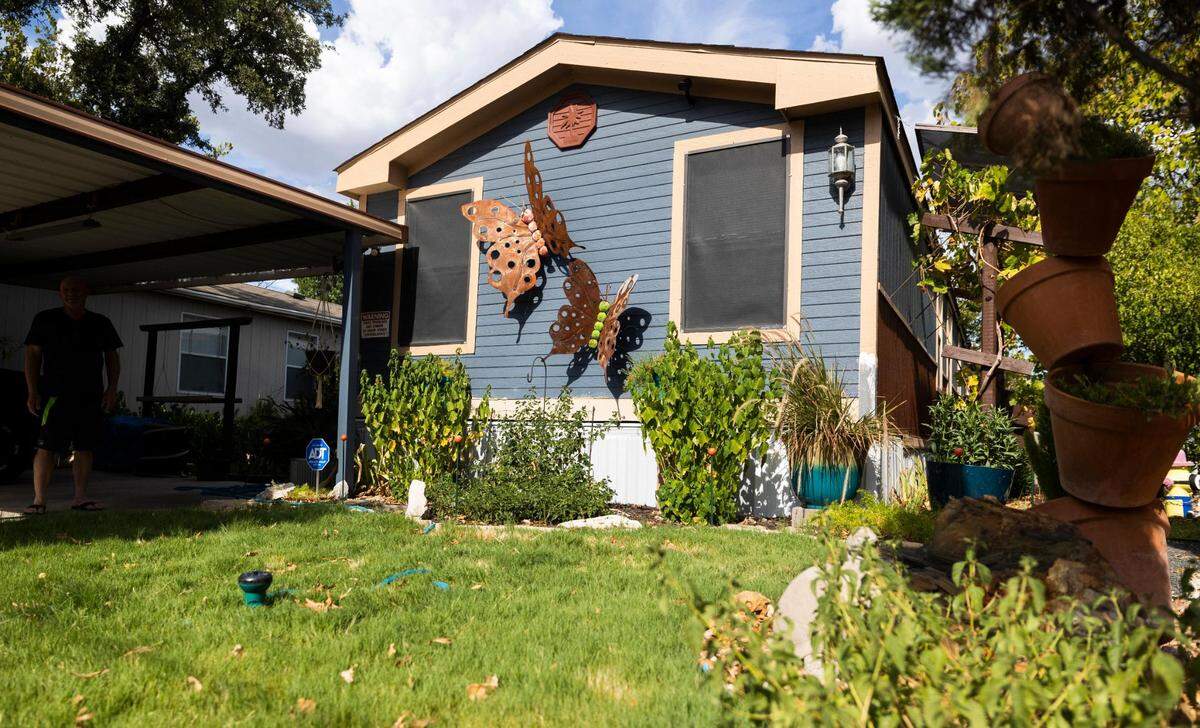
The property taxes on mobile home communities aren’t as high as site-built neighborhoods, since mobile homes typically depreciate in value. However, owners of manufactured home communities have seen their commercial property values skyrocket, like Tarrant County homeowners.
For one member of the Texas Manufactured Housing Association who owns a park in Fort Worth, property taxes went up so high that dividing it among tenants would cost them an extra $150 a month, said Pendleton.
If the owner of a manufactured home cannot pay the rent and wishes to move to a different community, their options are limited. And, moving a mobile home can cost up to $20,000.
“You’re isolating these parks as little islands, and then the people have nowhere to go,” said Pendleton.
Not only does this arrangement — by which residents own their homes but rent the land — put residents at the mercy of mobile home park owners, but it also limits buyers’ financing options.
When you buy a home, but not the land it sits on, you can’t finance it with a typical mortgage. Rather, buyers must use personal property or “chattel” loans, which have shorter terms, higher interest rates and fewer consumer protections than traditional mortgage loans.
In 2021, the median interest rate for chattel loans was 7.8%, compared with 3.5% for mortgages on manufactured homes, according to 2021 Home Mortgage Disclosure Act data.
Picture this
From his home in Frisco, Bird sees new apartment complexes taking shape along Texas highways all the time.
But adding luxury housing products won’t ameliorate the state’s growing housing affordability problem, he said.
“Nothing’s actually being done, even though you’re adding more doors,” said Bird.
That’s where manufactured housing could play a role, proponents of the housing product argue. But the industry that’s historically been overlooked by city policy will need help.
DJ Pendleton wants Texans to picture this.
Take a vacant swath of land in city limits. Develop it with modern, colorful manufactured houses. Get the city in on it to subsidize land costs and keep property taxes manageable.
When it comes to affordable horizontal development, “we think we could really fill that role if we were allowed to,” said Pendleton. “We would certainly like the opportunity to compete.”