As Rivian auto considers plant in Fort Worth, what can we learn from Tesla in Austin?
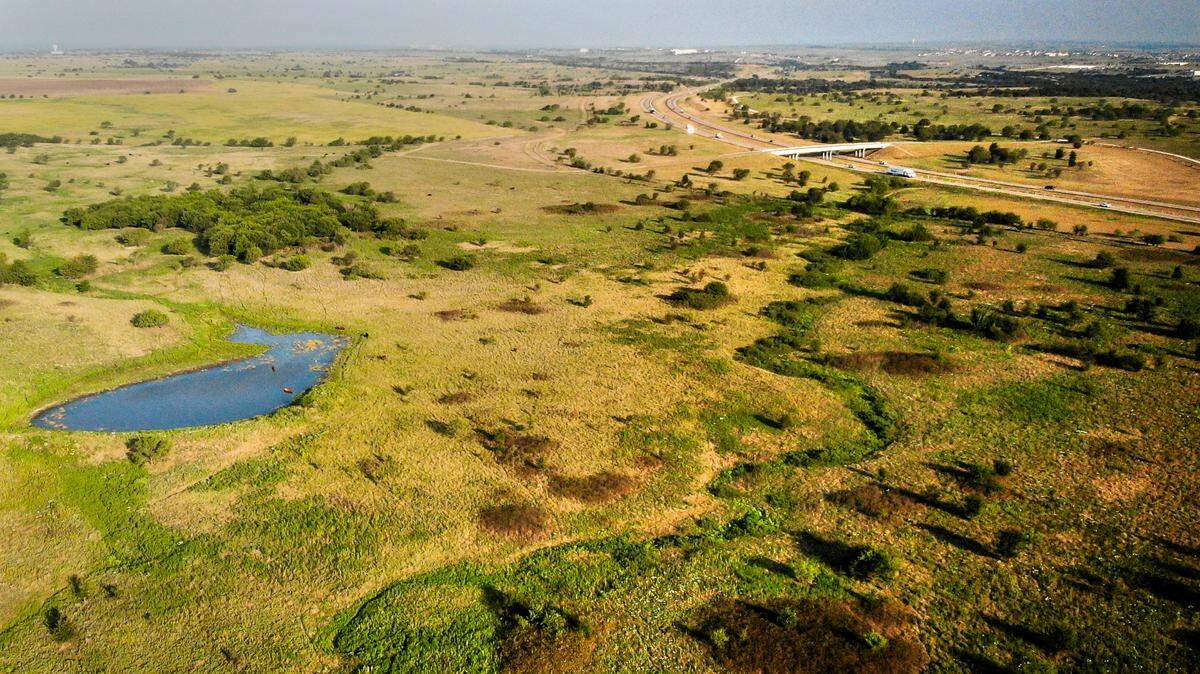
Drive through downtown Austin and you’ll see high rises and an array of new apartment complexes that pop up like weeds. As you travel some 15-miles southeast, empty land and scattered housing developments replace the downtown bustle. It’s here that electric vehicle mammoth Tesla has decided to make a home.
In the Austin area, Tesla has brought the hope of new jobs, better roads and economic opportunities in a part of Travis County that has been under served.
Fort Worth leaders hope Rivian Automotive, another electric vehicle manufacturer, could do the same for the western side of the city. And while the communities have differences, the Tesla plant and another Rivian factory — which helped renew an Illinois town — provide windows into what could be in store for Fort Worth and Tarrant and Parker counties.
“All the growth in the last 10 years has been to the north part of Fort Worth, and I would argue over the next five to 10 years, it’s going to be west into Parker County,” said District 3 city council member Michael Crain “This would, I think, really jump start a lot of the growth that’s already on the books.”
This month, the Fort Worth city council approved a $440 million package of tax incentives for Irvine, California, based Rivian, which promises to create 7,500 jobs by 2027. The minimum average salary for the jobs would be $56,000. Tarrant and Parker counties are considering a 70% tax abatement for 10 years.
The city is proposing the factory be built in the Walsh development in Tarrant and Parker counties. It would be located on 2,000 acres of undeveloped land on the south side of Interstate 20, east of the Interstate 20/I-30 split near Aledo.
No final decisions have been made by Rivian on where its factory will be built — Arizona has also reportedly been considered as a potential site. But Mayor Mattie Parker has confirmed Fort Worth is a finalist.
Now, the city waits to learn whether Rivian will call the community home.
Tesla arrives in central Texas
News broke in July 2020 that Tesla, headed by Elon Musk, was coming to Texas, promising to invest $1.1 billion and pay a minimum wage of $15 per hour at its largest assembly plant, called Giga Texas.
“We viewed Tesla not just as a company that was coming to Austin, but a company that was opening up an economic sector in Austin,” said Laura Huffman, president and CEO of the Austin Chamber of Commerce.
The plant itself, still under construction, is on 2,000 acres on the outskirts of Southeast Austin in the Del Valle area, a historically under served community in an unincorporated part of Travis County near the Austin international airport.
Austin has been a magnet for new businesses in recent years, drawing companies like Apple and potentially Samsung. It’s a trend in line with the state as a whole, as Texas attracts more California-based company headquarters than any other state.
Tesla offers a wide range of jobs, including some that just require a high school diploma and provide opportunities for growth, Huffman said. It would also add automobile manufacturing to the community and other ancillary jobs.
To draw the company, Travis County offered property tax rebates of $14 million over 10 years and Del Valle ISD offered a tax break that lets Tesla pay $776,000 each year for its first 10 years in property taxes, compared to more than $5 million, according to Texas Monthly.
Ray Perryman, an economist and president of The Perryman Group in Waco, estimates construction and development of the Rivian project could lead to some $6.2 billion added to the economy. By 2025, the annual benefits include almost $2 billion added to the economy, about $1.2 billion in personal income, and more than 30,000 total jobs, he said in an email.
He pointed out that Rivian is relatively new and untested. It has yet to deliver its first vehicle, but plans to start delivering trucks in September. Rivian, backed by Amazon and Ford Motor Co., has filed for an initial public offering. According to Bloomberg, it’s seeking a valuation of about $80 billion.
Rivian’s presence in North Texas would give the area a sizable footprint in the automobile industry as it evolves, Perryman said.
“The Tesla location in Austin will similarly stimulate the economy, adding billions in output and tens of thousands of jobs once mature operations levels are reached,” he said in an email.
A double edged sword for Del Valle
When Tesla moved into Del Valle, residents were given a double edged sword. On one hand, Tesla’s notoriety could bring attention to the community that has long been lacking.
The area where Tesla is located is a food and medical desert and lacks access to public transportation, officials said. When Tesla arrived, the community was skeptical, but knew the move would bring a economic boom and long needed improvements, said Austin City Council Member Vanessa Fuentes, whose district stretches into southeast Austin.
“You take an area that does not have a whole lot of access, and now immediately you put 5,000 workers in the middle of it,” said Travis County Commissioner Jeff Travillion. “That brings your grocery stores. That brings your convenience stores. That brings your places to eat. That brings all of those amenities that would have taken years and years to bring if you waited for the public process to work.”
The company is working with the school district to create an apprenticeship program to educate students and was ready with cases of water when the February winter storm hit, Fuentes said.
But community leaders worry salaries at the factory aren’t sufficient and residents could get priced out of the area as it grows and gentrifies.
“Fifteen dollars an hour is nothing when you live in the city of Austin,” said Susanna Ledesma Woody, president of the Del Valle Community Coalition and a Del Valle ISD trustee.
She encourages North Texas leaders to make sure their contract with Rivian, if it gets to that point, includes a requirement that they offer “a living wage” not a specific number, as the definition of a living wage changes with time. This will help ensure people can afford to live in the area they work, she said.
State Rep. Phil King, a Republican who represents Parker County, doesn’t worry about folks being displaced if Rivian were to move in.
“We have a lot of open space in eastern Parker County, and so this isn’t like moving into a neighborhood and pushing others out,” he said. “This is moving into vacant ranch land and building from the ground up.”
A Del Valle resident who serves as vice president of the community coalition noted that a direct comparison can’t be drawn between his community and the Fort Worth area. But, he offered some words of caution. “Pay attention” and look past the excitement of having a big business come to a community, Matt Worthington said.
”Think about things like, what kind of investments are you making in our community to make our community more innovative,” he said. “Can we make those investments in our community so that when they grow up, they’re doing things that change the world. Or, are we just sort of sourcing them for, like, the bottom barrel jobs and sort of relying on other people from other places to sort of do that kind of work.”
Rivian helps to sustain Normal, Illinois
When Mitsubishi closed its Normal, Illinois plant in 2015 and ended U.S. production, the community knew it had to find another tenant for its Mitsubishi factory. The city of about 53,000 in central Illinois also knew it would be an uphill battle, said Mayor Chris Koos.
It was a worrying time for the area’s economy. The city was coming out of a recession, and there was little home building, he said. On top of that, State Farm Insurance, a major employer in Normal’s twin city Bloomington, was moving workers to hubs in other parts of the country.
“We were concerned that we needed to diversify our economy, and manufacturing was something that we were looking at, especially with an abandoned auto plant,” Koos said.
Reaching out to potential replacements didn’t yield results. But Rivian — largely unknown at the time — approached the city and came to look at equipment at the plant it could recycle. Officials were stunned at the well-maintained condition of the factory and were drawn to the community’s shared value of sustainability, Koos said.
Rivian would take over the plant, offering the area a new economic opportunity.
Koos advised North Texas leaders to talk strongly about their sense of environmental stewardship and sustainable practices to convince Rivian to build a plant in Fort Worth.
A few years in, Koos said Rivian is employing more than 2,000 people. He’s seeing people hired from the region and from out of state. Thus far, Rivian’s presence in the community hasn’t brought related manufacturing jobs to support the factory, Koos said. The Normal site is the company’s first manufacturing facility for its electric vehicles, including a pickup truck.
Typically, key suppliers for vehicle manufacturers will set up operations nearby. That was the case for Mitsubishi, Koos said.
“We assume the same thing will happen again,” he said, adding that Rivian is early in its manufacturing process.
Koos grades the electric vehicle company’s economic impact “very positively.”
“We’re seeing an influx of people,” he said. “If you put a house on the market in Normal-Bloomington … reasonably priced, that house will be on the market for 24 hours, and houses are selling for above the asking price.”
Rolling out the red carpet for Rivian
As Fort Worth area leaders wait to see if Rivian selects North Texas as its factory site, the details of ongoing negotiations are largely secret.
“We’re excited that Fort Worth is a finalist,” says Chris Strayer, executive vice president of economic development for the Fort Worth Chamber of Commerce. “This is a great opportunity for our city, and we look forward to continuing the process.”
King, the state representative, didn’t go into details but said it’s an “all hands on deck deal right now” — from a school district level, to the municipal level, to the state — to make sure North Texas lands Rivian.
The Rivian project is also expected to be submitted for consideration as a Texas Enterprise Zone project, a state sales and use tax refund program aimed at encouraging business development in economically distressed parts of the state.
From a legislative perspective, King said, Texas has worked hard to be exciting for businesses.
“And we will do everything we can to try and make our tax structure, our regulatory structure, our workforce, everything, inviting to businesses, because we want them to move to Texas,” he said.
Greg Miller, a spokesperson for the Walsh Companies, envisions the area becoming a “new Western gateway for North Texas” by creating a new hub of business, retail and residential opportunities. The former ranch site is being developed and is expected to be home to 50,000 residents. The land for Rivan’s site is in an unincorporated area, but would be annexed by the City of Fort Worth.
“I think that the ... hallmark or first major tenant is really, really important when you look at economic deals that are going to last for years and years and areas that there’s opportunities for growth over decades,” he said.
It’s also a chance for North Texas to get in the electric vehicle game.
“In business and development, you always want to be part of ... what’s new, and not what’s old,” King said. “Everybody knows [electric vehicles] are the coming thing. It’s going to take decades for that transition to take place, but we know that’s where things are heading in great part.”