300 spots in Fort Worth are at risk of dangerous flash flooding. Most won’t be fixed.
Marilyn Espinal’s 1984 Lincoln Town Car weighs about 4,000 pounds.
Its predecessors —full-size luxury cars — were known by some as “land yachts,” but Espinal never thought her car would float.
Then one day about two years ago, it did.
Espinal, who is 75, had turned north off West Seminary Drive onto a neighborhood street near Hemphill on her way to a friend’s house. The rain poured so hard she couldn’t see the road, so she pulled over. Water rose around her.
Then the water began to push the car away from the curb.
“It just picked that heavy car up and floated me to the middle of the road,” she said. “It scared me so bad I thought ‘My God, I’m going to hit another car.’”
Luckily, she didn’t, and the water never got inside her car.
Fort Worth’s flash flooding
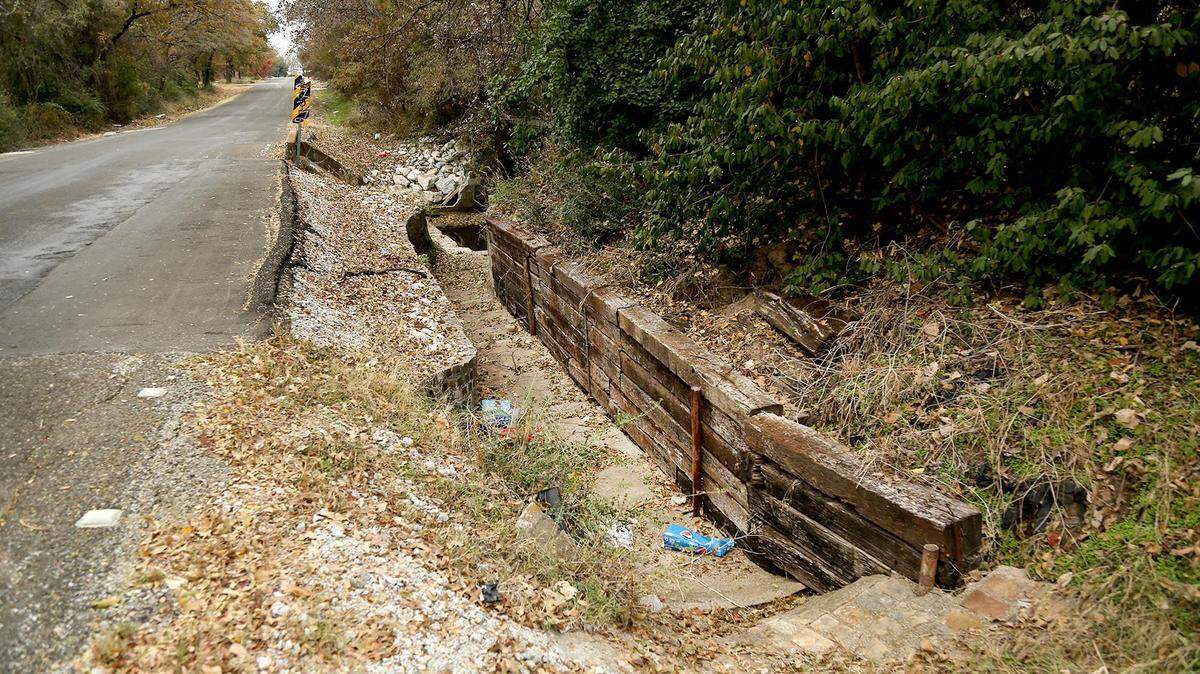
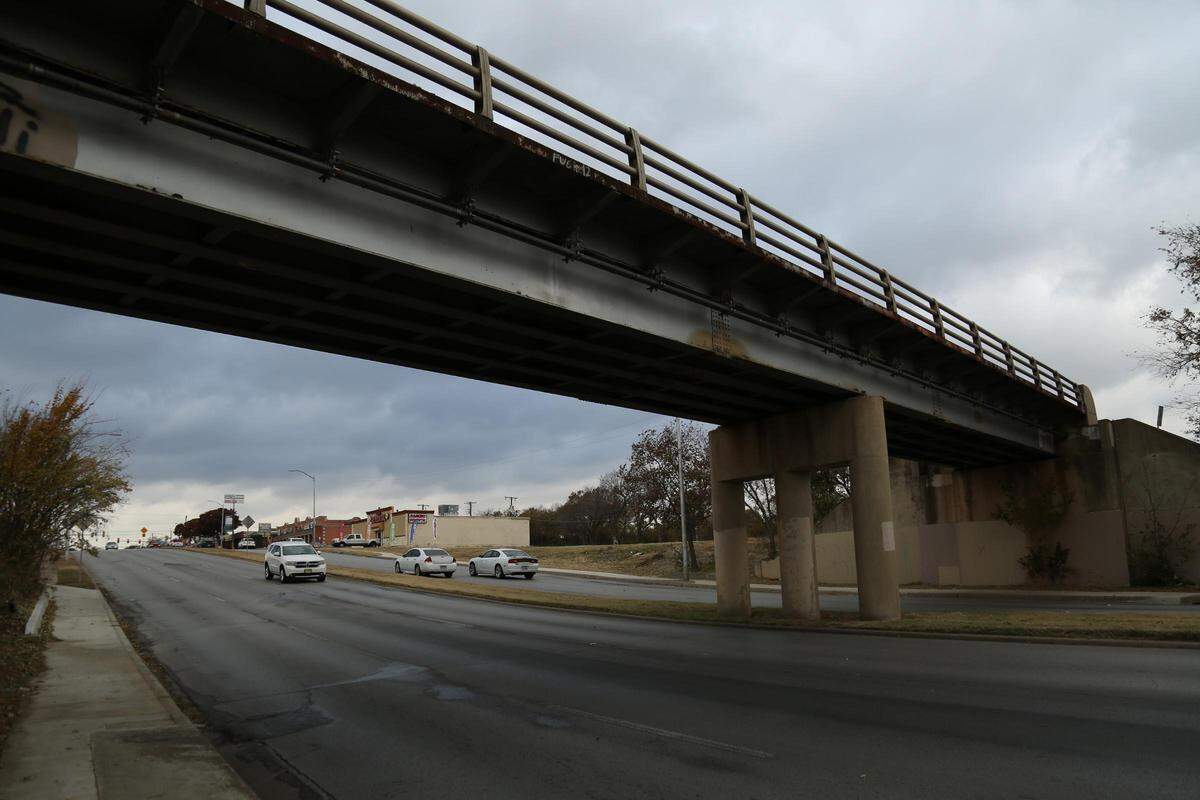
Though Espinal couldn’t recall the exact location where her car floated, at least four spots in the area between Seminary Drive and Loop 820 near Hemphill are among 300 dangerous flash flooding zones the city has identified. One spot on Seminary, at the train tracks west of La Gran Plaza, was deemed critical.
To fix those high water zones, and all other flash flooding problems, Fort Worth would need to spend about $1 billion, according to city estimates. But so far the city plans to spend $70 million, split between those high water zones, new pipes and other needs. With that money, the city can address about 40 dangerous high water spots, or about 13% of the danger zones.
City Manager David Cooke said the city explored a number of options to fund flash flood work and ultimately decided $70 million was the most that could be done without a greater stormwater fee increase than has already been approved to fund the work. He described the decision as a balancing act between the city’s needs and how much officials thought ratepayers would be willing to support. If the political appetite exists to spend more, Cooke said he would consider exploring additional bonds.
“Could we have done $100 million in work? Sure, but that’s a higher rate for residents,” he said. “I think it will be important for us to show we can deliver $70 million in work first.”
When heavy rain brings large amounts of water to a city street, it can be deadly — last year, for instance, four people died in five months on flooded Fort Worth streets. Those deaths included 18-year-old Jessica Romero and her 2-year-old daughter, Llaylanii. An hour later and about a mile north, Eddy Volpp, 69, drowned when his car was swept off South Cravens Road and was submerged in floodwaters.
The National Weather Service estimated that 5 inches to 6 inches of rain fell within two to three hours in the area where Romero and her daughter died. Fort Worth firefighters and Arlington police reported more than 50 high-water rescues that day.
Soledad Romero, Jessica Romero’s mother, said the city needs to do more than fix 40 dangerous locations, calling it “not enough.”
“Is it going to cost another life a year from now?” she asked. “What happens if someone dies at a spot they think isn’t critical now? I don’t know why they wouldn’t just fix everything.”
A little more than 50 locations have high water warning signs that flash during heavy rain. Soledad Romero said she wanted more of those placed around dangerous areas.
The location where Jessica Romero and her daughter drowned is not highlighted in the city’s list of dangerous locations because the Texas Department of Transportation owns the right-of-way. The department installed a guardrail at the location.
The city did declare the area where Volpp drowned as a critical location to be fixed with the new funding, but another spot a few blocks away near the 3700 block of South Cravens likely won’t be fixed, as it ranks lower on the city’s priority list.
The city has been slow to address urban flooding.
Stormwater fees make up the bulk of the the stormwater department’s funding. The department has an annual budget of about $44 million, but in most years no more than $12 million has been available for projects after paying for salaries and debt.
That changed in October, when the Fort Worth City Council approved a 6.5% increase on the stormwater fees property owners pay. For the average single family home, that’s an increase from $64.80 annually to about $69 starting next year. The increase will bring in between an extra $2.7 million to nearly $3 million a year through 2025.
The rate increase will support up to $70 million in bond work stormwater officials have planned through 2025. About $31.5 million of that will go to rehabbing pipes and restoring channels. Another $10 million will go to general flood mitigation.
Another $24.5 million will be used to tackle the fast-moving water that overtops roads and sweeps cars like Espinal’s Lincoln into the rushing water.
“We’re really shifting our focus to those life safety things,” said stormwater manager Greg Simmons. “As bad as it can be to have structural flooding, it’s not nearly as urgent.”
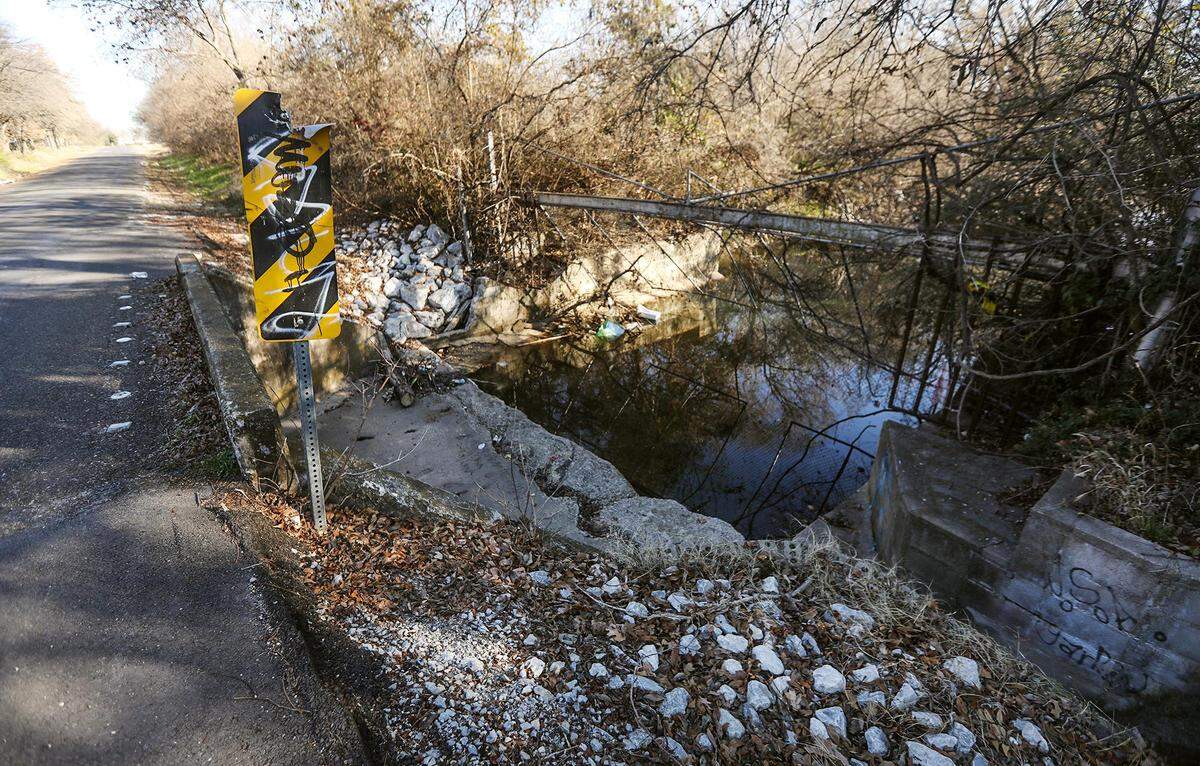
The city has identified 300 places where flash flooding can rapidly overwhelm a street and create a dangerous situation. A little more than 100 of those spots have been deemed critical, but even with the new funding the city can only address about 40 through 2025. It’s unclear how much it would cost to fix all 300 locations.
Some fixes may be as simple as digging a new culvert, but others may require building bridges or acquiring right-of-way from the state or a railroad. Stormwater staff prioritized the number of most concerning spots, which may change as the city continues to evaluate each location, Simmons said.
“It’s a matter of resources and priorities,” he said.
Fort Worth’s urban flooding is the result of a number of factors.
Parts of the city’s drainage system, particularly inside Loop 820, are too old and too small to handle the increased rainwater runoff that comes from more concrete, asphalt and buildings. Roughly a third of the system was installed 50 or more years ago, when the city’s population was less than half of what it is today.
The city doesn’t regulate stormwater runoff from properties that are 1 acre or smaller. That makes it hard to know how much more water flows off the popular larger “McMansions” that have sprung up in older neighborhoods.
Simmons said the city has identified 80 miles worth of pipe that needs to be repaired or replaced. But only about 14 miles can be addressed in five years through the funding covered by the stormwater fee increase. Twenty-two miles of creeks and other water channels no longer support urban runoff either because they’re too small or their banks have become eroded. Half of them will be revamped.
Money to spend
That $70 million may not seem like a lot when the city has upward of $1 billion in work, but stormwater city employees said it was the most they felt comfortable proposing when weighing debt and increasing customer fees.
Although the average increase on a single family home is a few dollars per year, school districts and companies will pay more, since rates are based on a property’s impervious space. The Fort Worth school district will pay nearly $57,000 more a year and Walmart nearly $43,000 more each year. They are the two highest rate payers.
“I mean, $60 to $70 million is going to be a nice influx, but there are still big gaps,” Simmons said.
Councilman Dennis Shingleton, who represents Arlington Heights — where the city is piloting a roughly $7 million program to buy homes that may flood— was dubious that the city was capable of doing much more than $70 million in work. He pointed to unfinished bond projects across the city that voters approved in 2014 and 2018. About a third of the projects approved in 2014 are unfinished. They include some drainage work related to street projects.
“I’m generally opposed to taking on more bonds, but stormwater may be an exception,” Shingleton said. “As a matter of fairness to the public who are supporting these projects, we have to show we can get them done first.”
Mary Kelleher, a former board member of the Tarrant Regional Water District who has advocated for better water management, said she and her neighbors are unhappy with the rate increase, but called the $70 million investment “refreshing.”
She lives in east Fort Worth along Randol Mill Road, which has remained largely rural despite being surrounded by urban DFW. In the past few years, longtime residents have been inundated with water runoff from nearby developments, she said. The water overwhelms the area’s open dirt ditches.
Two housing developments — Trinity Oaks, which is being constructed by D.R. Horton, and Oakridge, which is being built by LGI Homes — are being built on the hill above them, creating increased runoff. And they’re not the only projects planned for the once quiet area.
“We don’t have stormwater service out here,” she said. “I think it’s disgraceful that they would add more to the demands of the current infrastructure knowing that it’s not sufficient.”
Councilwoman Gyna Bivens, who represents Kelleher’s area and the neighborhood where Romero and her daughter died, said she couldn’t recall the specifics of the stormwater plans, but was confident they weren’t sufficient.
“I’m never happy because it’s never enough,” she said.
Urban Flooding
Rapid growth, both in sprawl and redevelopment, has been a major cause of urban flooding, said Texas A&M professor Sam Brody. He and a team of researchers from Texas A&M and the University of Maryland studied urban flooding across the country. He’s also mapping flood-prone areas outside the traditional Federal Emergency Management Agency’s 100 year floodplain, a map of flood risks based on historic water flows, starting with flood maps in Houston.
The team surveyed those involved in flood management from more than 350 municipalities in 48 states and found that while major storms like Hurricane Harvey or Tropical Storm Imelda grab national attention, smaller-scale flooding events happen continuously in cities and can have major economic impacts.
The survey found 70% of respondents reported inadequate drainage systems were their community’s principal problem and almost 60% believed their cities failed to make improvements as the hydrology changed from development or increased rain.
While regional flood planning accounts for large scale rain runoff, like from a subdivision, smaller amounts of water coming from a single home are rarely monitored, Brody said. New homes, streets and driveways move water quickly into drainage systems, causing them to overflow.
“You have a 1950s ranch that you tear down and replace with a 4,000 square foot mini-mansion, well, the roof alone, or the driveway alone, is new impervious space,” Brody said. “Now you have more runoff in a smaller area.”
This is true in Fort Worth.
For parcels an acre or smaller, the city doesn’t require stormwater management. The stormwater department has explored whether regulations should be placed on future homebuilding, said Jennifer Dyke, a former student of Brody’s who is now a program manager in the city’s stormwater department.
The city has met with a group representing builders, real estate companies and engineers, she said, but it hasn’t come up with recommendations yet.
Both Brody and the city are interested in exploring flood risks outside the FEMA flood map. Simmons, the city’s stormwater director, said the city may use citizen complaints and photographs of high water to better determine the location of risks.
“We’re trying to validate the flood risk based on actual events as opposed to just engineering models,” Simmons said.
In Arlington Heights, the city has purchased several properties for flood mitigation. The plan met the ire of some residents who worried home buyouts would lead to torn down homes and vacant lots.
While that was the original plan — replacing homes with a retention area, Dyke said the city is now looking into whether some homes could be raised or rebuilt with extra dirt for a higher elevation.
John Morris, an Arlington Heights resident who spoke against the buyouts, said he was glad the city might reconsider tearing homes down. He said a number of factors led to increased flooding in the neighborhood, including more runoff from development north of Camp Bowie and aging stormwater pipes.
He said he would support runoff regulation for acre-size lots if it meant neighborhoods like his would flood less, but he also wanted the city to explore other flood mitigation plans.
“We just want them to look at everything as a whole,” he said.
Climate change
The problem will only get worse, climate experts say.
What climate scientists know is that as the planet warms, extreme weather shifts become more common, including rain and heavy downpours, said meteorologist Sean Sublette. He works with Climate Central, a New Jersey-based nonprofit that studies climate change.
Climate Central looked at data for North Texas and found our region is getting wetter. From 1899 to 1928 the region averaged 31.85 inches of rain a year. From 1989 to 2018 that average increased to 37.24 inches. The two wettest years on record were 2015, with 62.61 inches of rain, and 2018, when 55.97 inches fell. There have been peaks and valleys, but the trend is toward more rain, Sublette said.
Looking at another set of data since 1950, North Texas didn’t have a single day with more than 5 inches of rain until 2010. The region also had more than 5 inches of rain in one day last year. There were some years before 1950 that had days with greater rain fall, like a storm in 1922 that dropped about 8.5 inches.
“We certainly see a signal in the data that the heaviest rains are getting heavier,” Sublette said.
That’s not to say the area won’t also see droughts, like the one that gripped most of Texas last summer. Sublette said both are symptoms of a warming atmosphere that compound each other.
Warmer temperatures lead to increased evaporation, making droughts worse. A warm atmosphere can also hold more water, making rain storms more intense. The water cycle is essentially ramped up, he said.
“It’s like you’re running on a higher octane fuel,” Sublette said. “You’re adding more moisture and more energy to the system.”
BEHIND THE STORY
MOREWhy we did this story
Three people died during flash floods in Fort Worth in 2018. The Star-Telegram wanted find out where these dangerous flood zones are and what could be done about urban flooding in one of the fastest growing cities in the county.
This story was originally published December 30, 2019 at 5:00 AM.