‘I’m ecstatic’: What a Donald Trump 2.0 presidency means for Texas’ biggest industries
The “red wave” victories that will return Donald Trump to the White House, and reclaim the U.S. Senate for Republicans, have some of Texas’ top business leaders seeing green.
“I’m ecstatic with how things turned out last night,” said Glenn Hamer, the president and CEO of the Texas Association of Business, on the morning after Tuesday’s election.
As the dust settles from Election Day, some of the state’s biggest sectors are poised to see a return to what they consider more business-friendly policies from Washington. Combined with the Texas Legislature remaining firmly under GOP control, President-elect Donald Trump’s proposed economic plans could hasten the state’s already rapid growth.
“We want to keep the same type of legislature in power, because it’s been a legislature that has been extremely good to job creators,” Hamer said.
Trump has proposed federal tax cuts, less regulation and a push to lower energy costs. Hamer called the presidential election extremely significant for local business owners, some of whom benefit from the tax cuts created by Trump’s 2017 Tax Cuts and Jobs Act. Trump is expected to move to extend the legislation, some benefits of which are set to expire in 2025.
Hamer also expects a second Trump administration to boost Texas’ aerospace and defense industries — both of which are major employers in North Texas, including Lockheed Martin and Bell Textron — along with its manufacturing and energy sectors.
Lockheed, which is Tarrant County’s largest employer with about 18,000 workers, has federal contracts worth billions to build fighter jets here.
“Lockheed Martin congratulates President-elect Trump and Vice President-elect Vance,” the company said Thursday in a statement. “We look forward to working with their administration and the new Congress to support and strengthen our national defense. We welcome the opportunity to work together to address the many critical issues facing our nation.”
During Trump’s next term, Hamer anticipates the state’s “jobs juggernaut” will continue, and economic growth will accelerate amid a likely less aggressive regulatory climate. The Texas Association of Business has joined the U.S. Chamber of Commerce in multiple lawsuits opposing Biden administration regulatory policies.
Texas’ gross domestic product increased by about 8.6% during Trump’s first term. The state’s GDP rose by over 18% from 2020 to 2023, when it exceeded $2 trillion.
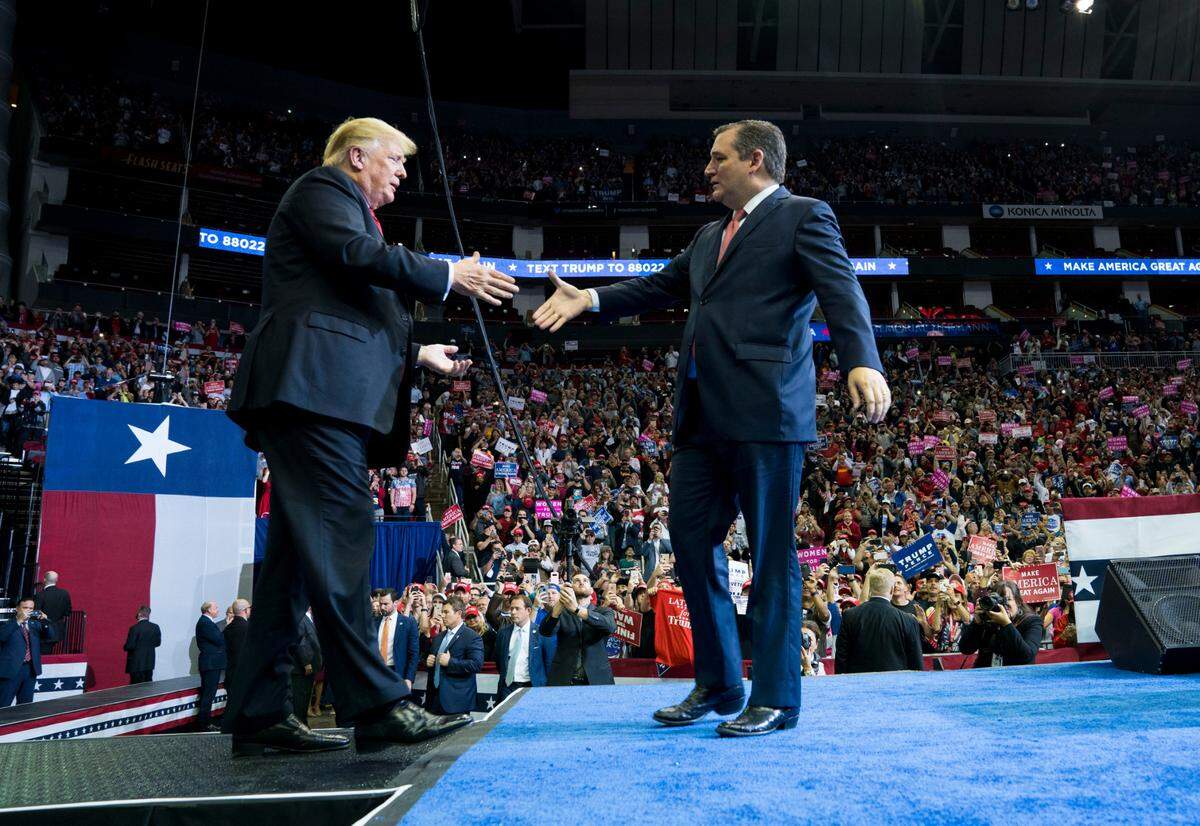
Hamer also noted that Republican U.S. Sen. Ted Cruz, who handedly defeated Democrat Colin Allred, will be well-positioned to become chair of the Senate Committee on Commerce, Science and Transportation during the next Congress. He has served as ranking member of the committee, which oversees issues including communications, highways, aviation, rail, shipping, interstate commerce, economic development and technology.
“I really believe that the Texas miracle, as a result of what happened both in Texas and federally, is alive and well,” Hamer said. “And the state will reach new levels of prosperity, under the upcoming federal administration and the continuation of great leadership in the state of Texas.”
Steve Montgomery, president and CEO of the Fort Worth Chamber, expects the city’s positive economic momentum to remain strong.
“I think as long as you maintain a good business environment, regulatory environment and legal environment, I think we’re going to thrive here in Fort Worth ... regardless of who’s sitting in the White House,” Montgomery said.
Texas’ economy grew at an annual rate of 7.3% in 2023, more than double the national average of 2.9%.
Montgomery is confident Fort Worth’s congressional delegation will continue to support local industries. He said the chamber will be monitoring federal regulations, trade policies and budget decisions, all of which could trickle down to North Texas businesses.
Montgomery said he doesn’t anticipate Texas’ regulatory climate or the Legislature’s position on business-related policies to significantly change.
Some issues experts are expecting the Legislature to contend with during its next session, which begins in January, are workforce development and infrastructure, specifically for water and energy. Also of concern is the fate of state’s research and development tax credit, an economic incentive for businesses set to expire in 2026.
Trump 2.0
While campaigning, Trump proposed a range of economic policies experts say could boost some of the state’s key industries.
John Diamond, senior director of the Center for Public Finance at Rice University’s Baker Institute, said a second Trump administration will likely bode well for the state’s $172 billion energy sector. Texas employs more than 900,000 energy workers, as of 2022.
Trump, who campaigned to lower energy costs, is expected to push for an increase in oil and gas production to drive prices down. His campaign platform promised he would “unleash the production of domestic energy resources” and “reduce the soaring price of gasoline, diesel and natural gas.”
A “drill, baby, drill” production increase could end up depressing oil and gas prices, but companies including many in Texas are hoping the president-elect will make it easier to sell to foreign markets and increase demand overall, the New York Times reported. The national average price of gasoline has fallen about 9% over the past year, to $3.11 on Wednesday (and $2.69 in Texas).
Trump’s victory Tuesday propelled the Dow to record highs on Wednesday, with an index of U.S. oil and gas stocks surging 5.5%. Meanwhile, solar stocks tanked on fears of the demise of the Inflation Reduction Act that expanded clean energy through tax credits.
Businessman and chairman of Hillwood, the developer of AllianceTexas, Ross Perot Jr. said the business community is “euphoric” after Tuesday’s election. Now that it’s clear what policies the country’s next president is likely to favor, Perot said businesses that were holding back because of an uncertain political climate can move to grow their enterprises.
“We see optimism, excitement, and if you’re pro growth, low tax, low regulation, that allows us to go to work,” Perot said in a Friday interview.
Perot expects more businesses to move to the U.S. from overseas during a second Trump term. He said companies in energy-intensive industries may be more inclined to move to Texas, particularly those in Europe, where energy is significantly more expensive than the U.S.
‘Tariffs are a nuanced issue’
On the campaign trail, Trump said he would impose a 60% tariff on goods from China and a 10% to 20% tariff on all other goods entering the U.S. Some economists think Trump’s proposed tariffs could increase inflation at a time when the Fed is close to achieving its annual target of 2%.
Diamond said increased tariffs could benefit Texas if they result in strengthened trade with South American and Central American countries — but that isn’t a guarantee.
“Tariffs are a nuanced issue. It’s not as easy as we either have them or we don’t,” Diamond said.
It’s unclear exactly how a broad tariff could impact existing trade agreements and treaties.
Texas’ imports from Mexico alone were roughly $142.7 billion in 2023, according to the state’s economic development and tourism office. Texas exports totaled over $444 billion, by far the most of any state.
Trump renegotiated the North American Free Trade Agreement into the United States-Mexico-Canada Trade Agreement in 2020. Trump’s second administration will continue to influence the USMCTA, which is set to undergo a review in 2026.
Diamond said no matter the candidate elected, the next president would have been confronted with issues like the USMCTA review and a growing national deficit.
Diamond believes Texas’ business-friendly government will keep attracting businesses
“I do think overall, companies will continue to look at Texas as a favorable place to move. I think trends are working in our favor, and I don’t see anything in this election that would slow those trends down,” Diamond said.
This story was originally published November 7, 2024 at 1:45 PM.