Will last remnants of Fort Worth Stockyards’ authentic past be preserved? Some hope so.
Away from the tourist-crowded sidewalks and cattle drives of East Exchange Avenue sit the remaining pieces of the Fort Worth Stockyards’ livestock market.
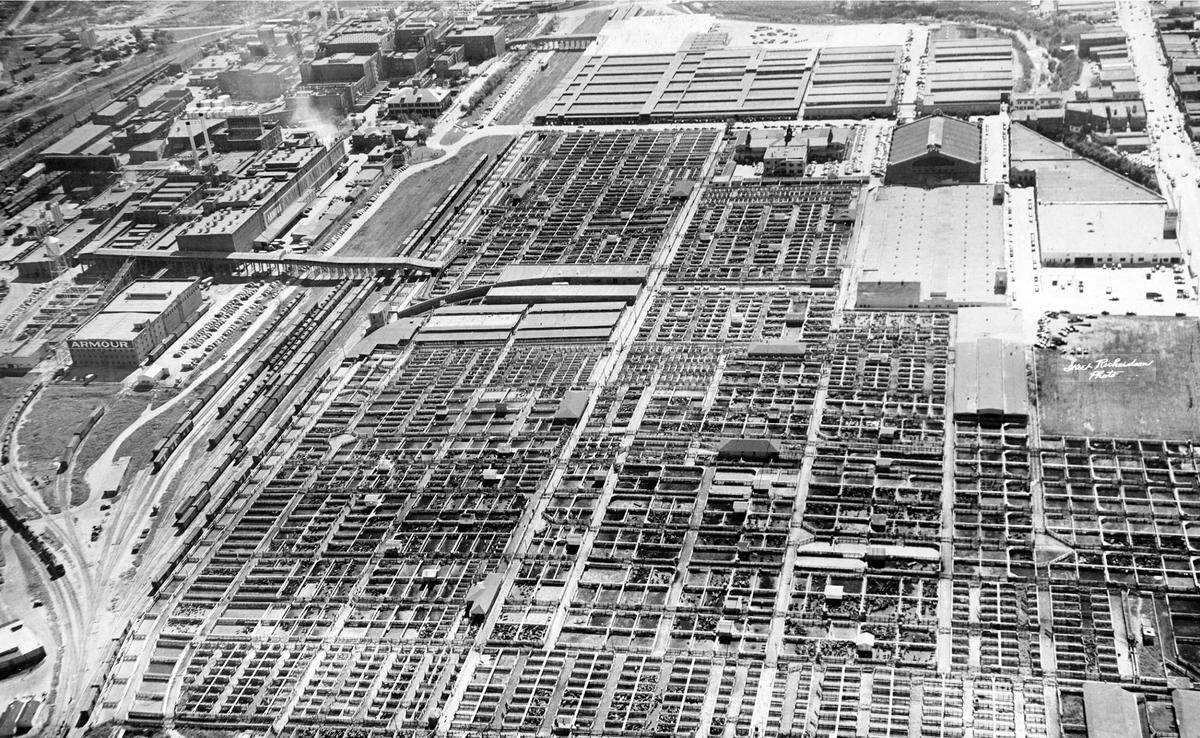
Tucked behind the Exchange Building are about 200 livestock pens— all that remain of the roughly 2,600 pens that once stood in the Stockyards.
The pens, and the Stockyards’ last working scale house they’re clustered around, were used when the historic district was one of the country’s busiest livestock markets. Original concrete turner posts, pen hinges, gate locks and brick paving are still there.
Visitors can see these historic structures from the wooden catwalk between Billy Bob’s Texas and the Livestock Exchange Building, though most people’s attention tends to be occupied by the huge longhorns munching on hay in some of the old pens.
The future of these few remaining structures from the Stockyards’ heyday isn’t certain. Parking lots bordering the pens will become underground parking garages; hotels, retail space and more will be built atop the garages as part of the nearly $1 billion expansion planned by the Stockyards’ ownership group. The project, with city incentives, is slated to almost double the size of the Stockyards.
A spokeswoman for the collaboration of owners and developers leading redevelopment, Stockyards Heritage Development Co., said there are plans to rehabilitate the pens and occasionally house animals in them. The group, which includes Majestic Realty Co., is also planning to add signage and use smartphone app-based technology to educate visitors on the pens’ significance.
The remaining scale house will be “refurbished and activated,” the owners say. While they haven’t yet revealed many specifics of their plans, an executive of Majestic Realty said in June that they are looking for ways to create educational experiences for visitors to learn about Western culture for decades to come.
.jpg "JS_scalehouse (1).jpg")
Scale houses, used to weigh livestock before their sale, are a critical part of the district’s history. The last of the once many scale houses scattered throughout the Stockyards, called Scale House A, still works. When the Star-Telegram visited in July, a Fort Worth Herd employee passing by said they use it occasionally.
A draft of a 2016 historic resource survey of the Stockyards includes Scale House B. The building was torn down during the summer of 2016, when construction started on the redevelopment of Mule Alley into retail stores and restaurants with the new Hotel Drover.
“Scale houses are integral to interpreting the Fort Worth Stockyards,” the resource survey says.
It is unclear why Scale House B, marked as “high priority” on the survey, was demolished. The Star-Telegram reported in 2016 that the building’s over 100-year-old scale was saved, but its current whereabouts are unknown.
Today, restaurants and shop-laden streets in the Stockyards can make it easy for visitors to forget that the hill at the end of East Exchange Avenue was once the sprawling complex of Armour and Swift slaughterhouses and meatpacking buildings.
For decades, the Stockyards was one of the largest livestock markets in the country, far from the manicured, tourist-friendly destination it is today. In 1944, the Stockyards’ busiest year, a record 5.25 million animals were sold there.
Some members of the North Fort Worth Historical Society are worried key parts of this history could be lost during the upcoming round of construction. The group is concerned about the future of a number of structures, including the pens, concrete corner posts, century-old turnstile, Scale House A, a pay station, a branding shed and staircases leading to the old Swift and Armour plants.
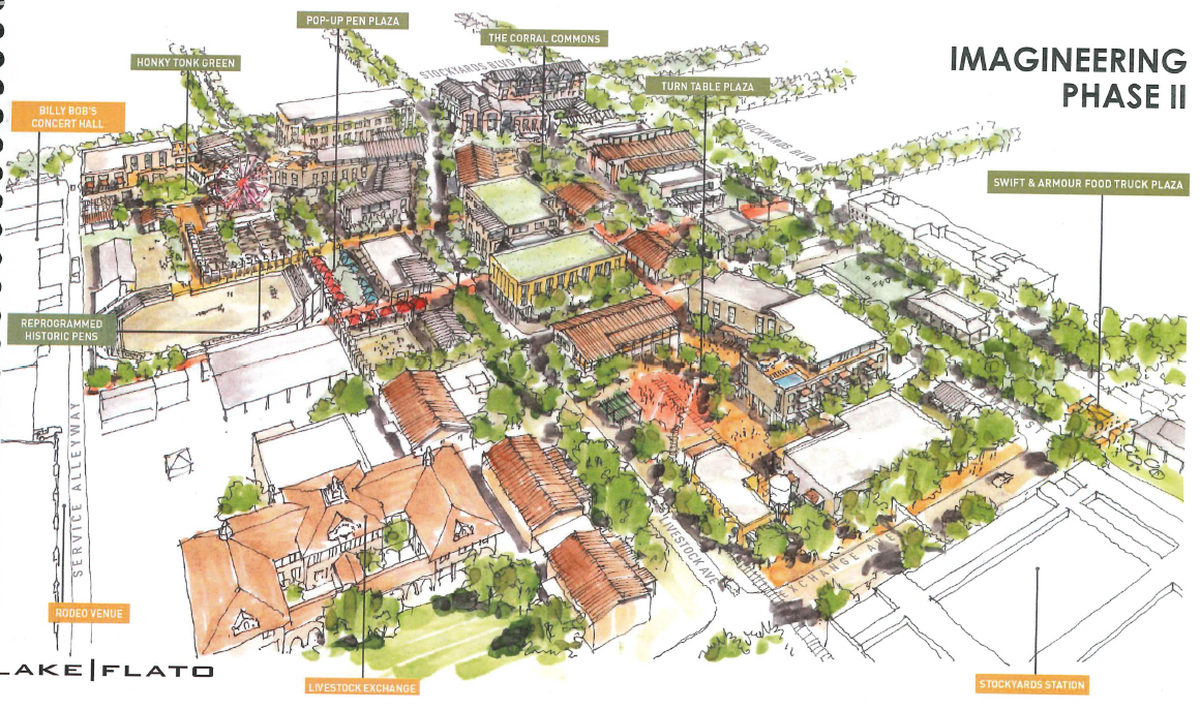
The historical society’s treasurer, Skip Humphrey, said the group thinks early renderings of the project presented to the city in June are vague. They want more details on how developers plan to fit existing structures into the redevelopment.
“We don’t know what it’s actually going to look like, because that drawing’s kind of like from up above and not ground level, it’s hard to tell,” Humphrey said.
Humphrey said maintaining historic parts of the Stockyards, even those not as glamorous as the tourist attractions on East Exchange Avenue, is crucial for the district to maintain its official historic status.
“Because it’s been designated as a historic district, doesn’t mean that can last forever,” Humphrey said. “If you change the area too much, you demolish too much to where it doesn’t reflect on the way it was when it was first designated, they can remove that historic district designation.”
The director of the Stockyards Museum, Teresa Burleson, shares the historical society’s concerns.
“If they take away what little history is left, this becomes another entertainment district, instead of a historic district,” she said.
This story was originally published August 22, 2024 at 11:12 AM.