
NTSB: Systemic flaws in safety oversight of gas pipelines
Three powerful accidents in recent years highlight weaknesses in the oversight of how natural gas providers maintain the largest pipelines in their networks, accident investigators said Wednesday as they issued more than two dozen safety recommendations.
A major effort a decade ago by the federal government to check a rise in violent pipeline failures in “high-consequence” areas where people are more likely to be hurt or buildings destroyed has resulted in a slight leveling off of such incidents, but no decline, the National Transportation Safety Board said.
And while the frequency of such accidents remains low, they are still more likely to occur in more densely populated areas despite increased safety efforts in those areas, the report found.
More safety improvements are needed “to prevent catastrophic gas transmission line accidents from ever happening again,” said Chris Hart, the acting NTSB chairman.
A steady increase in pipeline explosions and fires in the 10 years prior to 2003 prompted the Pipeline and Hazardous Materials Safety Administration to adopt safety standards in 2004 for inspecting and maintaining pipelines, with a priority given to high consequence areas.
From 2010 to 2013, incidents were overrepresented in high-consequence-area pipelines compared to less-developed areas where the risk to people and property is less, the board said.
Three accidents since 2010 illustrate many of the systemic problems, the board said. On September 9, 2010, a massive section of pipeline was blown out of the ground, igniting a giant pillar of fire in San Bruno, a San Francisco suburb. Nine people were killed and 70 homes destroyed.
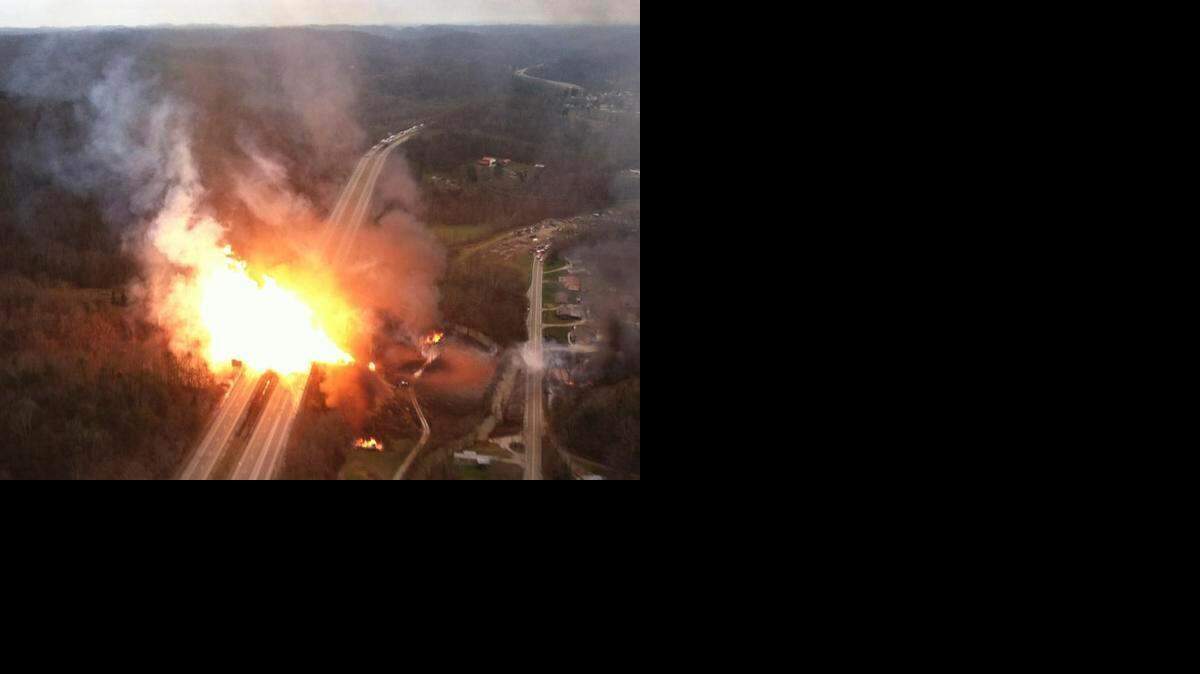
On Dec. 11, 2012, near Sissonville, W.Va., a stretch of pipeline ruptured, igniting a fire that destroyed three homes, damaged several others and melted the asphalt off a nearby stretch of highway. The pipeline hadn’t been inspected in 24 years.
A similar pipeline ruptured on May 4, 2009, near Palm City, Florida. The blast tossed 106 feet of buried pipeline into the air. Incredibly, no fire was ignited even though 36 million cubic feet of gas escaped and two other large gas lines were buried parallel to the one that ruptured.
In each of the accidents in the three states, the gas companies failed to conduct inspections or tests that might have revealed weaknesses in the massive pipelines, the NTSB found in a report that also reflected federal safety data and interviews with state inspectors and industry officials.
The concern then and now is that aging pipelines will rupture in populated areas. The U.S. is crisscrossed by nearly 300,000 miles of gas transmission pipelines, more than half of which were installed before 1970, which The pre-1970 pipelines have a significantly higher failure rate.
There is wide variation in states’ approaches to pipeline safety oversight in high-consequence areas, and there isn’t enough federal-to-state and state-to-state coordination between inspectors, the board said.
The board issued 28 recommendations, most of them to federal regulators. They urged states to adopt more costly pipeline inspection methods that are more likely to find problems.
This story was originally published January 27, 2015 at 4:44 PM with the headline "NTSB: Systemic flaws in safety oversight of gas pipelines."