Will Texas food prices soar after Russia’s halt of Ukraine grain deal? What experts say
When Russia pulled its grain deal with Ukraine this week, wheat prices began soaring around the world.
At 33 million tons, Ukraine was the world’s seventh-largest producer of wheat between 2021 and 2022, according to the U.S. Department of Agriculture. The country primarily uses the Black Sea to move its exports, but now Russia is blockading those ports and has threatened to treat export ships as Ukrainian military cargo carriers.
The global disruption is expected to have local ramifications in the U.S., including Texas.
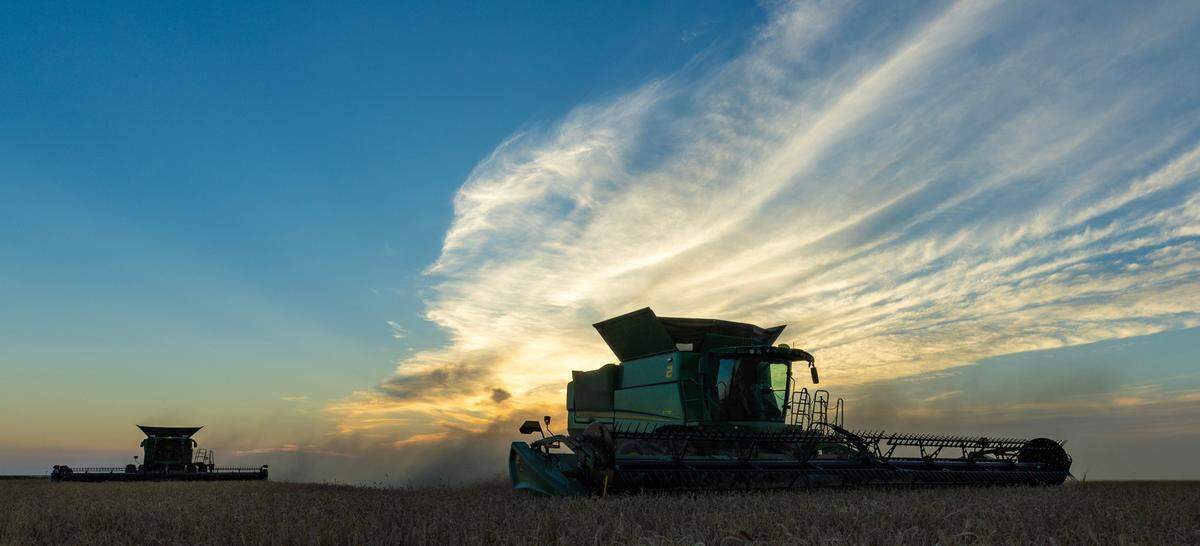
Darby Campsey, director of communications and producer relations for Texas Wheat, said with less wheat on the world market, prices are likely going to increase. As Texas farmers head into planting season in September, Campsey said we could see more wheat planted in the state than recent years to account for high prices.
But high wheat prices aren’t necessarily something new, Campsey said.
“If we look back at what’s already happened with the disruption between Russia and the Ukraine, we were already experiencing higher prices at the grocery store because of the pandemic. Supply chain issues pushed those prices up quite high during the pandemic, and then this disruption between Russia and the Ukraine happened last year that drove up global wheat prices and pulled down global stock of wheat.”
Campsey said Texans shouldn’t be anticipating a rise in the cost of wheat foods in restaurants and grocery stores, because the nation only uses about half of the wheat grown on average. But she expects the cost of transporting wheat to be extremely high for producers and distributors across the supply chain.
“We shouldn’t see too much of a change,” Campsey said. “If we do see a change in the prices at restaurants and grocery stores, it would be because they’re paying that additional transportation cost and not because the actual wheat is harder to come or more expensive.”
The Russian invasion of Ukraine in February 2022 spurred a rapid rise in prices in a number of markets.
Mark Welch, a Texas A&M professor in agricultural economics, said Russia withdrawing from its grain deal with Ukraine makes a difference on global inflation. But put in perspective, the cost of wheat is only one of several factors that affect the price of a loaf of bread in grocery stores, Welch said.
“Think about labor, energy, transportation, all those factors and how much more expensive those are in today’s economy,” Welch said. “Those have a greater influence on what we’re seeing in terms of inflationary pressures on products like bread than the price of grain.”
Welch said the cost of grain does make a difference — it can get passed on to food in restaurants and grocery stores — but it’s also one piece in the broader picture of inflation.
Gary Joiner, a spokesperson for Texas Farm Bureau, said shutting down the Black Sea corridor has the potential to decrease Ukraine’s export capacity by about 25 million metric tons.
But Joiner also said there should be minimal impact on consumer food prices and restaurant prices in the U.S. and North Texas. Russia’s decision will have more of an effect on food prices in Africa, the Middle East and Asia, Joiner said.
“World commodity prices for the grains impacted by the Russian announcement did initially jump, but those prices have come back down,” Joiner said. “Weather conditions right now have a stronger influence on world commodity prices than the Black Sea situation.”
Hans Müller, owner of Fort Worth bakery Swiss Pastry Shop, said his business is not too worried about the global disruption.
“Even if wheat prices go up significantly, it’s one of the cheapest ingredients that goes into our products,” Müller said. “Even if prices went up 100%, it still wouldn’t really affect us.”
This story was originally published July 20, 2023 at 2:13 PM.