
Language barriers, absence of bank loans leave Latino small-business owners struggling
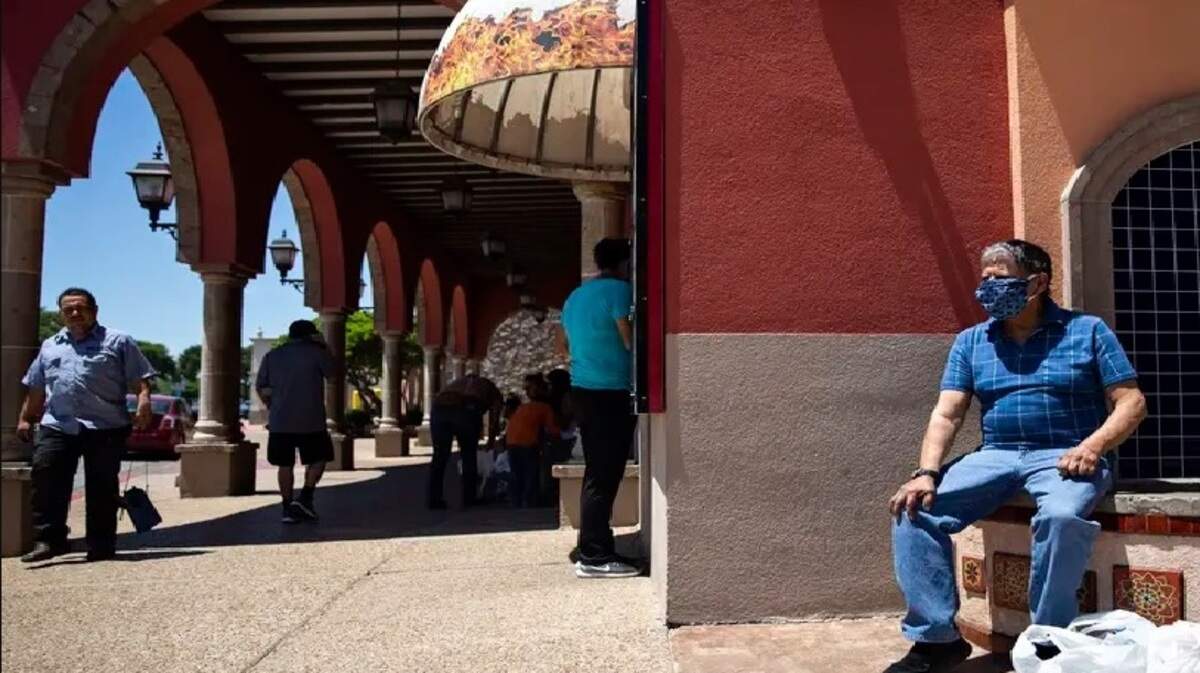
As Texas restaurants and retail stores began welcoming customers back through their doors last week, a few dozen people walking the hallways of Fort Worth’s normally bustling La Gran Plaza shopping mall passed reopened stores whose windows featured quinceañera dresses, Mexican ranchero boots and cellphones. Signs on the food court tables banned sitting. Only five or six restaurants were open.
In the center of the 1.2 million-square-foot mall, a stage where mariachi bands normally perform remained empty. A light blue neon sign overlooking the atrium asked, “Are we having fun yet?” as speakers blasted salsa, rancheras and Latin pop. No one was dancing.
A few storefronts away from a movie theater that sat dark, a padlock hung from the door handles of Maricruz Ávila’s sporting goods store, Pasion Deportes. The soccer jerseys, Mexican hats, sneakers and colorful Mexican dresses in her store’s windows hardly got any looks from shoppers.
Even before the coronavirus pandemic effectively ground Texas’ economy to a monthlong halt, Ávila was struggling to pay her rent and other fees on time. By the start of May, she owed $5,000 for rent, late fees, maintenance and insurance. The $1,400 she gave her landlord in April wasn’t enough to gain access to her store in time for Gov. Greg Abbott’s reopening of the state economy so she could begin earning money to pay back the debts and afford upcoming payments.
“I was already in a really bad economic situation,” she said. “I’m a single mother, I don’t have anyone to support me, I don’t have any work, and they still locked me out.”
Pasion Deportes, a shop in La Gran Plaza in Fort Worth, was one of several that did not reopen last week. Photo credit: Shelby Tauber for The Texas Tribune
Like many small-business owners in Texas, Ávila has reached a financial cliff after being forced to close for weeks in a state that didn’t prohibit evictions for commercial properties through the pandemic and is limiting how many customers can visit a store to help minimize spread of the virus. But for Latino business owners, other obstacles — such as navigating language barriers and struggling to access bank loans — will make it even harder to come back from the brink. And it’s happening in a state where there are more than 700,000 Latino-owned businesses, according to the Texas Association of Mexican American Chambers of Commerce.
“Those that have a way to pay rent are paying it. Those who aren’t paying it, it’s because they don’t have the money,” said Luz Herrera, a law professor at Texas A&M University and adviser to some of the store owners in La Gran Plaza. “Even if they’re paying and opening on May 1, it’s going to be very hard for them to come up with June 1’s rent if mall operations are at 25%.”
That could have a ripple effect beyond the mall and its shop owners because La Gran Plaza not only provides employment to thousands of people in the area, but spurred cultural and economic activity that made the surrounding neighborhood safer, according to customers and business owners who frequent the area.
“It’s definitely a place where a family could spend a Sunday,” said Anette Landeros, president of the Fort Worth Hispanic Chamber of Commerce. “The kids can watch some music while the parents shop or the abuelitos listen to mariachis. It really is kind of a community center, but also a business incubator where Latinos have a space where they feel comfortable in taking a chance at entrepreneurship.”
Even federally backed loans, like those through the Paycheck Protection Program that Congress created to help businesses stay afloat, are more difficult for some Latino business owners to access.
“There is no question that businessmen and women of color have been underserved by this program, and that must be fixed,” said Ellen Harnick, executive vice president of the Center for Responsible Lending.
Many La Gran Plaza tenants are asking for payment plans or for the mall’s management company to waive late fees. José de Jesús Legaspi, president of mall owner The Legaspi Company, said tenants’ situations are handled on a case-by-case basis and noted that some store owners owed money before the statewide stay-at-home orders.
“Unfortunately, we have to run a mall, and we have to face certain requirements with our lending community,” he said. “If we’re not able to maintain a revenue source ... then all of a sudden the big ship dies. Everybody loses.”
Even before COVID-19, malls across the country were suffering as they battled the rise of online shopping. More than 9,300 retail stores were expected to close in 2019, according to an analysis by Business Insider. But La Gran Plaza was an exception. On weekends, the parking lot was full, and some restaurants would have so much demand that customers waited up to an hour for their orders. For Mexican Independence Day, the events in the mall would draw up to 80,000 people.
El Mercado is a popular section of the mall that mimics the tianguis, or traditional Mexican markets, where customers can find fruit and ice cream shops, cellphone repair shops and all sorts of Mexican snacks.
“It has many similar things, like the sweets, the piñatas, the boots, the sombreros. It’s everything more for us Latinos,” said Fort Worth resident Lucía Jiménez, who vistited the mall in the last week with a facial mask and gloves.