
Fixing railroad tank cars gains traction after recent derailments
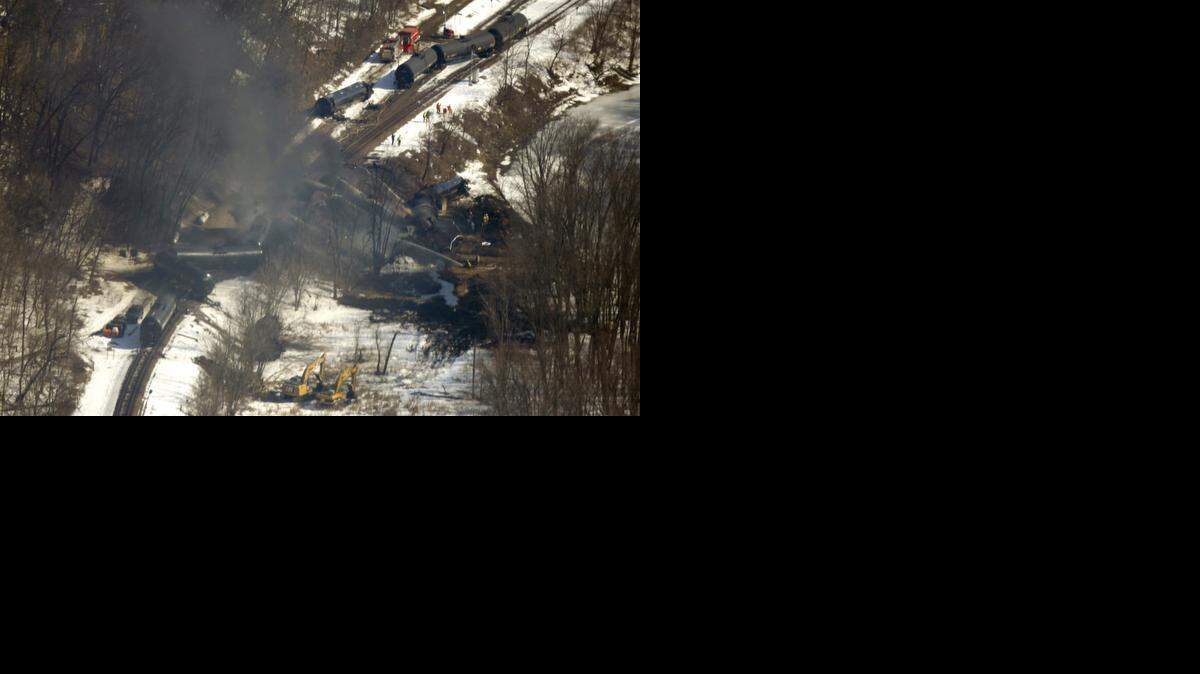
While some government and industry officials have repeatedly said there’s no silver bullet to improve the safety of oil trains, a persistent problem runs through every new derailment: the tank cars.
Oil industry groups maintain that railroads should do a better job of maintaining track to prevent derailments, while the rail industry has called for more robust tank cars that are better equipped to survive accidents.
Although there’s almost universal consensus that improvements are required in both areas, there’s one key difference.
Railroads have already spent heavily in recent years to improve their track for all kinds of freight and have pledged to spend more. Meanwhile, the companies that own and lease tank cars for transporting oil and other flammable liquids have been waiting for regulators to approve a more robust design to account for the exponential increase in energy traffic on the rails before they invest an additional cent.
The railroad industry petitioned the U.S. Department of Transportation in March 2011 for a more robust tank car design. Rather than wait for an answer, the industry adopted its own upgrades later that year. But several recent derailments involving different types of crude have suggested that the cars don’t perform significantly better than those they replaced.
And unlike the controversy that surrounds other proposed solutions, tank car upgrades have the support of lawmakers, regulators, mayors and governors, community and industry groups, and the National Transportation Safety Board.
“We certainly have been distracted from doing what is the most obvious safety improvement: the cars,” said Peter Goelz, former managing director of the NTSB.
The White House Office of Management and Budget is reviewing a package of proposals that include an improved tank car design. But the new rules aren’t scheduled to be published until May, frustrating many who’ve pushed for better tank cars for years.
For more than two decades, the NTSB has called for improving the most common type of tank car, the DOT-111. But those calls were largely ignored until railroads started carrying dramatically larger volumes of domestically produced crude oil and ethanol.
After a July 2013 oil train derailment in Lac-Megantic, Quebec, killed 47 people, Canada’s Transportation Safety Board found that none of the cars in that incident was equipped with thermal protection. About half of the tank cars carrying crude oil involved in that crash were made by Dallas-based Trinity Industries, which makes rail cars in Saginaw.
“Do we need a new standard for tank cars? Absolutely,” said Ed Hamberger, president and CEO of the Association of American Railroads, the industry’s principal advocacy group.
This story was originally published March 31, 2015 at 8:31 AM with the headline "Fixing railroad tank cars gains traction after recent derailments."