
Judge orders Fort Worth attorney to stop interfering in Chesapeake case in Oklahoma
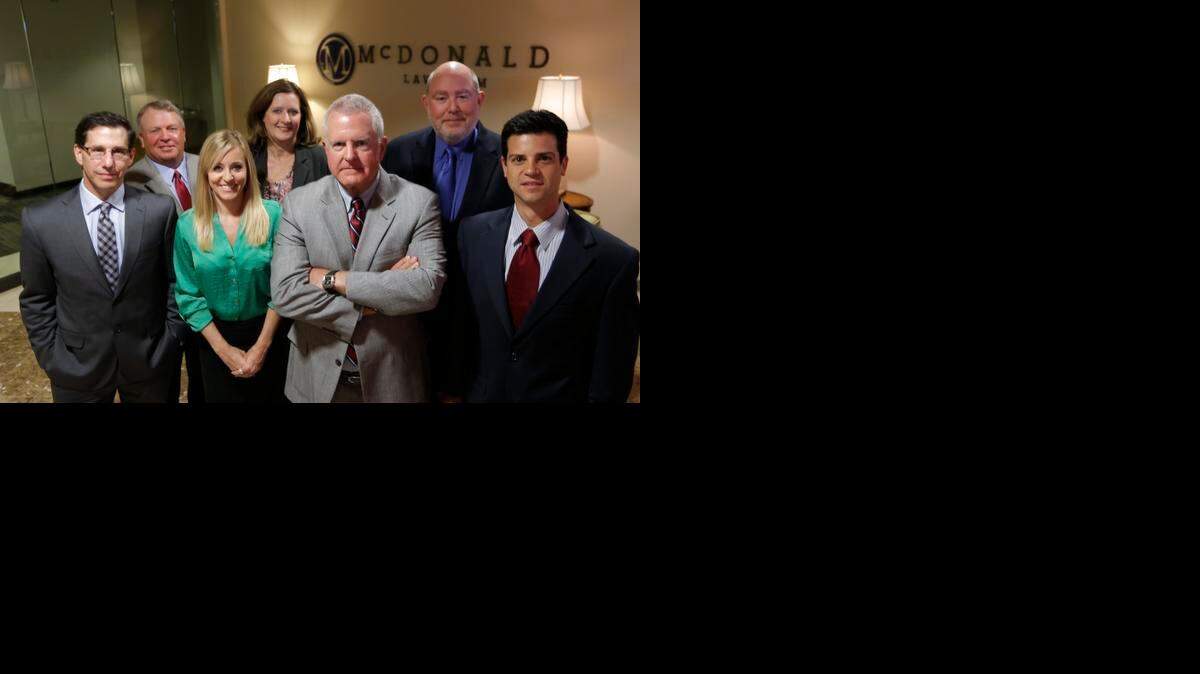
Fort Worth attorney Dan McDonald has recruited thousands of clients suing Chesapeake Energy over royalty payments through billboards, a website and public meetings. He has been so successful that his lawsuits are started to clog the courts in Texas.
But an Oklahoma judge overseeing a class action settlement against the Oklahoma City energy giant is not so happy with McDonald’s tactics and has told the lawyer to cut it out — now.
State District Judge Jon Parsley signed a temporary restraining order last week prohibiting McDonald’s firm from encouraging Oklahoma royalty owners to opt out of a proposed $119 million settlement with Chesapeake.
On Monday, Parsley will hold a hearing to decide if the restraining order against McDonald should stay in place, possibly shutting down his attempts to take on Chesapeake in its home state.
“Unless the McDonald law firm is restrained immediately from the enjoined activities, the settlement class will suffer immediate and irreparable injury” by being “unduly and or improperly influenced in their decision” to remain in or opt out of the class action lawsuit, Parsley’s Feb. 13 order states.
McDonald denies doing anything wrong, saying that he is simply questioning a settlement he is convinced will pay plaintiffs pennies on the dollar while attorneys could get up to about $48 million in fees.
“I ain’t rolling over. I’m fighting,” McDonald said. “This settlement stinks.”
Attorneys Rex Sharp and Arthur Schmidt, who requested the restraining order against McDonald, did not return repeated phone calls from the Star-Telegram seeking comment.
Settling an old case
Parsley is presiding over a class action lawsuit that was filed in 2010 when John W. Fitzgerald accused Chesapeake of underpaying oil and gas royalties by improperly deducting post-production costs, claims similar to those being made by McDonald and other attorneys in lawsuits in North Texas.
Classified as a class action by Parsley in February 2013, it covers drilling going back to 2004 and claims by tens of thousands of royalty owners covering possibly 10,000 wells, records show.
At first, Chesapeake fought handling the cases as a group, saying that there wasn’t enough commonality in the issues since at least 75,000 individual leases were involved dealing with varying qualities of gas to be processed from 1,100 different fields.
The Oklahoma Court of Civil Appeals agreed with Chesapeake in February 2014. It reversed Parsley’s certification and sent the case back to his court.
But by January Chesapeake was willing to settle the case, paying out $119 million to “avoid the time, expense and uncertainty” of continuing with the case, records show. Attorneys’ fees of up to 40 percent would be paid from that total, which could leaving about $71 million for the plaintiffs.
“We are pleased to reach this fair and reasonable agreement and look forward to further strengthening our relationships with our Oklahoma royalty owners,” Gordon Pennoyer, a spokesman for Chesapeake, said in a prepared statement.
Chesapeake, which has grown tired of fighting similar individual lawsuits by McDonald and others in Texas, has sought to group about 100 of them together in hopes of moving the cases along more efficiently and hopefully encourage plaintiffs to settle. It recently filed for multidistrict litigation status, which would send them to one court for pretrial decisions.
Parsley set a schedule that would have notices describing the pros and cons of the settlement going out to plaintiffs no later than Feb. 25. He then set an April 1 deadline for individuals to tell the court if they are objecting or opting out of the settlement and hiring their own lawyer.
The attorneys have already established a website with information about the settlement.
On April 17, Parsley is set to hold a “settlement fairness hearing” at his remote Oklahoma panhandle courtroom in Beaver County to hear final arguments on the case.
“It is not something I would do”
But before many of the plaintiffs had time to consider the settlement, McDonald swung into action.
He sent out mass mailings, put ads in newspapers and held public meetings in several cities earlier this month where he encouraged plaintiffs to opt out. In the newspaper ads, his firm pronounced in big letters that the proposed deal could net them “pennies on the dollar.”
Sharp and Schmidt a few days later asked for the temporary restraining order in which they accused McDonald’s law firm of conducting an “unethical solicitation campaign” that would cause “unnecessary and costly” confusion, documents show.
McDonald said he has made similar appeals for clients in Texas without complaint and that he is following American Bar Association guidelines on reaching out to people involved in the Oklahoma class action. “It’s not a matter of my opinion. I have not done anything wrong,” he said.
To make his case that he can continue to pursue Oklahoma residents, McDonald is bringing to the hearing Monday an ethics expert from St. Mary’s University School of Law and an expert from Harvard University on class action to bolster his case that the settlement is too low.
A memo prepared by Harvard professor William Rubenstein argues that the class certification cannot be accepted for a myriad of reasons including the varying interests of the class members and limited information about the dollar value of their claims.
McDonald said if his outreach to those involved in the settlement means that it falls apart, then so be it. “If it falls apart, then that is the way this is supposed to work. There are a lot of problems with this settlement,” he said.
But Terry Stowers, an attorney and executive director of the Coalition of Oklahoma Surface and Mineral Owners who settled the first class action lawsuit against Chesapeake in 2004, said he has problems with some of McDonald’s public statements.
He also said he has issues with the Fort Worth lawyer’s conduct under Oklahoma’s rules regarding attorney conduct. “It is not something I would do,” Stowers said.
Max B. Baker, 817-390-7714
Twitter: @MaxBBaker
This story was originally published February 19, 2015 at 6:25 PM with the headline "Judge orders Fort Worth attorney to stop interfering in Chesapeake case in Oklahoma."